Solid Wood Furniture Pricing Factors Explained in Singapore
I still remember standing in a Tampines HDB corridor last month with my colleague, measuring a 1.2-metre-long storage bench against the lift opening. Lift doors in many 12-storey blocks come in at about 800 mm wide and 2.1 m tall — tight enough that a chunky solid wood piece needs proper planning. The seller we were visiting had no idea of the assembled dimensions; the buyer nearly paid for something that would not fit. That single afternoon changed how I think about price. The sticker on a solid wood storage bench in Singapore is shaped by far more than the wood itself.
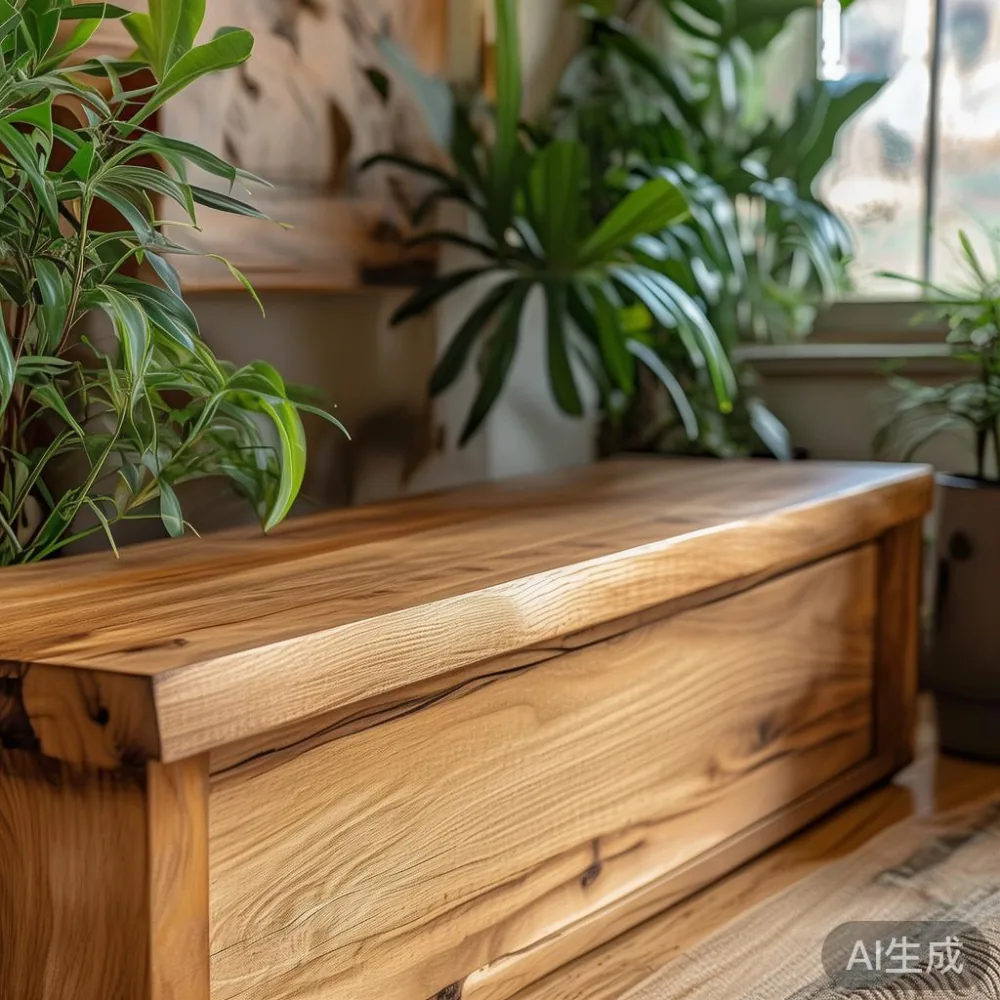
Over the past year I have walked through three factory showrooms and shipped samples back to a flat in Bedok for cross-checking. I have watched a craftsman hand-sand a French light luxury sideboard for forty minutes, and I have seen a knock-down panel crack along its particleboard core after six months near a Punggol window that gets afternoon sun. The price gap between those two outcomes is built from dozens of decisions. Here is what those decisions are, in plain English, with the cent-and-kilogram detail Singapore buyers actually need.
Does the wood species matter that much when comparing two storage benches?
Yes — and the difference shows up faster than most shoppers expect. A storage bench made from rubberwood (hevea) at 18 mm thickness will land in a Singapore retail shop for roughly SGD 280 to SGD 420 for a 120 cm bench. The same silhouette in imported white oak, even with a similar joinery style, sits closer to SGD 950 to SGD 1,400. Walnut pushes past SGD 1,600 for the same footprint.
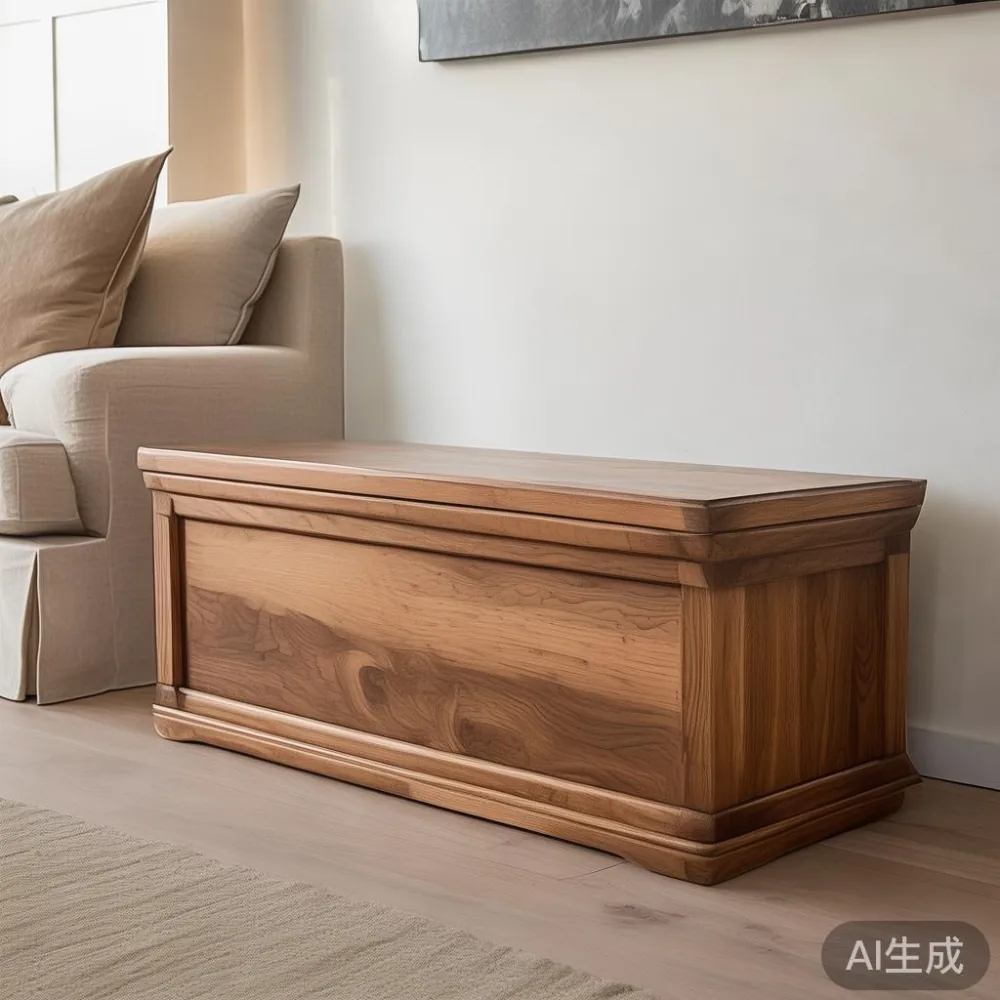
The species matters for three reasons. Density: oak and walnut register around 720 to 750 kg/m³, while rubberwood sits near 640. That density affects weight (a 1.4 m oak bench can weigh 28 kg versus 19 kg for rubberwood) and therefore your delivery cost — relevant when a single trip up to a 14th-floor walk-up in Punggol costs more than the bench itself. Stability: oak and ash shrink around 1.5% tangentially, while rubberwood can move 2.4% under the same humidity swing. In a Singapore HDB that runs air-conditioning at 23°C with door-shut humidity around 60%, that movement is small. Leave the same piece near an open window during the November monsoon, and the cracks start. Appearance: open-grain oak takes a clear oil beautifully; rubberwood needs a tinted finish to hide its pale, featureless surface.
For a storage bench destined for an entryway or under a window, ask the seller for the Latin name, the moisture reading at delivery (target 8 to 10% for Singapore-conditioned interiors), and the country of origin. Two pieces with the same look can hide completely different price structures inside.
What hidden engineering sits under a price tag?
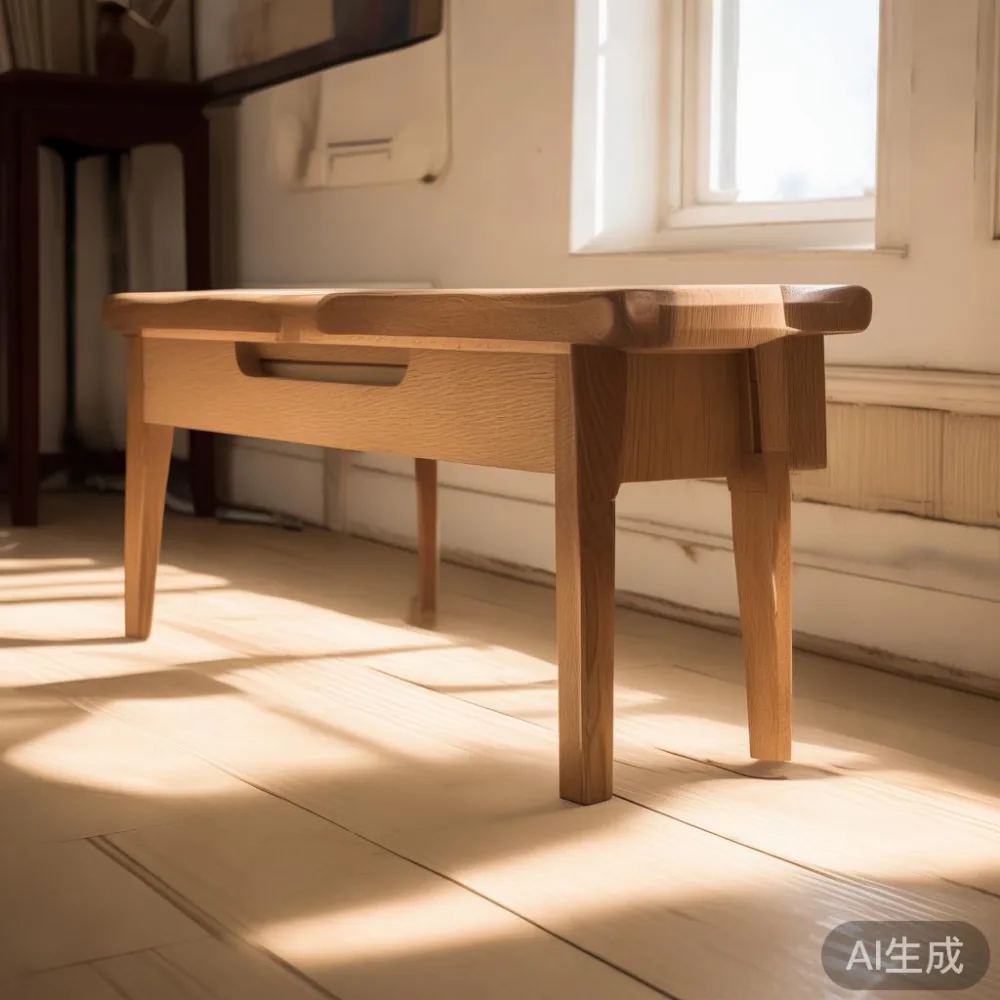
The visible bench is roughly half the cost of a well-built one. The other half hides in joints, finishes, and structural reinforcement.
First, look underneath. A serious storage bench uses through-tenons, dowels plus glue, or concealed steel brackets at the corners — not staples or short screws alone. Lift the lid. A soft-close hinge set from a European supplier adds about SGD 18 per bench in parts and 12 minutes of install time; a basic friction hinge adds SGD 4 and 2 minutes. Multiply that by the number of lids and you understand the margin. Run your palm along the inside of the storage cavity. A 6 mm plywood liner adds SGD 22 in material but protects the wood from scratches for ten years. Skip it and the first搬家 (house move) will leave marks.
Finishes add the most untraceable cost. A polyurethane sealer that meets Singapore's indoor VOC limits can be applied in three coats at SGD 35 per coat in labour and materials; a single-coat wax finish costs under SGD 8 but offers less moisture protection. For a storage bench used near an entryway where umbrellas drip, three coats pay for themselves in two wet seasons.
Then there is hardware. Solid brass cup pulls run SGD 6 to SGD 11 each; zinc alloy pulls run SGD 1.20. On a four-drawer piece, that gap alone is SGD 30. Over a decade of daily pulls, brass outlasts zinc by a factor of five in coastal air — relevant if you live in a Punggol waterfront unit where humidity and price range SGD 140 to SGD 220 for the same bench category shift noticeably when the metal changes.
Why does a dining table from the same factory cost double the price of a wardrobe?
Because the stress on the pieces is different. A dining table holds plates, elbows, and the occasional 12 kg Thanksgiving turkey across a single span. A wardrobe holds folded clothes and the occasional door slam. Engineering reflects that.
A solid wood dining table in European light luxury style — 180 cm × 90 cm, ash top, tapered legs — needs top boards between 32 mm and 40 mm thick to resist sagging past 4 mm across the span over five years. That thickness alone uses 38% more wood than the 22 mm boards inside a wardrobe side panel. The table also needs breadboard ends or metal corner brackets to keep the top flat as the seasons change. A wardrobe, by contrast, carries its load on vertical panels that never bend — 18 mm is sufficient for the sides, with a 25 mm top for stiffness.
The same logic explains the price spread between a nightstand and a bed frame. A queen-size European light luxury bed frame needs a centre rail, slats rated for 180 kg per side, and joinery that survives ten years of turning. A 50 cm nightstand needs only four legs and a drawer slide. You can find a serviceable nightstand in Singapore for SGD 220 to SGD 350; a matching bed frame in the same line runs SGD 1,600 to SGD 2,400. The wood is the same; the engineering, the joinery count, and the hardware scale are not.
If you are choosing between pieces, ask which components are structural and which are decorative. The structural ones — legs, rails, load-bearing panels — drive the price. Decorative panels, veneer overlays, and edge profiles add perhaps 8 to 15% on top.
Is the country of assembly a fair reason for a SGD 600 price gap?
Sometimes yes, sometimes no. A storage bench assembled in a Foshan workshop with ten years of export experience will carry a different price tag than the same silhouette assembled in a small Hanoi atelier, even if the wood, the glue, and the hardware are identical. The difference is overhead, scale, and warranty infrastructure.
Foshan factories such as MIDHILL operate with kiln-dried timber warehouses, CNC dovetail machines, and finishing rooms with downdraft sanding tables. A 130-cubic-metre kiln run costs the maker roughly SGD 1,800 per cycle; spreading that across 400 benches drops SGD 4.50 into the unit cost. A small workshop without a kiln air-dries timber for the shade, accepting a 12 to 18% moisture band. In Singapore's air-conditioned rooms, that timber will move.
Warranty infrastructure also has a real cost. A ten-year structural warranty backed by a 12,000-square-metre factory and a documented spare-parts warehouse is not free — but it converts what would be a SGD 280 gamble into a SGD 280 insurance policy. MIDHILL's lifetime refinishing service adds another layer: if your bench surface scratches after eight years, the workshop will sand and re-oil it for the cost of shipping alone. That kind of after-sales programme is funded by the unit price.
On the other hand, country of origin is sometimes used to mask poor design. A storage bench assembled in Europe of solid pine, with thin 16 mm panels and staples, will fail faster than the assembly floor of a regional maker using 22 mm oak and dowels. The label does not build the bench. The specification sheet does.
How does shipping and GST shape the final number on the invoice?
Singapore's 9% GST applies to the full landed value of imported furniture — wood, hardware, finish, and freight. For a storage bench declared at SGD 80 per piece, the GST component is SGD 7.20. For a dining table declared at SGD 600, the GST is SGD 54. The percentage is identical, but the absolute number scales with everything else.
Freight from a South China port to a Singapore warehouse runs SGD 12 to SGD 18 per cubic metre by sea, or SGD 85 to SGD 110 per cubic metre by air. A flat-pack bench in a 0.18 m³ box ships cheaply. A fully assembled bench in a 0.6 m³ crate ships at three times the rate. If your lift opening is 800 mm wide and the assembled bench is 1,250 mm long, you cannot fit it in anyway — flat-pack wins on freight and on access.
Local delivery from the Singapore warehouse to a HDB flat adds SGD 40 to SGD 80 depending on the floor and whether a Hiab lorry is needed for a condo loading bay with a 2.2 m clearance. Condos in the Bedok Reservoir area often have a 4-tonne vehicle limit in the basement; a 1,400-cubic-metre delivery truck simply will not enter. Smaller trucks cost more per cubic metre but clear the gate.
Free shipping above US$350 (about SGD 475) helps. On a SGD 900 storage bench order, freight is absorbed; on a SGD 280 nightstand order, you may pay SGD 60 for delivery. The threshold nudges buyers toward larger single orders, which is why pairing a storage bench with a matching light luxury coffee table often nets a cleaner invoice than two separate purchases.
Which five questions should I ask before paying a deposit?
First, ask for the timber specification in writing — Latin name, country of origin, moisture content, and thickness in millimetres of every panel. A bench described simply as "solid wood" with no Latin name often hides rubberwood or poplar under a stained finish.
Second, ask for photos of the joinery at the inside corners. A serious maker sends a phone snapshot in fifteen seconds; a less serious maker deflects. The photograph tells you whether the joinery is dowel-and-glue, biscuit, or staples.
Third, ask whether the storage bench comes fully assembled or flat-packed, and what the assembled dimensions are. Then take a tape measure to your lift lobby — a Sunday-morning visit when neighbours are out. A 1,400 mm bench will not enter a lift with an 800 mm door at any rotation angle.
Fourth, ask for the warranty in writing, with the address of the workshop that will service it. Ten years of structural warranty is meaningful only if the workshop is reachable. MIDHILL, for instance, publishes its Foshan factory address and ships spare slats and hardware on request — that kind of transparency is worth paying for.
Fifth, ask how the European sofa vs French provincial sofa debate applies to your seating pieces, how to style European wardrobe in bedroom corners for height, how to style French provincial sofa in bedroom nooks without overwhelming the room, and how a Coastal for small living room palette can pair with your bench — because the storage bench is rarely the only piece you will buy. The maker who answers those styling questions without pushing a specific SKU has probably seen the pieces in real homes.
How to choose European light luxury bed frames and light luxury coffee table tops that match the bench is a similar question: ask for a finish sample and hold it next to a piece you already own at home. A 60-second comparison in your own light tells more than a catalogue photograph.
What does a realistic Singapore budget look like in 2025?
For a 130 cm to 240 cm solid wood storage bench with a hinged lid, internal storage, and an oil finish:
Entry tier — rubberwood or poplar, 18 mm panels, zinc hardware, single finish coat: SGD 240 to SGD 420. Suitable for a guest room or a low-traffic entryway. Service life 4 to 6 years.
Mid tier — ash or white oak, 22 mm panels, brass hardware, three-coat finish, soft-close hinges: SGD 780 to SGD 1,350. Service life 12 to 18 years. This is the band where most Punggol and Bedok families land when they want a single piece that survives two 2030s moves.
Upper tier — walnut or imported European oak, 22 to 32 mm panels, full-extension drawer slides, dovetail joinery, lifetime refinishing included: SGD 1,600 to SGD 2,800. Service life 25 years and beyond. Often paired with a MIDHILL TV console in the same workshop batch for finish continuity.
A matching solid wood sofa in European light luxury profile — three-seater, ash frame, linen-blend covers — runs SGD 2,200 to SGD 3,800 in the same tier system. A bed frame in matching ash, queen size, runs SGD 1,800 to SGD 2,900. A dining table for six, 180 cm, runs SGD 1,400 to SGD 2,600. A nightstand pair runs SGD 480 to SGD 760. A wardrobe 200 cm tall, three doors, runs SGD 2,400 to SGD 4,200. A marble table accent piece in a European light luxury living room adds SGD 600 to SGD 1,400 on top.
The storage bench, in short, is one of the smarter entry points into a solid wood collection: it carries the same finish and the same hardware line as the larger pieces, but at a price that fits a single-room budget. Choose the species and the joinery once, and you can add the rest of the room around it for the next decade.
Price, at the end of the day, is not a number on a sticker. It is a compressed description of the wood inside the panels, the glue inside the joints, the metal under the lid, the workshop that answers the phone, and the truck that climbs to your floor. Read those five things, and the sticker stops being a mystery.