Veneer vs Solid Wood Storage Bench: A 5-Year Cost Comparison for Singapore Homes
I still remember the Saturday morning I spent at a Tampines HDB flat with my colleague Priya, helping her move a 150 cm storage bench up a 1.1 m wide service lift. The bench had a 4 mm walnut veneer over an MDF core, weighed about 28 kg, and looked acceptable when we tilted it past the corridor wall. Three months later she sent me a photo: the side panel had bubbled where a window AC unit dripped onto it during the afternoon monsoon season. That single image is the starting point for this breakdown, because the math over five years turns out very differently for a storage bench you can refinish than for one you cannot.
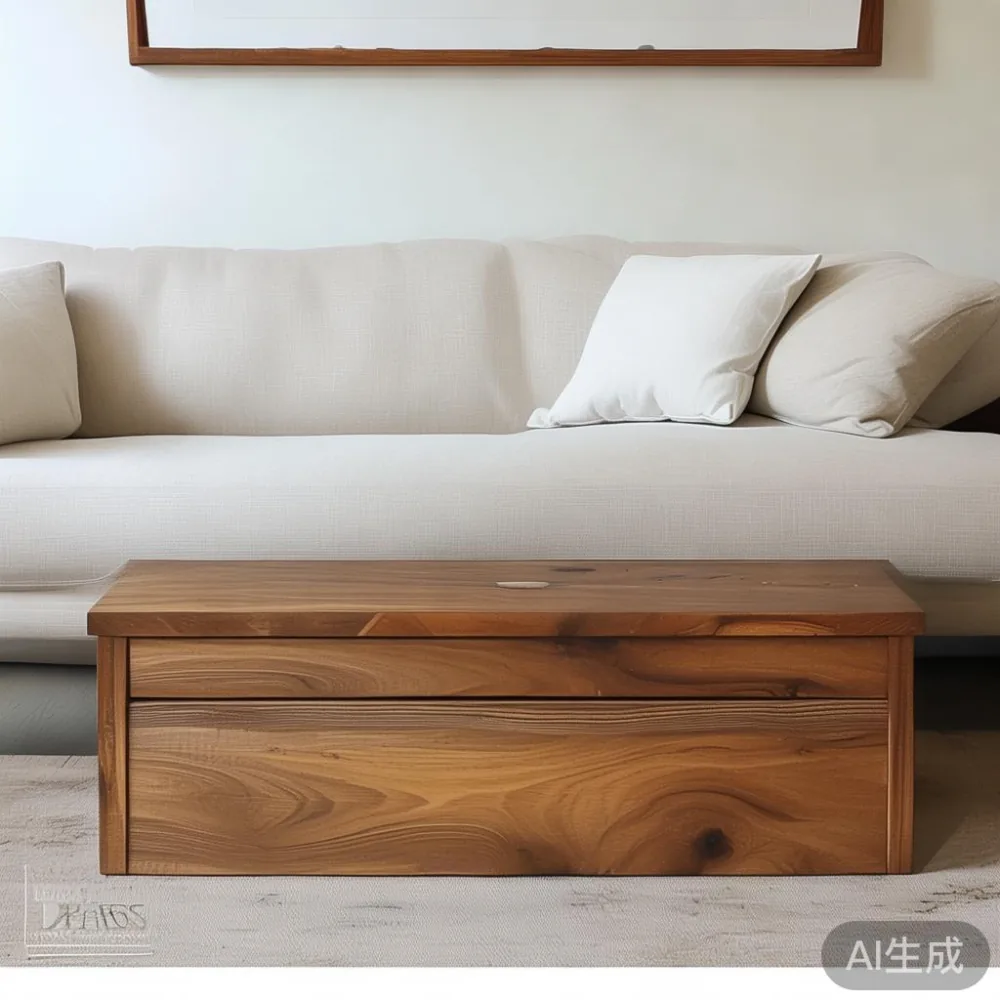
Why a storage bench is the hardest-working piece in a Singapore home
At 720 mm depth and roughly 120-150 cm wide, a storage bench swallows the things that otherwise colonise the corridor of a Bedok 4-room flat: shoe racks, delivery parcels awaiting collection, folded NTUC reusable bags, a folded stroller. The lift-door to corridor clearance in most HDB blocks is about 90-100 cm, and a 35 cm deep shoe rack often blocks the path entirely. A lift-top storage bench with internal volume of around 0.18 cubic metres replaces both pieces, and in a 60 sqm Punggol BTO it shows up on practically every interior designer's plan.
This is also where the veneer-versus-solid decision quietly compounds. A bench in the corridor gets touched 8 to 12 times a day, bumped by vacuum cleaners, and often sits two metres from the kitchen where cooking steam and humidity sit around 70-80 percent. The piece you put here is the piece that gets punished the most.
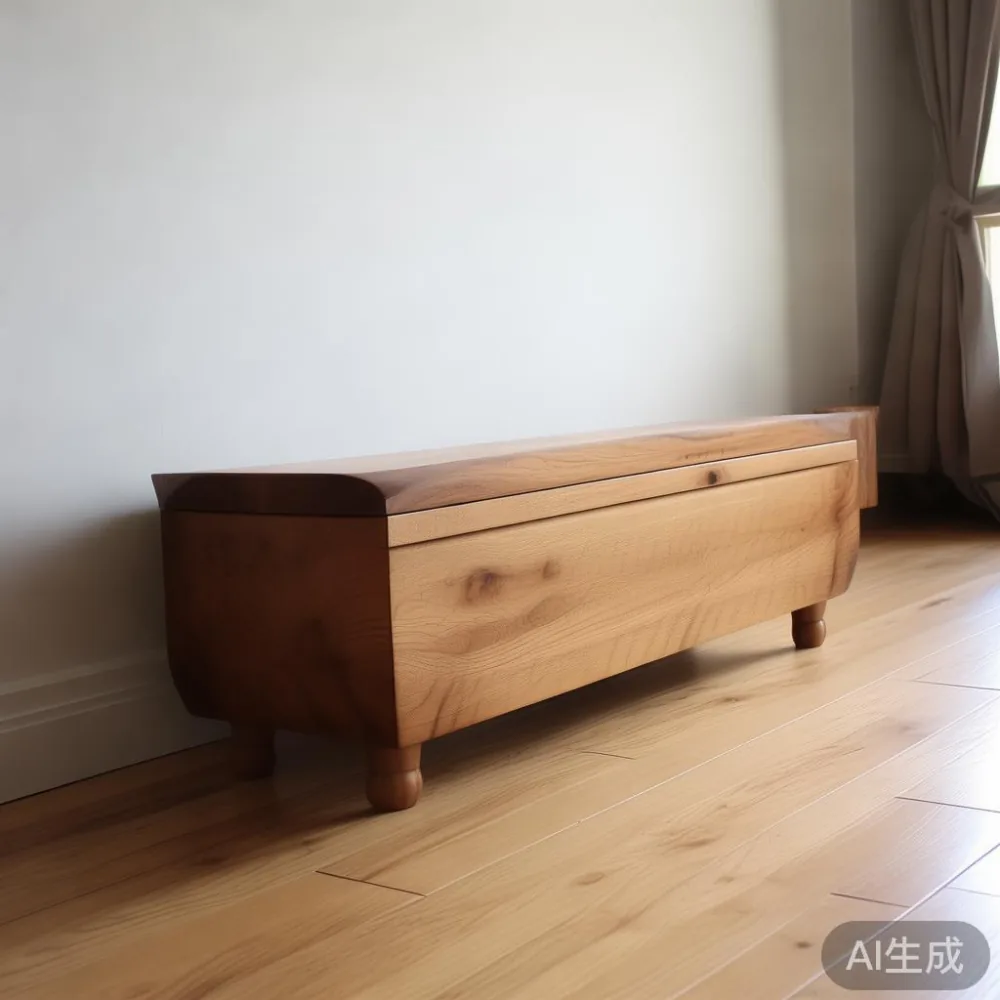
The real five-year cost of a veneer storage bench in SGD
A typical 130 cm veneer storage bench retails in Singapore at S$380 to S$620. Delivery is usually S$40 to S$80, and GST at 9 percent adds another S$40 to S$63 on the invoice. So the door price lands at roughly S$460 to S$763.
Now fast-forward five years. Veneer is a 0.3 to 4 mm slice of real wood glued to an MDF or particleboard substrate. Once the laminate edge lifts, the moisture barrier is gone. Singapore's average relative humidity of 80 percent plus the daily cooking cycle pushes delamination along. Repair is impractical: the affected panel cannot be sanded back to bare wood without cutting through the veneer itself. Most owners replace at year three to five. Add a second purchase at today's prices (call it S$500 for a mid-range piece), S$80 delivery, S$52 GST, plus S$60 for disposal of the old bench through a bulky item removal service, and the five-year total climbs to roughly S$1,150 to S$1,470. That is the realistic book value.
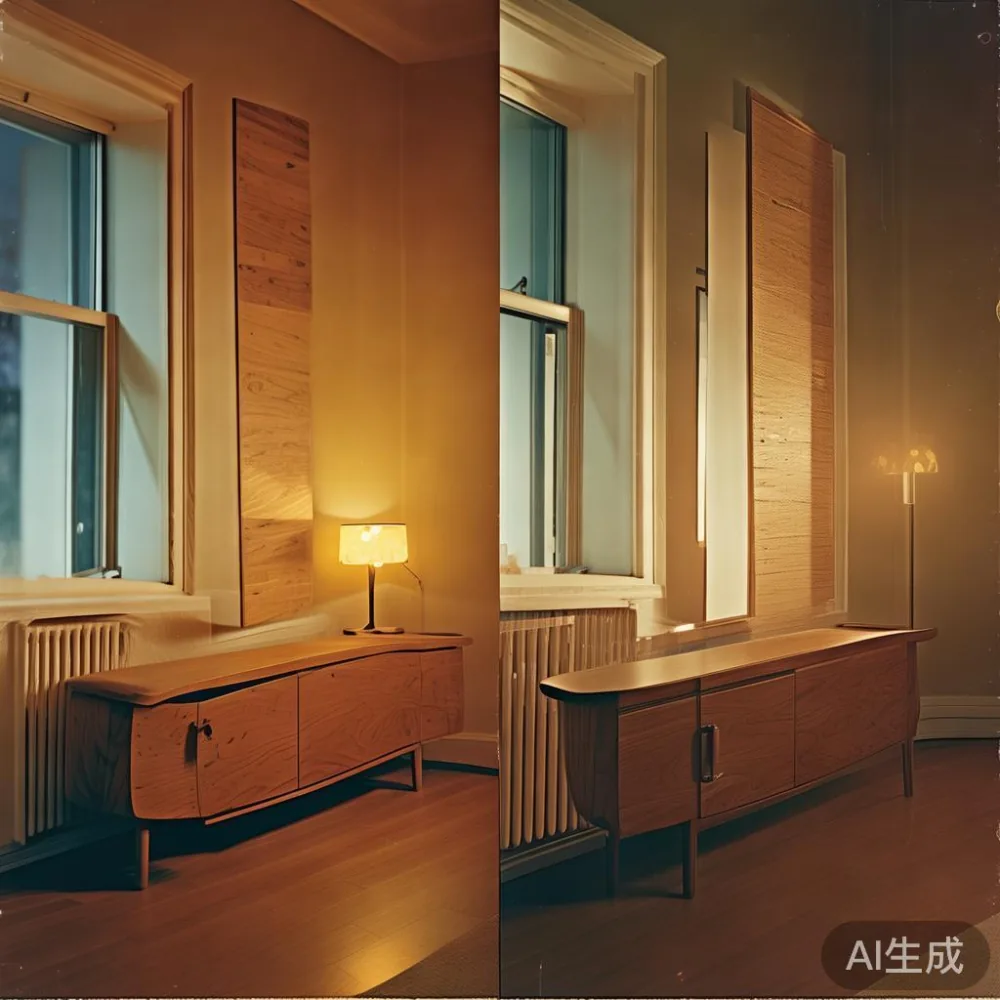
The real five-year cost of a solid wood storage bench in SGD
A solid wood storage bench in oak or walnut from a specialist maker in Singapore starts around S$1,050 and commonly reaches S$2,400 for a 140 cm piece in French light luxury proportions, which lean towards slim 18-22 mm tops, turned or tapered legs, and a low profile of about 450 mm. Add S$60 to S$100 delivery and S$100 to S$225 GST, and the entry cost is roughly S$1,210 to S$2,725.
The five-year math, however, is shaped by what solid wood can absorb. Sand out a scratch: 30 minutes and a sheet of 220-grit paper. A deep dent near the lid hinge: fill with a wax stick matched to the species, around S$12. Refinish the top every five to seven years at a Singapore workshop for S$180 to S$280, and the bench simply resets to year zero. Foshan makers such as MIDHILL have built their warranty around exactly this logic: a 10-year structural warranty on frames and joints, lifetime refinishing on solid wood pieces, and free shipping above US$350, which at the current rate is roughly S$475, a threshold most Singapore orders clear on a single bench. The five-year cost therefore lands at S$1,210 to S$2,725 with the asset still worth 60 to 70 percent of what was paid, because a refinished solid wood bench resells for close to its original price on Carousell.
Where can I buy a minimalist furniture in Singapore?
You can buy a minimalist furniture in Singapore directly from specialist solid wood makers who ship from Foshan, through local showrooms in Tai Seng and Eunos that carry post-modern light luxury lines, and via a small group of bespoke joiners in the Joo Chiat area; for a Japandi walnut minimalist furniture brief, the cleanest route is a maker-to-door order with refinishing included, which keeps the total five-year cost well below the cost of replacing a veneer piece twice.
How humidity, lift sizes, and HDB rules actually shape the choice
Two practical constraints decide the question more often than price. First, the lift: most HDB passenger lifts in Tampines and Punggol blocks are 1.1 m wide by 1.4 m deep with a door opening of about 90 cm. A solid wood bench in two pieces, each under 75 cm long and 28 kg, fits without the disassembly drama that a one-piece MDF bench demands. Second, corridor width: HDB common corridors run 1.2 to 1.5 m, and any piece deeper than 45 cm will obstruct emergency egress. The tapered leg geometry common in American light luxury and French light luxury design keeps the visible footprint slim while preserving internal volume, which is why the style suits HDBs so cleanly.
For landed property in areas like Bukit Timah or Serangoon Gardens, the constraint loosens but the humidity problem does not. A solid wood bed frame, dining table, or wardrobe in the same species as the bench will age in a visually coherent way across a five-year span, and that consistency matters when pieces are photographed for resale listings.
Side-by-side: the actual numbers a Tampines buyer faces
Let us put one realistic case on the table. Priya's replacement, ordered six weeks after the veneer failure, is a 140 cm solid oak storage bench with a lift-top lid, internal dimensions of 132 cm by 56 cm by 18 cm, and a 22 mm top. Quoted price: S$1,580. Delivery: free (above the threshold). GST: S$142.20. Year-one total: S$1,722.20. Year-three refinish of the top: S$220. Year-five spot repair on a hinge scuff: S$0, done at home with a wax stick. Five-year spend: S$1,942.20, with an asset still on the floor.
The veneer path for the same household: S$520 bench, S$50 delivery, S$51.30 GST, year-two replacement of S$520 plus S$50 plus S$51.30, plus S$60 disposal twice. Five-year spend: S$1,302.60, with no asset, two bulky-item pickups booked through the HDB municipal app, and two Saturdays lost to assembly. The cash gap is only about S$640 across five years, or roughly S$128 a year, less than a single Grab ride to Changi.
What the warranty language actually means at year four
Most Singapore retailers of veneer furniture offer a one-year warranty covering manufacturing defects, which excludes delamination, edge lift, and water damage, the three most common failure modes in local conditions. Solid wood makers exporting from China, including MIDHILL with its documented 10-year structural coverage, write warranties against joint failure, cracking from kiln-drying defects, and hardware malfunction. Lifetime refinishing, where offered, is the clause that pays off at year six or seven when a tenant moves out and the piece needs to look new again for the next tenancy.
It is also worth reading the returns policy carefully. A 14-day return window is standard and protects against arrival damage, but it does not protect against year-three humidity failure. The piece that survives year three is the piece whose substrate was always wood, not paper-laminated fibre.
Light luxury style cues that age well on a storage bench
French light luxury favours turned legs, brass-tipped feet, and a slim 18-22 mm top with a subtle bevel. American light luxury leans towards shaker-style panels, matte black cup pulls, and a square 25 mm top. Post-modern light luxury introduces soft curves and reeded fronts. All three translate cleanly onto a solid wood storage bench because the silhouette is already restrained. Avoid any design that hides a thin panel behind a decorative face, because that is the joint most likely to fail in a humid corridor.
Pairing the bench with the same species on a bed frame, nightstand, dining table, and wardrobe creates a continuous material story that photographs well for resale listings. A marble table introduces a cooler counterpoint and works particularly well as a console in the entryway adjacent to the bench, provided the marble sits on a solid wood sub-base and not directly on a particleboard carcass.
A small checklist before you click pay
Confirm three numbers before ordering. First, the assembled dimensions in centimetres, measured against your lift and corridor. Second, the shipping threshold for free delivery and the GST line on the invoice. Third, the warranty clauses for joints, hardware, and refinishing, in writing. A bench that costs S$1,580 with lifetime refinishing is a different financial instrument from a bench that costs S$1,580 with a one-year warranty, even though the price tag looks identical on the cart page.
If the budget is tight, a 120 cm bench in oak rather than walnut, with a single lift-top and no internal dividers, keeps the entry price around S$1,100 and still qualifies as solid wood across every load-bearing surface. Spend the saved dollars on better hinges, since the hinge is the only moving part and the part most likely to fail first on a corridor piece.
Five years from now, which one are you still using?
The honest answer for most Tampines, Bedok, and Punggol households is the solid wood piece, because the failure modes that retire a veneer bench in this climate are exactly the modes a solid wood bench can be repaired against with a sheet of sandpaper and an afternoon. The price gap, when amortised across five years and against the avoided second purchase, comes down to a few dollars a month. That is the cost of owning one piece for a decade instead of replacing the same idea twice.