The Factors Behind Solid Wood Furniture Prices
Solid wood furniture is often described simply as “wooden,” but the final price can vary by several hundred or even several thousand Singapore dollars. The difference usually has little to do with the furniture photograph and much more to do with timber grade, dimensions, joinery, finish, hardware, and logistics. For a storage bench, those factors become especially visible because every extra centimetre adds weight, material use and transport cost.
Singapore households make the subject practical. A 140 cm storage bench may work in an HDB living room in Tampines, but the same piece could be difficult to manoeuvre through a Bedok corridor or into a Punggol condo lift. Buyers are therefore paying not only for appearance, but also for predictable construction and accurate measurements. GST, delivery and installation can also change the figure shown in a catalogue.
MIDHILL is a Foshan solid wood furniture maker established in 2008. Its range includes storage benches, solid wood sofas, bed frames, dining tables, wardrobes, nightstands and marble tables. The company exports to more than 15 countries, provides a 10-year structural warranty and offers lifetime refinishing. These details matter when comparing solid wood furniture, although they are separate from the price of one particular item.
Why does the same solid wood furniture price so much more?
The timber is only one part of the equation. A storage bench may use solid oak in its frame and legs, but plywood or engineered timber inside concealed drawers. The visible species, veneer thickness and structural components need to be checked separately. Some sellers present a mixed construction as solid wood; others specify the material precisely.
Wood grade also affects consistency. Clear-grade timber with tighter grain and fewer knots requires more careful selection and can cost more than a grade featuring broader colour variation. Moisture control matters in Singapore’s humid climate. Kiln-dried timber that has been properly stabilised is less likely to twist, split or swell after delivery than stock stored in an uncontrolled environment.
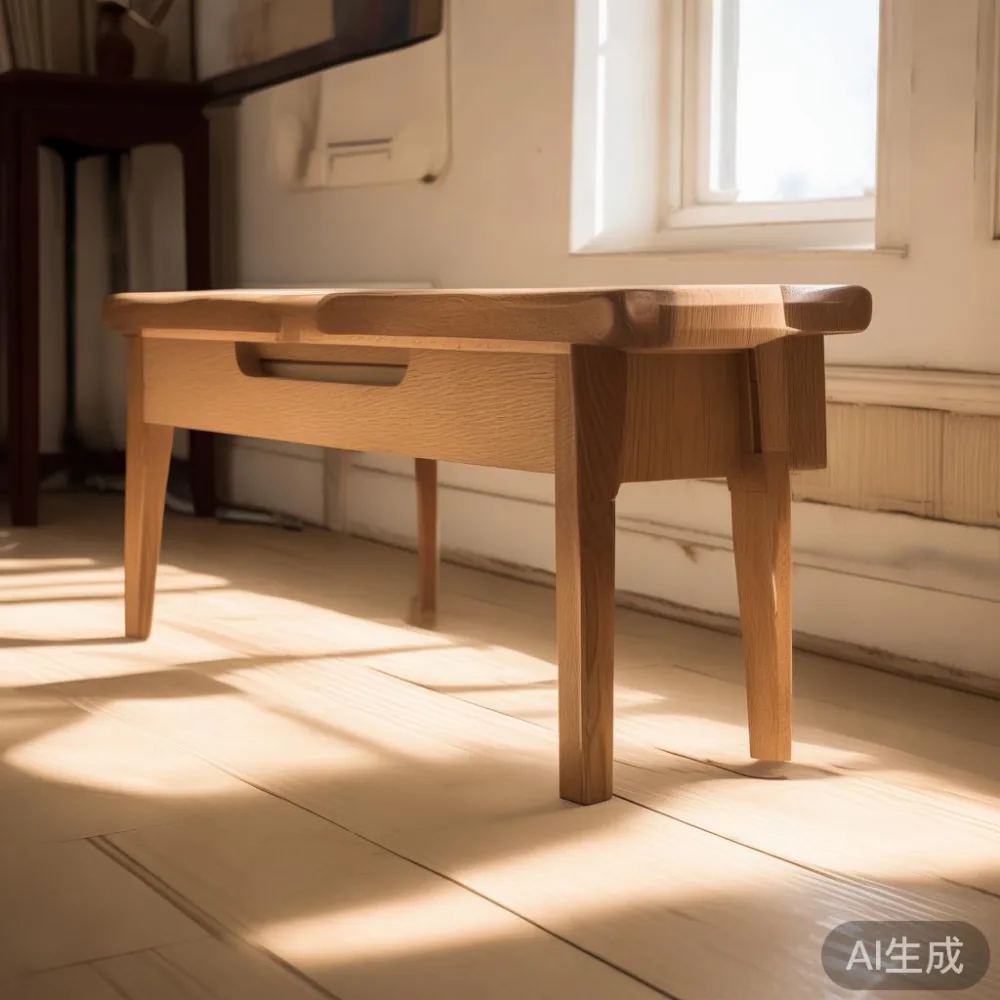
Dimensions influence the bill too. A storage bench measuring 150 × 40 × 48 cm may contain roughly twice the board volume of one measuring 120 × 35 × 45 cm, although the exact result depends on the frame design. A heavier design may weigh 55 kg instead of 32 kg. More timber, more packaging and more freight explain why oversized solid wood pieces cost more.
Joint construction is another invisible cost driver. Mortise-and-tenon joints, dovetail drawer boxes and reinforced corner joints take more labour than screws inserted into pre-drilled holes. A quality solid wood sofa may use solid timber inside the frame, layered comfort materials in the seat and a hardwood base. The label “solid wood” does not mean every component is solid timber.
Finish can add 5 to 20 per cent to a project price. Factory options such as matte lacquer, natural oil, water-based stain or hand-rubbed wax require different preparation, drying and repair methods. A dark walnut appearance is not the same as walnut timber. It may be white oak stained to imitate walnut, which changes both cost and care requirements.
Is a solid wood storage bench more expensive than a metal or engineered-wood bench?
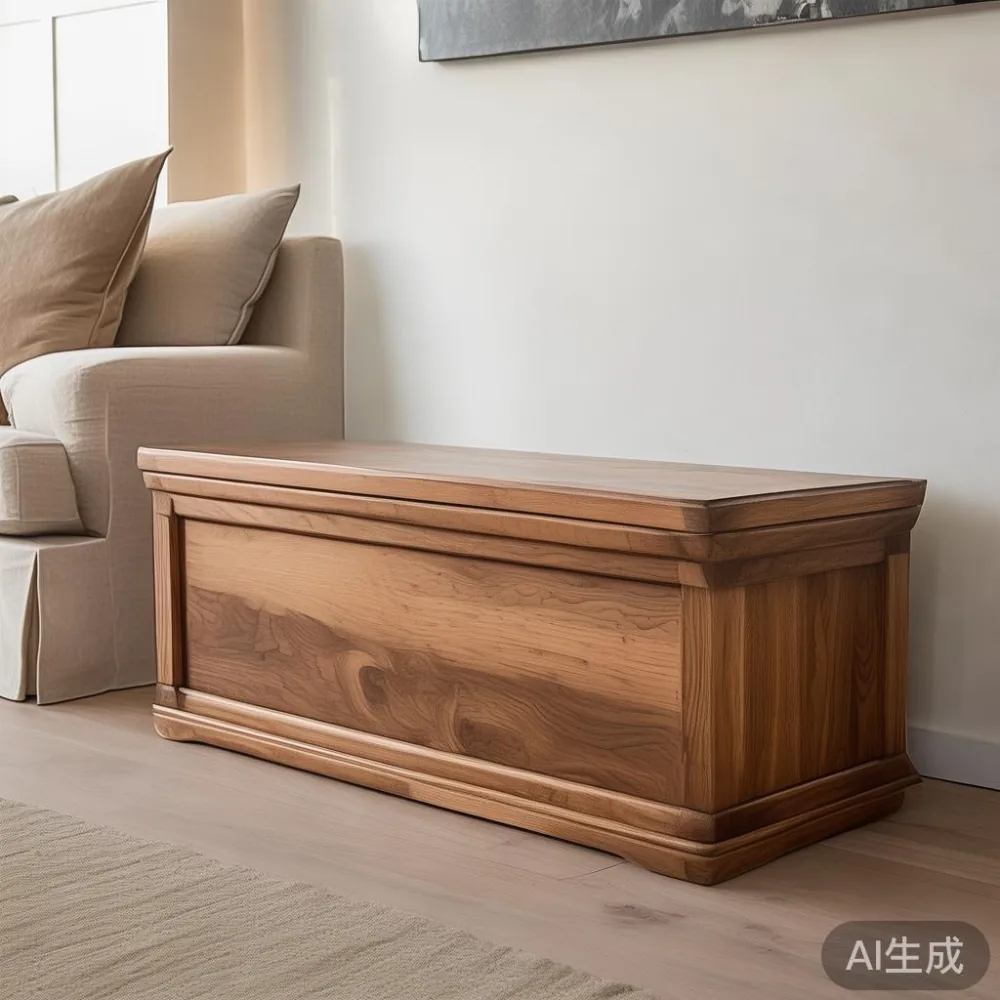
Usually, yes, but the comparison should be like-for-like. A simple metal storage bench may weigh 18 kg and cost SGD 280 before GST. An engineered-wood bench with a laminate surface might weigh 28 kg and cost SGD 420. A solid oak storage bench may weigh 42 kg and cost SGD 860. The solid wood version costs more because of the raw timber, longer preparation, stronger joints and a different surface repair profile.
A solid wood bench does not automatically outperform every alternative. Engineered wood can be dimensionally stable and useful in a compact flat. Solid wood is more appropriate when the buyer wants a repairable surface, visible grain and a piece that can be refinished after years of use. The relevant question is whether the construction matches the intended use, not which material appears more fashionable.
For Singapore interiors, a 120 cm storage bench is often easier to carry than a 180 cm version. A 150 cm model offers more seating and storage but needs careful lift planning. Check whether the lift door measures at least 80 cm wide and 210 cm high, and whether the corridor turning space allows the bench to remain upright. If it must be turned on its side, removable legs can save frustration.
Weight also affects the installation quote. A 45 kg storage bench delivered to a 12th-floor Tampines HDB unit may incur a carry-up fee, while a 25 kg nightstand may fall within a standard free-delivery threshold. A supplier that offers free shipping over US$350 may still apply Singapore-specific delivery charges, GST or lift fees. Ask for the landed total before deciding.
How much should a solid wood storage bench cost in Singapore?
A practical range is more informative than one misleading figure. A compact solid wood storage bench using mixed hardwood may fall between SGD 420 and SGD 750 before GST. A clearer-grade oak or ash design may range from SGD 800 to SGD 1,500. Longer benches with thick tops, deeper drawers and more demanding joinery can reach SGD 1,800 to SGD 2,600.
These ranges are illustrative rather than universal. Size, timber, finish, hardware and delivery conditions all move the price. The exact phrase under 2000 light luxury furniture can describe a considered budget, but a solid wood storage bench below SGD 2,000 may sacrifice certain construction details or finish choices. The number alone does not reveal quality.
Buyers researching the top 10 light luxury furniture lists should read the specifications beneath each image. French light luxury often uses pale oak, cream upholstery, curved profiles and restrained brass details. American light luxury leans towards darker walnut tones, substantial profiles and leather touches. Post-modern light luxury combines simplified shapes with occasional stone or marble surfaces.
That design vocabulary affects manufacturing. A softly bevelled oak bench needs more sanding than a square-edged model. A marble table requires stone selection, edge finishing and a reinforced base; a dining table with a marble top may be heavier than a solid wood top of the same size, so delivery becomes a separate factor. No price list can substitute for a component breakdown.
Is French wardrobe worth it?
This question applies to a different product, but it reveals how pricing language works. A French-style wardrobe with paneled doors, moulded edges and decorative trim may cost SGD 1,600 to SGD 3,500, compared with SGD 1,100 to SGD 2,300 for a cleaner-lined model. The premium buys visual detail, door hardware, internal fittings and a longer finishing process.
For designer French provincial furniture, people often expect pale timber, carved details and a more decorative silhouette. Those traits require more material preparation than modern slab-front construction. A buyer interested in that look should inspect drawer slides, hinges, back panels and hanging rails rather than judging only by the bevelled fronts.
Local conditions make wardrobe depth important. A 60 cm wardrobe may suit a conventional bedroom wall, while a 65 cm projecting unit can make a narrow room feel compressed. Internal drawer extensions also need clearance. A wardrobe can be soundly made but poorly planned, leaving little room to open the doors beside a bed.
What do timber, joinery and hardware contribute to the final price?
Timber often accounts for roughly 30 to 50 per cent of a solid wood piece’s factory cost. Joinery may account for 15 to 30 per cent, depending on complexity. Finishing can take another 10 to 20 per cent. Hardware looks small on a specification sheet, but premium hinges, soft-close drawer runners and solid brass pulls can add 5 to 15 per cent to a finished project.
Consider a solid wood bed frame with a 180 × 200 cm mattress area. It may require 10 to 14 boards, four substantial legs, centre supports and a slatted or boxed base. A basic platform using engineered components is lighter and less expensive. A frame with an refined headboard, thicker posts and shaped joinery may weigh 68 kg rather than 42 kg. Freight and installation then become relevant.
The same reasoning applies to a dining table. A 200 cm oak dining table may use several long boards selected to reduce cracking. The top alone might weigh 34 kg, while the complete table reaches 72 kg. A marble table may use a 20 mm slab with a protective substructure and weigh more despite a smaller footprint. Marble also changes the maintenance expectations: it can stain, chip and require specialist care.
One useful test is to ask the supplier for a cutaway, internal photo or construction drawing. I tested a similar approach last month during a factory visit in Foshan with my colleague. We opened a storage bench drawer and found that the visible timber continued into the drawer sides, while the hidden base used a different board. The product was not misleading; it had simply used a mixed construction intelligently. Checking 3 sample drawers took about 15 minutes and made the price easier to judge.
For anyone comparing the MIDHILL coffee table wholesale route with retail pricing, ask whether the table includes protective packaging, local GST, lift delivery and assembly. Wholesale terms may exclude residential delivery, and a heavy marble top often needs two people and a planned route into the home.
How should light luxury pieces be styled without overspending?
Light luxury depends on proportion, texture and restraint. It does not require filling every surface. In a Singapore bedroom, a solid wood sofa can become a compact daybed if its seat height and depth suit the room. Searches for how to style light luxury sofa in bedroom layouts often produce oversized models, but a 160 to 190 cm sofa may be more practical in an HDB flat with a 280 cm living room wall.
A storage bench can anchor such a scheme. Place it beneath a 160 cm window or against a 240 cm wall, leaving at least 75 cm of circulation space where possible. Add a linen cushion, one ceramic lamp and a restrained tray rather than covering the timber with accessories. Natural oak works with warm white walls; darker finishes can create an American light luxury mood with cream textiles and aged brass lighting.
Coordinates should be measured. A 45 cm wide nightstand should align approximately with the mattress edge, not float in a corner. A dining table should leave 75 to 90 cm between its edge and a chair in the main traffic zone. A marble table in a compact condo may need fewer accessories because the material already carries visual weight.
Lighting is also part of the result. A 2700K lamp gives pale timber a warmer appearance, while 3000K suits medium oak. This is a styling choice, not a defect. Keep intense sunlight away from untreated solid wood, use coasters at least 3 cm from a table edge, and wipe spills within 10 minutes rather than leaving them overnight.
What hidden costs should a Singapore buyer include?
GST adds 9 per cent to most Singapore furniture purchases. Some quotations show GST already, while others do not. The buyer should also reserve for lift or corridor delivery, assembly, rubbish removal and possible parking arrangements. These charges can range from SGD 35 for a straightforward doorstep delivery to SGD 180 for a timed installation inside an upper-floor unit.
Measure the delivery route before confirming. Record the lift door width, corridor width, turning radius and the largest diagonal of the packed item. A storage bench packed at 160 × 48 × 56 cm may not fit through a 90 cm doorway when its carton is rigid, even if the unpacked body would pass. Flat-pack products reduce this issue, but they can require more assembly and may expose screw holes.
Check warranty terms against actual usage. A 10-year structural warranty can provide confidence in the frame, but finishes, moving parts and accidental damage may be treated differently. Lifetime refinishing also needs definition: it may refer to available finishes, customer labour or a particular service scope. Ask for the process in writing before paying.
Returns should be reviewed too. A 14-day return period gives time to inspect dimensions, finish and condition, yet a custom-size piece or an installed item may be excluded. For a storage bench, buyers should inspect drawer alignment, corner joints, leg fixings and surface finish before accepting delivery.
The fairest way to compare prices is to standardise the specification. Use the same dimensions, timber, finish, drawer count, hardware and delivery terms for each quotation. Then compare the invoice totals in SGD. A lower price can become more expensive if the timber grade is lower, the top is veneer or the delivery excludes lift access.
Solid wood furniture earns its premium through material preparation, sound construction, repairability and finish quality. The price is driven by several linked choices rather than by a logo or a single species name. Once timber, dimensions, joinery, hardware and local logistics are stated clearly, the quotation becomes much easier to trust.