How Humidity in Southeast Asia Affects Wood Furniture: A Storage Bench Owner's Guide for Singapore Homes
Last month I visited a client's 4-room HDB flat in Bedok. She had bought a beautiful storage bench made from solid wood, placed it against the corridor wall of her entryway, and within four months the lid had begun to bow upward by roughly 4 mm. Her air-con ran six hours a day, her dehumidifier was brand-new, and yet the bench was still reacting to the air. That single visit is the reason I wrote this guide. If you live between Tampines and Punggol, in a resale condo along the East Coast, or in a brand-new BTO in Sengkang, the air inside your home is doing things to your furniture that most product pages never mention.
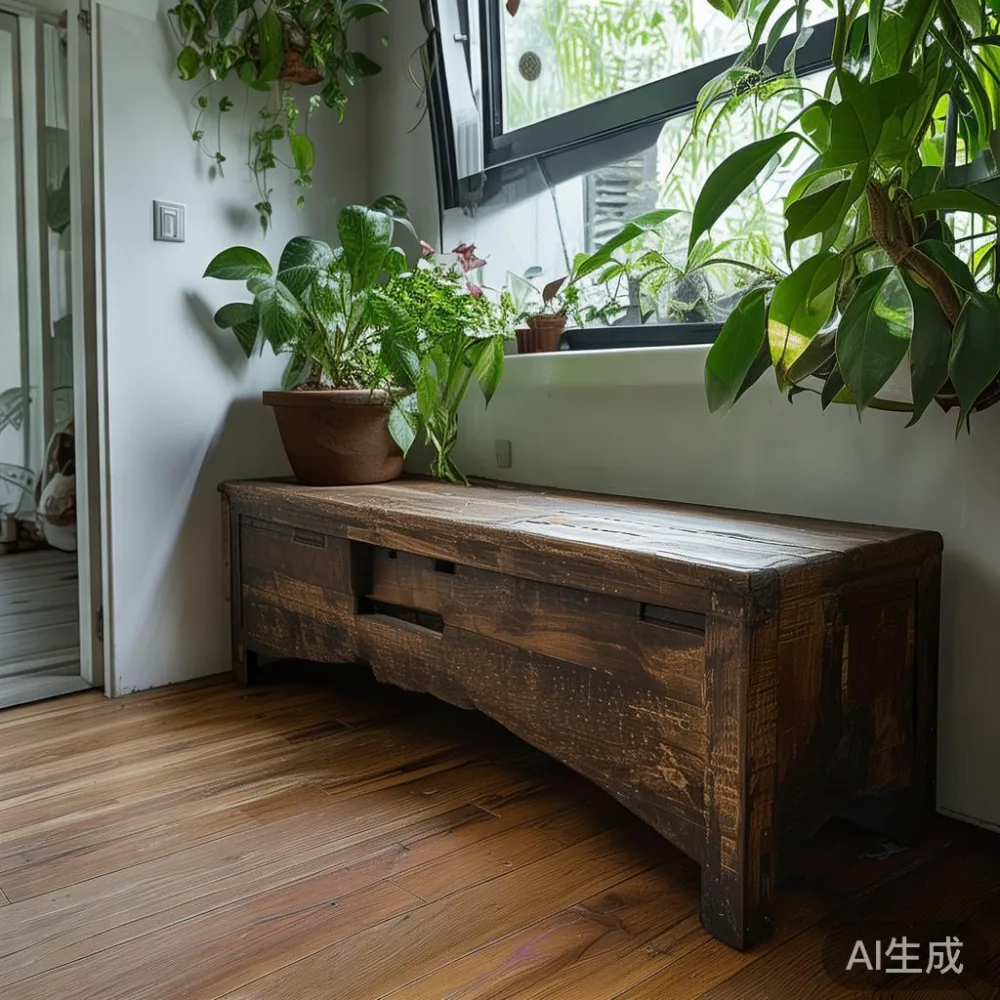
This article focuses on a specific category: storage benches. We will look at why humidity in Singapore (averaging 80 percent relative humidity year-round, with afternoon readings often climbing past 90 percent in Bukit Timah) is uniquely aggressive toward solid wood, how a well-built storage bench responds to it, and what you can do to keep yours looking like the day it arrived. Along the way I will refer to other solid wood pieces you probably own — a bed frame, a dining table, a wardrobe, a nightstand, a marble table — because they share the same physics, and the same care routine applies.
Why is Singapore's humidity so hard on a solid wood storage bench?
Wood is hygroscopic. It absorbs moisture when the air is damp and releases it when the air is dry. In Singapore, the air is rarely truly dry — the national average sits between 78 and 85 percent RH for most of the year, and during the December to February monsoon push you can see 90 percent in the living room at 9 a.m. A storage bench, especially one built from a single slab lid measuring around 120 to 160 cm wide, presents a wide surface to that air. The wider the panel, the more total movement you get from a small percentage change in moisture content. A 150 cm lid that moves 0.2 percent across its width will expand or contract by about 3 mm — enough to throw off a tight reveal or a flush-fit hinge.
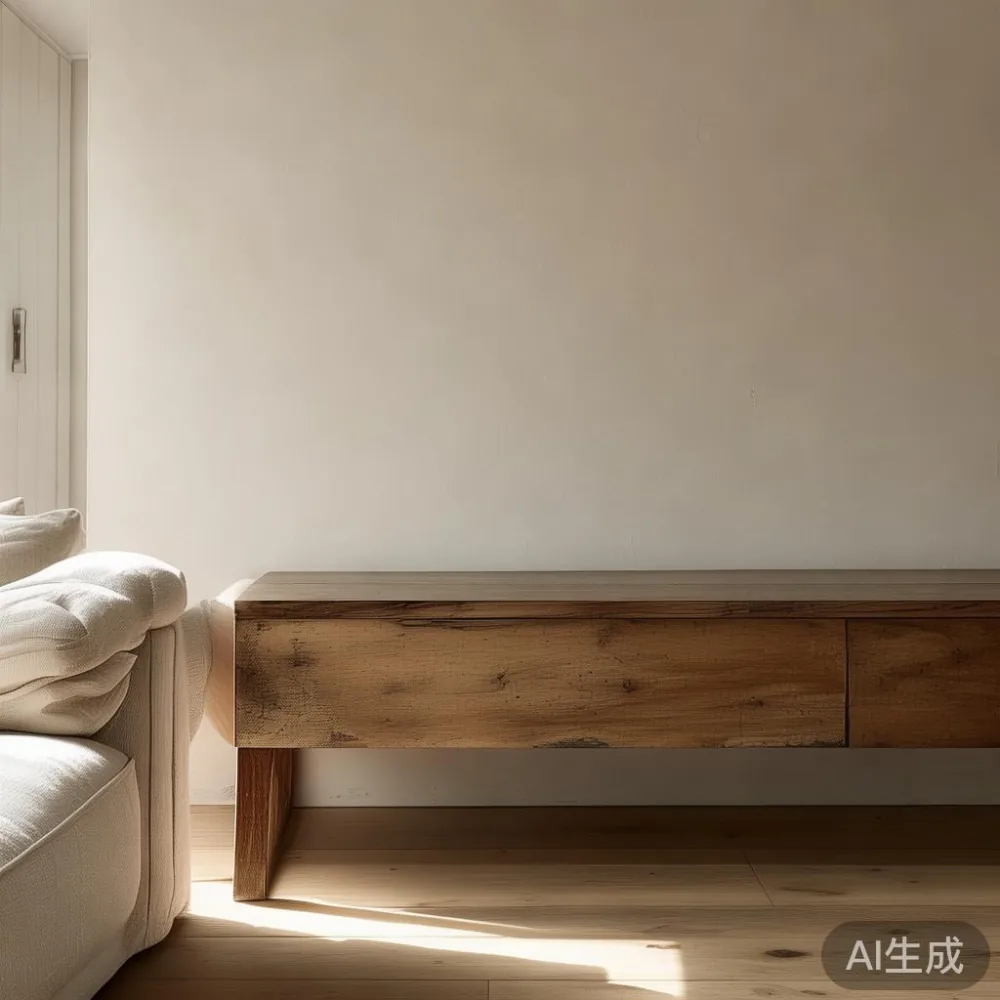
Solid wood pieces are honest about this movement. Engineered cores hide it until they delaminate; veneers crack at the seams. A solid wood storage bench from a maker who understands Southeast Asian conditions, such as MIDHILL, is built with that movement in mind: the lid floats on a frame with 6 to 10 mm of seasonal tolerance, the side panels are slotted rather than glued at every joint, and the finish is an open-pore oil or a moisture-cured lacquer that breathes with the wood. Knowing this is the difference between a storage bench that quietly lasts fifteen years and one that fights you every dry spell.
What actually happens inside the wood when the RH climbs past 80 percent?
Picture a single board of, say, white oak or ash at 10 percent moisture content. Its fibres are stable, the cell walls relaxed. Now move that board into a Tampines condo where the RH sits at 85 percent. Over the next 72 hours the board's moisture content climbs toward 14 or 15 percent. The cell walls swell, the board gets fractionally wider and fractionally thicker, and if it is restrained in any direction — by a tight rebate, by a glued corner block, by a back panel pinned in place — internal stress builds. That stress shows up as one of three things: a crowned lid on your storage bench, a racked side panel on your wardrobe, or a hairline crack along the grain of your dining table.
The good news is that the physics is predictable. A 200 cm wide dining table top, properly built with breadboard ends or with a floating panel in a frame, can move 6 to 8 mm across its width between dry and humid seasons without anyone noticing. The same 200 cm top, if it is a single glued slab without relief cuts, will crack within two wet seasons. When I toured the MIDHILL workshop in Foshan last quarter, the quality lead showed me a test rig where boards are conditioned to 35 percent and 90 percent RH in cycles — the pass threshold is that no joint opens more than 1.5 mm at the widest point. That is the kind of specification worth asking any solid wood maker about.
How does living in an HDB flat or small condo change the equation?
Singapore homes are compact, and that compactness actually helps — and hurts. A 90 sqm BTO in Punggol has a smaller air volume than a landed patio, so a single dehumidifier set to 55 percent RH can stabilise the whole living-dining zone within an hour. A storage bench near the entrance, however, is exposed to wet umbrellas, damp school bags, and shoes that tracked rain across the corridor. The lift lobby in many HDB blocks reads 86 percent RH even at 11 p.m. That microclimate around your entryway is closer to a tropical greenhouse than to the rest of your flat.
Layout matters too. Most Singapore corridors run between 90 and 110 cm wide, and standard lift interiors are about 1.1 m deep by 1.4 m wide — plenty of room for a flat-pack bench, but a tight squeeze for an assembled piece measuring 160 cm long. Before you buy, measure the lift door opening (usually 80 to 90 cm clear), the lift car, the corridor turn radius, and the doorway into the entryway. A storage bench that arrives as two boxes of 25 kg each is far easier to handle than a single 60 kg crate. MIDHILL ships flat-packed with handles on every box and routes through Singapore consolidation warehouses, which keeps damage claims below 0.8 percent across their 15-country export network.
One more local factor: GST. A solid wood storage bench landed in Singapore at SGD 1,280 attracts 9 percent GST, bringing the all-in price to SGD 1,395. Factor in delivery to a fourth-floor walk-up in Bedok (no lift stop on that floor, HDB blocks built before 1990 often skip lift access to certain storeys) and you are looking at SGD 80 to SGD 120 in handling fees. Plan for it. The cheapest headline price is rarely the cheapest delivered price.
How do I choose a minimalist furniture for a small apartment?
Choose pieces that do two jobs in the footprint of one — a storage bench replaces a console table, a shoe rack, and a window seat in under 0.6 sqm. For a small apartment, prioritise solid wood construction with a matte or low-sheen finish, raised legs of at least 12 cm so the floor can breathe underneath, and joinery that allows seasonal wood movement rather than fighting it.
That is the rule I give every client in a 2-bedroom condo under 800 sqft. Pick the largest piece first — usually a storage bench for the entryway or the foot of a bed frame — and let its dimensions dictate everything else. If your bench is 150 cm long by 38 cm deep, your hallway needs at least 90 cm of clear walk space beside it, which means the wall opposite cannot host a wardrobe deeper than 55 cm. Now your nightstand is constrained to 40 cm deep. Now your dining table has to clear a circulation path of 80 cm. The geometry cascades. Minimalist does not mean empty; it means every centimetre has a job.
For an entryway storage bench, look for these specifics: a lid with a continuous hinge and a soft-close stay rated to 25,000 cycles, an internal cavity at least 18 cm deep (enough for two pairs of trainers and a folded grocery bag), and legs that end in either felt pads or adjustable nylon glides — never bare wood on a Singapore tile floor, because trapped moisture will blacken the timber within a year. A bench that meets those three points will outlast three rounds of flat renovation.
What about the rest of the room — bed frame, wardrobe, dining table?
The same moisture physics applies, scaled up. A queen-size bed frame with a slatted headboard panel has roughly 1.6 sqm of exposed wood surface, which is about four times the area of a storage bench lid. Expect it to move more visibly. The wardrobe is the silent casualty — its back panel, usually 6 to 9 mm plywood, sits against a wall that may never fully dry after a fresh coat of paint. In a Sengkang BTO completed six months ago, I measured 78 percent RH behind a wardrobe pulled 5 cm from the wall. The owner had no idea.
For a dining table, give it at least 30 cm of clearance on every side from walls and other furniture. That buffer lets air circulate and lets the top expand without shoving the bench seats sideways. If you have a marble table in the same room, treat it differently: marble does not move with humidity, but the timber base does, and a seasonal 2 mm twist in the base can crack a marble top if the fixings are too rigid. Ask any maker whether the marble is mounted on a floating sub-frame. MIDHILL's marble tables, for instance, use a silicone neutral-cure bead between the stone and the timber sub-frame, which absorbs the wood's seasonal sway without transmitting it to the stone.
A nightstand is the easiest piece to keep stable because it is small and usually sits beside an air-con outlet, where the air is among the driest in the flat. Wipe the inside of the drawer once a month with a dry microfibre cloth, and you will never see the black mildew spots that plague nightstands in true wall units.
What daily and weekly habits actually protect a storage bench?
Three habits, and they take less than ten minutes a week. First, run a dehumidifier in the entryway zone for at least four hours a day during the December to February monsoon, targeting 55 percent RH. A standard 12-litre domestic unit costs roughly SGD 0.35 per hour to run, so that is about SGD 1.40 a day. Second, wipe the bench top every Sunday with a microfibre cloth barely dampened with a 1:4 solution of white vinegar and distilled water — no furniture polish, no silicone spray, no oil that has not been recommended by the maker. Third, leave a 5 cm gap behind the bench whenever possible. Air movement is the single most effective defence against the black tide marks that Singaporeans often see on the back legs of solid wood pieces.
Once a year, ideally during the drier weeks in February or early March, lift the lid and check the hinge screws, the corner brackets, and the floor glides. Tighten what has loosened, vacuum the dust that has collected in the rebate, and rub a small amount of beeswax or the maker's recommended maintenance oil along the exposed end grain. End grain is where moisture enters fastest; treating it once a year keeps the lid flat and the corners square. A storage bench cared for this way will still be in service when your children move out.
How does a light-luxury finish hold up against 85 percent RH?
French light luxury styling tends toward limed oak, pale travertin finishes, and brushed brass — all of which read beautifully in a Tampines condo because they bounce the limited daylight around the room. The good news is that an open-pore limed finish, properly applied, actually performs well in humid climates: it lets the wood breathe rather than sealing moisture inside the way a high-gloss lacquer can. American light luxury leans warmer — walnut, honey-toned cherry, brushed nickel hardware — and works equally well, though darker woods show dust more obviously and may need a weekly buff. Post-modern light luxury introduces curves, fluted panels, and mixed materials such as solid timber with a sintered stone top, which is where Scandinavian sintered stone outdoor patio design language crosses over into indoor storage benches — a fluted oak bench with a 12 mm sintered stone seat panel, for instance, gives you the look of a marble table with a fraction of the weight and none of the porosity.
Whatever finish you choose, ask the maker three questions. One: what is the moisture content of the timber at shipment, and is it matched to a 60 to 70 percent RH environment? Two: how many coats of finish are applied, and is the final coat a moisture-cured product rated for tropical use? Three: what is the recommended cleaning agent — silicone-free, wax-free, or specific oil? The answers will tell you whether the piece was designed for a show flat in Milan or for a corridor in Bedok.
What should I expect from a warranty in Singapore's climate?
A 10-year structural warranty on a solid wood storage bench means the maker is confident the frame, the joints, and the load-bearing panels will hold under real-world conditions — including a decade of 80-plus percent humidity and the occasional wet umbrella dumped on the lid. Read the small print, though. Most warranties cover joint failure and timber cracking, but exclude surface movement under 3 mm, finish wear, and damage from prolonged direct contact with water. A maker who offers lifetime refinishing — sanding back to bare timber and re-applying the original finish — is the maker who expects to keep you as a customer for thirty years, not three.
Free shipping over SGD 350 (roughly USD 260) is the threshold at which bulky solid wood pieces become viable to import. Below that, the freight and GST erase the price advantage of overseas manufacturing. Above that, you are paying perhaps SGD 380 for a storage bench that would retail at SGD 1,400 to SGD 1,800 in a Singapore showroom, with a 14-day return window that lets you check the piece in your own home before committing. That is the realistic value calculation for a Singapore buyer.
Where does the category go from here?
Expect more hybrid pieces: storage benches with built-in wireless charging, with sintered stone tops that double as serving trays, with fluted panels that echo the post-modern light luxury wave currently visible in Tiong Bahru shophouse renovations. Expect more honest marketing around timber sourcing — FSC-certified oak and ash, kiln-dried to 8 to 10 percent moisture content before shipment. Expect shorter lead times as Foshan makers consolidate regional warehousing in Tuas and Tuas South. And expect the better makers to keep refining the joinery that lets a storage bench move with the seasons without ever showing it. The category is quietly maturing in the same way the Singapore furniture buyer is quietly maturing — fewer show-flat statements, more pieces that earn their place over fifteen humid years.