Caring for a Lacquered Storage Bench in a Singapore Home: A Practical Guide for HDB and Condo Living
Living in Singapore means living with humidity that hovers between 70 and 90 percent for most of the year. Anyone who has watched a wooden door swell in a Tampines HDB corridor, or has seen a dining table develop a cloudy ring after one too many kopi sessions on a Sunday morning, knows the struggle. A lacquered storage bench looks magnificent when it arrives, but the climate here will test it within weeks if you do not give it a basic care routine.
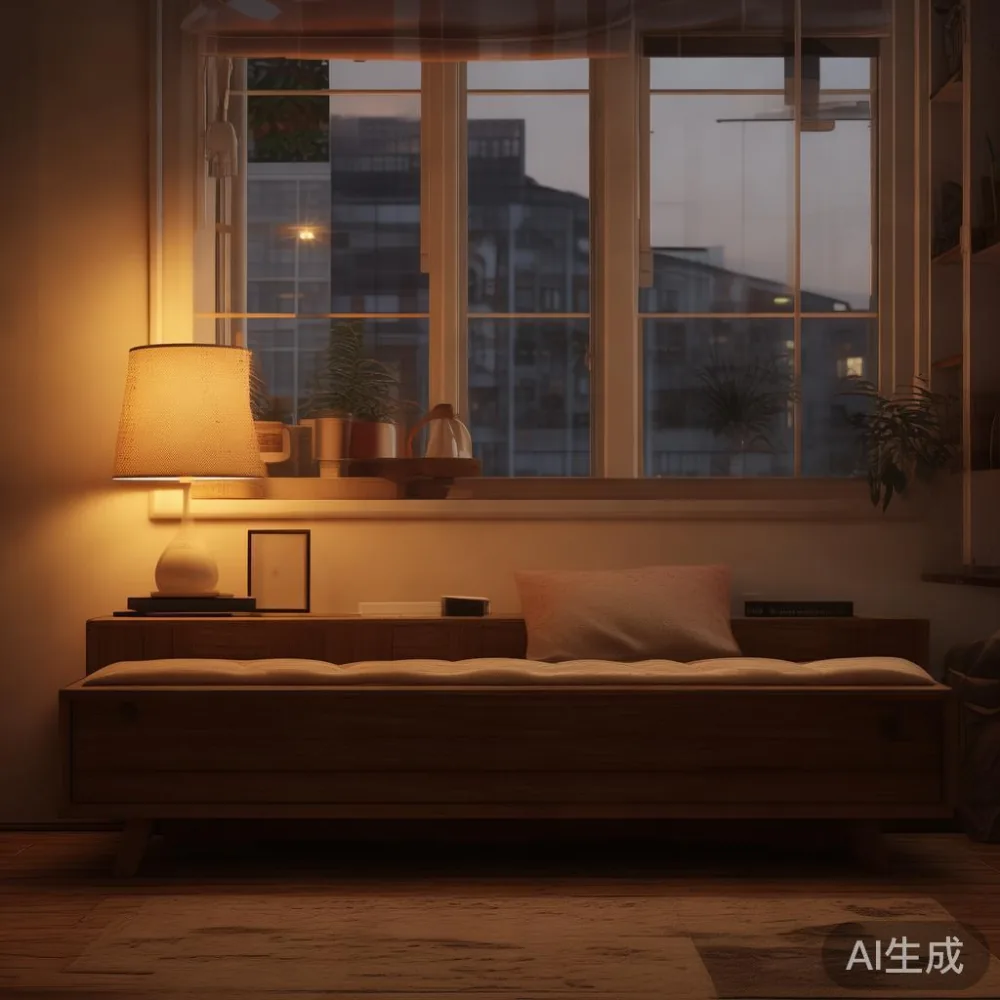
This guide draws on a visit I made last month to a client in Bedok Reservoir, where a black ash wood king bed frame, a marble side table, and a long storage bench in the entryway had been placed three months earlier. The bench had begun to show a faint haze on the surface. With a little adjustment to the room and the bench itself, the haze lifted within a fortnight. The same principles apply to any lacquered piece, from a solid wood sofa frame to a bedside nightstand, whether you live in a Punggol condo or a Bukit Batok walk-up.
Why does a lacquered surface change in a tropical climate?
A high-build polyurethane lacquer is a film finish. It seals the wood underneath and reflects light from its own clear coat, which is what gives a piece its mirror-like depth. In a controlled environment of 40 to 60 percent relative humidity, the film stays supple. When the ambient humidity sits at 75 to 90 percent, as it often does in June through September, the wood beneath the film absorbs moisture and expands by a fraction of a millimetre. The lacquer then has to flex with it. Over time, that flexing shows as dullness, micro-crazing, or a whitish bloom that does not wipe off easily.
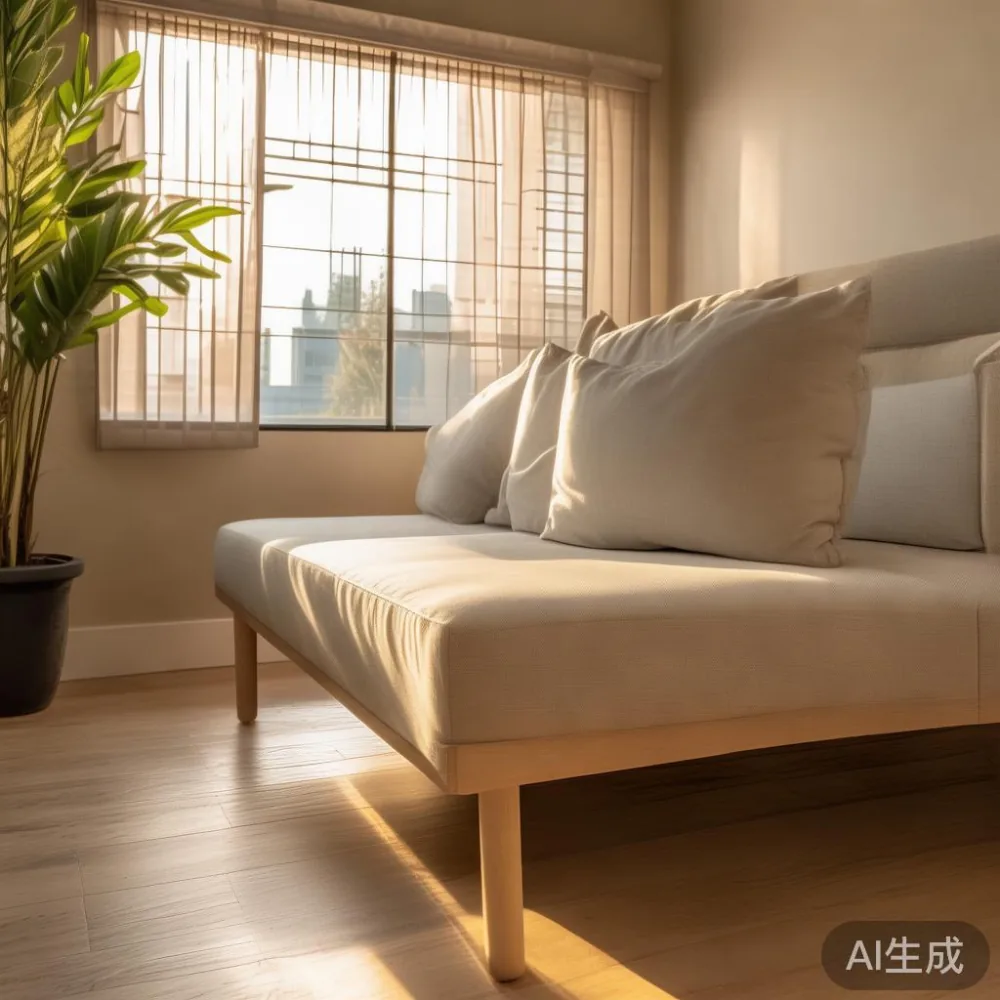
Direct sun is the second stressor. A lacquered storage bench placed 1.5 metres from a west-facing balcony door in a Yishun flat will see UV levels that can bleach ash and oak within a single season. Heat from afternoon sun can also soften the film temporarily, so a wet glass left on the bench can leave a ring that would not appear in winter. Air-conditioning cycles, which drop room humidity from 80 percent to 50 percent in under thirty minutes, cause the wood to move back and forth every day. Each cycle is small, but 365 cycles a year add up.
How should you clean a lacquered storage bench every week?
Weekly care takes four items and roughly three minutes.
- A microfibre cloth, 30 by 30 cm, lint-free, washed without fabric softener.
- Plain water in a 250 ml atomiser, with one drop of pH-neutral dish soap.
- A dry second microfibre cloth.
- A wax-based paste such as a clear museum wax, applied only once every three months.
Spray the cloth, not the bench. Wipe along the grain in straight lines, never in circles, because circular buffing can leave visible halos under raking sun from a corridor window. Dry the surface with the second cloth within thirty seconds so moisture does not sit on the film. Avoid silicone polishes, ammonia-based cleaners, and anything labelled for kitchen use. On a storage bench that lives in an entryway, pay attention to the front apron and the corners where grit from shoes collects.
For a client in Punggol Waterway Terrace, this three-minute routine twice a week was enough to keep a 180 cm long bench in showroom condition for two years running. The piece had been finished with a five-coat Italian polyurethane system by MIDHILL, and the same routine transferred to the matching solid wood sofa and dining table without any extra step.
What humidity level should you keep in a Singapore flat?
Target 50 to 60 percent relative humidity at bench height. A SGD 25 digital hygrometer placed 50 cm above the floor on the same side as the bench will give you a reliable reading. If the reading climbs above 70 percent for more than four hours, run a dehumidifier. A 12-litre compressor model, available locally from around SGD 280, will pull a 20 sqm HDB room from 85 percent to 55 percent in roughly four hours, using about 0.4 kWh per hour.
For most HDB flats, the air-conditioner already drops the room to 55 percent when set to 23 degrees Celsius on dry mode. The problem is the eight hours when the unit is off. A small desiccant pack tucked under the seat of a storage bench can absorb 40 to 60 ml of moisture per day. Replace or recharge it monthly. If you own a French light luxury style bench with carved aprons, place the pack on a small tray so it does not leave a mark on a hidden surface.
How do you deal with spills, scratches, and white haze on a lacquered bench?
Spills must be blotted, not wiped. Use a dry cloth within fifteen seconds, then follow with the weekly routine. A ring left overnight may respond to a paste of non-gel toothpaste and baking soda, rubbed in along the grain for ten seconds and buffed dry. Test it first on the underside of the seat or on a rear leg.
White haze is almost always moisture trapped beneath the surface of the film, or wax buildup from incompatible polishes. Remove the old wax with a cloth lightly dampened with mineral spirits, then re-wax with a thin coat of clear paste wax applied thinly. Buff thin out so the film depth is even.
Scratches that have not broken through to bare wood can be concealed with a matching furniture marker, around SGD 12 to SGD 18 for a quality brand. Deeper scratches down to bare wood are best left to a refinisher, since a full lacquer repair requires controlled spray conditions. The good news is that most lacquered pieces carry a structural warranty of ten years, and a service visit for surface refresh is usually a fraction of the cost of replacement. MIDHILL, for example, offers lifetime refinishing on its lacquered storage benches, which means a tired piece can be sanded and re-coated at the Foshan workshop and returned to you looking close to new.
Is a king bed worth the price?
Yes, if the bed frame is solid hardwood and you intend to keep it for more than ten years, because the per-year cost of a well-made 200 kg black ash wood king bed frame works out to roughly SGD 80 a year over a twelve-year life, which is less than two weeks of kopi money.
The arithmetic changes once you account for the climate. A MDF or veneer king bed frame in a Tampines HDB flat will usually show edge swelling within eighteen months in a non-air-conditioned bedroom. A solid black ash wood king bed with a five-coat lacquer finish, on the other hand, tolerates the same humidity cycle for well over a decade, provided you keep the room at 55 percent relative humidity and run the weekly routine above. The same reasoning applies to the matching nightstand and the wardrobe, both of which see the same air. Buying once, and buying right, costs less than replacing twice.
Where should you place a storage bench in a small HDB or condo?
Measure first. A standard HDB corridor is about 1.2 m wide, and a condo lift door is typically 0.9 m wide by 2.1 m tall. A storage bench longer than 150 cm may need to come up the stairs or be delivered in two halves, which is worth confirming before you place an order. Most suppliers, MIDHILL included, will split a long bench into manageable sections for free if you ask at checkout.
Once inside, keep the bench 15 cm away from external walls if possible. External HDB walls in Punggol and Sengkang can run cooler than the room air, which creates a microclimate where condensation forms on the back of the piece overnight. That same 15 cm gap lets air move behind the bench and stops moisture from settling. Avoid placing a bench below a window where afternoon sun falls. If the layout forces it, hang a 60 percent UV-filtering sheer on the window, available locally from around SGD 45 per metre, which cuts UV without darkening the room.
Keep the bench away from air-con vents. The direct blast of cold, dry air on one side of a piece of furniture will dry it unevenly and may cause a slight warp on a solid wood side panel over five to seven years. A nearby marble table with a metal base, by contrast, can sit closer to a vent without worry. Use felt pads under every leg, and re-check them twice a year. A SGD 8 pack of 24 felt pads will outlast the bench.
How does MIDHILL finish its lacquered storage benches for humid climates?
MIDHILL has shipped lacquered solid wood pieces to more than fifteen countries since 2008, including a steady stream to Singapore through both HDB and condo projects. The benches are finished with a five-coat Italian polyurethane system that includes a moisture-barrier primer, two colour coats, and two clear topcoats cured at 45 degrees Celsius. Each coat is sanded with 400-grit paper between applications. The total dry film thickness sits at around 0.12 mm, thick enough to resist humidity cycling yet thin enough to keep the wood's natural grain visible. A storage bench from this line typically weighs between 45 and 65 kg depending on length, which is heavy enough to feel solid underfoot yet light enough to move for cleaning. The matching dining table and wardrobe go through the same finishing room, which makes it easier to keep a small apartment looking coordinated in a post-modern light luxury style.
What should you do in the first 30 days after delivery?
Keep the storage bench in its wrapping for the first 12 hours so the film equalises to the room temperature. Unwrap, then leave the room air-conditioned for 48 hours at 23 degrees. During those two days, avoid placing wet items, plants, or plastic sheets on the surface. Open the bench once a day for ten minutes so any residual solvent fumes can dissipate. From day three onwards, run the weekly routine and keep the humidity at 55 percent. If you notice a faint smell of wax or solvent for the first week, this is normal for a fresh lacquer film and will fade by day ten. Delivery inside mainland Singapore is usually three to five working days after the workshop ships, and shipping over SGD 350 is free, which means most single-piece orders for a Tampines, Bedok, or Punggol address arrive at no extra freight charge.
When should you call a professional?
Call a professional if the white haze does not lift with the steps above, if the lacquer film has cracked or peeled, if a deep scratch has exposed raw wood, or if the piece has been flooded. A 14-day return window covers most transit damage, but long-term care is yours to plan and to maintain. With thirty minutes a week and a SGD 25 hygrometer, a lacquered storage bench in Singapore will hold its depth and gloss for the better part of two decades, which is the kind of quiet return on a piece of furniture that most people actually notice only when it is missing.