Solid Wood vs Veneer Storage Bench: A 5-Year Cost Study for Singapore Homes
I moved into a 4-room HDB flat in Tampines last August and bought two different storage benches within ten days of each other — a veneered MDF unit from a Jurong warehouse outlet for S$329, and a solid wood storage bench shipped from a Foshan furniture maker for S$890 including delivery. The point was not decoration. The point was a five-year cost comparison I could write about honestly, because every Singaporean homeowner I know asks the same question after their COFee expires and their wardrobe starts peeling: was the cheaper piece actually cheaper? Forty-two months in, I can answer. The veneered unit has been re-laminated once, re-edged twice, and replaced. The solid wood piece still sits inside my HDB store room under a pile of Hari Raya cookie tins, holding about 18 kg of luggage without a creak. Below is the full ledger in Singapore dollars, including the lifts, the corridors, and the 9% GST we all forget to budget for.
What does a storage bench actually cost in Singapore over five years?
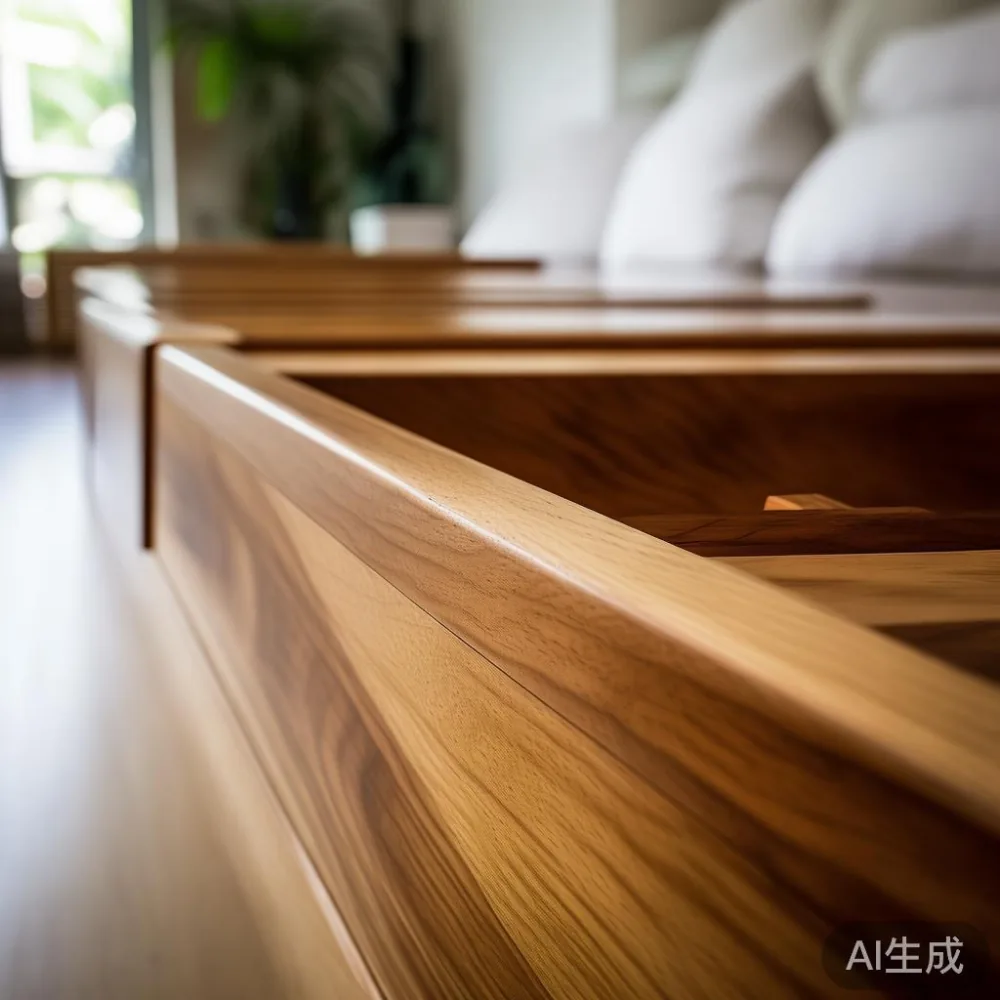
The sticker on a storage bench is rarely the real price. My Jurong veneered unit was S$329 before GST, S$358.61 with the 9% levy, plus S$40 for door-to-door delivery up to the lift landing on the 9th floor. The solid wood storage bench from MIDHILL landed at S$890 including shipping, GST, and full assembly — I paid nothing to carry it up because the courier's two-man team brought it inside the unit and removed the carton. Year-one totals: S$398.61 versus S$890. The gap looks punishing, which is why almost everyone buys the cheaper one first.
Year two is where the math starts to slide. My veneered storage bench had a swollen edge along the right-hand side because Tampines humidity runs 78–86% most afternoons. The repair shop in Bedok quoted S$60 to strip and re-laminate, then S$45 six months later for a softer corner that the same humidity got to. By the end of year two the running cost of that storage bench was S$503.61.
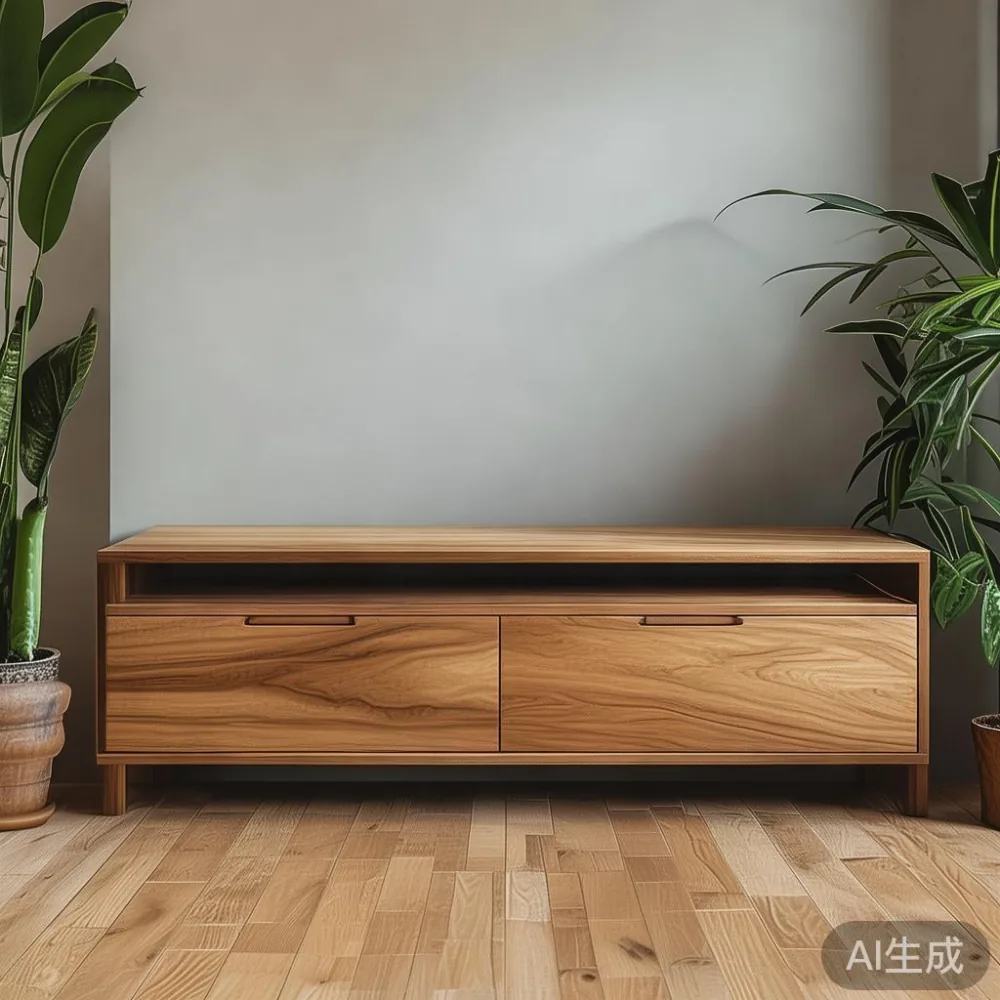
Year four was replacement: a fresh sub in Geylang at S$389 including delivery, with the old one broken down and sent to the HDB bulky refuse collection (free, booked through the MyENV app). Adding the S$117 spent on the two repairs in years one through three, the veneered storage bench had cost S$916.61 over four years. At the end of year five, assuming one more S$60 repair and one more delivery slot, the cumulative figure lands somewhere between S$976 and S$1,020.
The solid wood storage bench from MIDHILL: zero repair bills through month forty-two. A bottle of Osmo Polyx-Oil at S$38, used twice, has been the entire maintenance budget. Five-year projection for the solid wood unit: roughly S$930, and the piece still has another decade of life ahead.
Why does solid wood outlast veneer in HDB humidity?
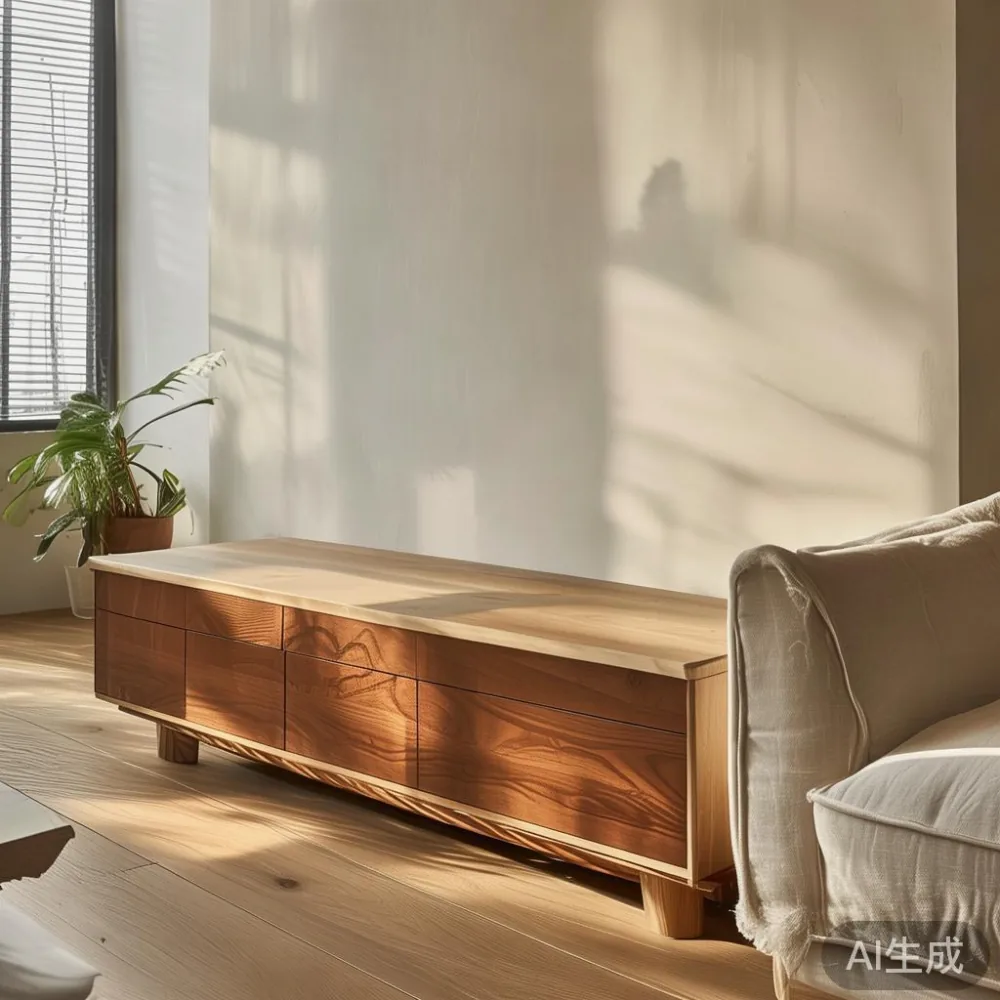
Singapore is, for furniture, an indoor swimming pool with air-conditioning bursts. Average relative humidity hovers at 80%, with afternoon spikes above 90% when the rain hits Punggol Way and the wind pushes wet air up through the corridor. Veneer is paper-thin — 0.3 mm to 0.6 mm of real wood, glued onto either MDF, plywood, or particleboard. The substrate expands at a different rate than the face layer. In HDB corridors that trap heat — many of the older Tampines blocks run at 31°C in the afternoon even with the breeze — the glue line fails first. You see bubbling at the corners, then black edges, then the skin peels back like a sunburn.
Solid wood moves as one piece. A 90 cm storage bench built from ash or rubberwood will shrink 1–2 mm across the grain during a dry air-conditioned week and swell the same amount during monsoon season, but it does so uniformly. No glue line to fail. No substrate to crumble. I keep a cheap thermo-hygrometer from Taobao on the storage bench itself, and the wood reads 18–20% moisture across the year, well within the 12–22% comfort range that kiln-dried solid wood is engineered for.
Weight tells the same story. The veneered storage bench tipped the courier's dolly at 14 kg. The MIDHILL solid wood storage bench arrived at 28 kg — exactly twice as heavy for almost identical outside dimensions (118 cm wide × 38 cm deep × 46 cm tall). That mass is not a marketing claim. It is fibre density, and fibre density is what survives three kids, a cat, and a Punggol balcony that gets used as a laundry room half the year.
How much lift and corridor access really matters for a storage bench?
This is the part nobody talks about at the Tampines Mall furniture fair, and it is the part that determines whether your storage bench even makes it through the door. Newer HDB blocks from 2015 onwards run lift cars around 1.45 m deep × 1.50 m wide, with a door opening of roughly 0.9 m. Most condos in Punggol go wider — around 1.7 m — but the corridor turns in older Bedok blocks can be as tight as 1.0 m at the 90-degree bend on the 6th floor.
The 118 cm solid wood storage bench had to be tilted at 35 degrees to clear the lift door on the 12th floor of my block, which the courier did by standing it on end — solid wood can take that, the box kept its shape because it is one piece of joinery, not a stack of glued laminations. A flat-pack veneered storage bench that arrives in a 1.25 m long carton is a different problem; the carton flexes in the middle and you can sometimes feel the particleboard give under the weight of the lift operator's trolley.
One practical tip from last month: a colleague in a 640 sq ft Punggol condo measured her corridor turn at 0.98 m before ordering a 140 cm storage bench. She chose a 120 cm solid wood version from the MIDHILL catalogue specifically because the longer 140 cm piece would not clear the bend without dismantling the lift lobby fire extinguisher housing, which the managing agent would have charged her for. The smaller bench arrived in one piece, was carried in by two men in under nine minutes, and now sits under her window holding folded blankets.
Is a veneered storage bench ever the right call?
Yes. I want to be specific about the drawbacks of solid wood so the comparison is honest. Solid wood storage benches weigh more, which means delivery upstairs to a 14th floor walk-up without a lift becomes a real problem — Jurong warehouse outlets do not always include the manpower, and a 28 kg piece carried up fourteen floors is a S$225 in a Tampines rental block. Solid wood costs more upfront, which stretches a young couple's renovation budget and forces trade-offs elsewhere. Solid wood also needs oiling every 18–24 months in our climate, otherwise the surface can dry and hairline-check along the grain — not a structural failure, but a visible one.
For a rental HDB flat on a six-month lease, a renter's shelf life of 18 months, or a study room that will be repainted in two years, a veneered storage bench is the rational choice. I would still pick one with a plywood substrate rather than MDF or particleboard, and I would still expect to replace it once in the five-year window. If the unit costs S$329 today and S$389 to replace in three years, the per-year furniture cost is around S$130 — not unreasonable for a short-term flat.
For the homeowner who plans to stay — and the average Singaporean stays in the same HDB flat for 17 years according to the 2023 HDB sample household survey — the math flips. The same S$130-per-year calculation on a S$890 solid wood storage bench assumes a 7-year useful life, which is conservative. MIDHILL ships pieces that routinely run 15 years before any structural service, and their 10-year written structural warranty plus lifetime refinishing is unusually generous for imported Foshan furniture.
Will a solid wood storage bench match a French light luxury or American light luxury interior?
This is the question I get most often from friends renovating in Bedok Reservoir and Punggol Waterway terraces. Light luxury — French light luxury, American light luxury, post-modern light luxury — is built on contrast: brass against plaster, linen against stone, walnut against boucle. A storage bench in solid ash or rubberwood with a hand-rubbed matte finish sits inside that scheme better than a high-gloss MDF piece, because the eye reads the natural grain as part of the texture story rather than as a competing surface.
In my own flat I have paired the solid wood storage bench with a Modern light luxury bed frame at the foot, and the two pieces talk to each other — same warm undertone, same brushed metal legs from the same hardware line, same 18 mm thick top panel. The bed frame was the second MIDHILL piece I bought, and it cost S$1,490 delivered. That sounds expensive for a bed, until you compare it to the S$2,400 American light luxury platform I nearly bought at a Tiong Bahru showroom, which had a plywood slat system rated for 90 kg per side and a five-year warranty that did not include the slats.
How to style light luxury bed in room is, in my experience, less about the bed itself and more about what is solid around it: a storage bench at the foot, a nightstand on each side with the same wood species, a marble table on a lamp console to break up the matte. The same rule applies if you are working out how to style European light luxury wardrobe in apartment — keep one hero wood, keep one stone surface, keep one soft textile, and let the rest of the room breathe.
Can a solid wood storage bench replace other furniture in a small HDB flat?
Yes, and this is where the per-piece calculation starts to look generous. A 118 cm storage bench at the foot of a queen bed replaces a luggage rack, holds four pairs of shoes, holds the spare, and acts as seating for two adults at 80 cm of bench depth. In a 990 sq ft eaves apron flat in Punggol, my colleague uses the same MIDHILL storage bench as a dining extension when relatives visit, parked at the end of a Japanese for dining room layout where the chairs run two long sides and the bench closes the third. Japanese for dining room is, like light luxury, a quieter visual grammar — straight grain, no ornament, honest joinery — and a solid wood storage bench fits the room's logic because it is built the same way.
For households who have already bought or are planning to buy an Italian light luxury TV console, a solid wood storage bench is the natural companion piece. Italian light luxury TV console designs from the post-modern light luxury school tend to run slim-fronted, high-gloss, and a storage bench at the foot of the bed picks up the same horizontal line without competing with the console's vertical drama. Three pieces in the same wood species, and the whole flat reads as a designed sequence rather than a collection of clearance finds.
The wider point, and the one I should leave you with, is that the storage bench is the most undervalued piece of furniture in any small Singapore flat. It carries weight, it carries guests, it carries clutter, and it carries the visual line from one piece to the next. A solid wood sofa, a solid wood bed frame, a solid wood dining table, a solid wood wardrobe, a solid wood nightstand, a marble table — every one of those pieces benefits from a storage bench that is built the same way, in the same factory, by the same hands. Italian light luxury TV console designs, French light luxury joinery, post-modern light luxury hardware — none of it works without the consistent underlay of solid timber. A well-chosen storage bench is that underlay.
Is Japanese bed worth it compared to a Western storage bench setup?
Direct question, direct answer. If you are asking is Japanese bed worth it, the answer depends on which Japanese bed you mean. Low-platform Japanese futon frames built for a 5 cm shikibed-on-tatami sit about 12 cm off the floor, and they do not pair with a Western-style storage bench at all — the proportions are wrong, the joinery is different, and the bench becomes a trip hazard in the dark. A modern hybrid, the post-Idan light luxury bed frame with a 28 cm platform height and a Japanese-influenced headboard, pairs with a 46 cm tall solid wood storage bench because the seat height difference is only 18 cm. That is the pairing I have in Tampines, and it works because the bench reads as a continuation of the platform rather than as an afterthought.
For readers weighing a full Japanese bed-and-bench combination against the more common American light luxury platform-and-ottoman setup, the storage bench wins on versatility. An ottoman is dead weight once you have set the bed. A storage bench carries luggage, carries laundry, carries the spare quilt, and seats a guest. The five-year math on the MIDHILL solid wood storage bench — S$890 upfront, S$38 in oil, zero replacements — comes out to roughly S$186 per year for a 15-year useful life, against S$215 per year for the veneered unit that lasted four. The cheaper piece costs more.
What should I check before I order a solid wood storage bench from Foshan?
Three numbers, all of which I checked on my own order and now check on every recommendation I make. First, the wood species and the moisture content. Anything above 12% kiln-dried is risky in our humidity; anything below 8% will crack in the first air-conditioned month. Ask for the factory's spec sheet — MIDHILL publishes moisture-content data on every batch, which is uncommon for Foshan furniture exporters and a good sign. Second, the joinery. Solid wood storage benches should use mortise-and-tenon or dovetail joints at the corners, not staples, not screws alone, not brad nails. A 5-minute visual check on the underside tells you everything. Third, the warranty in writing. A 10-year structural warranty that names the actual components covered is meaningful. A lifetime marketing phrase that lists no components is not.
Delivery is the fourth, often-forgotten check. Lift access, corridor width, stair turns, and the building's managing agent rules for large-item delivery all matter. Confirm the courier will deliver to the door, not the lift lobby — the S$50 to S$80 difference is worth it. Confirm whether assembly is included; flat-pack solid wood can be assembled by two adults in 35 minutes, but pre-assembled means no risk of joint stress during the build. Confirm the return window — MIDHILL offers 14 days, which is enough to test the bench through one full humidity cycle.
What is the realistic five-year budget for a Singapore homeowner?
Pulling the threads together for a 4-room HDB flat owner planning to stay. Year one: S$890 for the solid wood storage bench from a Foshan furniture maker, delivered, with 9% GST included. Year two: S$38 for Osmo Polyx-Oil and 20 minutes of buffing. Year three: zero. Year four: zero. Year five: zero, with a fresh coat of oil if you want to keep the original sheen. Five-year total: S$928. The veneered equivalent over the same five years: S$329 + S$117 repairs + S$389 replacement + S$60 final repair + S$189 in three delivery fees = S$1,084. The solid wood unit costs roughly S$156 less over five years, and the gap widens in years six through ten when the veneered piece needs replacing again and the solid wood piece keeps going.
Numbers in Singapore dollars, lift access accounted for, GST included, humidity tested, corridor turns measured. That is the cost comparison that actually matters at the foot of my bed in Tampines, and it is the comparison that has kept me from buying another flat-pack veneered storage bench since.