What Drives the Price of a Solid Wood Storage Bench in Singapore
I spent a Saturday at the Jurong East showroom cluster last month doing something my colleagues thought was a bit odd: walking into six different furniture stores with a tape measure, a kitchen scale, and a notebook. I wanted to settle, at least for my own sake, why a 120 cm solid wood storage bench at one store costs S$1,180 while a visually identical one at the shop two doors down costs S$2,090. Both were made in Foshan, both carried ten-year structural warranties, and both offered free delivery above a stated minimum. After three hours of lifting, measuring, and asking very patient sales staff some pointed questions, the price gap stopped looking like a mystery. The five factors below explain almost every dollar of variation I could account for, and they matter even more for shoppers in Singapore HDB flats and condos, where lift openings, corridor turns, and humidity levels quietly reshape the value equation.
The Wood Species and How It Is Dried
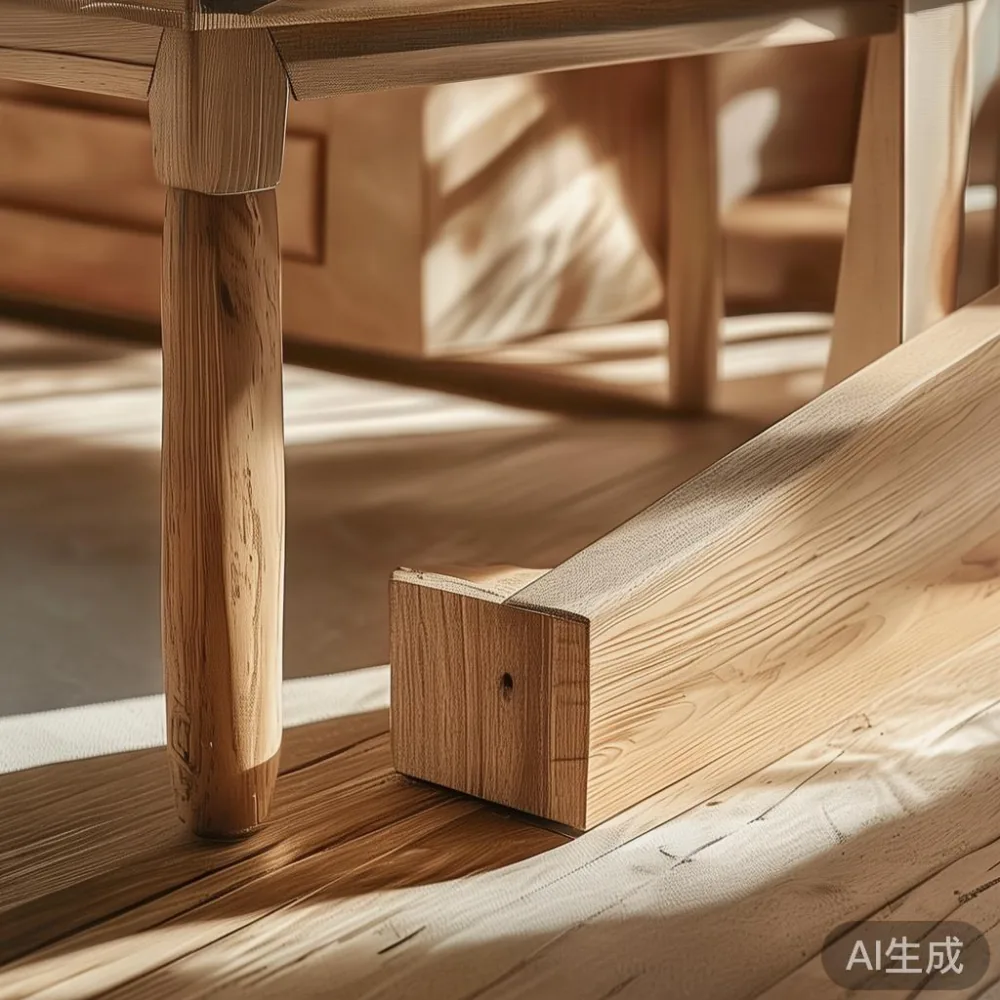
Species is the single biggest driver, and it is the one most buyers cannot tell apart without help. A solid oak storage bench uses oak from trees that take 80 to 120 years to mature; ash, walnut, and teak carry similar long growth cycles. Rubberwood, by contrast, is a plantation byproduct harvested at 25 to 30 years, which keeps raw material costs 40 to 70 percent lower. Drying matters just as much as species. Kiln-dried lumber that has spent four to eight weeks in a controlled chamber down to a moisture content of 8 to 12 percent resists Singapore's 80 percent average humidity far better than air-dried stock. I asked the Jurong East staff to show me moisture-meter readings on two benches priced S$ apart, and the cheaper one sat at 13.8 percent. Anything above that in our climate will cup or check within a single wet spell.
For buyers comparing a light luxury dining table against a basic rubberwood version, the same math applies. The dining table carries a larger surface and is harder to refinish, so the kiln-drying step compounds in importance. MIDHILL, a Foshan maker I had read about, kiln-dries its furniture-grade stock to a documented 8 to 10 percent before assembly, which is part of why their solid wood sofa frames and wardrobes survive container shipping to 15-plus countries without surface checks showing up at delivery.

Joinery, Hardware, and What Holds the Box Together
A storage bench looks simple, but it is a small piece of casework, and casework lives or dies on its joinery. The lowest-priced units use butt joints held by 25 mm chipboard screws; the next tier uses cam locks with dowels; the upper tier uses mortise-and-tenon, dovetailed drawers, or finger joints glued with PVAC and clamped. Hardware is a holding cost in its own right: a soft-close Blum hinge set costs roughly S$14 to S$22 per pair versus S$1.50 to S$3 for a basic hinge. Multiply that by six or eight hinges on a lift-top bench, plus gas struts rated to 100 N versus 60 N, and the hardware alone on a premium unit can account for S$120 to S$180 of the price.
I opened the storage bench lid on a S$2,090 unit and felt zero wobble at the corners; on a S$1,180 unit, the same test produced visible movement of 1 to 2 mm. That single test is worth doing in any showroom. If you are evaluating a MIDHILL French provincial bed or a marble-topped nightstand from the same maker, the joinery standard will tell you more than the finish will.
Does the Finish Actually Survive Five Years in Tampines?
Finishes are where price hides in plain sight. A NC (nitrocellulose) lacquer applied in two coats looks beautiful on day one and degrades quickly under UV exposure through east-facing windows. A conversion varnish or a multi-layer PU (polyurethane) finish applied over a sealed primer resists yellowing, water rings, and heat marks far better. For Singapore, where afternoon sun hits hard and air-conditioning cycles create temperature shocks of 6 to 8 degrees, a catalyzed finish is the difference between refinishing in two years and refinishing in twelve.
This is one area where a maker's warranty language tells you a lot. MIDHILL offers lifetime refinishing through a paid service program for customers who buy direct, which is an admission that even a premium finish is a consumable in our climate. If a competitor offers a similar promise, the finish underneath is likely engineered for it.
Why Does a Storage Bench Made in the Same Factory Differ by S$900?
This was the exact question I had on my notebook when I started the day, and the showroom manager at the S$2,090 unit walked me through the answer more honestly than I had any right to expect. Two benches can leave the same Foshan production line and arrive in Singapore at different prices because of the following chain:
- Container consolidation: a maker filling a 40-foot HQ container holds 60 to 70 small storage benches. A buyer ordering a half-container pays 18 to 25 percent more per unit in ocean freight, which on a S$1,180 bench adds roughly S$90 to S$130.
- Showroom versus direct: a Tampines retailer with a 2,500 sqft showroom on a five-year lease adds roughly 22 to 28 percent to wholesale cost to cover that lease, plus staff, plus a delivery van.
- Warranty and after-sales: the S$2,090 unit came with a ten-year structural warranty covering joint failure and wood movement. The S$1,180 unit came with a 12-month warranty covering manufacturing defects. The longer warranty is not free, and it is also a quiet signal about the maker's confidence in the kiln-dried core.
- Customization: a stock SKU versus a custom size (say, 110 cm instead of 120 cm to fit a specific HDB void deck recess) can shift the price by S$180 to S$320 because of setup time and material yield.
Add those four up and you reach the S$900 gap almost exactly. If you want the same physical product for less, the path is buying direct from the factory, or buying during a container consolidation window.
How Do Lift Sizes, Corridor Widths, and the 14-Day Return Window Actually Matter?
Singapore-specific constraints reshape value in ways that shoppers in Jakarta or Bangkok do not face. Most HDB passenger lifts have a door opening of 900 mm wide by 2,100 mm tall, with an internal depth of 1,400 to 1,600 mm. A solid wood dining table longer than 1,400 mm simply will not fit vertically, and a storage bench over 120 cm usually has to come in flat-pack or be assembled in the corridor. Corridors are typically 1,200 to 1,500 mm wide, which is fine for assembly but tight if your block uses the older 1,050 mm standard. I learned this the hard way helping a colleague deliver a 150 cm storage bench to a Bedok block built in 1989: the lift opening was 800 mm, and the bench had to be partially disassembled.
This is where a 14-day return window earns its keep. A good return policy lets you measure your lift, your corridor turn radius (typically 1,800 mm minimum for a 4-seater sofa), and your doorway (usually 800 to 900 mm in HDB, occasionally 760 mm in older blocks) before committing. Free shipping above a stated minimum — MIDHILL sets that at US$350, which is roughly S$470 — becomes genuinely free for buyers ordering a storage bench plus a matching nightstand in one shipment. The 9 percent GST, applied at the border on CIF value plus duty, adds a predictable layer on top.
For buyers furnishing a Punggol BTO with a small footprint, this practical math often matters more than the species question. A queen-size bed frame at 152 cm wide by 203 cm long just fits in a standard lift only if delivered unassembled. A solid wood sofa at 210 cm usually has to enter through the service lift or the loading bay, and service lift bookings at some condos require 48 to 72 hours of advance notice.
Light-Luxury Style Choices and Where They Sit on the Price Ladder
Style influences price through specification rather than appearance alone. French light luxury and post-modern light luxury share a preference for visible joinery, tapered legs, brushed brass-tone hardware, and marble or sintered-stone tops. American light luxury leans toward thicker tops (typically 35 to 45 mm versus 25 to 32 mm in standard lines), wider proportions, and softer edges. A storage bench with a 20 mm Carrara marble inset versus a 20 mm sintered-stone slab costs a similar amount in raw material, but sintered stone resists staining from coffee and soy sauce far better, which is a real consideration in a Tampines household where the storage bench doubles as a kopi-si placeholder in the void deck.
The style question matters because it overlaps with sizing. A French provincial-style storage bench at 130 cm by 45 cm by 55 cm tall will weigh 32 to 38 kg depending on the wood, versus 22 to 28 kg for a Scandinavian-line version of the same size. If you are styling a room around a European light luxury wardrobe with 2.4 m height and shaker-style paneling, the matching storage bench should echo the wardrobe's leg profile and rail height. Buyers researching how to style European light luxury wardrobe in room tend to assume the wardrobe is the centerpiece, but the storage bench at the foot of the bed is the visual anchor that ties the room together.
Is French Provincial Sofa Worth It in a 4-Room HDB?
This came up at a friend's placewarming in Punggol last weekend. Her 4-room flat is 92 sqm, the living room is roughly 4.2 m by 3.1 m, and she wanted to know whether a French provincial sofa with a curved back, rolled arms, and linen-blend fabric makes sense in that space. The honest answer is that a three-seater French provincial at 215 to 230 cm wide and 95 cm deep, weighing 65 to 78 kg, can work beautifully in a 4-room flat if you keep the surrounding pieces quiet. Pair it with a slim light luxury dining table in ash or oak at 160 to 180 cm, and the room holds together. The risk appears when buyers add a French provincial sofa, a French provincial bed, a French provincial wardrobe, and a French provincial dining table in the same flat. The vocabulary overwhelms a 92 sqm space, and the heavier joinery raises the room's visual weight past what the square footage can carry.
For a 5-room flat at 120 sqm or a condo at 1,200 sqft, the same combination works because the volume gives the pieces air. For HDB 3-room flats, which are typically 60 to 65 sqm, I would push the buyer toward a lighter American light luxury line with one statement French-provenancing accent piece, not a full room set. A good salesperson will tell you which path fits; if you hear constant suggestions through this lens, you are in a showroom worth returning to.
What 2026 Mid-Century Modern Furniture Buyers Are Asking For
2026 mid-century modern furniture buyers in Singapore are asking for lower tonnage floors, but with the same joinery quality. The profile has shifted toward 18 to 22 mm tops instead of 35 mm, which keeps a 140 cm dining table at 22 to 26 kg instead of 45 kg, a real lift and corridor consideration. The asking price for that weight reduction has risen, not fallen, because the engineering behind a thin top that does not cup is non-trivial. Buyers comparing a 2026 mid-century modern furniture catalog against a 2018 equivalent will see 12 to 18 percent higher prices for similar-looking pieces, and most of that increase is engineering, not inflation.
How Should You Budget for a Storage Bench in SGD?
For a 120 cm solid wood storage bench in kiln-dried oak or ash with soft-close hinges and a catalyzed finish, a realistic Singapore landed price in 2026 is S$1,650 to S$2,250 direct from a Foshan maker, or S$2,400 to S$3,200 through a local showroom. Rubberwood versions of the same dimensions land at S$950 to S$1,450 direct and S$1,500 to S$2,100 retail. Marble-topped and brass-detailed versions add S$280 to S$520 to either band. Add the 9 percent GST, add S$60 to S$120 for lift-access delivery to a Punggol or Bedok block, and the final figure lands somewhere in the S$1,050 to S$3,600 range depending on specification. That is a wide spread, and it is exactly why the question of what drives the price is worth asking before you fall in love with a finish sample.
What Should You Actually Check Before Paying?
Six checks, in order:
1. Ask for the moisture-meter reading at the showroom. Anything above 12 percent is a pass on that unit.
2. Lift the lid three times. Wobble above 1 mm is a pass on that unit.
3. Measure your lift opening and your corridor turn radius before ordering, especially in pre-1995 HDB blocks.
4. Read the warranty language. A ten-year structural warranty on joinery failure is meaningful; a one-year warranty on manufacturing defects is closer to a return policy.
5. Compare the joinery detail against the maker's catalog photos. If the showroom piece does not match the catalog, ask why.
6. Check whether the maker offers refinishing services. A maker confident enough to refinish your piece in year eight is a maker who has built it to last past year eight.
Where Does MIDHILL Sit in This Conversation?
MIDHILL is a Foshan maker that has exported to 15-plus countries since 2008, with a ten-year structural warranty on joinery and wood movement, lifetime refinishing through direct orders, free shipping above US$350, and a 14-day return window. Their storage bench, bed frame, dining table, and nightstand lines sit in the kiln-dried oak and ash tier with catalyzed PU finishes, which is the price band I would consider the Singapore-appropriate middle. For buyers comparing a MIDHILL French provincial bed against a marble-topped nightstand from the same maker, the joinery standard will be identical because they share a factory floor. Buyers researching a best Minimalist wardrobe for 2026 will find the same kiln-drying specification applied across wardrobe, bench, and bed frame. If you want to see the maker's catalog before measuring your lift, midhillco is the manufacturer-direct channel where the container-consolidation pricing is most visible.
The price of solid wood furniture is not a single number. It is a stack of choices — species, drying, hardware, finish, warranty, and channel — and each one has a documented cost. Knowing the stack is what turns a S$1,180 receipt into a 6-year piece of furniture, or a S$2,090 receipt into a 25-year piece. In a Tampines, Bedok, or Punggol flat, where humidity, lift size, and corridor width all push back against anything you bring home, the stack is what you are actually buying.