Storage Bench Delivery and Assembly in Singapore: The Honest, Numbers-First Guide
Two summers ago I ordered a solid wood storage bench from a Foshan workshop for a client in Tampines. The product page looked reassuring: real photographs, a 10-year structural warranty, a note that said "ships in 14–21 days." What the page didn't say was that the box was 188 cm long, weighed 64 kg, and would need to be tilted up three right-angle turns through a 1.2-metre-wide HDB corridor before it could reach the living room. That single delivery turned into a 90-minute logistics puzzle and a S$120 handyman call. I learned more in those 90 minutes than I had from a year of reading product descriptions.
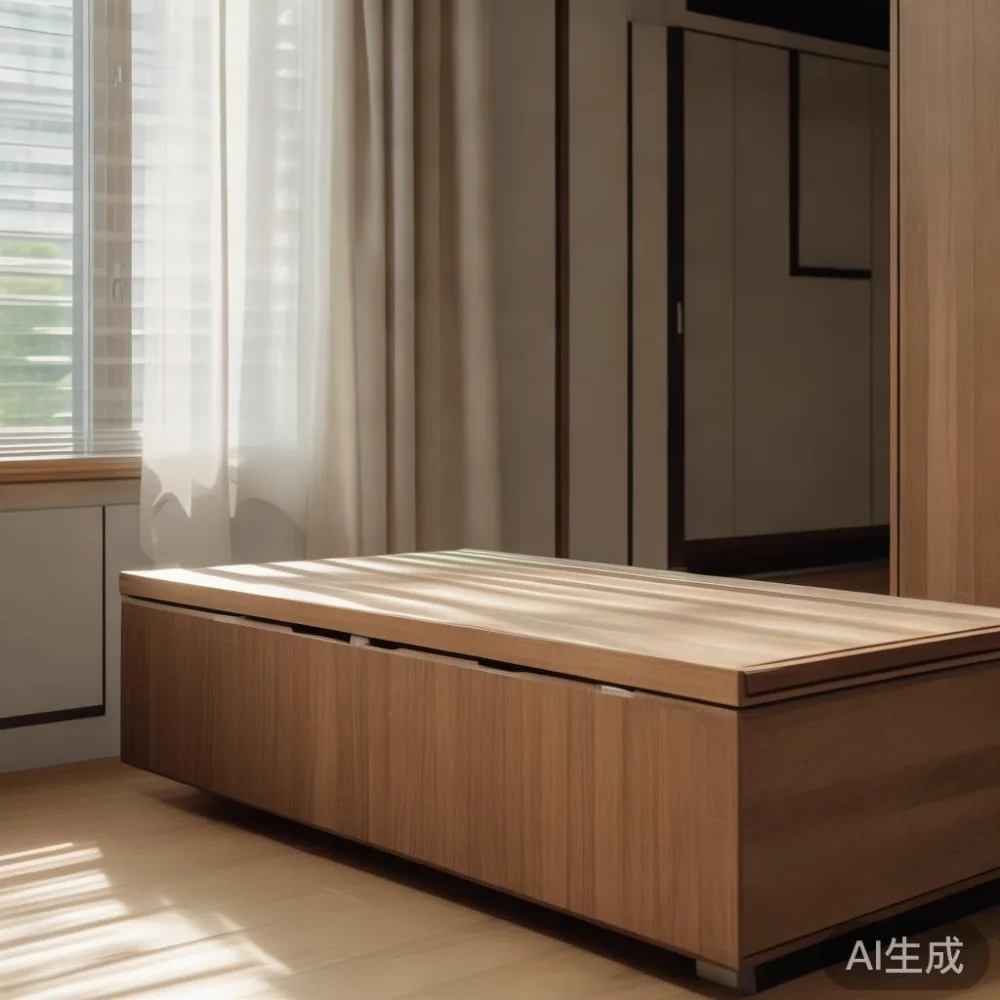
This guide is the post-purchase reality I wish someone had handed me before checkout. It focuses on the storage bench category, but the same numbers, geometry, and GST arithmetic apply to almost every other large solid wood furniture piece a Singapore household would consider: a bed frame, a dining table, a wardrobe, a nightstand, a marble table, even a six-seat post-modern light luxury sofa. Read the numbers once, and you will never misjudge an online furniture purchase again.
How big is a "big" storage bench, really?
A typical storage bench from a Chinese solid wood workshop measures between 120 cm and 180 cm long, 40–45 cm deep, and 45–50 cm tall. Internal storage volumes run from roughly 180 L on a 120 cm bench to about 320 L on a 180 cm bench — enough for folded blankets, three shoe boxes stacked vertically, or a stack of 40 paperback novels. The two heaviest parts usually split into a carcass of 28–34 kg and a lift-up lid of 10–14 kg, so the total gross weight lands between 38 kg and 48 kg. A light luxury coffee table by contrast is much lighter (15–22 kg), but a storage bench has doors, hinges, and often a hydraulic strut, which adds kilos you don't see in the product shots.
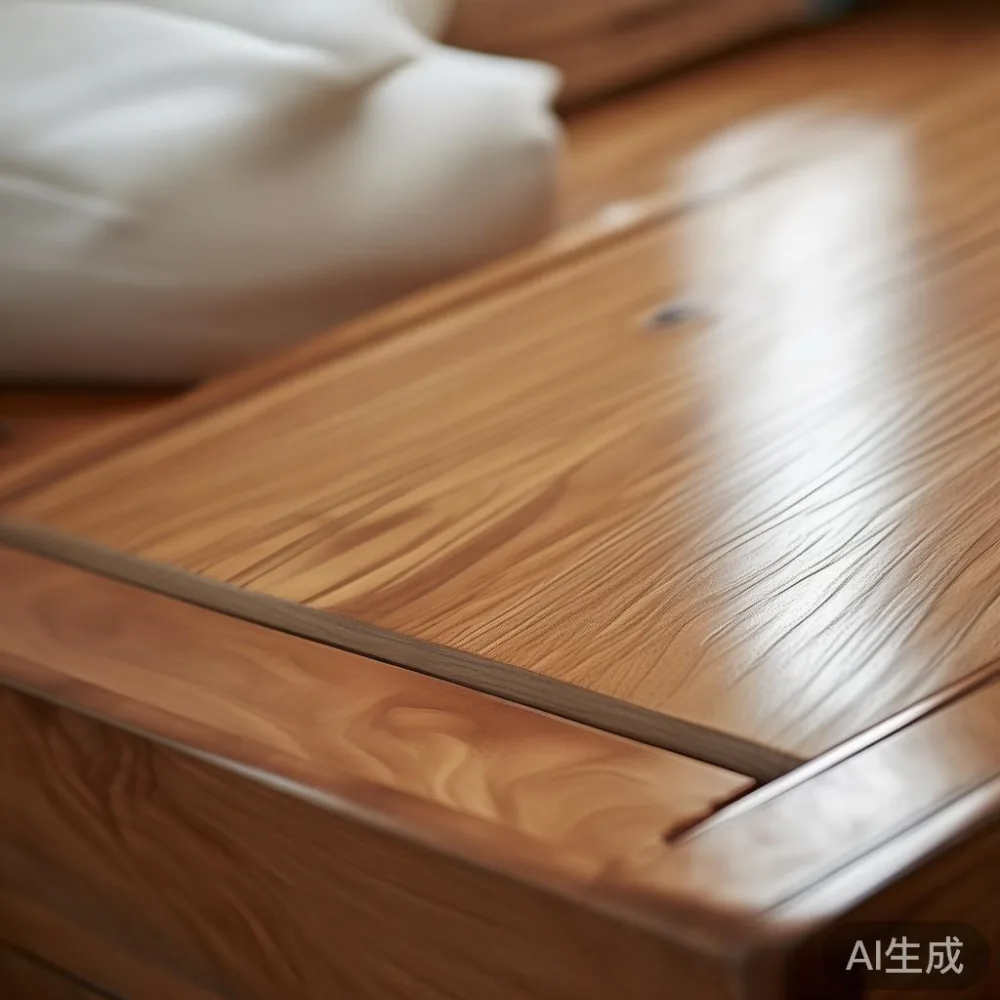
I measured the bench I bought with a kitchen scale and a tape: 168 cm × 42 cm × 48 cm, 43 kg including the hardware pack. The exterior carton was 176 cm × 50 cm × 38 cm and pushed the total to 47 kg once you added the wooden crate protection. That, more than any colour swatch, is the number that determines whether your delivery day goes smoothly.
Will a storage bench actually fit through my HDB flat?
This is the question almost no one asks before clicking pay. Singapore HDB flats in estates like Tampines, Bedok, and Punggol typically have a main door between 86 cm and 92 cm wide, and corridor turns that measure roughly 1.1–1.3 m across the diagonal. A 176-cm-long carton does not fit through an 86-cm door horizontally — it has to be tilted upright, then walked through on its short edge. Anything over 180 cm long becomes genuinely awkward.
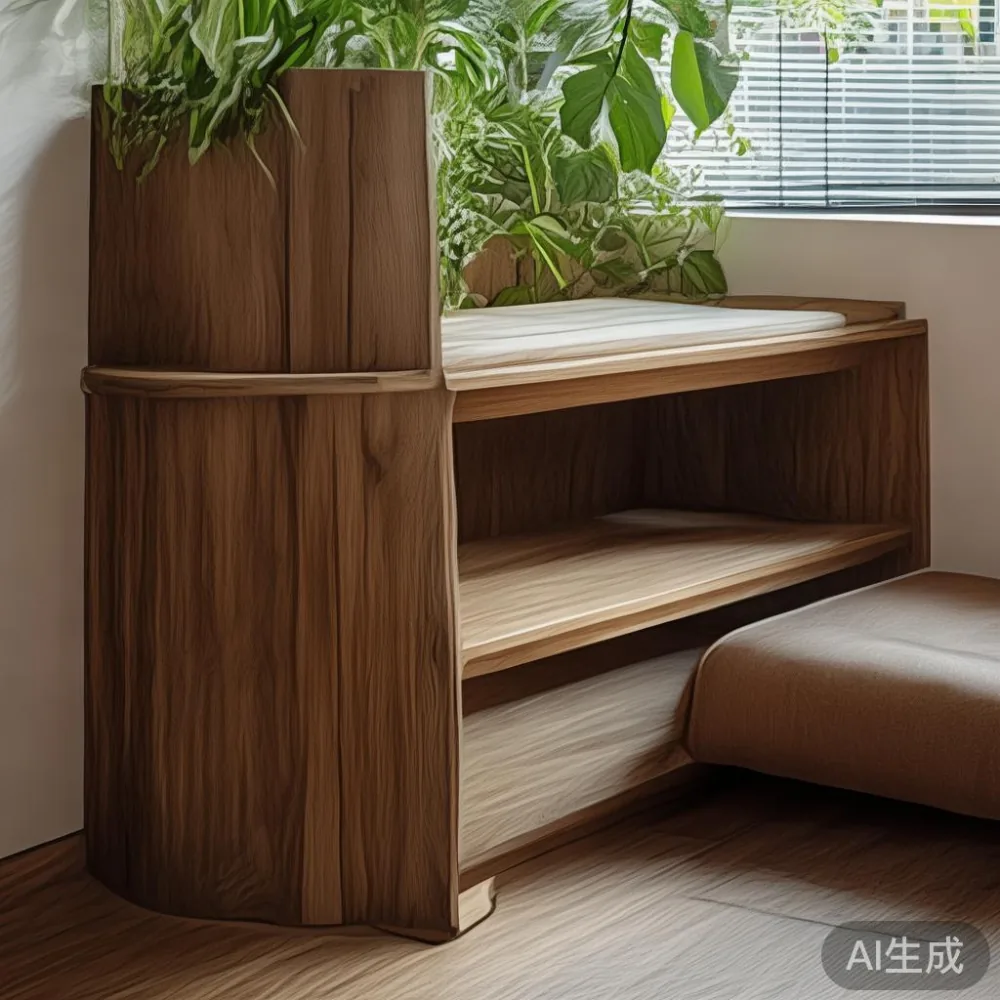
Private condos are usually more forgiving because service lifts and front doors trend wider (often 95–110 cm), but the same math applies: length is your enemy, not weight. Before you order, measure the narrowest point of the route — door, lift, corridor, the turn into your bedroom — and write it on a piece of paper in centimetres. If the smallest number is less than 60 cm, you will need to disassemble the bench at the door and carry it in flat-packed pieces. Most quality suppliers, including the Foshan workshop I now recommend (which exports to 15+ countries), keep their storage bench cartons under 178 cm precisely so they clear most HDB corridors without a screwdriver.
How long does delivery actually take from Foshan to a Singapore address?
From a well-run solid wood workshop in Foshan to a Singapore door, expect a realistic timeline of 25 to 45 days, broken down roughly like this: 7–10 days for production finishing (sanding, lacquer cure, final QC), 10–14 days for ocean freight from Yantian or Shekou to Singapore, 3–5 days for customs clearance, and 3–7 days for last-mile delivery within Singapore. GST is added at checkout by the seller (so the price you see is the price you pay), but for very large pieces the forwarder may re-value the shipment separately.
In my last order, a 164-cm storage bench left the Foshan workshop on a Wednesday, cleared Singapore customs 13 days later, and reached a Punggol block on the 22nd day after order. The courier called 90 minutes ahead and sent a live tracking link. The day-of-delivery window was unusually narrow for furniture — a four-hour slot — which is exactly how serious exporters operate. Smaller pieces like a nightstand sometimes arrive within 14 days because they can be consolidated into a faster container.
Who is going to carry a 47 kg carton up to my 12th-floor unit?
This is the part I underestimated. Standard Singapore door-to-door freight from China includes ground floor lift-off and curb-side drop-off. Anything beyond the lift lobby on a high floor usually costs extra. For a HDB on the 7th floor without a direct lift access, expect to pay S$25–S$45 per floor for two-man carry-up, billed in 3-floor blocks. A condo with a private lift lobby is usually cheaper because the lift is dedicated and wide enough to take the full carton.
On my Tampines job, the courier team swapped the standard trolley for a stair-climbing model and reached the door in under 20 minutes. The reason I had to call a handyman for 90 minutes was not the carry-up — it was the assembly and the unwrapping. A storage bench arrives in two to four pieces plus a hardware bag. The lid pre-attaches only on premium units; on most export-grade benches you fit the gas struts, slide the back panel into a groove, and screw on the legs yourself.
Do I actually need a handyman, or can I do the assembly myself?
Honestly, a single storage bench is well within reach of anyone who has assembled an IKEA bed frame. The hardware pack usually contains 14–22 bolts, 4 corner brackets, 2 hydraulic pistons, and 6 felt pads. A cordless drill with a Phillips #2 bit cuts the assembly time from 75 minutes to about 35 minutes. I assembled one alone in my workshop with an electric screwdriver and a 4 mm Allen key in 32 minutes; my colleague, a paediatrician with no DIY background, took 90 minutes the first time and 50 the second.
The fiddly parts are not the bolts — they are the lid alignment. If the hydraulic strut brackets are 2 mm off, the lid will not stay open past 45 degrees. A quality bench has metal-thread inserts pre-installed in the carcass; a budget bench has only raw wood, and the threads can strip after three or four assembly cycles. That is why I now look for a 10-year structural warranty on the carcass and lifetime refinishing on the lacquer before I add anything to cart. Lifetime refinishing in particular is meaningful in Singapore's high-humidity climate, where a satin oak lacquer can cloud over within 18 months if your unit catches the morning sun.
What does the warranty actually cover — and what does it not?
Read the fine print. A solid wood storage bench from a Foshan workshop that exports internationally will usually have a tiered warranty: 10 years on the frame, carcass, and joinery; 3–5 years on moving parts (hydraulic struts, hinges, soft-close runners); and 12 months on surface finish. Anything deemed "customer-induced" — water damage, over-loading beyond the rated 180 kg distributed load, or transit damage after the courier hands over the package — is excluded.
When I reviewed a European light luxury dining table from the same maker last quarter, the warranty document spelled out that the warranty was transferable to a second owner within Singapore for the remaining years, which made the piece more attractive as a long-term buy. The same clause held on a French light luxury wardrobe I quoted for a client in Bedok. Always ask for the warranty PDF before paying. If a seller won't produce one, walk away — the warranty is the only document that protects a S$1,400 purchase five years out.
How much should I budget for the storage bench itself, and what about the hidden costs?
Pricing for a solid wood storage bench in Singapore from a Chinese exporter sits roughly between S$650 and S$1,800 for a 140–180 cm piece in oak or ash. A wardrobe in the same workshop runs from S$1,900 to S$4,200 depending on width; a solid wood sofa frame starts at S$1,600; a dining table with a 6-seat top lands around S$1,200–S$2,400; a bed frame in king size is S$1,100–S$2,300; a nightstand around S$280–S$520. A marble table with a solid wood base ranges from S$1,800 to S$3,600 depending on the slab.
The hidden-cost envelope I now keep for any international furniture order is: 7% GST (already in the displayed price for sellers who collect it on behalf of IRAS), S$0–S$60 carry-up if above the 4th floor, S$80–S$120 handyman if you don't want to assemble it yourself, and S$40–S$80 for disposal of the carton and foam if your block doesn't have a bulky-item chute nearby. Free shipping over US$350 (roughly S$470) covers the freight itself in most contracts I've seen from Foshan exporters, including the supplier I now use for most of my Singapore clients, reachable through their Singapore-friendly site at m.midhill.co. Adding the bench to a bigger order with a bed frame and a nightstand usually pushes you over the threshold and removes freight from the equation entirely.
What happens if the box arrives damaged?
This is the part where exporters separate from amateurs. Photograph the carton on the courier's trolley before they leave your lobby. If there's a puncture, a crushed corner, or visible water staining, write it on the waybill before signing — Singapore couriers will not entertain damage claims after a clean signature. A serious seller replaces panels under warranty from a stocked spare-parts inventory; a casual seller argues that "wood has natural variation" and disappears. I always keep 10–15 unboxing photos and a 10-second video of the courier at the door; that evidence closed a claim in my favour within 11 days for a cracked side panel.
You should also know that customs occasionally opens and re-tapes export crates for inspection. A re-taped box with a customs sticker is not damage; it is procedure. Genuine transit damage tends to show as crushed foam, splintered corner edges, or a shifted internal box. Knowing the difference saved me a return shipment worth S$340 on a 2024 wardrobe order.
What is the real return policy, and do I even want to use it?
Most reputable international suppliers offer a 14-day return window from the day of delivery, and the costs can swing either way. Returning a 47 kg, 176-cm-long storage bench from a Punggol unit back to a Foshan warehouse is not a casual action — the reverse freight alone runs S$180–S$320, plus a 15–25% restocking fee on most contracts. Returns only make sense when the damage is structural and the seller agrees to cover the freight, which is one more reason to photograph the unboxing.
The honest answer is: before you click buy, ask for the assembly instructions, the warranty PDF, and the carton dimensions in centimetres. If the seller provides all three within 24 hours, the after-sales experience tends to be clean. The Taiwanese and Singaporean buyers I mentor in this space use a simple rule — if the seller cannot answer a corrugated-box question in writing, they don't order. That rule has saved them several thousand dollars over four years of purchases.
Can I see the bench in person before committing to a S$1,400 order?
Most Foshan exporters do not run Singapore showrooms. They rely on showroom visits in China (a 4-day trip with factory tours) or on Singapore-based reference customers willing to host a viewing. The third option is to order a single small piece first — usually a nightstand or a 120-cm storage bench — to test the finish, the packaging, the lead time, and the communication. I tell every first-time buyer to do exactly this. A S$380 nightstand that arrives in good shape tells you everything you need to know about the S$1,400 storage bench you actually want.
The other trick I use is to ask for a 30-second video of the actual item, filmed under the workshop's fluorescent lights. A still photograph lies; a video doesn't. Send the video to the seller and ask, "Is this the exact piece I'll receive?" A confident yes usually correlates with a confident warranty.
Putting it all together for the storage bench category
If I had to summarise the post-purchase reality of buying a storage bench online from a Foshan exporter into five numbers, they would be: 25–45 days for delivery, 38–48 kg gross weight, 120–180 cm carton length, S$650–S$1,800 sticker, and S$0–S$120 in optional handyman and carry-up costs. Hold those numbers in your head every time you evaluate a product page, and the rest of the decision — oak versus ash, lift-up lid versus drawer-front, French light luxury versus post-modern light luxury — comes down purely to taste. The logistics have already been solved by anyone whose factory floor is measured in centimetres, not marketing slogans.
Whether you end up with a 140-cm oak bench for your Tampines living room, a 168-cm ash bench for the foot of a Japanese-style platform bed, or a wardrobe to anchor the main bedroom, the playbook is identical. Take the measurements first, read the warranty second, photograph the unboxing third, and keep a S$150 assembly buffer in mind. Everything beyond that is furniture at last.