Lacquered Storage Bench Care in Singapore's Climate
A lacquered storage bench can be hard-wearing and elegant, yet Singapore’s heat, humidity, salt-laden air, and daily household traffic can leave a beautiful finish dull, sticky, or uneven. For residents of HDB flats and condos in Tampines, Bedok, Punggol, and elsewhere in Singapore, proper care means more than wiping the surface once a week. It also means controlling moisture, avoiding heat near windows, cleaning spills quickly, and understanding which products are safe for the lacquer.

This guide focuses on one furniture type: the lacquered storage bench. A 120 cm bench may serve as a shoe station in an HDB entryway, a padded seat in a bedroom, or a low display cabinet in a living room. Whatever its role, its lacquer should be protected with a measured routine rather than an aggressive one.
MIDHILL builds solid wood furniture for international markets and offers a 10-year structural warranty, lifetime refinishing, delivery in 14–21 days to many Singapore orders, and free shipping for purchases over US$350. The advice below concerns daily surface care; it does not replace the care instructions supplied with a specific lacquer, stain, or finish.
How does tropical humidity affect lacquered wood?
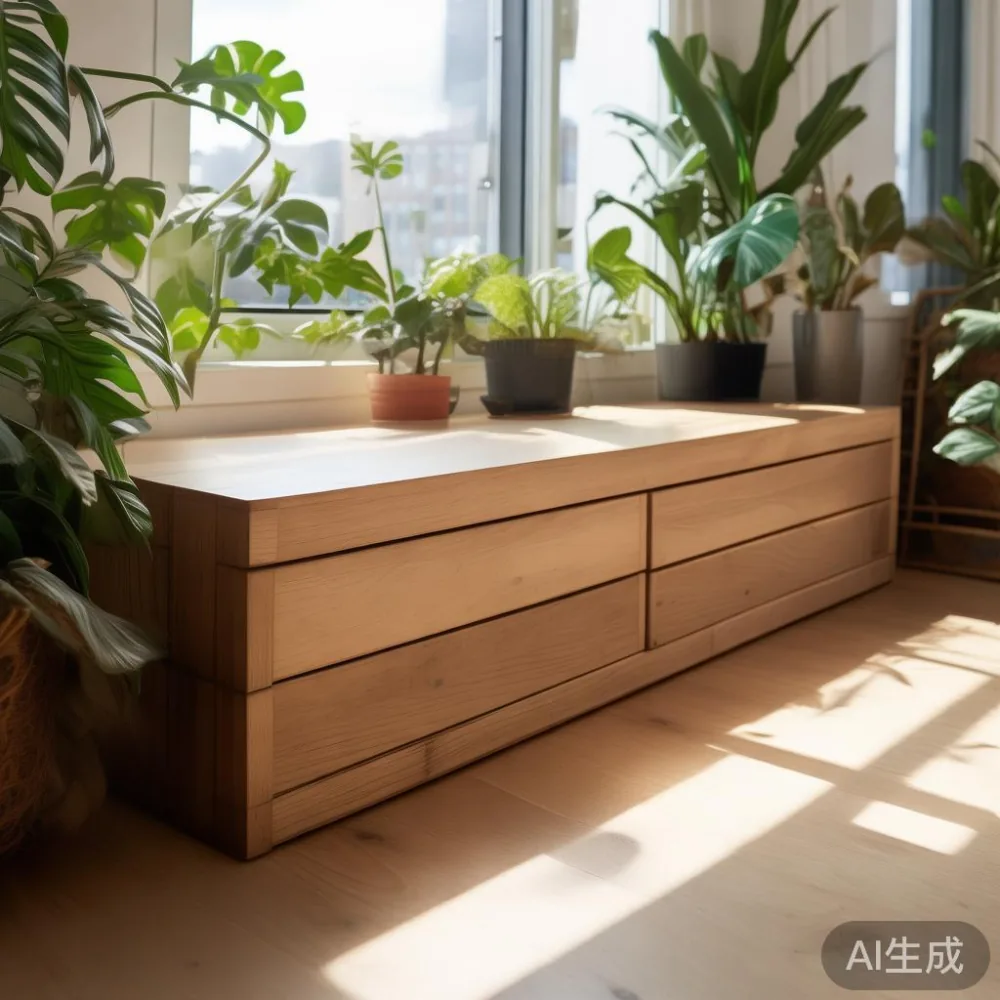
Singapore’s climate can keep relative humidity high for much of the year. Lacquer is less porous than unfinished timber, but its wood substrate can still respond to moisture. A storage bench placed against an external wall in Bedok, beside a bathroom in Punggol, or near a frequently opened kitchen doorway may encounter condensation that settles on the finish.
Watch for early signs rather than waiting for visible peeling. Fine haze, a tacky feel, water rings, edge lifting, or a finish that changes colour under a bright LED lamp can all indicate moisture stress. Move the bench at least 45 cm away from an air-conditioner outlet and 60 cm from a window or sliding door where direct sun and rain can reach it. However, keep it clear of a strong air-conditioning draft, which can dry one side faster than the other.
A hygrometer is useful and inexpensive. Aim to keep the room within approximately 40%–60% relative humidity where practical. If readings repeatedly exceed 65%, improve ventilation or use a dehumidifier. Do not place a damp mop, laundry basket, or wet sports equipment directly on the bench lid.
Benches stored in corridors or near void decks need more caution. Lift lobbies may be well ventilated, but covered walkways can trap humidity, and lift cleaning can leave grit at wall edges. Lift the bench base onto 4 small protective pads, each about 2 mm high. These raise the lacquered feet slightly and allow inspection without dragging the piece through a 90 cm doorway.
What is the safest way to clean a lacquered storage bench?
Begin with the mildest effective method. For routine cleaning, use a soft microfibre cloth, barely damp with warm water and 1 teaspoon of mild dishwashing liquid diluted in 1 litre of water. Wring the cloth until no water drips from it. Test the mixture on a concealed 5 cm section under the bench lid for 24 hours, especially with an aged or unfamiliar finish.
Wipe along the grain and around joinery rather than flooding the surface. Dry immediately with a clean, dry cloth. For fingerprints and light marks, a second pass with a clean damp cloth usually removes residue without leaving a film. Never use steel wool, scouring pads, abrasive powder, nail-polish remover, acetone, bleach, alcohol, or household degreaser. These can soften lacquer, dissolve its topcoat, or leave pale patches that cannot be corrected with ordinary furniture polish.
Clean spillages within 30 seconds if possible. Blot liquids rather than rubbing them. For sticky residue, place a cotton cloth over the mark and warm it gently with a hairdryer held at least 30 cm away for 10 seconds; move constantly and do not let the heat soften the finish. If the mark remains, ask the finish specialist before applying any solvent.
Use coasters and trays, even on lacquer. A ring left by a cup of kopi can require refinishing. A 10 cm coaster protects a 3 cm ring from spreading, while a tray with raised edges prevents water from reaching the edge of the storage compartment. Avoid using the bench lid as a chopping board or placing hot cookware directly on it.
Should I use furniture polish on a lacquered storage bench?
Polish is not automatically suitable. Some aerosol and cream products contain silicone, mineral spirits, beeswax, or solvents that may change gloss or make a water-based lacquer cloudy. If the product label says “safe for lacquer,” follow its dilution and application directions, then test a 5 cm hidden area for 72 hours.
For a satin lacquer, a commercial lacquer cleaner is generally easier to control than polish. Apply a small amount—about 2 ml—to the microfibre cloth, never directly onto the bench. Work a 20 cm section at a time and buff with a separate dry cloth. Overlapping patches can create visible haze, so complete the full panel before stopping.
Do not polish a bench only because it looks dull. If the dullness follows hand contact, it may be grease; if it appears around the perimeter, inspect the edge and joints. If the entire panel has faded evenly, the finish may have oxidised and may need professional assessment. MIDHILL’s lifetime refinishing service can be relevant for eligible solid wood pieces, although lacquer colour, gloss level, and availability should be confirmed before work begins.
Timing matters. In Singapore, clean late morning after air-conditioning has reduced condensation, or early evening once the unit has stabilised the room. Avoid cleaning at night when outdoor humidity peaks.
Can sunlight and heat damage the finish?
Yes. Singapore’s intense sun can fade pigment, weaken a clear coat, and create uneven gloss. A west-facing Tampines condo balcony can receive direct afternoon sun, while a bedok HDB window may admit bright morning light. Curtains with a UV-filtering layer help, but they should not touch the bench because repeated contact can polish one area and wear the lacquer edge.
Keep the storage bench at least 60 cm from a south- or west-facing window when possible. If the layout leaves only 30 cm, use a lined curtain rather than placing a reflective foil screen behind the bench. Foil can concentrate heat, while a silver heat-insulating blind may still transfer warmth to the rear panel.
Allow 10 cm behind the bench for ventilation. Do not push it tightly against a hot wall or behind a TV console that traps heat. Check the top every month with a surface thermometer. A reading around 30°C is normal in a tropical room; persistent readings above 40°C call for relocation.
Heat also affects adhesives inside storage compartments. Use the bench as intended, but avoid storing damp towels, wet uniforms, or tightly sealed food containers that release condensation. Keep heavy objects—perhaps 20 kg of books—distributed across the base rather than concentrated at one rear corner.
How often should a lacquered storage bench be maintained?
A light weekly clean is usually enough for a bench in a low-traffic bedroom. In an HDB entryway with shoes removed daily, wipe the lid every 7 days and the interior every 14 days. A condo living room that handles homework, bags, and weekly cleaning may need a top-surface wipe every 3–4 days. These are practical starting points, not fixed rules.
Use a seasonal checklist:
Every week: remove crumbs, check for sticky areas, and wipe the lid with a barely damp microfibre cloth.
Every 2 weeks: vacuum the inside with a brush attachment and inspect the 4 feet, edges, and underside.
Every month: check humidity with a hygrometer, examine lacquer under daylight, and tighten or rotate felt pads if the bench moves.
Every 6 months: inspect scratches, lifting at joints, and changes around handles. Photograph the same 3 areas so changes are easier to judge.
After a spill: act within 30 seconds, blot, then dry the area and check it the next morning.
Do not schedule refinishing simply because the bench is 5 or 10 years old. Lacquer can remain serviceable when its structure is sound. Scratches that expose wood or moisture-like clouding deserve attention because contamination can reach the substrate.
Can a storage bench fit through HDB lifts and condo corridors?
Fit should be checked before delivery, especially for a bench wider than 80 cm. A standard Singapore HDB lift interior may be about 1.1–1.4 m wide and 1.4–1.6 m deep, but building variations are common. Measure the lift door, cabin, turning space, and the route from the ground floor. Allow at least 5 cm of clearance when the bench is turned diagonally.
Many corridors are approximately 1.2–1.8 m wide. A 150 cm storage bench can be difficult to turn in a 1.2 m corridor, even when it fits into the lift. Remove the bench lid if the design allows, secure loose drawers, and protect corners with 2 mm foam. Do not use the lift’s emergency door or leave a package unattended in a common corridor.
For move-in planning, confirm whether the building requires a booking slot and the maximum permitted delivery duration. A van may arrive in 30–60 minutes, yet the lift reservation might be limited to 20 minutes. Ask the delivery team for the packaged dimensions rather than estimating from the assembled size.
Singapore orders include GST, and the final payable amount should be stated clearly in SGD. Furniture delivery to most Singapore addresses commonly takes 14–21 days after order confirmation, though made-to-order pieces may require 6–8 weeks. Inspect the carton on arrival for moisture, puncture marks, or impact before accepting it.
What should I do if the lacquer is scratched, swollen, or peeling?
First stop the damage. Isolate the bench from further dampness, remove objects from the affected compartment, and keep pets and shoes away from the area. Place towels around—not on—the bench if water is present, then improve ventilation.
For a fingernail-catch scratch in the lacquer, keep the area clean and dry. Do not rub it with a nail file or fill it with wax. For a 10 cm scratch exposing timber, photograph it in daylight and request finish advice. A small surface mark may be corrected by a trained refinisher, while lifting along 20 cm of an edge can indicate a more involved repair.
Cloudy or white haze can sometimes be moisture trapped under the lacquer. Do not assume a polishing compound will fix it. Let the room reach roughly 50% relative humidity, keep the bench away from heat, and wait 72 hours before seeking professional assessment.
If a piece needs coordinated care, note that the storage bench should not be treated in isolation. Wood, lacquer, metal handles, marble inserts, and cushions each respond differently to moisture. This same discipline applies to a solid wood sofa, bed frame, dining table, wardrobe, nightstand, or marble table: a cleaner suitable for one material may damage another.
How should MIDHILL lacquered storage benches be cared for?
For MIDHILL lacquered storage benches, start with the care card supplied with the piece because lacquer systems differ. Retain that card for the life of the furniture, including the finish name, care restrictions, and original order details. The company was established in 2008 and exports to more than 15 countries, so production batches may include different finish schedules even when the design looks similar.
Use a mild, tested cleaner, controlled humidity, protection from direct sun, and quick spill response. The 10-year structural warranty covers eligible structural issues under its terms; surface wear, unsuitable cleaning, water exposure, and accidental damage should be reported promptly so the team can advise on repair options. Lifetime refinishing can support long-term appearance care for eligible items, subject to review.
Good design and good maintenance work together. A 140 cm lacquered storage bench can bring French provincial softness, American light luxury restraint, or post-modern light luxury clarity to a compact Singapore home. It may coordinate with designer French provincial furniture or provide a practical base for a Mid-century modern accent chair, but its finish still needs a considered tropical-care routine.
When shoppers compare wider collections, they may encounter under 2000 Minimalist furniture, a best Nordic wardrobe for 2026, a MIDHILL wardrobe, guidance on how to style Japanese sofa in room layouts, and a best light luxury sofa for 2026. These are separate product decisions; a lacquered storage bench should be selected for its dimensions, interior layout, finish, and suitability for the actual entry or bedroom environment.
Returns are accepted within 14 days under MIDHILL’s policy, subject to the stated conditions. Check the finish immediately after delivery, photograph all 4 sides, and retain the packaging until the piece has been inspected. Free shipping applies over US$350, but customers in Singapore should still compare the quoted delivery fee and GST before ordering.
A careful routine takes perhaps 15 minutes each week and 20 minutes each month. That small investment helps preserve the lacquer’s depth, protects the solid wood beneath it, and keeps the storage bench useful and presentable through Singapore’s changing weather.