How to Match a Storage Bench to a Warm Minimal Interior
Last month I visited my colleague Priya's new 4-room HDB flat in Tampines North. She had spent six weeks agonising over her dining area, and the room still felt "off" — too cold, too curated, too much like a catalogue. The fix turned out to be a single piece of furniture she hadn't considered: a solid wood storage bench tucked under the window, replacing two plastic stools and a stack of shoe boxes that had been living in the corridor outside her unit. Within an hour of moving it in, the room read warmer, the entry sequence from her HDB door made sense, and her American light luxury walnut dining table stopped looking lonely.
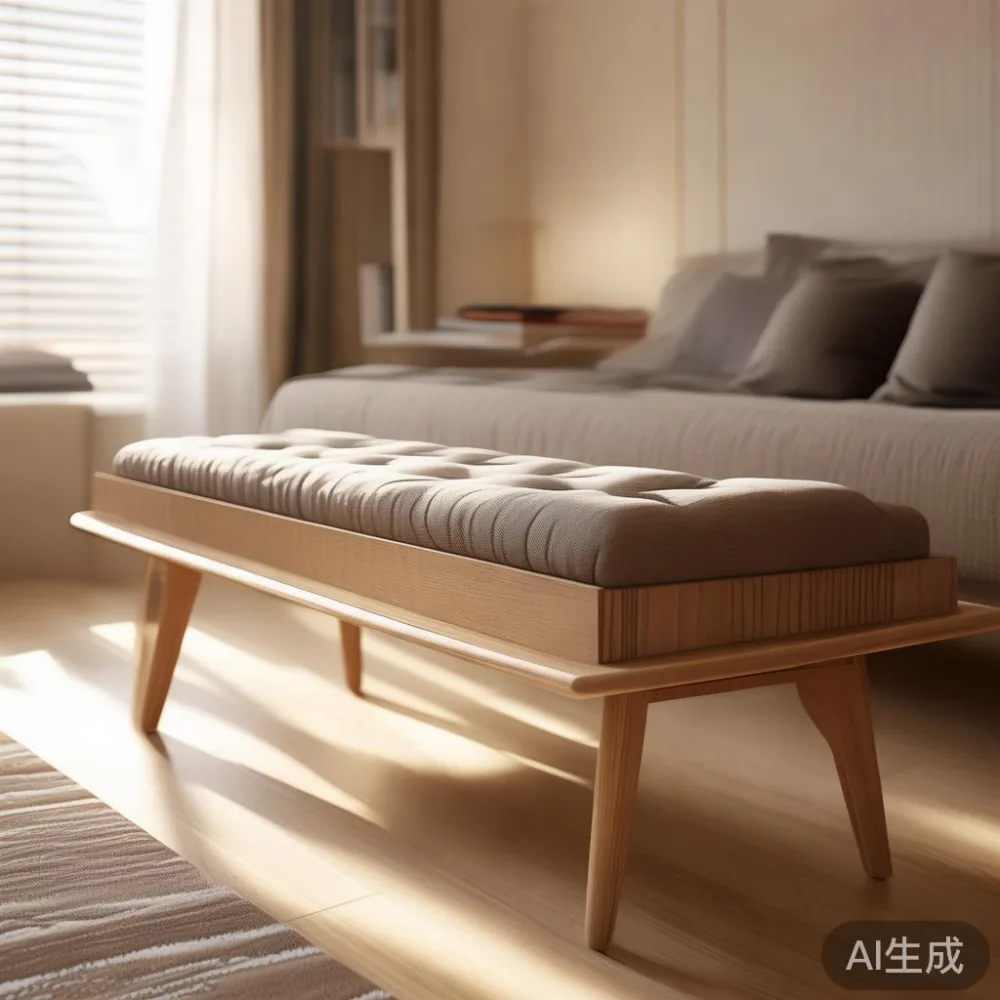
If you live in a Singapore HDB flat, condo in Punggol, or a walk-up in Bedok, you already know the constraints: a typical 3-room HDB corridor is about 1.2 m wide, most service lifts in older blocks cap at 2.0 m × 1.6 m, and the door to your unit is roughly 0.9 m wide. Every piece you bring home has to be physically possible, visually quiet, and useful. A well-chosen storage bench ticks all three boxes — but only if you match it to a warm minimal interior rather than fighting one.
What does warm minimal actually look like in a Singapore home?
Warm minimal is not the stark, all-white Nordic look you see in magazine spreads that were photographed in Stockholm lofts with 3 m ceilings. In a 90 sqm HDB flat, that look reads as clinical within a week. Warm minimal pairs the same restrained palette — one wall colour, one wood tone, one metal accent — with materials that absorb light instead of bouncing it back: solid oak rather than high-gloss laminate, brushed brass rather than chrome, linen rather than polyester velvet.
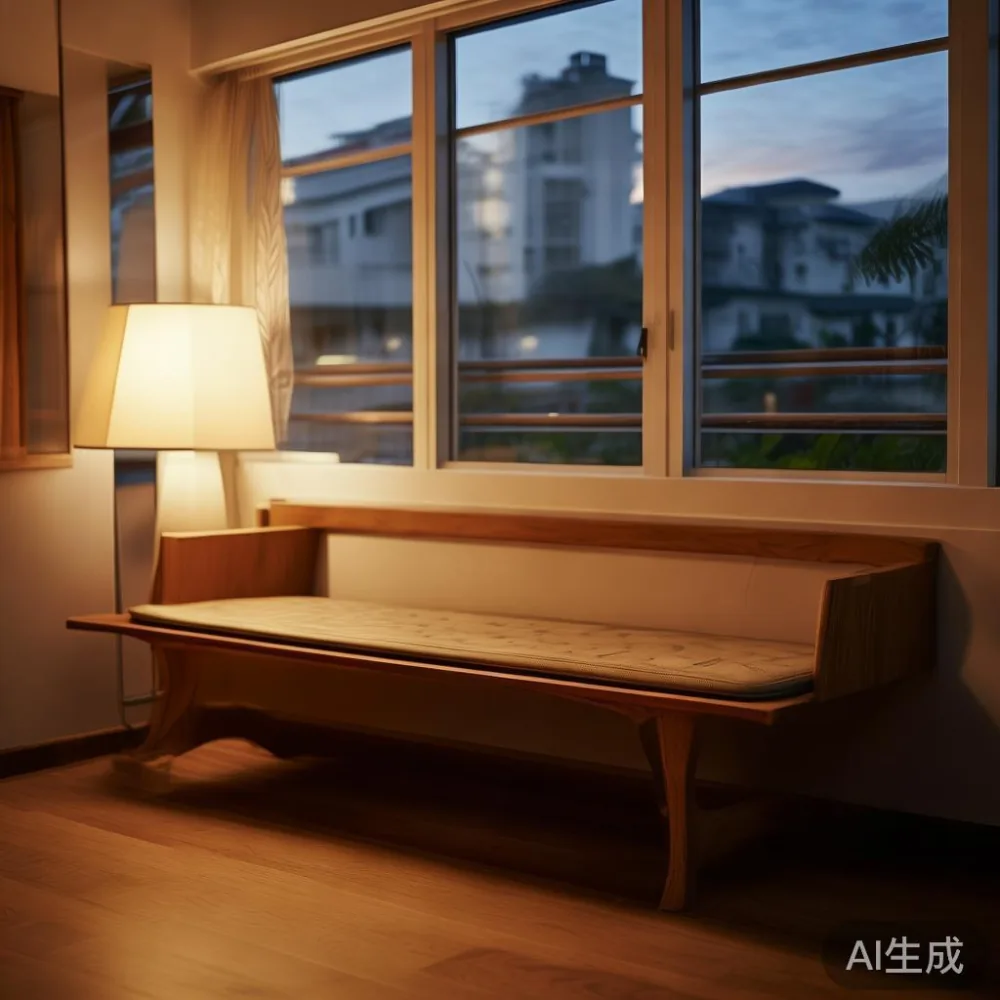
Three rules of thumb I use when visiting client homes:
- Choose one warm neutral as your anchor: sand, putty, oat, or a soft clay. Behr's "Warm Buff" or Nippon's "Natural Beige" sit in this range.
- Limit your wood tones to two across the whole flat. If your dining table is American walnut, your storage bench, bedside nightstand, and wardrobe doors should sit in the same walnut family — not a mix of teak, pine, and oak.
- Reserve one "quiet" element per room that is purely tactile. In Priya's case, that was the brushed-brass handle on the storage bench.
Light luxury — whether French, American, or post-modern — works in this palette because it is really just restrained geometry with one indulgent material moment. A French light luxury piece might be a bouclé armchair; an American light luxury piece tends to be a wider, lower walnut dining table; a post-modern light luxury piece leans into rounded corners and integrated handles. The storage bench is the most affordable way to introduce any of those styles into a small flat, because a single 120 cm bench costs roughly S$680–S$1,150 in Singapore, versus S$3,200+ for a designer armchair.
What is the difference between Italian light luxury master bed and modern furniture?
An Italian light luxury master bed is a category of bed frame that combines restrained geometry (clean headboard, slim profile, no ornate carving) with one indulgent material moment — typically a fully upholstered headboard in bone-coloured leather or bouclé, paired with solid wood legs in walnut or canaletto — whereas modern furniture refers to a broader design movement from the mid-20th century onward that prioritises function, industrial materials, and absence of ornament. In practice, an Italian light luxury master bed is modern furniture with a softer hand and a higher material budget, which is why the two terms are often confused on retail sites.
This distinction matters when you are matching pieces across a flat. If your bedroom carries an Italian light luxury bed frame, your living area can echo that softness with a marble table side surface and a solid wood sofa with linen cushions — without committing to a matching Italian suite that would cost S$12,000+ and overwhelm a 12 sqm HDB master bedroom.
Why does a storage bench anchor a warm minimal room better than extra chairs?
A storage bench does four jobs in a small Singapore flat, and that is exactly why it beats the alternatives.
- Seating for two at the dining table. A 120–140 cm bench fits three adults comfortably where two armchairs would block the corridor.
- Hidden storage. A bench with a lift-up lid holds about 60 L — roughly 12 pairs of sandals, three sets of bedsheets, or all the random cables and adapters that Singapore households accumulate.
- A drop zone. With HDB entry doors opening directly into the living or dining area, you need somewhere for bags, keys, and the GrabFood delivery to land. A bench with a tray on top is the Singapore equivalent of a Western mudroom.
- Visual weight. A solid wood storage bench under a window grounds the room in a way that two plastic stools or a slim console cannot.
Priya's flat went from feeling like a showroom to feeling like a home the moment we replaced her two stools with a 130 cm walnut storage bench weighing 28 kg. The bench's mass was the point. In warm minimal design, you want fewer objects, but the ones you keep should feel permanent. A 28 kg solid oak bench feels permanent; a 4 kg plastic stool does not.
How do I measure, deliver, and fit a storage bench through an HDB door?
This is the question every Singapore buyer should ask before paying a deposit, because I have seen at least four people in the Bedok and Punggol HDB forums post photos of cardboard boxes jammed into service lifts. Use this checklist.
- Measure your HDB door: standard units are 0.9 m wide × 2.1 m tall, but some older flats in Queenstown or Tiong Bahru are 0.8 m wide.
- Measure your corridor: typical HDB corridor width is 1.2 m, but the bend near the lift lobby can tighten to 1.0 m.
- Measure the lift: new HDB blocks have lifts of about 2.0 m deep × 1.6 m wide, but BTOs in Punggol are running 1.8 m × 1.5 m. Older service lifts can be 1.4 m × 1.1 m.
- Confirm the bench packaging dimensions with the seller. A 140 cm bench usually ships in a 145 × 55 × 45 cm carton. If the carton diagonal exceeds your lift door diagonal, it will not fit upright — only flat.
- Ask about disassembly. Most solid wood benches from Foshan factories like MIDHILL ship with the legs detached in a separate small carton, reducing the main carton by about 12 cm in height.
For Priya, the deciding factor was that MIDHILL offered free door-to-door shipping above US$350 (about S$470), with a 14-day return window if the piece did not fit her vision. The bench arrived at her Tampines unit in 18 days from order, well-packed, and the two delivery men carried it up to the 9th floor without using the service lift — they walked it up the fire stairwell because the carton was slim enough. That kind of flexibility is rare among Singapore furniture retailers, most of whom charge S$80–S$180 for delivery above the 5th floor.
Which storage bench dimensions suit a Singapore dining area?
Match the bench length to your table length, then drop 20–30 cm on each side so people can still pull out chairs at the ends.
- 120 cm dining table → 90–100 cm bench (rare; usually you buy a 120 cm bench and let it extend past the table).
- 140 cm dining table (the most common 4-seater in HDB flats) → 110–120 cm bench.
- 160 cm dining table (typical 6-seater in a 5-room HDB or condo) → 130–140 cm bench.
- 180 cm dining table → 150–160 cm bench.
For height, 45 cm is the standard Singapore dining bench height, matching the 73–75 cm seat height of most solid wood dining tables. Depth should sit between 35 cm and 42 cm — shallower than a chair, so people can still squeeze past the table when someone is seated. The most popular configuration I see in Punggol and Sengkang new launches is a 130 cm × 38 cm × 45 cm bench in American walnut or white oak, which costs roughly S$850–S$1,100 and weighs between 24 kg and 32 kg depending on the wood density.
Which wood tone and finish reads warmest without darkening the room?
This is the most common mistake I see: a buyer falls in love with a dark walnut piece on the showroom floor, installs it under a north-facing HDB window, and the room suddenly looks like a Singapore kopi tiam at 8 pm. North-facing units in particular get the least direct sunlight, so they need lighter woods or you end up turning on lights at noon.
For north-facing HDBs (most BTOs in Punggol, Sengkang, and parts of Tampines): choose white oak, ash, or a light-walnut stain with a satin rather than matte finish. Aim for a wood tone between Janka hardness 1,300 and 1,500 if you want durability without the visual heaviness of teak (Janka 1,070) or rosewood (Janka 2,200+).
For south- and east-facing units (Bedok, Marine Parade, some Tampines blocks): you can go a notch darker — mid-walnut, or a smoked oak with a slight grey cast — because the natural light will warm it up rather than flatten it.
For the finish, satin oil-based is the right call over 90% of the time in a warm minimal interior. A matte finish looks chalky under Singapore humidity after about 14 months, and a high-gloss finish is impossible to maintain in a home with kids, GrabFood deliveries, and the occasional spilled kopi. A satin oil finish can be refreshed every 18–24 months with a 30-minute wipe-down of danish oil, which is why MIDHILL offers a lifetime refinishing service — you ship the top back or, for Singapore customers, arrange a local refinisher through their partner network.
What about the bedroom — can a storage bench work there too?
Yes, and this is where you move from the dining area into the bedroom as a consistent design thread. A storage bench at the foot of the bed replaces the need for a blanket box, gives you somewhere to sit while putting on shoes, and visually closes the room in a way that feels intentional rather than cramped.
In a 12 sqm HDB master bedroom with a queen Italian light luxury master bed (typical footprint 160 × 210 cm), a 140 cm × 40 cm × 45 cm bench at the foot leaves 50–60 cm of walking space on each side, which is the minimum comfortable clearance for two people to pass. The bench can store four sets of bedsheets, two winter quilts (rare in Singapore but some expats keep them), or out-of-season clothing if your wardrobe is already full.
Match the bench wood to your bed frame wood. If your bed frame is American walnut, the bench should be American walnut. If your bed frame is white oak with a bouclé headboard (a French light luxury pairing), the bench should be white oak with a bouclé cushion on top — a small detail that ties the room together without spending an extra S$2,000 on a matching suite.
How do I style a storage bench so it does not look like a flat-pack purchase?
Three small moves, each under S$80, separate a flat-pack-looking bench from one that looks like it was built for the room.
- Add a 5 cm thick cushion on top, in a fabric that echoes your sofa or dining chairs. For a warm minimal interior, an oatmeal linen or a stonewashed cotton in a neutral tone works. Custom cushions in Singapore run S$65–S$140 for a 130 cm bench pad.
- Place one object on it that is not for sitting — a ceramic vase, a stack of three design books, a marble table tray. The object should be at least 15 cm tall so it breaks the horizontal line of the bench. A marble table tray is a common touch because it picks up the same stone you might use on a coffee table or bedside nightstand.
- Anchor it with something behind. A piece of framed art, a wall sconce, or simply a wall in the same warm neutral. A bench floating in the middle of a blank wall reads as temporary; a bench with intention behind it reads as built-in.
Priya ended up doing all three. Her cushion was a S$95 oatmeal linen pad from a Tiong Bahru tailor, the marble table tray was a S$60 travertine piece from a homeware shop in Joo Chiat, and the wall behind got a single 60 × 80 cm framed print in a thin oak frame. Total styling cost: about S$200. The visual change in the room was disproportionate to the spend.
What should I budget for a quality solid wood storage bench in Singapore?
Realistic pricing for a 120–140 cm solid wood storage bench in Singapore in 2026, before GST:
- Mass-market flat-pack (IKEA, Taobao agents): S$180–S$420. Usually particleboard with a wood veneer, 1-year warranty, no refinishing service.
- Mid-range solid wood (local makers, regional brands): S$680–S$1,400. Solid oak or ash, 3–5 year warranty, some offer paid refinishing.
- Foshan factory direct, light-luxury tier (the category MIDHILL sits in): S$850–S$1,600. Solid American walnut, white oak, or ash; 10-year structural warranty; lifetime refinishing; free shipping above US$350 (about S$470).
- Designer European brands (BoConcept, Muuto, &Tradition resellers): S$2,400–S$4,800. Often uses veneered MDF over solid wood, 5-year warranty, no refinishing.
Add GST at 9% on top. For a S$950 bench, that is S$1,035.50 delivered. Delivery to a 4th-floor HDB unit in Tampines typically adds S$40–S$80 unless the order crosses the free-shipping threshold.
How do I care for a solid wood storage bench in Singapore humidity?
Singapore sits at 80–95% relative humidity for most of the year, which is the natural enemy of solid wood furniture. Three habits keep a bench in showroom condition for 10+ years:
- Wipe with a dry microfiber cloth weekly. Never use a wet cloth or all-purpose cleaner — water raises the grain and dulls the finish within months.
- Keep the bench 15–20 cm away from the wall if it sits against an exterior HDB wall. Air circulation prevents the back panel from absorbing moisture and developing mildew at the joinery.
- Run the aircon or a dehumidifier in the room for at least 4 hours a day during the December–February wet phase. Target 55–65% indoor humidity. A S$120 Xiaomi dehumidifier handles a 12 sqm bedroom easily.
For deeper restoration, danish oil applied once every 18–24 months keeps the wood hydrated and the colour consistent. The 30-minute process is the same whether you do it yourself or send the top back to the maker. Brands that offer lifetime refinishing — and there are only a handful in the Foshan-to-Singapore corridor, MIDHILL among them — will pick up the piece, refinish it, and return it within 21–28 days for roughly S$120–S$180, which is cheaper than buying a replacement.
Is a storage bench worth it if I already have a wardrobe and sideboard?
If you already own a wardrobe, sideboard, and nightstand in the same wood tone, a storage bench becomes the visual closure of the system rather than another piece of clutter. It is the difference between a flat full of furniture and a flat with a coherent interior. The bench ties the dining table, the bed frame, and the wardrobe together because it carries the same wood and the same restraint.
The honest answer is that a storage bench is the lowest-cost, highest-impact piece in a warm minimal interior. It costs less than a single accent chair, it holds more than a sideboard, and it solves the entryway problem that every HDB and condo in Singapore has. If you are building a warm minimal flat from scratch — dining table first, bed frame second, wardrobe third — the storage bench should be the fourth piece you buy. Priya learned this the hard way, after moving in six weeks earlier and trying to live without one. Now that the bench is in place, she is planning to swap her plastic stools for matching pieces in the rest of the flat, starting with the balcony, where a smaller 90 cm version of the same bench will hold her plant pots and a pair of gardening gloves.
For anyone reading this and weighing options, the practical route is to shortlist three benches in the S$850–S$1,200 range from brands with a 10-year structural warranty, confirm the lift and door dimensions with the seller in writing, and place the order with enough lead time that a 14-day return window still protects you after the piece arrives. The Nordic sofa guide australia covers a similar decision framework for living room seating if you want to extend the same logic to your sofa — the underlying principles of measuring, wood matching, and humidity care apply identically to a solid wood sofa, a marble table, or a wardrobe. Warm minimal is not about buying less; it is about buying fewer, better things that earn their place in the room for the next 15 years.