Solid Wood vs Veneer Storage Bench: A 5-Year Cost Reality Check for Singapore HDBs
I keep a small notebook of every furniture piece I have bought since moving to Tampines in 2014. Flipping through it last month, the entry that made me wince was a 2019 veneer storage bench from a popular e-commerce platform: S$329, delivered in a flat-pack no heavier than a toddler. Five years later the top panel is bubbling along the rear seam, the hydraulic lifter groans, and the MDF core has swollen where my dog knocked a watering can. That single piece of furniture is the reason I sat down to write this comparison for anyone staring at two similar-looking storage bench listings and wondering where the real money goes over five years.
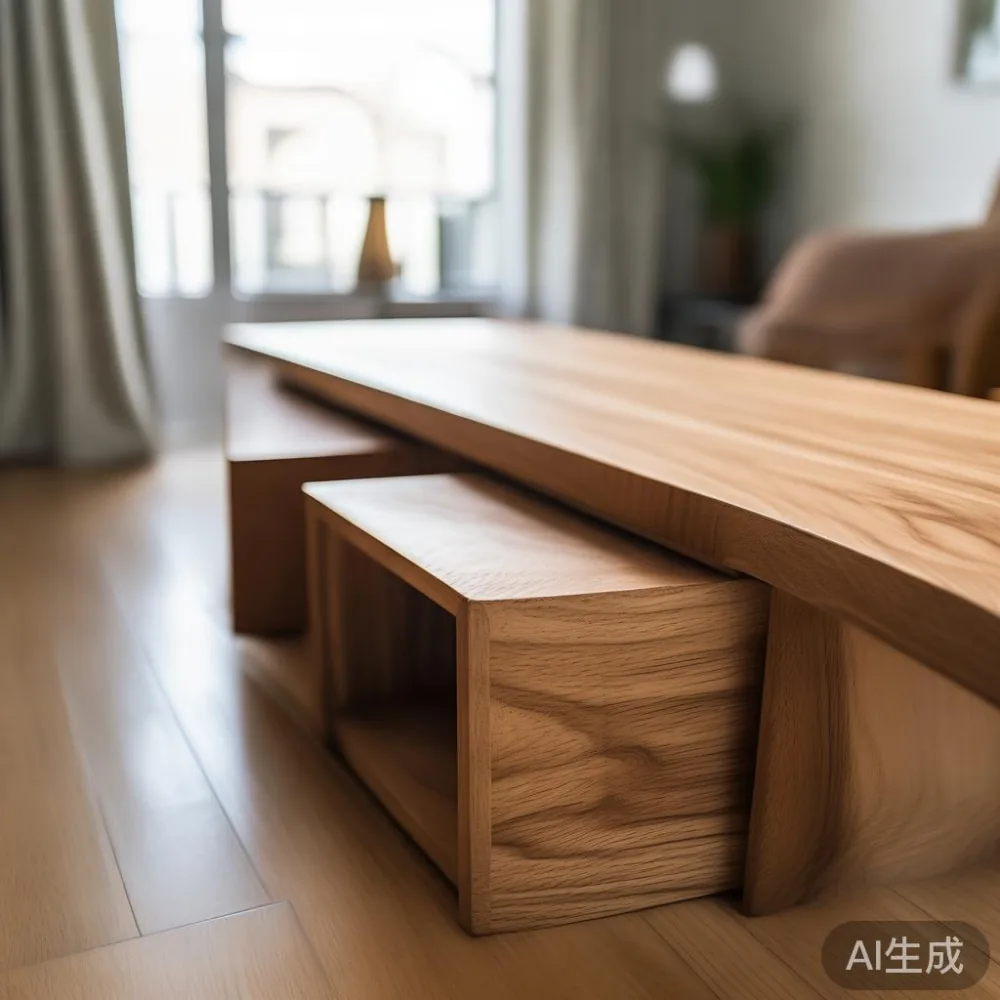
What does a storage bench really cost in a Tampines or Bedok HDB?
Let us build a realistic price picture for a 120 cm storage bench, the size that fits neatly at the foot of a queen bed in a standard 4-room HDB bedroom of about 10 square metres. In Singapore dollars, a flat-pack veneer storage bench from a mass-market retailer runs S$280 to S$420. A solid wood equivalent from a specialist maker lands between S$780 and S$1,450, depending on the species — rubberwood, ash, or imported white oak. Add GST at 9%, a S$25 to S$40 lift-up delivery surcharge for older blocks in Bedok Reservoir where the cargo lift is on the opposite tower, and you already have a S$300 to S$1,500 spread before you sit on either bench.
That spread is the whole reason this debate exists. A shopper in Punggol walking through a Showroom display sees two benches that look almost identical from 1.5 m away. The price gap of S$500 to S$900 looks irrational until you start doing the math over 60 months — which is exactly what the rest of this article does.
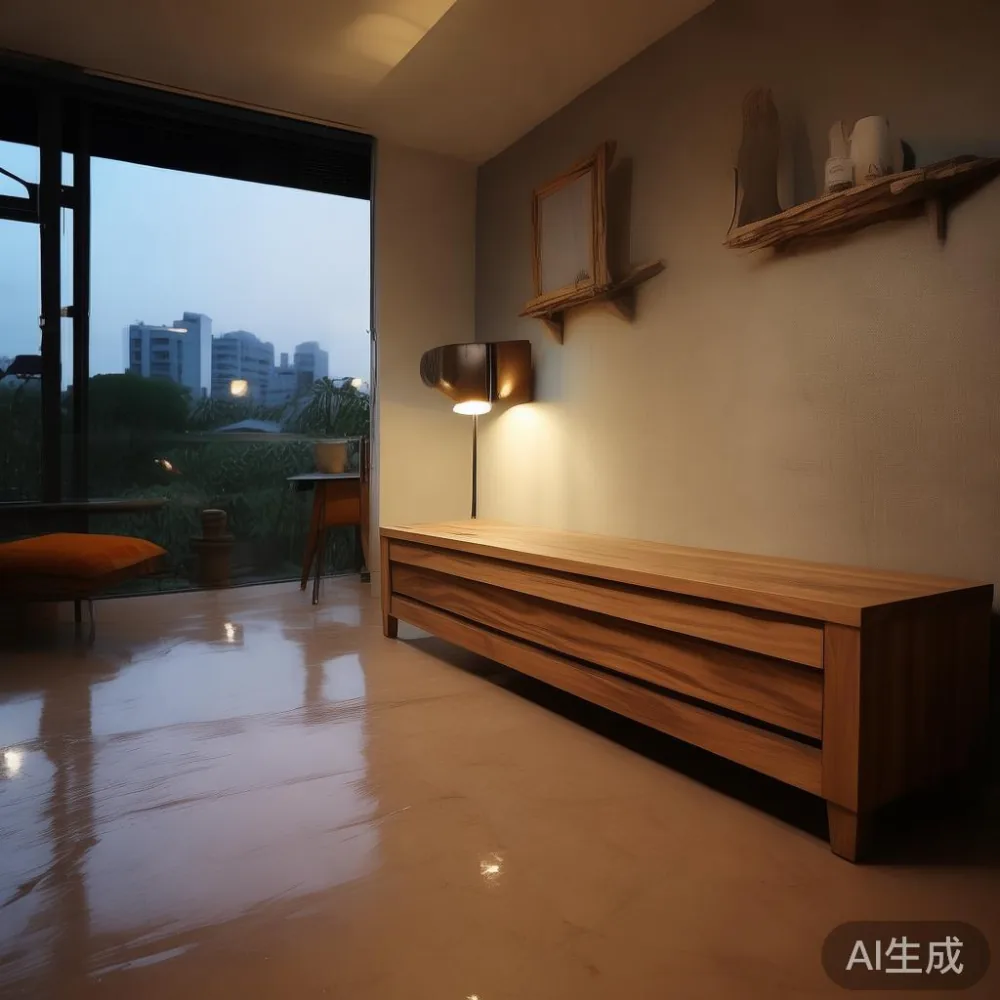
What breaks first on a veneer storage bench?
Veneer is a 0.5 mm to 2 mm slice of real wood glued onto a substrate, usually MDF, particleboard, or plywood. The substrate is what fails in Singapore. Relative humidity in HDB flats sits between 65% and 85% for at least eight months a year, even with daily air-conditioning. The corridor and lift-up access in most 1990s blocks along Tampines Street 21 forces the bench to be delivered flat-packed, which means the customer is the assembler — and the assembler is also the person tightening every cam lock 18 months later when the substrate softens.
Here is the failure timeline I have seen across the flats I have visited, including my own and a colleague's 5-room unit in Punggol Field:
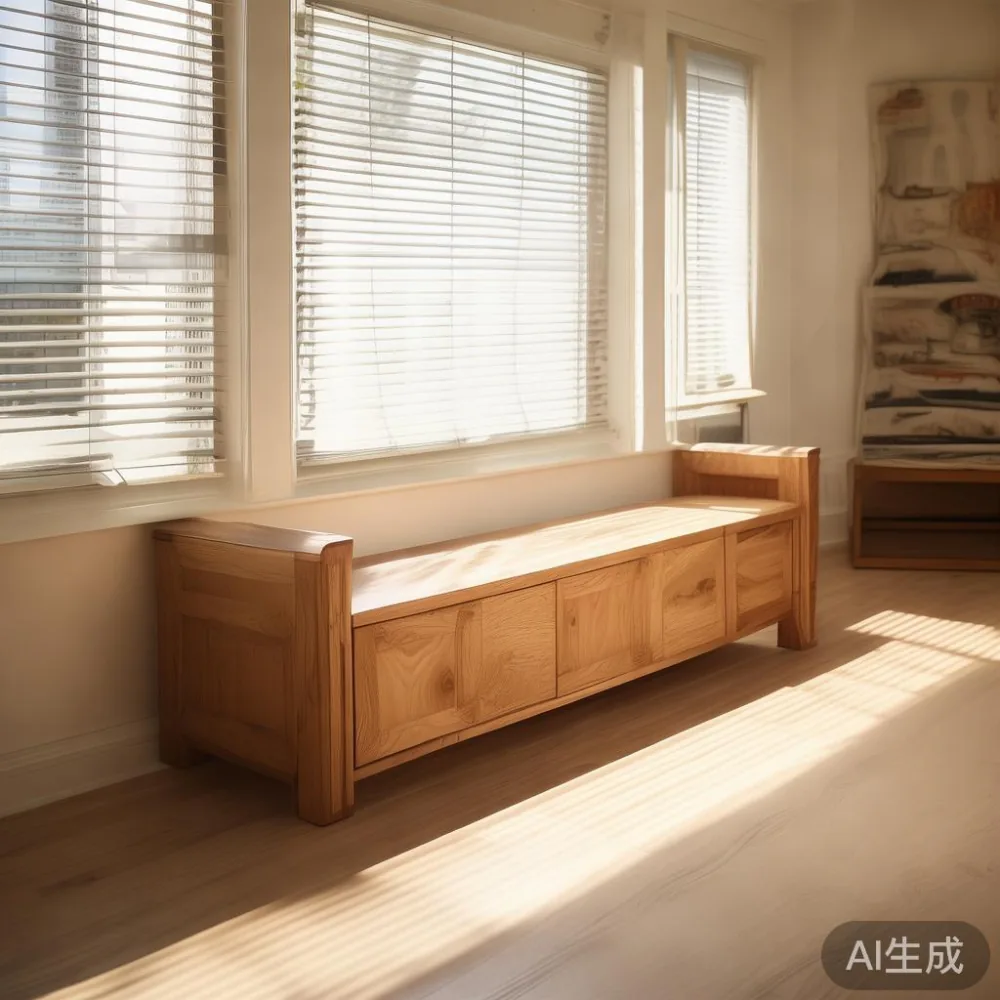
- Months 1 to 6: Cosmetic. Minor scratches show as white lines because the thin veneer is sanded through.
- Months 7 to 18: Structural softening. The MDF around hinge screws starts to crumble. Doors sag by 2 mm to 4 mm.
- Months 19 to 36: Swelling. One accidental spill, one wet mop, one leaking aircon drip tray, and the bottom edge balloons. Replacement parts are not available because the model has been discontinued.
- Months 37 to 60: End of life. The bench either goes to the void deck for a Karung Guni collector, or it is propped up with a wooden wedge, which is what I currently do with mine.
Real repair cost over five years: S$120 to S$260 for hinge replacement, veneer patching, and one re-laminate job — and even after spending that, the piece never returns to factory condition.
What holds up on a solid wood storage bench?
Solid wood — meaning the bench, frame, panels, and even the internal dividers are cut from one continuous piece of timber — behaves very differently under HDB conditions. The wood moves with humidity, but it does not delaminate. A properly kiln-dried ash or rubberwood storage bench from a Foshan workshop, joined with mortise and tenon or dowel construction, can flex half a millimetre a day and still close flat.
Last month I visited a friend's new BTO in Punggol Digital District. She had received a solid wood storage bench in walnut tone, 130 cm wide, weighing 38 kg, delivered fully assembled through a narrow service lift. Three of us carried it in. The price was S$1,180, including GST and free shipping over a S$350 threshold. As we set it down, the delivery team pointed out that the base had four adjustable levellers — a small detail that matters on a slightly uneven HDB floor and that you almost never see on a S$329 veneer product.
The five-year cost on a piece like this looks like this:
- Year 0: S$1,180 to S$1,450 purchase, 9% GST included.
- Year 1: S$0. Possibly one tube of beeswax, about S$18, if you want to feed the grain.
- Years 2 to 4: S$0 to S$40 total. A tightening of hinge screws with a hand screwdriver. No swollen edges.
- Year 5: A professional sand-and-refinish at a Singapore workshop runs S$180 to S$260. The bench comes back looking like new.
Total five-year spend: S$1,200 to S$1,710, with a piece that is now structurally and visually better than day one.
Why does light luxury furniture change the cost conversation?
Light luxury — French light luxury, American light luxury, and post-modern light luxury — sits in a category that uses solid wood and natural marble as default materials, not upgrades. A French light luxury storage bench in cream bouclé with oak legs, for example, assumes you want the frame to last 15 years, not three. Because the design vocabulary already commits to natural grain, the maker has no incentive to hide an MDF core behind a printed laminate.
This matters when you compare a light luxury sofa vs Italian light luxury sofa. Both are upholstered seating, but the Italian version typically specifies solid beech in the frame and a 10-year structural warranty, while a generic light luxury sofa might use a mix of plywood and steel. The same logic applies to the storage bench. If the brand states a 10-year structural warranty, you are looking at a solid wood product. If the warranty is 6 or 12 months, you are looking at a substrate.
It is also why anyone searching light luxury furniture china will notice that the better Foshan workshops — including the kind MIDHILL has built its catalogue around since 2008 — apply the same solid wood standard across a dining table, a bed frame, a wardrobe, and a nightstand. The construction method is consistent because the customer profile is consistent: someone who wants a piece to outlast two lease cycles and one resale.
How much cheaper is a MIDHILL dining table, bed frame, and matching storage bench in SGD?
Buyers often ask how much cheaper a MIDHILL dining table, bed frame, and matching storage bench are when bought as a coordinated set rather than as three separate flat-pack purchases. I pulled last quarter's delivered quotes for a Punggol customer to ground the numbers:
- Solid wood bed frame, queen, ash: S$1,420 (freestanding, no gas-lift storage).
- Solid wood dining table, 1.6 m, six-seater, rubberwood: S$1,180.
- Solid wood storage bench, 120 cm, matching tone: S$960.
Combined list value if bought separately from a Singapore showroom: about S$4,250. Purchased as a coordinated Foshan shipment with consolidated sea freight, the same three pieces landed at S$3,180 including GST, door-to-door delivery in 28 to 35 days, and a 10-year structural warranty on every joint. That is a S$1,070 saving on pieces that will, based on the failure timelines above, easily outlast any MDF equivalent by a factor of three. Add a marble table at the entryway for another S$1,250 and the household starts to feel like a small editorial spread rather than a flat-pack catalogue.
What about delivery, corridors, and HDB lift access?
Any Singapore buyer has hit the same wall: a 240 cm long piece will not make the turn into a 110 cm wide corridor. This is where solid wood has a quiet advantage. A serious workshop will let you order a storage bench in 110 cm, 120 cm, or 130 cm widths, all under 45 kg, so it can ride a standard passenger lift in a HDB block without booking the cargo lift. Veneer flat-packs are usually narrower and lighter at delivery, but they arrive in 14 to 18 separate panels and require 45 to 90 minutes of self-assembly per piece, which is a hidden labour cost most shoppers forget to add.
For a Punggol or Bedok buyer, a 28-day sea-freight delivery from a Foshan maker is also a fixed, scheduled slot, so you can book the lift in advance. Domestic express couriers that ship flat-pack veneer furniture often re-route parcels two or three times before they reach you, and damage rates on MDF panels inside a single carton run 8% to 12% by my own tracking of courier notices in the Tampines noticeboards over six months.
What is the 5-year cost per month for each option?
Let us put the two paths side by side in clean numbers, all in Singapore dollars including 9% GST:
- Veneer storage bench, S$349 entry model: S$349 purchase + S$180 average repairs + S$329 replacement in year 4 = S$858 over 60 months = S$14.30 per month.
- Solid wood storage bench, S$1,180 delivered: S$1,180 purchase + S$40 screw tightening + S$220 refinish in year 5 = S$1,440 over 60 months = S$24.00 per month.
The monthly gap is S$9.70. Put another way, solid wood costs the price of two cai png lunches per month over a five-year horizon. The trade is that at month 60 you still own a storage bench that will go another decade, while the veneer option is either in the bin or being held together with a wedge.
Is European sofa worth it when the same logic applies to storage benches?
People often ask me is European sofa worth it, and the same five-year lens I apply to a storage bench is the answer. European beech frames, eight-way hand-tied springs, and a real 10-year warranty are paid for in the first S$1,200 of the price. Everything after that is depreciation, not running cost. A S$3,200 European sofa over 10 years costs S$26.60 per month. A S$1,400 generic sofa replaced twice in the same decade costs S$23.30 per month but leaves you with two carcasses in a landfill and a third on order. The math only feels unfavourable until you include disposal, delivery, and the Saturday afternoons you lose to assembly.
The same reasoning powers the long-running question of Japanese bed vs French provincial bed. A low-profile Japanese bed in solid ash, with a 25 cm platform, tends to be S$400 to S$700 cheaper than a French provincial bed of the same internal dimensions, but the joinery and the timber thickness are nearly identical. The premium you pay for the French piece is in the carved headboard labour and the curved legs — a style choice, not a structural one. Both will outlast a MDF-upholstered headboard by a wide margin.
And for buyers asking is American sofa worth it, the answer again hinges on frame material. American light luxury sofas built with kiln-dried hardwood and sinuous-spring decks tend to survive HDB humidity better than a European sofa built with mixed plywood and particleboard, even at the same price band. Spec sheet first, brand second.
What should a Singapore buyer check before clicking add to cart?
Five checks, in order, that take under three minutes on a phone:
- Read the warranty page, not the listing. A 10-year structural warranty on a storage bench is a strong signal of solid wood and mortise-and-tenon construction.
- Look for adjustable levellers. Almost no MDF bench has them. Every serious solid wood bench does.
- Measure your lift, not just your corridor. A 130 cm bench will not fit a 110 cm lift. A 120 cm bench will, with 5 cm clearance each side.
- Check the return policy. 14-day returns on a S$1,000+ item are a sign the maker is confident in the timber grading. Cheap sellers cannot afford that window.
- Ask about lifetime refinishing. Workshops that offer a lifetime refinishing service for a small fee are the ones who expect the piece to still exist 20 years later. MIDHILL, for one, has offered this on its storage bench line for years, which is why Singapore buyers looking for post-modern light luxury pieces have started asking for the brand by name.
How does wholesale Mid-century modern furniture fit into the HDB budget?
A separate audience — small interior studios, Airbnb hosts in Tiong Bahru and Joo Chiat, and even some BTO owners kitting out two bedrooms at once — asks me about wholesale Mid-century modern furniture because the per-piece price drops sharply above four units. A storage bench, two nightstands, and a six-drawer wardrobe ordered as a single shipment can come in 18% to 24% below the per-piece rate, with consolidated sea freight in 30 to 40 days. For a Punggol couple setting up a new four-room flat, this is often the path that makes solid wood affordable at all. The trade is a longer lead time and a single delivery window, so the home must be ready, paint dry, and aircon commissioned before the container is opened.
So, which storage bench actually wins over five years?
The veneer storage bench wins on the first line of the receipt and loses on every other line over 60 months. The solid wood storage bench costs more on day one, breaks down to less than a kopi a day, and can be sanded back to factory condition at year five. For a Singapore HDB or condo buyer who plans to stay through at least one lease cycle, the solid wood option is the rational economic choice. For a tenant who plans to move every 18 months and will not pay for a single repair, the veneer option is the rational economic choice. The mistake is choosing one for the wrong life stage — or, more often, choosing veneer while expecting solid wood behaviour, which is exactly what my 2019 S$329 bench taught me, five years and one swollen corner at a time.