Solid Wood Furniture Cost: What Influences the Price
Ask a Singapore homeowner to estimate the price of solid wood furniture, and the numbers can be surprisingly far apart. One quote might show SGD 680 for a dining table, while another reaches SGD 2,400 for a wardrobe that looks similar in photographs. The difference is rarely explained with a simple material label. It comes down to timber species, construction, dimensions, hardware, finish, logistics, and the level of service attached to the order.
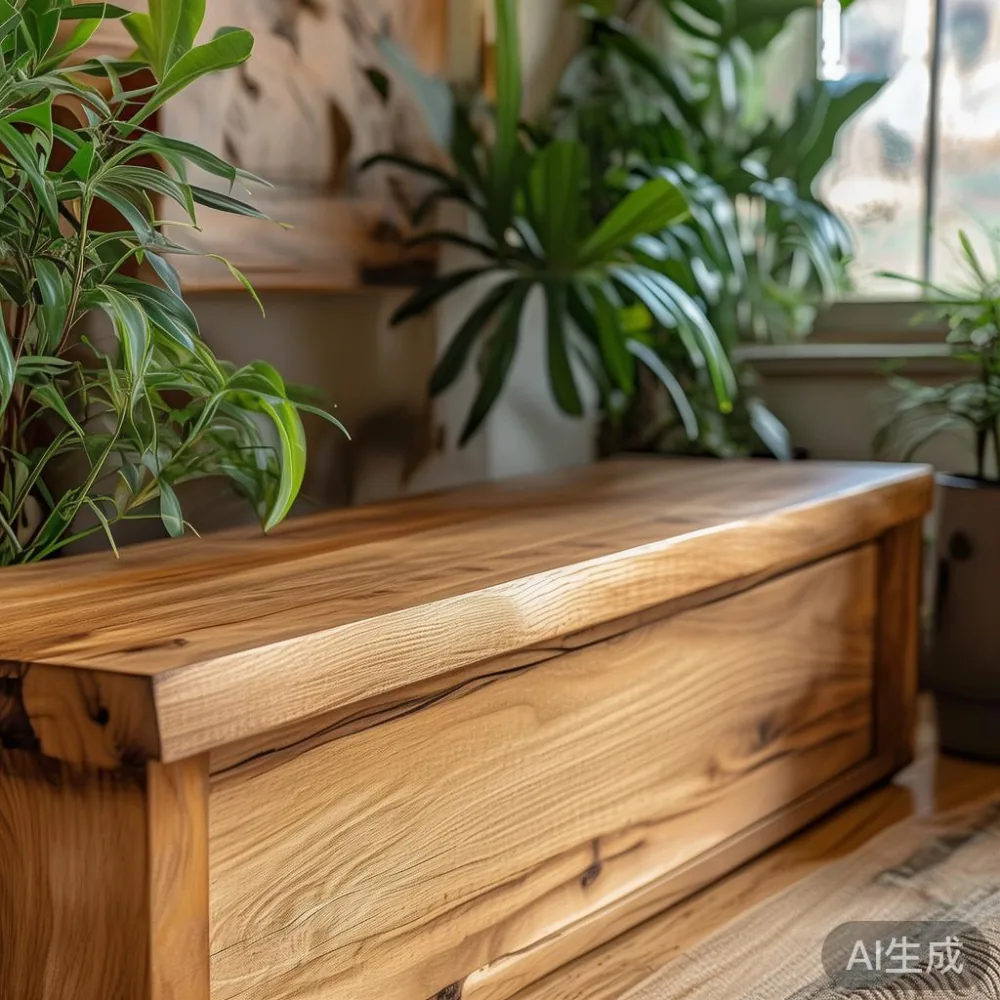
That distinction matters in places such as Tampines, Bedok, and Punggol, where an HDB flat may have narrow lift doors, compact corridors, and rooms planned around careful use of every square metre. A storage bench must fit through the building's access route, arrive without damaging walls, and remain useful after it is installed. Price is not merely what you pay for appearance; it is the combined cost of good materials, accurate making, safe delivery, and ownership support.
Is a solid wood storage bench always more expensive than a veneer or MDF one?
Not always, but solid wood usually carries a higher material cost because the maker buys actual pieces of timber rather than engineered boards. MDF may cost about SGD 45 to SGD 90 for a standard 90 × 45 × 45 cm panel, while comparable solid hardwood components can cost SGD 110 to SGD 260 before fabrication. A framed storage bench using oak, ash, or rubberwood will often land around SGD 320 to SGD 780 in Singapore, depending on the design, finish, and amount of joinery.
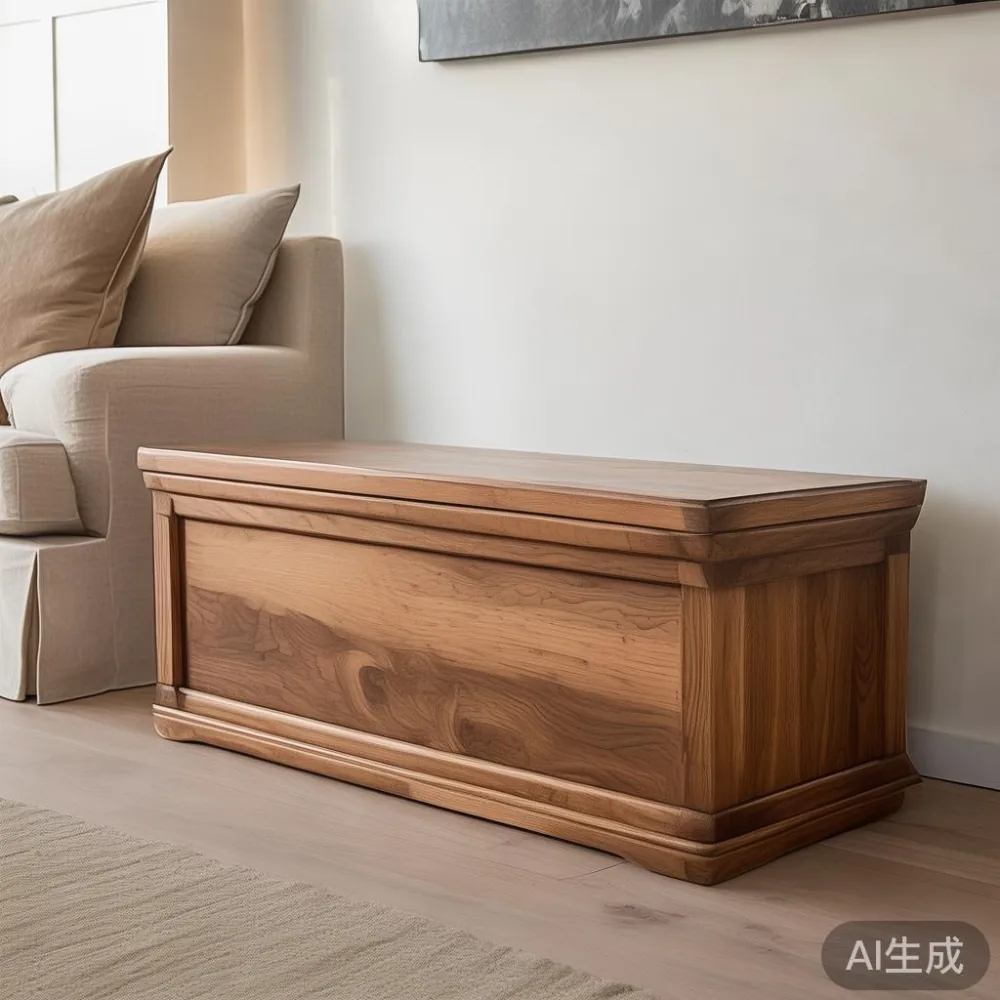
The word “solid” only tells you that the visible structural parts are wood, not how dense, stable, or well finished they are. Two storage bench designs can use solid wood and still differ by SGD 300 because one has simple dowelled construction while the other includes shaped legs, a mitred frame, drawers, adjustable shelves, and hand-finished edges. Veneer can also be entirely appropriate when used honestly and engineered well. It may even be the sensible choice for a lightweight bench intended to move between a bedroom and a HDB living room.
Look beyond the sample photograph. Ask for the timber species, board thickness, drawer construction, and finish schedule. A credible quote should identify measurements such as a 120 × 40 × 45 cm seat with 18 mm panels and 45 × 45 mm legs, rather than offering only a finish name and a collection name.
What makes one solid wood dining table cost more than another?
Timber species is one of the clearest price drivers. Rubberwood and some Asian hardwoods can support a practical dining table in the SGD 680 to SGD 1,280 range. White oak, walnut, or other premium timbers can move a comparable design into the SGD 1,600 to SGD 3,200 range. Those are market ranges, not fixed retail prices, and a complex base, thicker top, or made-to-order size will affect the figure further.
Thickness changes both material use and perceived quality. Moving from an 18 mm top to a 25 mm top adds perhaps SGD 90 to SGD 220 for a table around 160 cm long. A 200 cm top uses more wood and may require additional bracing, so the cost can rise by another SGD 150 to SGD 400. Joinery is another factor. Long dowels, mortise-and-tenon joints, and supporting corner blocks take more labour than concealed screws inserted into a basic frame.
Finishing should be priced as a system rather than a colour swatch. A water-based matte coating may add SGD 70 to SGD 150, while a multi-coat hand-rubbed oil finish can add SGD 180 to SGD 420. The finish should be described by sheen, coat count, preparation, and expected care. It should not be confused with a photograph of the right tone. In Singapore's humidity, a well-prepared surface is especially important, even though the local climate is not the same as a warehouse in northern Europe.
For a compact condo dining area, a 140 × 80 cm table may cost SGD 780 to SGD 1,500, while a 180 × 90 cm version may range from SGD 1,050 to SGD 2,100. The smaller footprint can also determine whether a table is merely affordable in price or genuinely usable in the room. Measure chairs, circulation space, and the route from the lift before selecting the width.
Do hardware, joinery, and comfort explain the price of a solid wood sofa?
A solid wood sofa combines two price structures: the timber frame and the upholstered body. The timber frame may use kiln-dried hardwood, plywood, or engineered components depending on the design, while foam density, fabric, stitching, and suspension determine comfort. A three-seat model with a solid wood frame might retail from about SGD 1,280 to SGD 2,800, compared with roughly SGD 780 to SGD 1,650 for a simpler frame-and-foam construction.
The visible frame still matters. Solid wood legs, rails, and supporting members should have declared sections rather than vague claims. A sofa with 45 × 45 mm front legs and 20 mm rails may justify a higher figure than one with decorative 30 × 30 mm parts. Under the upholstery, the support system affects longevity: well-spaced webbing, reinforced joints, and layered foam can add SGD 180 to SGD 520 to the final price.
Design references can also shift demand and price. If you are comparing a light grey luxury sofa with a warmer timber-led model, fabric selection may account for SGD 100 to SGD 350. European light luxury for guest room usually needs durable, easy-clean textiles, restrained proportions, and enough clearance for a narrow corridor. The useful comparison is not whether one image looks fashionable, but whether its dimensions, cushion density, frame, and warranty match the room.
Two other searches reveal how people describe the same design language. For a buyer comparing a light luxury sofa vs Japandi sofa, the main distinctions are sculptural detail versus simplicity, refined upholstery versus visible wood, and layered visual softness versus clean lines. Meanwhile, a search for the best Italian light luxury sofa for 2026 often points towards crafted silhouettes and tactile finishes rather than one fixed specification. Neither term guarantees a superior frame, so the product sheet remains more informative than the style label.
When you ask whether the best Italian light luxury sofa for 2026 suits an HDB living room, the scale test is more revealing than the style name. A sofa with a 228 cm length and an 88 cm depth can feel generous in a 10 m² room, while a 205 cm model may preserve a 70 cm circulation route. Measurement saves money because fewer sofas need alteration, return handling, or replacement.
How do bed frame and wardrobe prices scale with size and internal fittings?
A bed frame's price often rises in visible steps. A basic solid wood platform for a standard Singapore queen mattress, measuring about 152 × 191 cm externally, may cost SGD 520 to SGD 980. A framed design with a shaped headboard, slatted support, and a thicker surround can range from SGD 850 to SGD 1,650. A king-size version, roughly 182 × 191 cm, can add SGD 180 to SGD 450 because it requires more timber, longer components, and stronger bracing.
Storage changes the calculation. Drawers, lift-up mechanisms, and divided compartments are not free additions. Two drawers might add SGD 100 to SGD 220, while a hydraulic lift and full base storage can add SGD 250 to SGD 600. Hardware rated for repeated daily use should be named by its operation and load class. It should not be represented as “premium” without a test result.
If your interest is in how to style Japandi bed in bedroom, focus on proportion, low visual clutter, and a calm material palette rather than copying every published image. A 152 × 191 cm queen bed with a 92 to 105 cm headboard and 22 to 26 cm side tables can fit a typical 3.5 × 3.6 m bedroom, provided the door swing and wardrobe doors remain clear. A bed with a solid oak frame may cost more than a similar-looking painted or veneered frame because the timber grade and finish preparation differ.
For buyers comparing the best French bed for 2026, details such as an upholstered headboard, shaped timber rails, and layered padding can command a premium over a plain platform. Those features may add SGD 350 to SGD 900 depending on fabric and size. Again, they should be assessed against the room, not against a trend label.
A wardrobe is usually priced by cubic volume and fitting complexity. A modest two-door unit measuring 120 × 58 × 200 cm may range from SGD 780 to SGD 1,450. A larger 180 × 60 × 220 cm wardrobe can cost SGD 1,500 to SGD 3,000. Internal drawers, hanging rails, LED strips, and a full-length mirror can add SGD 220 to SGD 850, while a sliding or lift system can change both the price and the required door clearance.
How much do marble details change the cost of a dining or nightstand?
A marble table can cost more because natural stone varies in pattern, thickness, and processing. A 120 × 70 cm table with a 10 to 20 mm marble top may retail for SGD 980 to SGD 2,200, depending on whether the base is solid wood, metal, or stone. Marble adds roughly SGD 250 to SGD 900 over a comparable all-wood table. It also introduces practical questions about weight, support, edge protection, and stain resistance.
Weight matters during delivery. A 120 × 70 cm marble top may weigh 35 to 60 kg, while a solid wood dining table of similar length might weigh 40 to 55 kg. A stone top can therefore need two people, a rated trolley, and careful planning around lift capacity. It must not be assumed that a particular lift can accept a heavy order simply because the building has a service lift.
A solid wood nightstand usually ranges from SGD 160 to SGD 420. Adding a marble top may increase the figure by SGD 90 to SGD 240. The small saving in drawer space can be less significant than the added fragility and moving difficulty, particularly for a unit beside a bed in a compact HDB flat.
What should a Singapore buyer include when comparing delivered prices?
Compare the landed price in Singapore, including GST, rather than comparing an export price or a showroom-style figure. Singapore GST is currently 9%. On an SGD 1,200 pre-GST item, tax adds SGD 108, making the total SGD 1,308. A cheaper item can therefore become more expensive after delivery, installation, and access charges are included.
Access should be measured before ordering. A common HDB lift door is around 90 cm wide and 200 cm deep, but internal dimensions and allowed load can differ between blocks. Give the supplier the narrowest doorway, corridor turns, stair width, and lift dimensions. A storage bench longer than 150 cm may need its seat or legs disassembled. A wardrobe may need to be transported in modules. A dining table with a 190 cm top may fit diagonally, but only if the lift and landing permit it.
Delivery timing should also be written down. Made-to-order furniture may take 35 to 60 days, while stocked or simpler items may take 7 to 21 days. Standard delivery to a Singapore address might be free above SGD 350 for an eligible order, as MIDHILL states, but below that threshold a fee may apply. Confirm whether the quoted service includes carrying to the door, unpacking, assembly, and placement in the room. Charges for an extra trip or a failed access attempt can be substantial compared with the furniture's original price.
Returns, warranty, and aftercare affect the long-term cost. MIDHILL provides a 14-day return window, a 10-year structural warranty, and lifetime refinishing under the stated terms. That support can justify a higher initial price than an untested import with no local remedy. Check what the structural warranty covers, what evidence is needed for a claim, and whether refinishing includes collection, transport, labour, and coating. The numbers should be clear rather than implied.
For example, a storage bench bought for SGD 460 may need a hinge replaced after 4 years, or it may still have matching original finish and replacement hardware 8 years later. The difference in ownership cost can exceed SGD 100 even without a second purchase.
Which specifications should appear on a responsible furniture quotation?
A useful quotation needs enough numbers to compare products without a visit. For a storage bench, request length, width, height, seat height, timber species, panel thickness, leg section, drawer dimensions, finish type, and assembled weight. For a dining table, request top thickness, extension method, clearance under the apron, and the number of people it seats. For a bed frame, request external dimensions, compatible mattress sizes, centre support, and headboard height. For a wardrobe, request depth, hanging space, internal shelf loads, and door operation.
Those figures expose cost drivers that photographs conceal. A 3 cm solid timber panel can contain twice the wood of a 1.5 cm panel, while a hand-cut dovetail drawer can take 4 to 7 hours where a screw-fastened drawer takes 1 to 2 hours. A concealed soft-close runner may add SGD 25 to SGD 70 per drawer. Good quoting makes these differences visible.
Ask for a physical sample if the finish or timber is unfamiliar. In my own comparison last month, I visited a supplier and handled 3 samples from the same nominal colour: one had a coarse open grain, another displayed a smoother surface, and the third was noticeably warmer. The price difference was SGD 34 per square metre before application. On a 2.4 m² dining top, that gap becomes about SGD 82. It was a small amount, but it showed why finish selection should happen at the board rather than only on a screen.
Foshan furniture is often associated with manufacturing capacity, but the origin of a piece does not by itself explain its retail price. Material certification, timber preparation, joinery, moulding, finishing, quality checks, export packing, and local service all matter. The same production district can produce very different levels of furniture, just as the same timber can be cut and finished in very different ways.
The most sensible approach is to price a complete, measurable product rather than chase a material buzzword. Confirm that every panel and support is appropriate, compare delivered costs, inspect the finish, and read the service terms. A solid wood storage bench at SGD 590 with 20 mm panels, stable joinery, and a clear warranty may suit a Punggol home better than a superficially similar SGD 780 piece with 15 mm components and no refinishing support. The true price is the amount you pay for the furniture you need, the access it must pass through, and the service you can rely on after delivery.