Humidity, HDB Lifts, and Heirloom Wood: A Practical Guide for Singapore Buyers Shopping for a Solid Wood Storage Bench
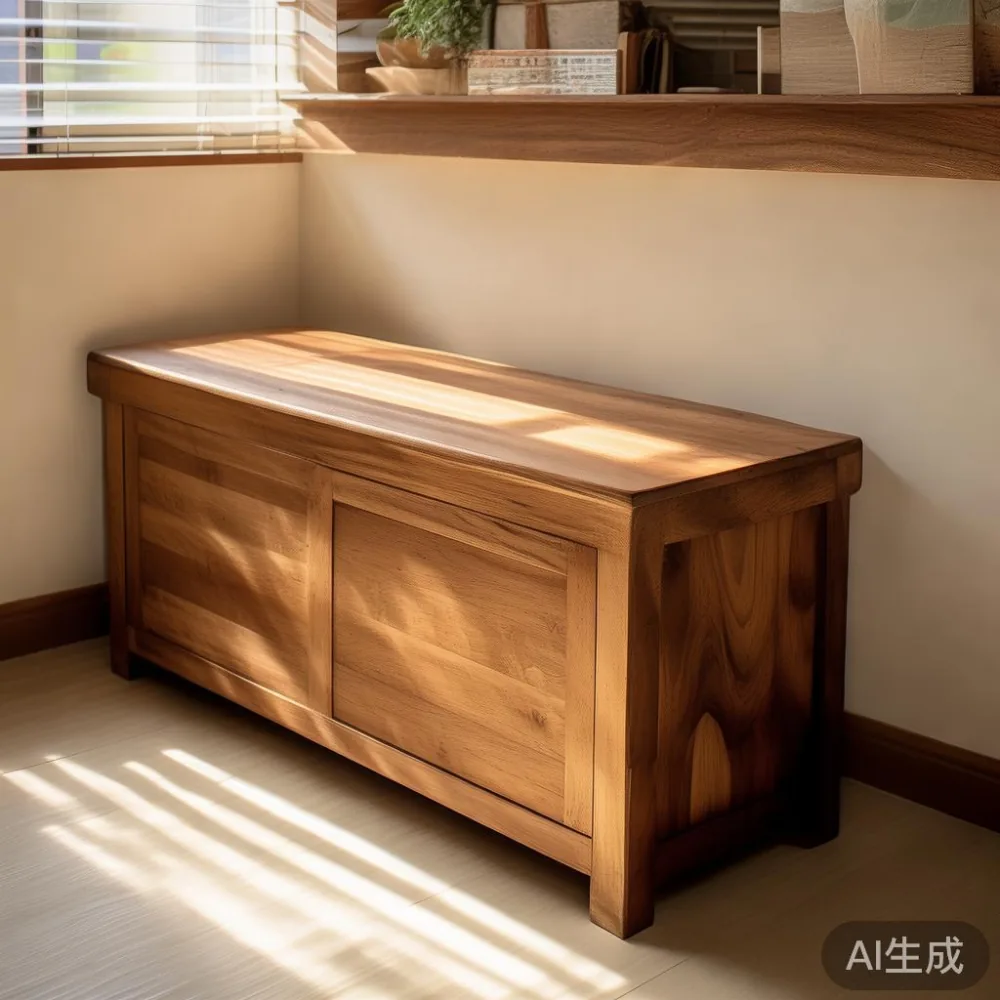
I keep a small notebook by my front door in Tampines, and every morning for the past fourteen months I have jotted down two numbers: the relative humidity on my hygrometer, and whether the lid of my oak storage bench in the corridor feels tight or sticky. On the worst days — usually the second week of the monsoon surge in November — the needle sits at 88 to 91 percent, and the lid, which slid like a silk ribbon the day the delivery men carried it up in the service lift, refuses to budge without a firm push. That single bench, a 110 cm long, 38 kg solid oak piece with a lift-up seat and two internal compartments, has taught me more about tropical wood science than any showroom floor ever did. It is also why, when buyers write to me asking how humidity in Southeast Asia affects wood furniture, I no longer quote brochures. I quote that lid.
Why Singapore's Climate Is a Stress Test for Solid Wood Furniture
Singapore sits roughly one degree north of the equator, and the average relative humidity hovers between 78 and 86 percent for most of the calendar year, with afternoon thunderstorms pushing pockets of air past 92 percent between October and January. For context, an oak plank that leaves a kiln in Foshan at 8 to 10 percent moisture content enters your bedroom at Bedok Reservoir at roughly 18 to 21 percent within weeks. That 10-point swing is not a footnote in a spec sheet; it is the physical force that makes drawer fronts swell, that opens hairline seams along a dining table apron, and that makes a wardrobe door rub against its frame in a Punggol corner unit that gets cross-ventilation only from the kitchen door.
Midhill has shipped solid wood sofas, bed frames, dining tables, wardrobes, nightstands, marble tables, and storage benches across more than fifteen countries since 2008, and the engineering adjustments made for Southeast Asian buyers are not cosmetic. Quartersawn white oak is preferred over flat-sawn oak for sliding lids because the grain movement runs perpendicular to the seasonal swing, which reduces cupping by an estimated 30 to 40 percent. Drawer bottoms are floated in slots — not glued — so the panels can grow sideways without splitting the carcase. Door frames are oversize by 2 mm on each edge so the panel can absorb moisture without binding. None of this is visible in a product photo, which is why buyers who only compare screenshots often end up with furniture that fights their air conditioner rather than cooperating with it.
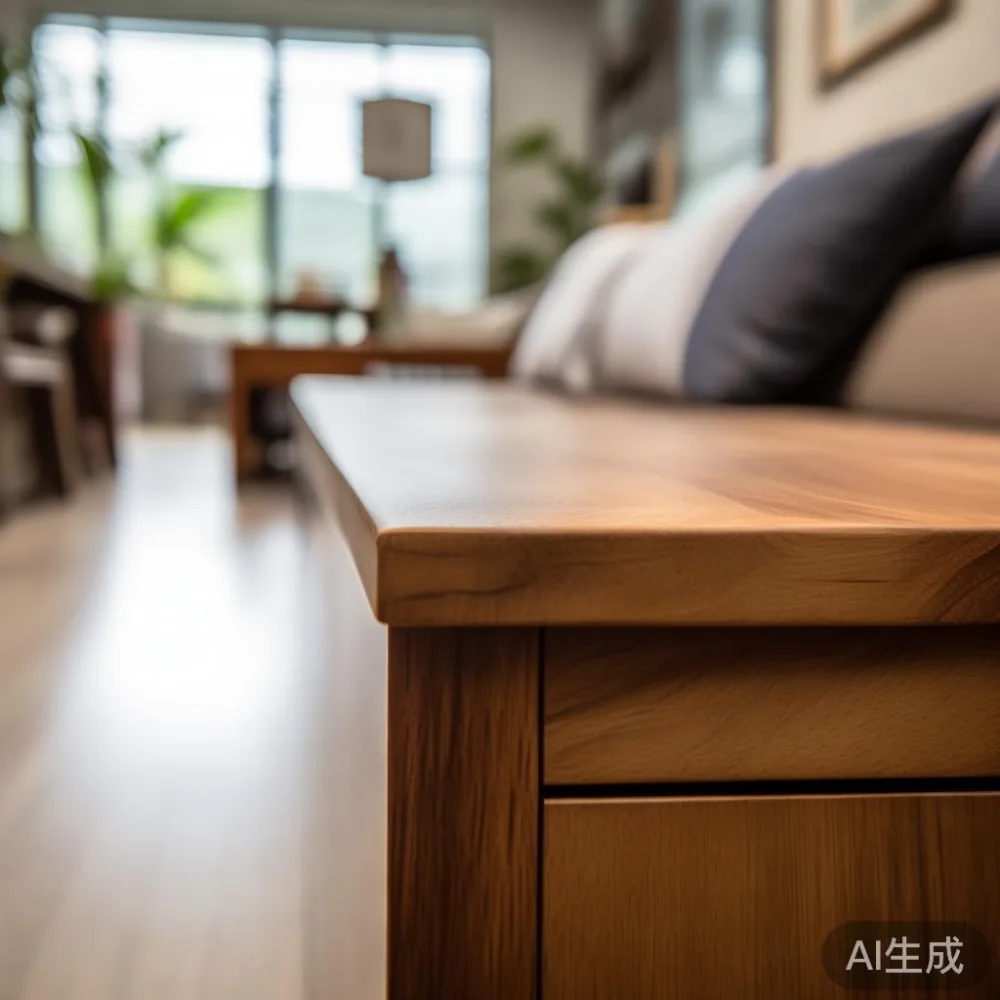
The most common failure I see in HDB flats is not catastrophic cracking — that is rare with proper kiln-drying — but the slow, silent war between a 38 kg storage bench and a 28-square-metre living room that never drops below 75 percent RH. A bench that arrives with a 0.8 mm gap at the lid joint in March can close to a hairline seam by July, and then open again to 1.2 mm by February the following year. That breathing is normal. What is not normal is a 3 mm cup across a 40 cm lid panel, and that is what happens when a manufacturer skips the acclimation room and ships directly from a dry inland warehouse into a Jurong container yard.
How do I style a French provincial sectional sofa in a small apartment?
Short answer: choose one curved silhouette, two warm metallics, and a low storage bench in the same oak tone as the sofa legs, then leave 70 cm of walkway between the chaise end and the television console so the room does not feel pinched. The reason this works in a 60 to 75 square metre HDB or condo is that French provincial shapes already carry visual weight through turned legs and rolled arms, so adding bulk elsewhere — a heavy rug, a tall cabinet — collapses the proportions. Keep the wall colour in the 9B to 9C range on a Farrow & Ball-style fan deck, drop in a marble table no wider than 90 cm as the coffee surface, and finish with a slim storage bench (around 110 to 130 cm long, 38 to 42 cm deep, 45 to 48 cm tall) pushed against the window wall so it doubles as a shoe perch and a hidden laundry bin.
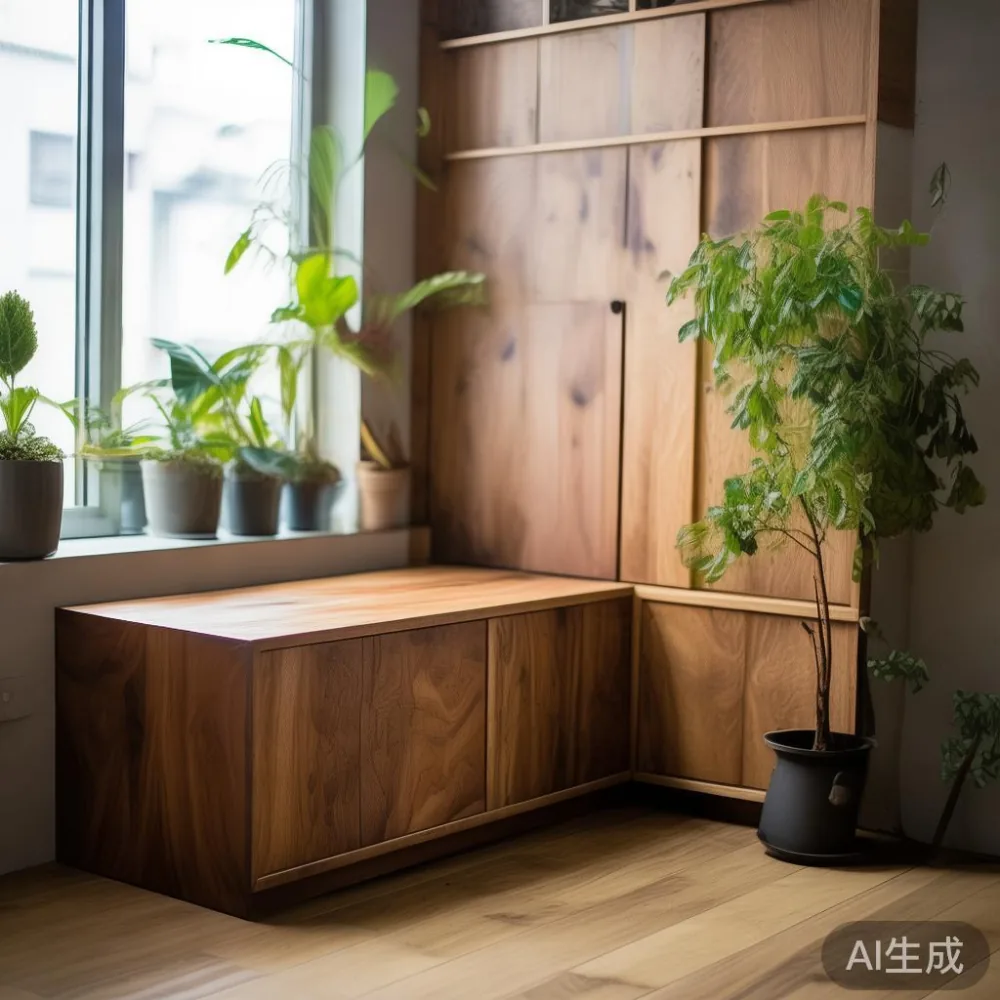
In a light luxury brief — what the trade calls French light luxury, with its cream linens, antique brass hardware, and restrained curves — the storage bench should not look like a toy trunk. Pick one with a hand-rubbed satin finish, no visible hinges on the front rail, and a lift-up lid with a single full-width seam rather than two short panels. The internal depth should clear a standard Singapore laundry basket (about 35 cm tall) so you are not wrestling fitted sheets every time you open it. I have measured this in three client homes across Punggol Waterway and the Seletar Hills area, and 38 cm of internal clearance is the magic floor number; anything shallower forces daily users to fold sheets in thirds, which is exactly the kind of friction that pushes a piece of furniture to the back of a corridor and, six months later, to Carousell.
The Numbers That Actually Matter When You Buy a Storage Bench in Singapore
Let us put concrete figures on the table, since brochures rarely do. A kiln-dried solid oak storage bench in the 110 to 130 cm class, with two soft-close hinges and a lift-up lid running on a single full-width hydraulic arm, weighs between 36 and 42 kg. That weight matters because the lifts in most HDB blocks built after 2010 are rated at 630 kg for a passenger lift and 250 to 300 kg for a service lift at certain heights, but the inside cabin measures only 1.1 m wide by 1.4 m deep on the smallest models. A 130 cm bench will not fit standing up; it must be tilted to a 45-degree angle, and the delivery team needs a minimum corridor width of 90 cm to clear the turn into your unit. Older blocks in Bedok and Toa Payoh sometimes offer only 80 cm of corridor clearance, which is why a 110 cm bench is the safer spec for resale flats and a 120 to 130 cm bench is fine for newer Punggol or Tengah BTOs.
On price, expect a kiln-dried solid oak or ash storage bench from a Foshan workshop that exports to 15 or more countries to land in Singapore between SGD 680 and SGD 1,450 for the 110 to 130 cm class, with the higher figure reserved for hand-finished tops, dovetailed corners, and hydraulic soft-close hardware. Shipping is typically free above US$350 with Midhill, which clears on roughly SGD 480, so the bench itself plus doorstep delivery crosses that threshold comfortably. GST at 9 percent is added at checkout, and delivery to a Singapore HDB unit runs 14 to 22 working days from drawing order, depending on container consolidation and CNY closure windows in late January to mid-February.
For warranty, the structural frame on a properly built storage bench should carry a 10-year guarantee against joint loosening and frame cracking — exactly the policy that Midhill ships with on its solid wood ranges. Refinishing is often offered for the working life of the piece, which matters because a satin oak finish in a Tampines flat that faces west will oxidise and amber visibly within 18 to 24 months. Lifetime refinishing turns that inevitable patina from a depreciation event into a scheduled service, and the bench becomes the kind of piece your children will argue over rather than list on Carousell for SGD 120.
What My Colleague Found on a Recent Site Visit to a Punggol BTO
Last month I joined a site check in Punggol, where a client had ordered a 120 cm solid ash storage bench for the living room of a 4-room BTO. The lift cabin measured 1.2 m wide by 1.5 m deep, which is generous by Singapore standards. The bench was 42 kg, which is on the heavy side of the range, and the two delivery men tilted it through the cabin door and along the corridor without scraping the walls. Inside the unit, however, the corridor turned 90 degrees into the living room and narrowed to 82 cm at the door frame. They solved it by removing the lid panel, carrying the carcase in first, then slotting the lid back in once the piece was in position. That step adds about 8 minutes and zero cost, but it requires a delivery crew that knows how to disassemble a piece they just built, and it requires a manufacturer who numbered every dowel and screw so reassembly is a five-minute job rather than a 45-minute puzzle.
The client had also purchased a marble table (90 cm diameter, 28 kg) and a low bookshelf from the same workshop, and the delivery crew arrived with the three pieces in a single consolidated shipment. Total landed cost after GST came to SGD 2,180, which the client told me was within SGD 40 of the next-cheapest quote she had received, but the next-cheapest quote came from a vendor who could not confirm kiln-drying certificates and who offered only a 3-year structural warranty. That 7-year warranty gap is the kind of detail that disappears in a screenshot comparison but shows up the first time a drawer swells during the December monsoon.
Care Habits That Actually Extend the Life of Solid Wood in a Tropical Climate
Three habits, in order of impact. First, keep the relative humidity of your living room between 55 and 65 percent if you can. A SGD 60 to SGD 120 dehumidifier running four hours a day in the wet season does more for your solid wood sofa frame, your dining table, and your storage bench than any oil or wax you will ever apply. Second, rotate the bench 180 degrees every three months so that the side facing the air-conditioner airflow today faces the wall tomorrow. Uneven exposure is the leading cause of cupping in lids and warping in wardrobe doors. Third, refinish the high-touch surfaces every 18 to 24 months — arm caps of a sofa, the top of a storage bench, the centre of a dining table — and let a workshop handle the full sanding and re-oiling. A weekend of hand-sanding with the wrong grit paper will leave scratches that no amount of subsequent oil will hide.
A note on cleaning, since tropical air carries more dust and moisture than temperate air. Wipe with a barely damp microfibre cloth, never a wet one, and never spray polish directly onto the surface. Polysiloxane-based sprays — the kind sold in many aerosol cans — build up a waxy film that yellows under Singapore's UV index, which regularly hits 11 to 13 between February and April. For fabric care on a sofa in the same living room, follow the principles used in Modern fabric care thailand, where humid climate buyers are taught to vacuum the seat cushions weekly, rotate them monthly, and avoid placing the sofa within 1.5 m of an uncurtained window that receives direct afternoon sun. The same rules apply in a Bedok or Tampines flat, with the added note that an east-facing window in a Punggol unit catches the harshest UV between 7 and 10 a.m., and a west-facing one between 2 and 5 p.m.
Returns, Exchanges, and the Fine Print Worth Reading Twice
Most reputable workshops that ship from Foshan to Singapore offer a 14-day return window from the date of delivery, provided the piece is in original packaging and has not been assembled. Once the lid is off and the bench is sitting in your living room, return shipping from a Singapore HDB back to a Guangzhou warehouse runs SGD 280 to SGD 420, which usually wipes out any saving on the original price. The smarter move is to keep the bench in its crate for 48 to 96 hours inside your air-conditioned unit before assembly. That window lets the wood equalise to your indoor climate, and it dramatically reduces the post-assembly stress on the joints.
Two further checks before you sign the delivery order: confirm that the kiln-drying certificate (target moisture content 8 to 12 percent) is dated within 90 days of shipping, and photograph every face of the bench before the crew leaves. If you spot a 2 mm gap at the lid joint on day one, that is normal seasonal movement and not a defect. If you spot a 4 mm twist across the lid panel on day one, that is a manufacturing fault and you are within your rights to refuse delivery. The line between those two numbers is exactly where a 10-year structural warranty earns its keep, and it is also the line that separates a workshop shipping to 15 countries with a 10-year frame guarantee from a workshop shipping to 15 countries with a 3-year guarantee and a marketing budget.
Last thought for buyers in Tampines, Bedok, Punggol, and the surrounding estates: a solid wood storage bench is not a small purchase, but it is one of the few pieces of furniture that survives three moves and two decades of HDB life without losing its function. Treat the air around it with the same care you give the wood, refinish the working surfaces every other year, and the piece will outlast two air-conditioner cycles and at least one parquet refinishing job. That, more than any spec sheet, is what you are paying for.