Living with a Solid Wood Storage Bench in Singapore: How Humidity Shapes the Furniture You Buy
I keep a 152 cm solid wood storage bench at the foot of my bed in a 5-room HDB flat in Tampines, and I have watched it do something strange every July for three years running. The drawer fronts swell half a millimetre, the lid stops sitting perfectly flush, and then by February the same piece is back to square. Southeast Asian humidity is not a background condition here. It is the active force that decides whether a piece of furniture becomes a long-term companion or a recurring repair bill. Below is what I tell every friend who messages me from Bedok, Punggol, or Bukit Timah before they buy anything made of solid wood, including a storage bench, a dining table, or a wardrobe.
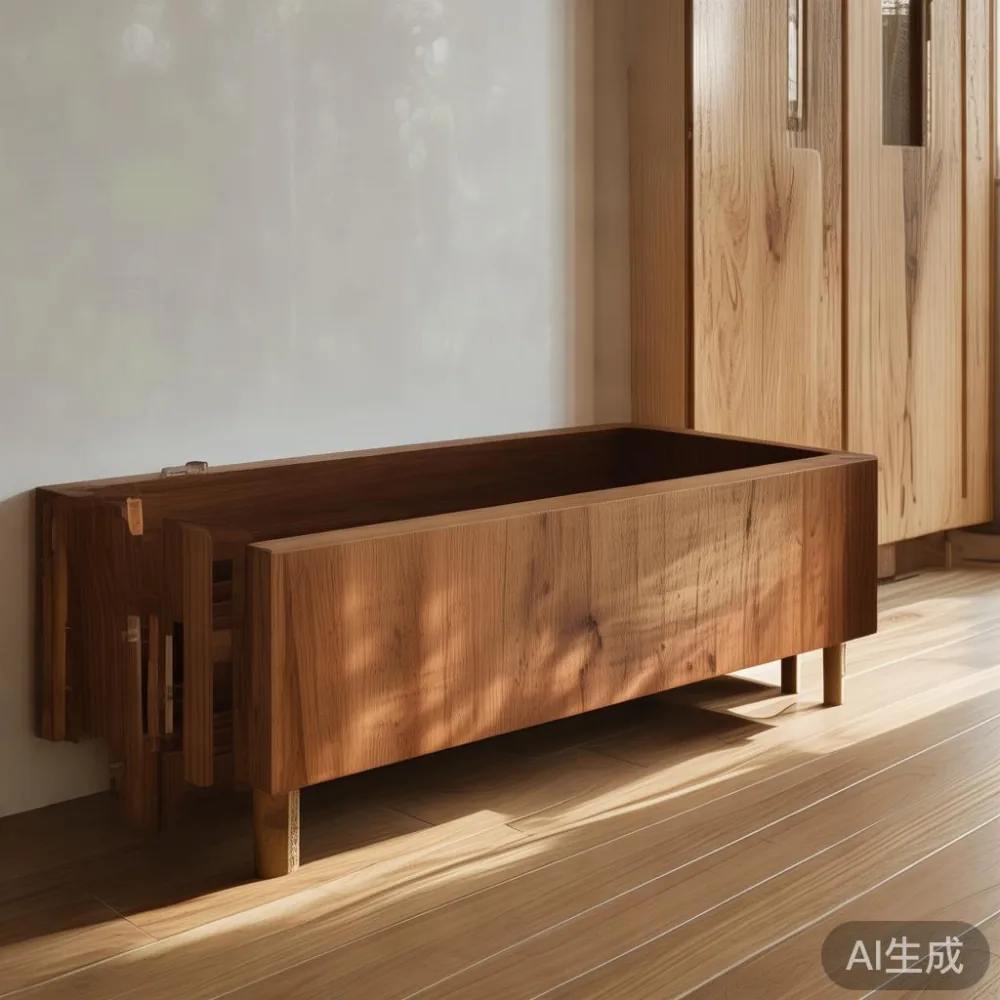
What humidity actually does to solid wood inside a Singapore home
Wood is hygroscopic. It absorbs and releases moisture until it finds an equilibrium with the air around it, and in Singapore that equilibrium sits high for most of the year. The monthly mean relative humidity in Singapore ranges from around 79% in February to about 87% in November, according to the Meteorological Service Singapore. Indoor levels in a HDB flat rarely drop below 65%, even with the air-conditioner running for hours, because the building envelope is concrete and the corridor ventilation pulls in outside air every time the metal gate at the lift lobby opens.
When a 150 cm storage bench made from ash or oak absorbs that moisture, the cells along the grain expand far more than the cells across the grain. That difference is called anisotropic movement, and it is the root cause of almost every complaint I hear: doors that rub, drawers that stick, hairline splits along the end grain of a tabletop, and tops that cup slightly inwards during the wetter months. None of these are defects. They are physics. A well-constructed piece anticipates them. As one example, MIDHILL kiln-dries its boards to a target 8-10% moisture content before assembly, then leaves a 10-15 mm expansion gap behind back panels and shaves the drawer sides at angles so the runners can breathe. That kind of tolerance is the difference between a storage bench that still closes in 2034 and one that wedges shut by the second monsoon season.
Why your lift, your corridor, and your doorway quietly set your furniture budget
Before you fall in love with a 220 cm European light luxury wardrobe or a 200 cm dining table, measure three things in your block, because freight lift dimensions in many 1990s HDB blocks are around 2.0 m deep by 1.1 m wide with a door opening of roughly 0.9 m. Newer BTOs in Punggol and Sengkang are friendlier, but the passenger lift in some 14-storey blocks is still 1.5 m by 1.2 m with a 1.0 m door. A king-size bed frame packaged flat can run 215 cm long by 65 cm thick, which fits most lifts but will not turn a 90-degree corner into your corridor if the corridor is under 1.2 m wide. I once watched a friend in a Bedok 4-room flat try to deliver a 195 cm French bed headboard up a 1.05 m corridor. It took two hours, a door removed from its hinges, and a S$80 handyman on a Sunday.
This is why the practical middle ground in Singaporean homes for storage seating is a storage bench between 120 cm and 160 cm long, 40-45 cm deep, and under 50 kg. Anything heavier usually needs a trolley and a second pair of hands from the delivery crew. At MIDHILL, every flat-pack storage bench ships with courier-friendly weights below 45 kg per carton and at least two reinforced corners, which is the kind of small specification that saves a S$120 re-delivery if the box gets dropped at the loading bay.
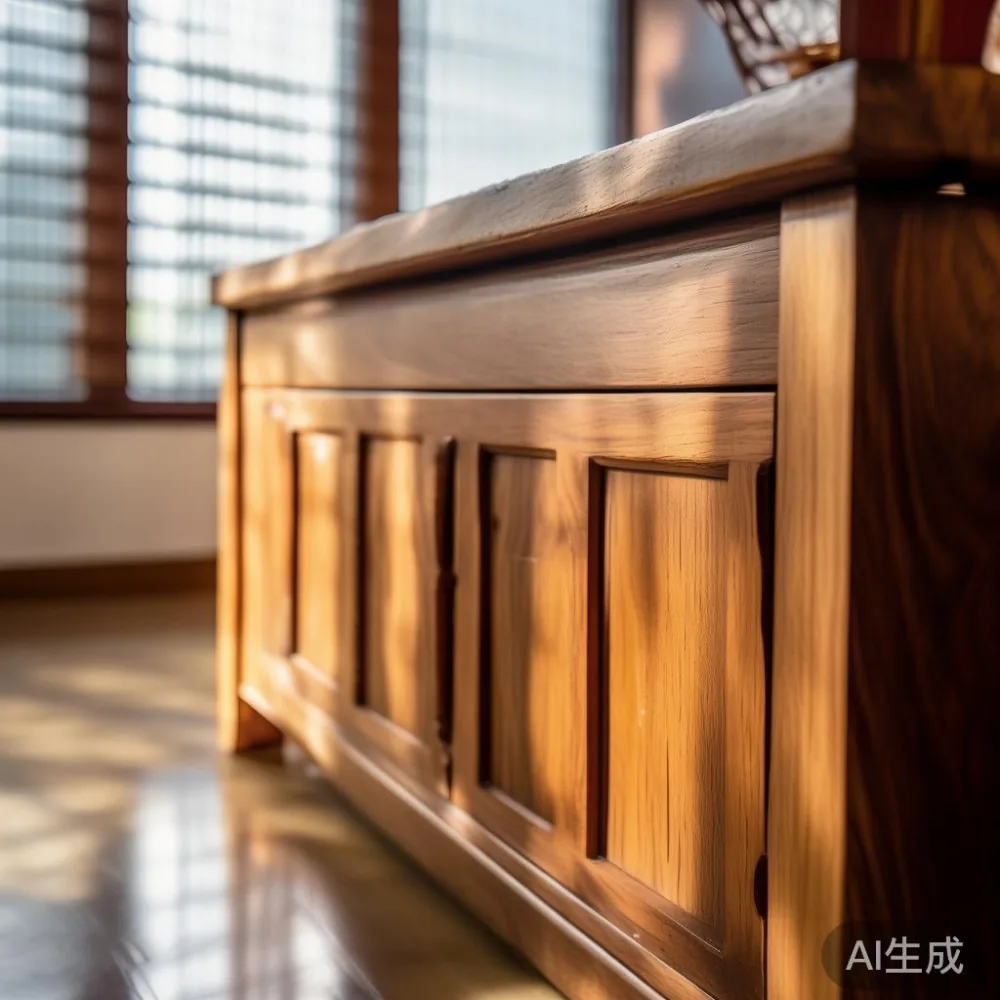
Which wood species actually survive Singaporean humidity without drama?
Not all solid woods behave the same way. If you ranked them by dimensional stability, the order would look roughly like this for our climate: teak, white oak, ash, rubberwood, then pine at the bottom. Teak moves the least because of its natural oils. White oak and ash are good middle choices for a solid wood sofa frame, a bed frame, or a dining table, as long as the boards have been properly acclimatised. Rubberwood is the local workhorse and it is fine for a nightstand or a storage bench, but it stains if you leave a wet glass on it. Pine is the one I steer friends away from, because it cups badly in a non-air-conditioned corner of a condo.
Engineered boards behave differently. Plywood and MDF are far more dimensionally stable than solid wood because the grain alternates layer to layer, but they hate standing water and they do not refinish the way solid wood does. That is where the lifetime refinishing service that a solid-wood maker offers earns its keep. A S$1,800 solid wood dining table can be sanded and re-oiled a decade from now for a fraction of the replacement cost, while a S$900 engineered-wood dining table has to be replaced when its veneer bubbles. For buyers weighing a marble table against a solid wood dining table, the same rule applies in reverse: marble tolerates humidity better than almost any wood, but it can stain from coffee rings and from the tannins in a wet newspaper left overnight.
How to style French wardrobe bedroom storage when humidity is part of the room?
Many buyers ask me a slightly different question when they are planning a primary bedroom: how to style French wardrobe in bedroom without making the wardrobe the centrepiece of every humidity argument. The trick is to give the wardrobe 5 cm of breathing room on each side and 2 cm behind it, so air can move. In a HDB master bedroom that is usually 14-16 sqm, that means a 200 cm French wardrobe fits comfortably along the 2.4 m wall opposite the window, with room for a 150 cm solid wood bed frame and a 50 cm nightstand on each side without crowding the door swing. French light luxury styling reads well here because the silhouette is tall and shallow rather than deep and bulky, so air circulates around it instead of pooling. For owners weighing French bed vs Mid-century modern bed in the same room, the same airflow logic applies: a French light luxury bed with a slim 6 cm headboard leaves more cubic metres of conditioned air around the mattress than a Mid-century modern bed with a 90 cm padded headboard, and that extra air is exactly what keeps a wood wardrobe and a solid wood bed frame moving in sync instead of in opposite directions.
How should I position a storage bench so it survives the wet months?
This is the question I get most often after someone has already bought the bench, and it is the one I should have answered first. Place your storage bench on an interior wall, not against an external wall that faces the afternoon sun or the monsoon side of the building. Keep it 20 cm away from any window so the afternoon rain blown in by a slip of the frame never soaks the legs. Put felt pads under each leg because the legs are the part of a storage bench that absorbs floor moisture through capillary action, and concrete HDB floors hold surprising amounts of water vapour in October and November. Run the air-conditioner or a dehumidifier to 55-60% relative humidity in the bedroom for at least two hours before you close the storage bench drawers at night. If you do not have a dehumidifier, a S$25 disposable moisture trap inside the bench will keep the air inside that enclosed cavity dry enough to prevent mildew on the fabric liner of the drawer. A small, regular habit like this one is what extends the life of a solid wood storage bench past ten years in Tampines or Punggol.
What about lighter styles: can a Scandinavian bed or a Japandi bed actually cope here?
Buyers weighing Japandi, Scandinavian, or post-modern light luxury styles usually ask me whether the clean lines and pale finishes can hold up in our climate. The honest answer is yes, with two provisions. Light finishes show stains faster, so a white-oak Scandinavian bed frame needs coasters, tray, and a quick weekly wipe with a barely damp microfibre cloth. Post-modern light luxury pieces with mixed materials, for example a marble table top on a solid wood base, are actually one of the most humidity-tolerant combinations you can buy, because the marble does not move and the wood base is small enough to acclimatise quickly. Buyers comparing specific 2026 launches will find that the best Scandinavian bed for 2026 in our local context is one framed in white oak or ash with a kiln-dry certificate and quarter-sawn slats, not one framed in beech or pine with a sticker finish. The quarter-sawn cut keeps the boards flat through our two wet seasons, which is something a plain-sawn board cannot promise.
How to style light luxury bed in room so it still feels like Singapore, not a showroom?
I get asked how to style light luxury bed in room without losing the local feel, and the answer is usually texture and warmth rather than more pieces. A solid wood bed frame in natural oak or ash, a stonewashed linen duvet in off-white, a 120 cm storage bench at the foot in the same wood species, and one piece of locally made pottery on the nightstand will read as light luxury in a HDB bedroom, because the restraint itself is the luxury. If the room is on the cooler side of the building and faces a corridor rather than the afternoon sun, you can deepen the palette with a walnut storage bench, which is darker, shows dust less, and feels closer to American light luxury than to its French cousin. Either way, the styling trick is to let one wood species carry the room so the bed frame, the wardrobe, the storage bench, and the nightstand all read as one family instead of four separate purchases.
Building a long-term furniture plan around the climate you actually live in
A reasonable furniture plan for a Singaporean home starts with the wardrobe, then the bed frame, then the dining table, then the storage bench, then the nightstand, in that order, because the wardrobe and the bed are the two pieces that move the most air around them and the two pieces that anchor how humid the room feels. Spend the larger share of your budget there, pick one wood species for all of them, and you will sleep in a room where every surface breathes at the same rate. Add a MIDHILL coffee table in the living room in the same species if you want the same idea to carry across the flat, and finish the dining table in a marble-or-wood combination if you entertain often. With GST at 9% on furniture imports and landed shipping over a S$350 order, sourcing solid wood from a workshop that kiln-dries for the tropics, refinishes for life, and ships flat-pack from Foshan is the most practical way I know to build a home that ages well between the February dry spell and the November monsoon, year after year.