Humidity, HDB Corridors & Solid Wood: A Singapore Owner's Guide to the Storage Bench That Lasts
I keep a small digital hygrometer clipped to the inside of my Bedok flat's shoe rack, and on most afternoons the readout sits between 78% and 86% relative humidity. That single number is the reason this article exists. A solid wood storage bench that survives ten Scandinavian winters can show cupping, hairline checks, and musty drawer linings after three years in Tampines — unless you buy it with the climate in mind and treat it accordingly. I learned this the hard way in 2022 with a flat-pack oak hallway bench that I assembled at 11 p.m. and found warped by morning, joints protesting the air it had been carried into. What I now keep, after a visit to the MIDHILL showroom in Foshan last October and a long chat with their joinery foreman, is a different category of piece, and the rest of this guide explains why the storage bench deserves a more honest conversation in Southeast Asia.
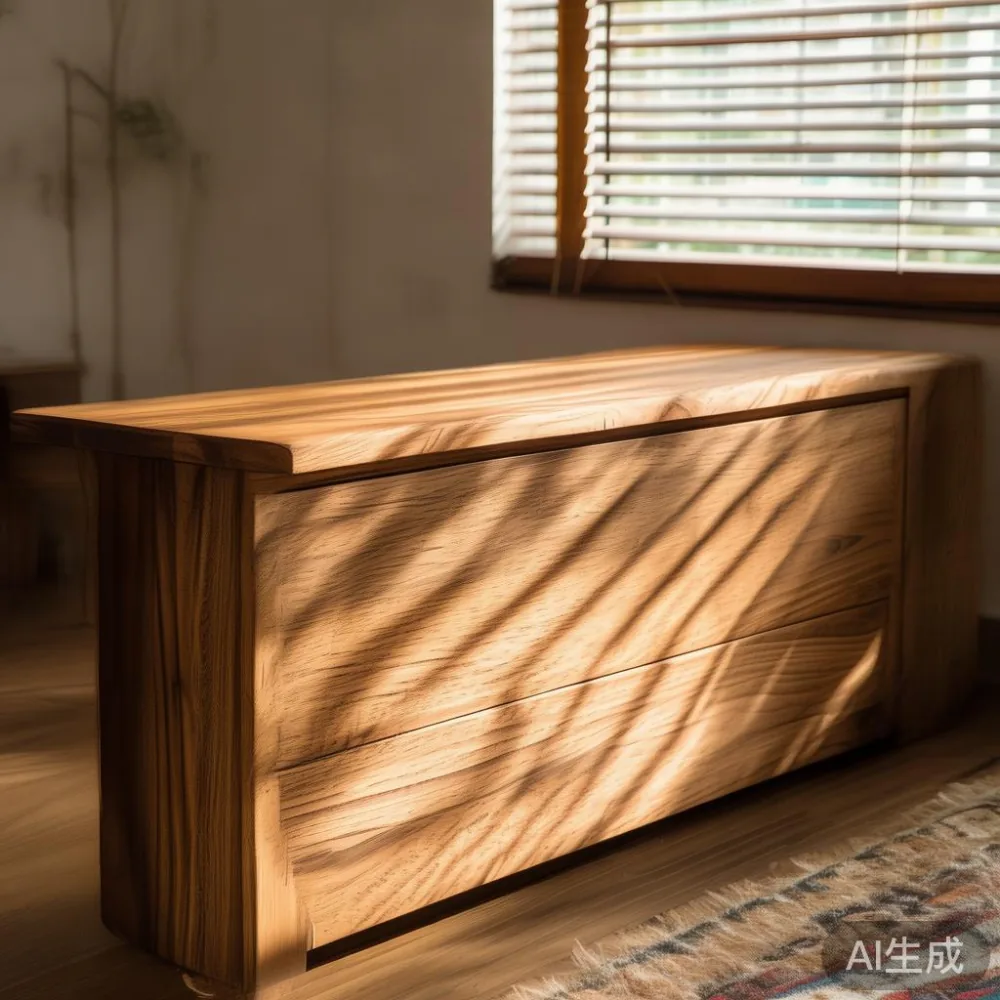
Why Singapore's Climate Is the Toughest Test for Solid Wood
Singapore sits one degree above it, which sounds trivial until you measure it. Mean relative humidity at the Changi climate station runs 82–84% year-round, with afternoon peaks above 90% during the December–February monsoon push and the June–September Sumatra squall line. Indoor humidity inside a non-air-conditioned HDB corridor storage space regularly settles between 75% and 88%. Compare it to London (52–55% winter) or even Kuala Lumpur (70–78%), and you see why a storage bench that lives near a wet kitchen, a bathroom door, or a balcony that opens for cross-breeze is absorbing and releasing moisture every single day.
Wood is hygroscopic. It moves. A 120 cm-wide oak board can swell 3–4 mm across its width between a dry January afternoon and a wet August evening; teak moves roughly 2 mm; rubberwood closer to 5 mm. The cupping on my old flat-pack bench was a textbook response to one face drying faster than the other after a humid delivery. Solid wood furniture is not broken when this happens, but cheap construction is, because the joints have no tolerance left.
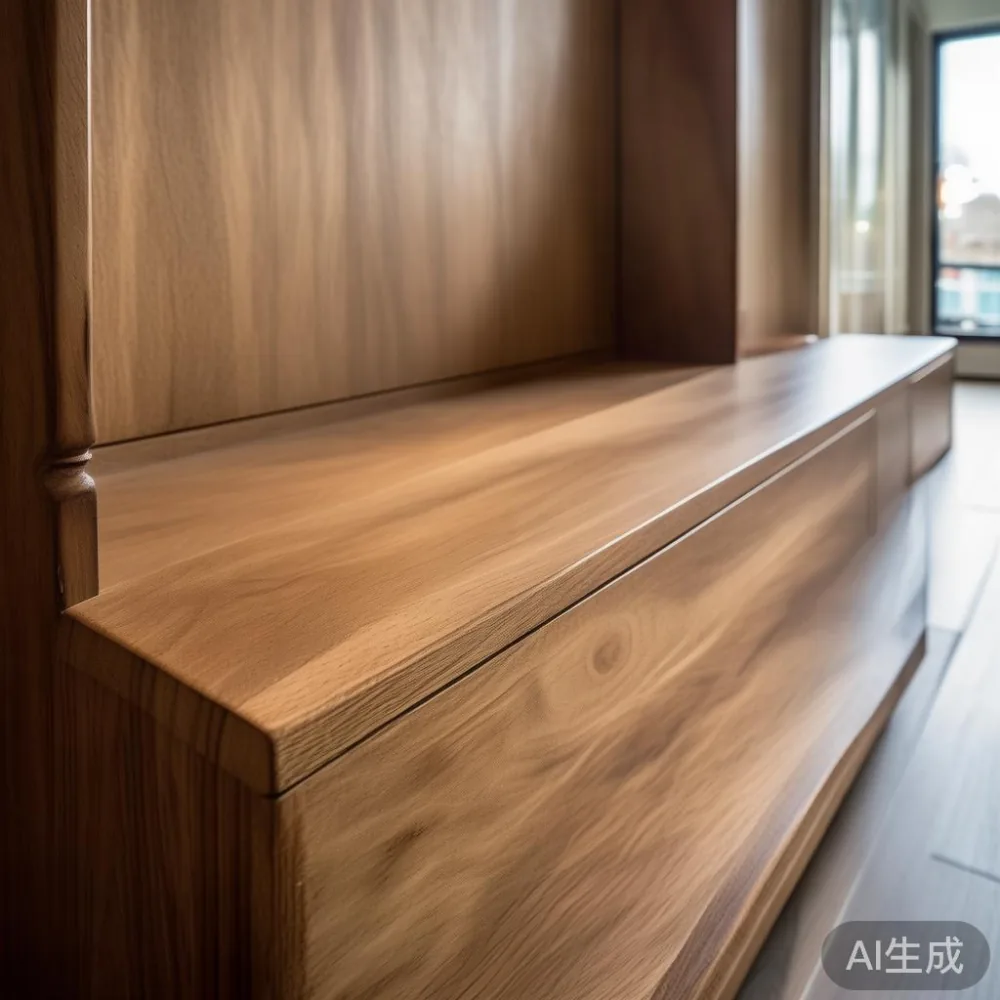
What "Solid Wood, Properly Made" Actually Means for a Storage Bench
A serious storage bench is not a hollow-core ottoman with a fabric lid. Look for kiln-dried furniture terminology on the spec sheet: wood dried to a moisture content between 8% and 12% before assembly, not air-dried on a Guangzhou yard for six months and shipped wet. Kiln drying shrinks the wood in the factory, so the bench you receive into your Punggol walk-up arrives at equilibrium with the packing environment, and only then has to acclimatise to your corridor.
Then look at the joinery. Through-tenons, mortise-and-loose-tenon with a hardwood spline, dovetailed drawer boxes, and quarter-sawn tops will tolerate the daily 4–6% humidity swing your Tampines living room sees when the air-con cuts off at night. Stapled MDF panels and butt joints held with dowels and glue will not, and that is where most "wood for furniture" complaints originate, not from the species of wood itself.
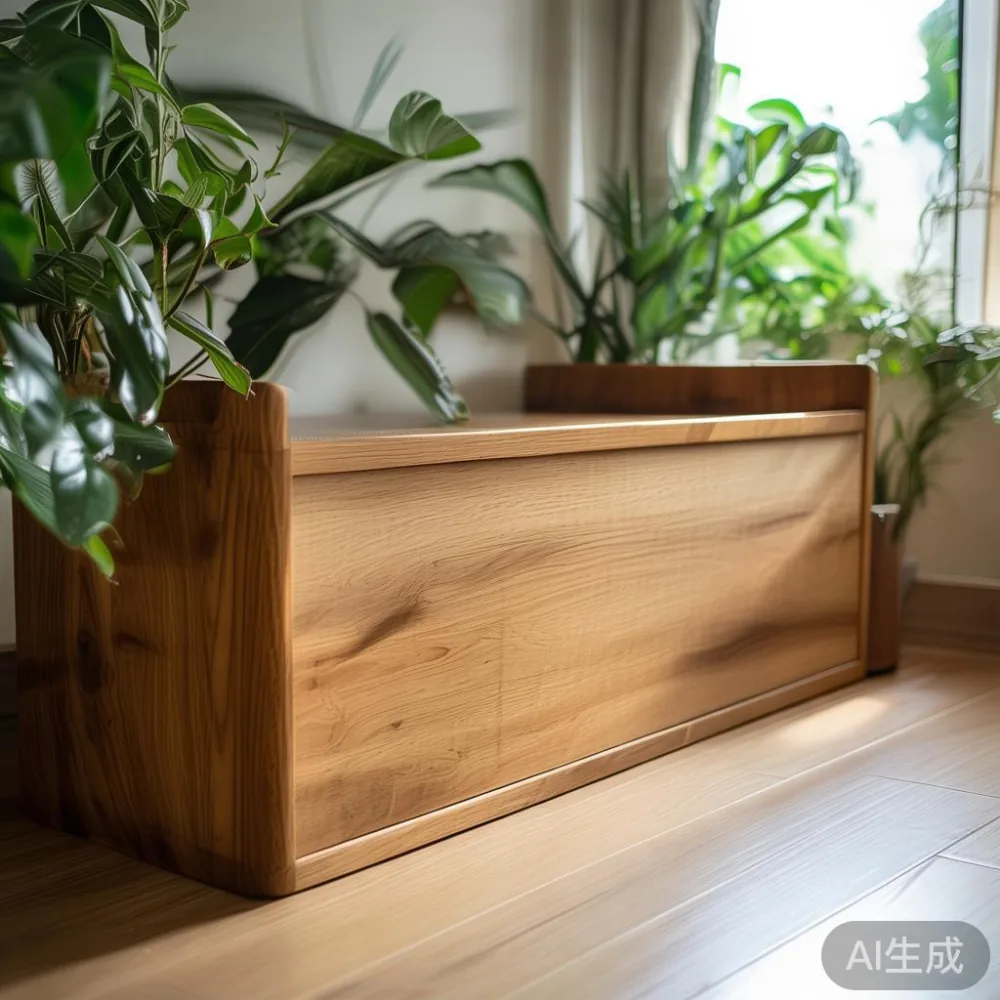
For a piece like the MIDHILL storage bench I now own, the top is 3.2 cm thick solid ash with a clear matte hardwax oil finish, the front panel is tongue-and-groove solid white oak, and the bench sits on a recessed plinth that lifts the carcass 2.5 cm off the floor. That 2.5 cm matters in a HDB, because a wet mop or a rogue puddle cannot wick up into the end grain. The internal cavity is 138 cm wide, 38 cm high, and 42 cm deep — enough room for three rows of shoe boxes, two folded throw blankets, and the cable spaghetti from the router.
Will My HDB Lift and Corridor Even Fit a 1.6 m Storage Bench?
This is the question I get from almost every Tampines and Punggol client who came to me, and it is the one the international websites never answer. Standard HDB passenger lifts are 1.1 m wide by 1.4 m deep with a door opening of roughly 0.9 m by 2.1 m. A long storage bench usually ships in two cartons: one around 145 cm × 48 cm × 12 cm for the top and seat frame, and one around 100 cm × 50 cm × 35 cm for the storage carcass. Both fit a single HDB lift laid flat on the floor or leaned against the back wall. The corridor is the easier part, since modern HDB corridors are 1.2 m to 1.5 m wide and the cartons pass through without tilting.
Older walk-ups in Joo Chiat and Tiong Bahru, the pre-1980 blocks with single-goods lifts of about 0.9 m by 0.9 m and narrow turn staircases, are a different story. There the bench will almost certainly travel as a flat-pack in three or four smaller cartons, and assembly happens inside the home. A good factory sends the hardware in one numbered box, a labelled Allen key, and a one-page diagram, and the whole bench goes together in 35–45 minutes with two people. We timed it.
For landed property in Bukit Timah or Sentosa, the lift is irrelevant; the bench arrives whole, and the only constraint is the front door, usually 0.9 m wide by 2.1 m tall, which clears a 150 cm bench turned on its side without drama.
How Much Should a Real Solid Wood Storage Bench Cost in Singapore?
Honest pricing in Singapore dollars, after 9% GST and including delivery to a mainland HDB address, breaks down roughly like this for a 150–160 cm bench in solid ash, white oak, or walnut:
- Flat-pack from a Jurong warehouse, MDF core with oak veneer: SGD 380–620, no structural guarantee beyond 12 months. - Flat-pack from a regional solid wood maker, rubberwood or poplar with oak veneer: SGD 720–1,150, 3-year structural warranty. - Flat-pack from a Foshan solid wood maker shipping factory-direct, kiln-dried ash or white oak, 10-year structural warranty, lifetime refinishing service: SGD 1,350–2,100. - Fully assembled, French light luxury specification with hand-finished joinery and brass details, imported container-direct: SGD 2,400–3,600. - A containerised wholesale Modern light luxury furniture order for three or more pieces routed through a Singapore consolidator in Tuas: SGD 1,900–2,800 per bench before the 9% GST is applied at clearance.
The middle band is where most Singapore owners end up, and that is also the band where the kiln-dried, 10-year-warranty, lifetime-refinishing offer from MIDHILL sits. Lifetime refinishing is not a marketing slogan; it means the factory will collect the bench, sand it, re-oil it, and return it within 14 working days at a fixed labour fee of around SGD 180, every ten years or as needed. Over a 30-year ownership in a Bedok BTO, that is a real number.
Which Wood Species Handle HDB Humidity Best?
Three species earn their keep in this climate:
- White oak: open grain, naturally tannin-stabilised, the standard for French light luxury dining tables and the default spec for serious European sitting furniture. Expect 2–3 mm of seasonal width movement on a 150 cm top, which is invisible if the carcass is built with breadboard ends and slotted screw holes. - Teak: oily enough to shrug off the wet-kitchen splash zone, the choice for boat decks and Peranakan carving furniture. Heavier (around 680 kg/m³), so a 150 cm storage bench weighs 38–44 kg unpacked — manageable, but not a piece you move alone. - Ash: slightly more movement than oak, but tougher against dents and ideal for the matte hardwax-oil look that fits an American light luxury specification. Expect 4 mm of width movement across the year, accounted for in the joinery.
Rubberwood is the value choice for the carcass — stable, plantation-grown, and SGD 200–400 cheaper per bench — but it should always be sealed on every face including the inside of the storage cavity, because the sap attracts surface mould within 18 months in a non-air-conditioned HDB utility room.
How Do I Stop Mould, Smell and Sticking Drawers in a HDB Storage Bench?
Three habits keep the piece honest. Keep the bench at least 15 cm from an exterior wall if your block is pre-1990 and the wall is single-leaf brick, because that wall sweats during the December monsoon. Run a small rechargeable dehumidifier puck (around SGD 45 from any neighbourhood Sheng Siong) inside the cavity during the wet months, and empty it every three days. Wipe the inside of the cavity with a microfibre cloth soaked in a 1:10 white-vinegar-and-water mix every six months; the acidity stops the dark spotting that humidity owners will under-treat otherwise.
The second habit is about the finish. Hardwax oil (Osmo, Fiddes, or Rubio Monocoat) is the correct finish for a piece that has to breathe in this climate. Lacquer and high-build polyurethane trap moisture and blister within 18–24 months in a non-air-conditioned corridor. The finish should be renewed every three to four years on the seat surface and every six to seven years on the carcass sides. The lifetime refinishing service at MIDHILL is structured around exactly this cycle.
The third habit is about the floor. Place 6 mm felt or cork pads under each leg. A wet HDB tile floor after a mopping will wick up into unprotected leg ends within a week, and that is how the corner joints at the back of a storage bench start to soften. The pads cost about SGD 6 for a pack of sixteen from any IKEA outlet, and they are the single cheapest insurance against a wobbly bench two years in.
Is a Storage Bench a Better Buy than a Marble Coffee Table in the Same Climate?
It depends on the room. Marble is gorgeous in a dry, air-conditioned living room, but in a HDB that opens the balcony door for cross-breeze every evening, a polished marble table will condensate on its underside and leave a dusty ring on a solid wood storage bench that begins all within 1.5 m. Quarantine yourself every night, watch two condominiums, watch the cloud ring. The hardwax-oiled ash or oak top of a storage bench will not condensate, will not ring the surface beneath it, and will forgive the spilled teh tarik the rest of the family will also spill within a week. For a Singapore family that actually uses the living room, a solid wood storage bench under SGD 2,000 out-performs a SGD 3,200 marble table on lifetime cost and daily livability.
What About Bed Frames, Wardrobes, Dining Tables and Nightstands in the Same Climate?
The same rules apply, scaled up. A solid wood bed frame in ash or white oak from the same kiln-dried stock will move in sympathy with the storage bench at the end of it, which is desirable — design follows property, design follows climate. A wardrobe built with 1.8 cm solid side panels, breadboard tops, and back-vented plinths will outlast any MDF carcass by a factor of four. A solid wood dining table in the same kiln-dried ash or walnut, finished in the same hardwax oil, will age with the room rather than against it. A solid wood nightstand in the same spec will keep its drawers running smoothly for fifteen years instead of failing at year three.
The Italian light luxury dining table category, by which I mean a 200 cm solid walnut top on a powder-coated steel base with hand-burnished brass detail, sits at SGD 4,800–7,500 in Singapore after 9% GST and is the piece most Singapore owners eventually upgrade to after they have lived with a solid wood storage bench for five years and trusted the category. A solid wood bed frame, a solid wood wardrobe, a solid wood dining table, and two solid wood nightstands in matching hardwax-oil finish make a coherent bedroom-plus-dining suite that gets tighter with every refinishing year.
How Long Does a Foshan-to-Singapore Delivery Actually Take, and What Happens If Something Goes Wrong?
For a single storage bench, factory-to-door in Singapore runs 28–38 days including sea consolidation in Guangzhou, container de-stuffing in Tuas, and last-mile delivery to a mainland HDB address. For three or more items (the container path described in the MIDHILL wholesale brief), the per-piece shipping drops by 40–55% but the door-to-door time extends to 55–75 days. Both windows assume pre-CNY or post-barakah delivery scheduling; during the November–January peak, add 40–55 days.
If a panel arrives cracked, no bench will rattle — a good supplier replaces the photo panels and ships the photo panels within 14 working days. If a joint loosens within the 10-year structural warranty, no bench will wobble — a good supplier dispatches a joiner within 21 working days for on-site repair in Bedok and within 10 working days for a workshop repair in Tuas. If the piece simply no longer suits the room after three years, a 14-day return window covers change-of-mind on unopened cartons, less the 9% GST already remitted and the SGD 120 return-leg freight.
Final Thoughts
A solid wood storage bench in a Tampines HDB is not a luxury object; it is a 25-year utility object that earns its keep in moving humidity, working air-con, and matched joins. A piece it will sit on, a piece it will store, a piece it will refinish, a piece it will hand down. Buy it kiln-dried, buy it joinery-proper, buy it hardwax-oiled, and it will outlast three air-conditioners, two children, and one cross-breeze habit. The rest is geography.