How to Choose the Right-Size Storage Bench for a Singapore HDB Living Room
A storage bench has to earn its place in a Singapore HDB living room. It should provide somewhere to sit, a surface for keys and trays, and concealed room for shoes, blankets, toys, or household equipment without narrowing the walkway. Size is not simply a matter of capacity: the bench must also clear the lift, corridor turns, television wall, dining zone, and the route between your front door and sofa.
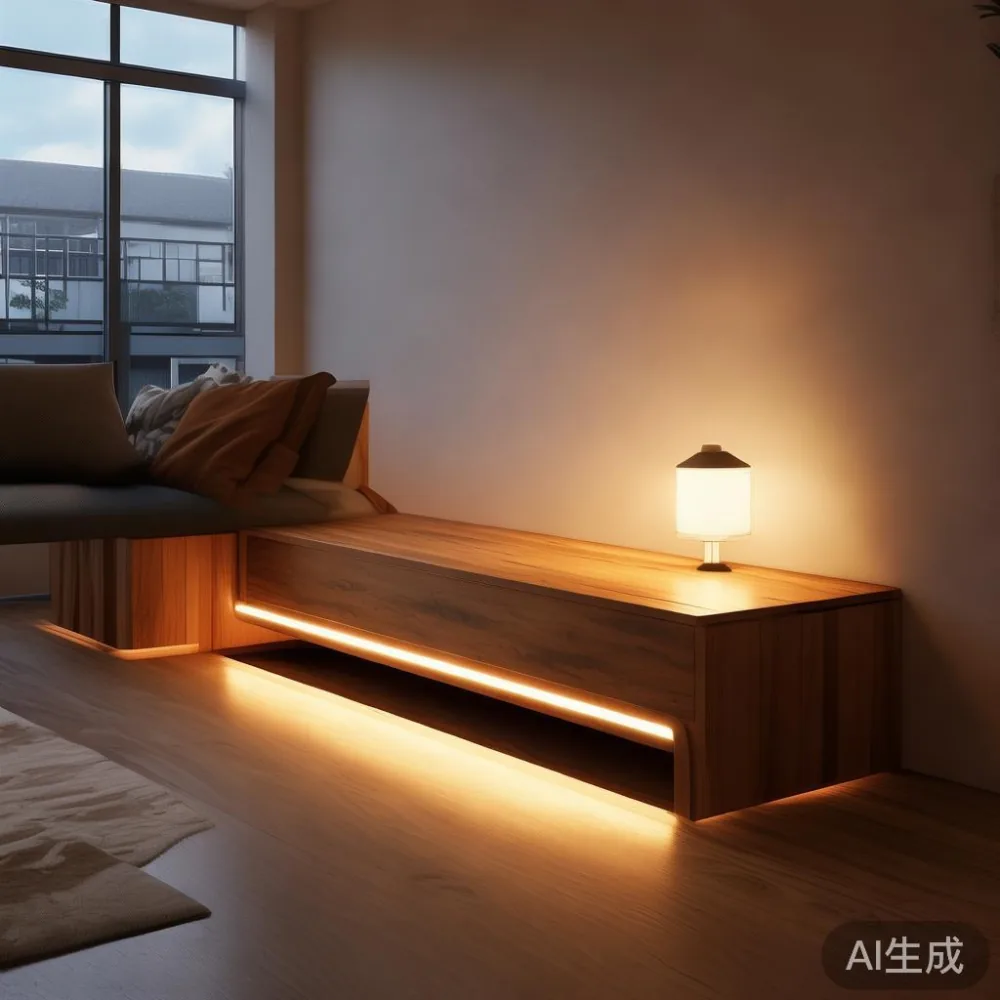
At MIDHILL, we design and manufacture solid wood furniture in Foshan, and our experience with international customers has shown how small measurement errors become expensive during delivery. Singapore’s HDB flats and condos make that point especially clearly. A bench that looks comfortable in a 90 cm room bay can become an obstacle in a 78 cm corridor or block a 90 cm lift doorway. Here is a practical method for choosing dimensions that fit your home and daily routine.
What measurements should you take before choosing a storage bench?
Begin with a floor plan, but do not rely on it alone. Ask the HDB management office for the lift’s internal dimensions and door width, then measure your own route with a tape. In many Singapore blocks, an internal lift car is around 110 cm wide and 110 cm deep, although older and newer buildings differ. A standard passenger lift door may be about 90 cm wide. A long storage bench entering diagonally can fit even when its length appears too large for the doorway, but a sharp turn at the landing may make that impossible.
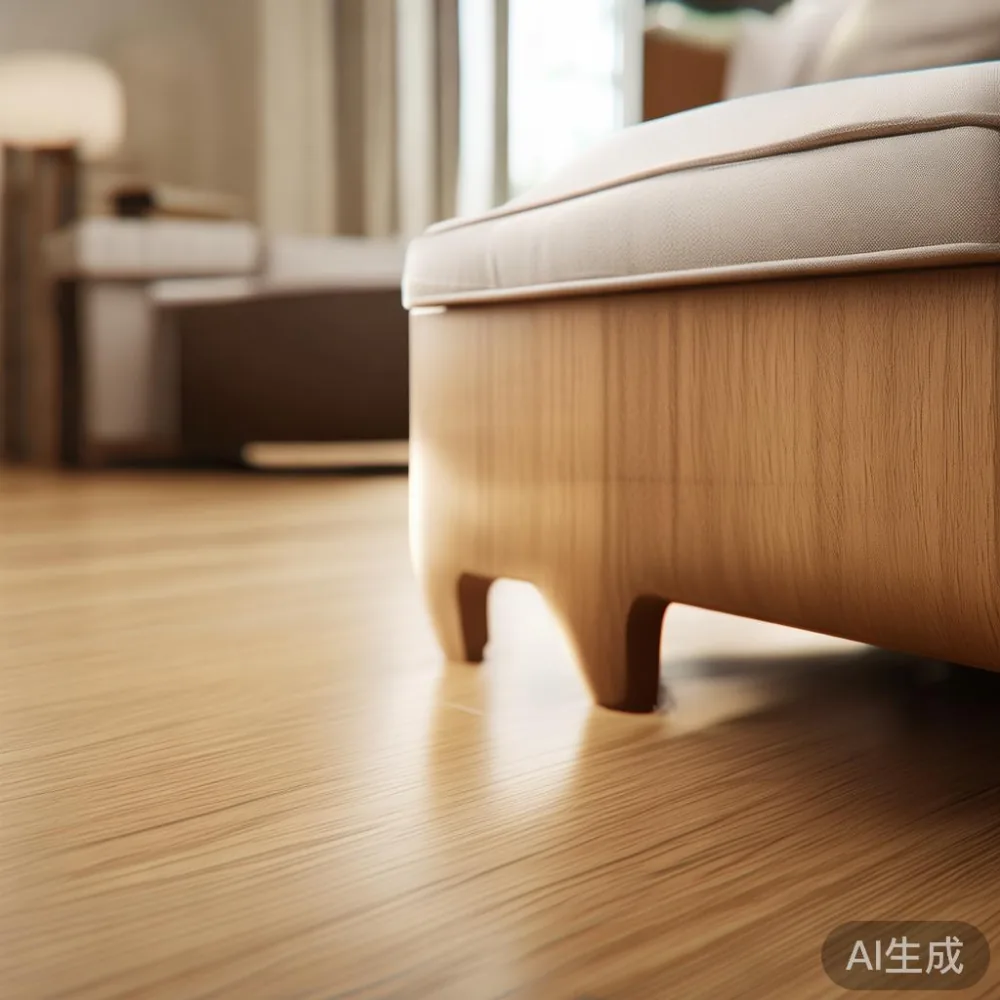
Measure the intended location from at least three points: the wall length, the usable depth after circulation space, and the clear opening in front of the storage bench. If you sit down while checking, leave at least 90 cm in front of the seat for legs and movement. In a compact living room, a depth of 38–42 cm often works better than 45–50 cm. A 120–140 cm width commonly accommodates two adults, while a 150–180 cm width may suit a family or a wider HDB living room.
Last month I visited a client’s four-room Tampines flat to check a proposed storage bench. The showroom piece was 160 cm wide and 48 cm deep. It looked right against the television console, but the client’s actual route passed through only 82 cm between that console and the dining chair. We reduced the depth to 40 cm and changed the handle projection. The revised bench cleared the fixed furniture, opened without striking the chair, and still held 13 pairs of shoes.
Which storage bench width suits a Singapore HDB living room?
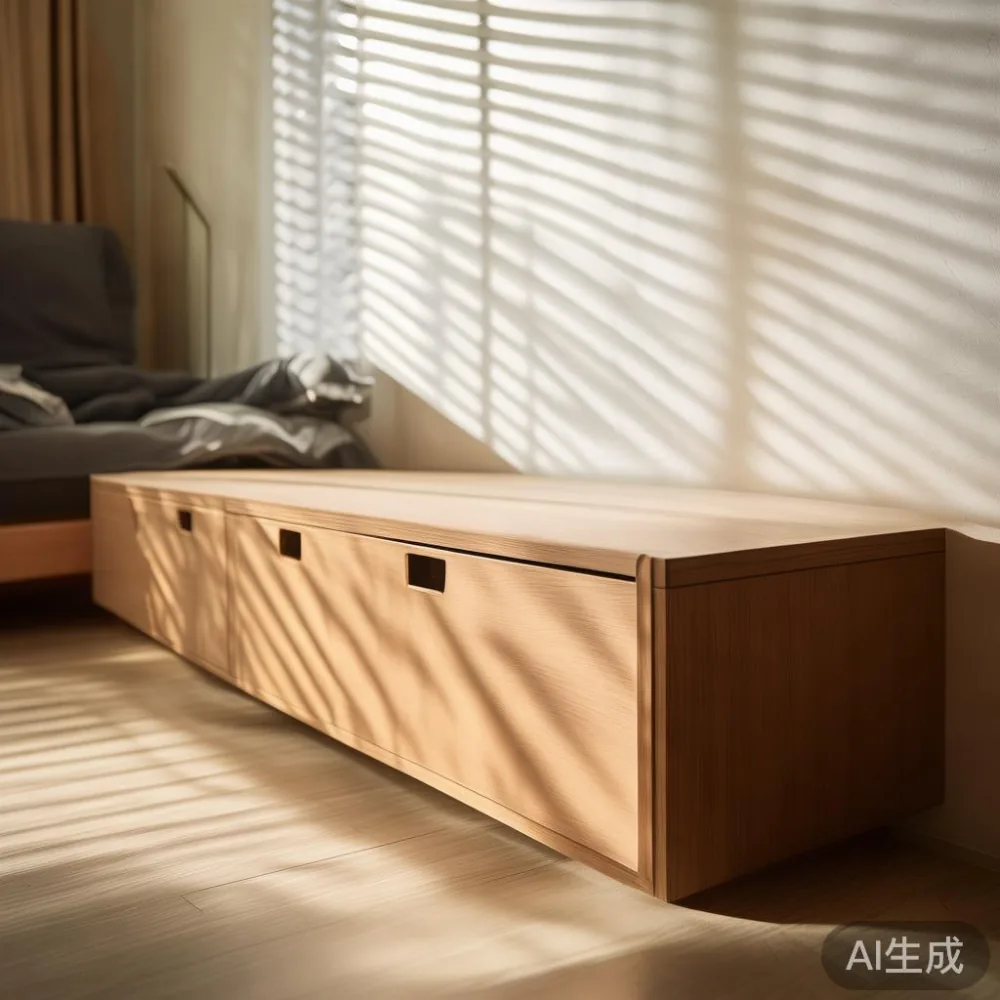
The most useful widths are 100 cm, 120 cm, 140 cm, 160 cm, and 180 cm. These are broad design families rather than fixed products. A 100 cm model can work beside a compact sofa in a 3-room flat, but two people may feel cramped. A 120 cm bench gives each person a realistic seat area of about 60 cm. A 140 cm bench adds breathing room without consuming a full wall. Widths above 160 cm need a more open bay and careful attention to the position of the television cabinet.
For a three-room HDB flat, a 100–140 cm storage bench is often sensible. For a larger four-room flat, a condo living area, or a family that needs substantial concealed storage, 140–180 cm may be appropriate. The key is to compare the bench with the sofa rather than the room’s total floor area. Leave roughly 40–60 cm between the storage bench and a nearby sofa for visual separation, or align them as one continuous composition.
Seat height deserves equal attention. A height of 43–46 cm suits most adults and many standard dining chairs, making the piece usable with an existing dining table. Below 40 cm can feel low and awkward for older users; above 48 cm may resemble a console more than a bench. If children use the bench for putting on shoes, 38–42 cm is easier for them, yet it should not be so low that adults have to lean back heavily.
French light luxury styling often suits an upholstered-top storage bench in a pale oak or cream finish, while American light luxury can use a solid wood frame with restrained brass hardware. Post-modern light luxury may pair clean lines with a rounded seat or an asymmetric internal divider. In each case, measure the finished body: feet, handles, and the hinged opening all affect the space you actually need.
How much storage capacity do you need?
Capacity depends on internal width, depth, and shelf design. A 120 cm bench with two divided compartments may hold about 20–25 pairs of adult shoes when the shelves are 15–18 cm apart. A 140 cm model can reach approximately 30–35 pairs, and a 160 cm bench with adjustable dividers may manage 40 pairs. Loose boots, helmets, vacuum accessories, and bedding consume much more room than shoes.
Make an inventory before selecting a size. Measure your daily items and group them by frequency. Daily items should be reachable without lifting the cushion or top panel. Seasonal items can sit in deeper sections. If you plan to store a vacuum cleaner, check both the length and diameter of the machine; a 28 cm vacuum will not fit a 25 cm internal bay even if the bench exterior is generous.
Do not maximize every millimetre. A storage bench with no ventilation can trap dampness, particularly in Singapore’s humid climate. Leave small gaps between stored footwear and consider cedar inserts, a moisture-absorbing tray, or a ventilated back panel. For electronics or charging cables, add a cable opening and keep the power adapter accessible rather than sealed inside a timber compartment.
If the room needs a larger surface, a top at 45–48 cm can serve as a side table for a lamp or coffee cup. Use a tray and leave a 10 cm margin around devices that generate heat. A marble table has the same planning considerations: polished stone needs careful handling, but a small marble-topped section can give a solid wood storage bench a sharper finish without requiring a separate side table.
Will the storage bench fit through the lift and along the corridor?
Use the product’s largest rigid dimension, not only its width and depth. A 160 cm bench may enter a 110 cm lift diagonally, while its 48 cm depth could become the limiting measurement. Before purchase, record the lift car height, internal diagonal, doorway height, corridor width, and any corners. The maximum packaged length should ideally be 10–20 cm below the tightest turn available.
For corridor planning, allow at least 10 cm of clearance between the delivery package and either wall where possible. A wider package may need to be tilted or turned on its side. Confirm whether the supplier can deliver unassembled or partly assembled, since a flat-pack storage bench may pass through doors more easily. Even assembled furniture can often be separated into the seat, base, and lid, but the construction method should be confirmed before ordering.
HDB corridors also have practical rules about moving large furniture without obstructing fire access or escape routes. Arrange delivery for a low-traffic weekday between 10 a.m. and 3 p.m., after checking whether the building has a loading bay or booked service hours. Two-person delivery is sensible above 25 kg or whenever there are stairs. Ask the building office about its move-in policy rather than assuming the lift booking is sufficient.
MIDHILL provides delivery support to Singapore customers, and its international experience includes shipping to more than 15 countries. Give the delivery team the block number, floor, lift model, and clear photographs. That information reduces the chance of a failed delivery and supports MIDHILL’s 10-year structural warranty.
What material and finish should survive Singapore conditions?
Solid oak, ash, beech, and other properly seasoned hardwoods offer different appearances and price points. Oak suits a warm HDB interior and shows wear gradually; ash has a lighter grain; walnut creates a darker American light luxury mood. Confirm that “solid wood” refers to the main structural parts rather than veneer over engineered board. The drawer base, seat supports, and lid frame are especially important because they carry repeated loads.
Singapore’s humidity calls for stable timber, good joins, and a finish that can be maintained. Ask about the wood moisture treatment, coating system, and expected movement under changing humidity. A high-quality finish may need attention after several years, particularly around handles and the front edge. MIDHILL offers lifetime refinishing, which is useful for furniture intended to remain in the same family for many years.
The terms used for adjacent furniture can clarify the intended style, although every piece should still be checked at actual scale. A light luxury bed vs Nordic bed comparison often concerns profile, tone, and visual weight, not merely colour. Similarly, French bed vs Mid-century modern bed asks you to compare curved upholstery with tapered legs and geometric forms. These distinctions become more meaningful when applied to a storage bench, where the frame, top, and internal fittings must function together.
The same care applies to storage. If the bench is positioned near a bed frame or nightstand, coordinate the wood tone so it looks intentional. If it sits near a wardrobe, consider how to style Japanese wardrobe in bedroom arrangements or how to style American wardrobe in bedroom schemes, then repeat one element such as a warm finish or slim metal pull. That small repetition can make a practical storage bench feel integrated.
How do you match a storage bench to the sofa, dining table, and other furniture?
A storage bench should relate to the room’s strongest lines. If the sofa has straight, low arms, a slim rectangular bench will look composed. If it has rounded upholstery, a softened corner or upholstered seat can balance it. If the dining table is black metal and glass, warm timber adds texture. If the room already contains a marble table, a restrained solid wood piece can keep the composition from feeling overly hard.
Aligning the storage bench with the television console or sideboard often creates the cleanest result. Check that the bench does not compete with a tall wardrobe in a compact bedroom or living room. Leave 60–75 cm between the storage bench and the dining area if people must pass while chairs are occupied. A bench near an entry should not project into the front-door route; leave the door’s full swing clear and maintain a path of at least 75–90 cm.
Material repetition helps more than matching every item exactly. For example, if the room has an oak dining table, an oak-toned storage bench can connect the dining and living zones. If the sofa is upholstered in oatmeal fabric, a cream cushion will bridge the upholstered and timber surfaces. Avoid placing the bench where it blocks a socket, air-conditioner airflow, window operation, or the television’s viewing angle.
Designers searching for designer Modern light luxury furniture should focus on proportion, tactile finishes, and quiet detailing rather than dense decoration. A tapered base, shadow-gap opening, or brushed-metal pull can add character without making the bench bulky. When reviewing a solid wood sofa, bed frame, dining table, wardrobe, or nightstand around the storage bench, compare grain direction, leg height, and colour temperature.
How much should a solid wood storage bench cost in Singapore?
Budget approximately SGD 700–1,200 for a 120 cm storage bench made from responsibly sourced solid wood with a practical internal divider and a straightforward finish. A 140–160 cm version with thicker timber, upholstered seating, improved hinges, or more elaborate detailing may range from SGD 1,200–2,200. Hand-finished pieces with premium hardware can cost SGD 2,200–3,500 or more.
Price should reflect the actual load-bearing construction, drawer movement, finish quality, and delivery terms. Check whether the price includes GST. Singapore’s GST is currently 9%, and a business importing the furniture may need to account for GST, customs duties, and local delivery separately. Request an itemised quotation so you can distinguish the product, shipping, and handling charges.
For shoppers comparing broader furniture ranges, a search for where to buy sofa from MIDHILL can reveal the same manufacturing standard across seating and case goods, though a storage bench should still be assessed by its own dimensions and internal layout. MIDHILL’s 10-year structural warranty provides reassurance for the frame and joins, while lifetime refinishing supports long-term upkeep.
Other practical terms include free shipping over US$350 for qualifying orders, but the threshold does not automatically mean every Singapore delivery is free; confirm the destination-specific offer before checkout. Review the 14-day returns policy, including who arranges return collection and whether a custom-size or bespoke-finished bench qualifies. Custom pieces may need longer production times, commonly 6–10 weeks, while standard designs may ship within 2–4 weeks after production. Singapore delivery often takes another 7–14 days depending on consolidation and the final destination.
What should you check before placing the order?
Create a final measurement sheet with the bench width, depth, height, internal dimensions, handle projection, and maximum component weight. Compare it against the lift, corridor, landing, and room dimensions. Photograph the route on the delivery day, since renovations or furniture moves can change access. If the bench must be turned at a corner, explain the turning direction to the delivery team rather than leaving them to work it out on site.
Test the seat if possible. Sit for 2 minutes with your usual posture and check whether the lid or cushion pushes you backward. Open and close every compartment several times. Confirm that the hinges remain clear of the flooring and that the base does not rock. A storage bench may carry 70–120 kg in normal family use; exceeding that limit can damage the seating structure or hinges.
Look for smooth drawer action, even gaps, secure shelf pins, and a finish without visible brush marks or excessive sheen. For a light-luxury appearance, inspect how the grain continues across the top and whether end grain has been treated carefully. If you want an upholstered option, ask about foam density, removable covers, and fabric composition in Singapore’s warm, humid conditions.
Keep the purchase record, care instructions, and warranty details. Clean the timber with a lightly damp cloth, dry it immediately, and avoid silicone-based sprays. Maintain ventilation inside the storage sections and inspect hardware every 6–12 months. With the right measurements and realistic capacity, a storage bench can make an HDB living room more functional without making it feel crowded.