Veneer vs Solid Wood Storage Bench: A Real 5-Year Cost Comparison for Singapore Homes
I moved into a 4-room HDB in Tampines in 2019, and the first piece of furniture I bought was a storage bench for the corridor outside my flat. Six years later, after seeing how both veneer and solid wood versions age inside Singapore's humidity, I want to walk you through a number-by-number 5-year cost comparison. This is the kind of decision that quietly shapes how much you spend on home goods over a decade, and in a 92 sqm flat where every cent counts, the difference is real.
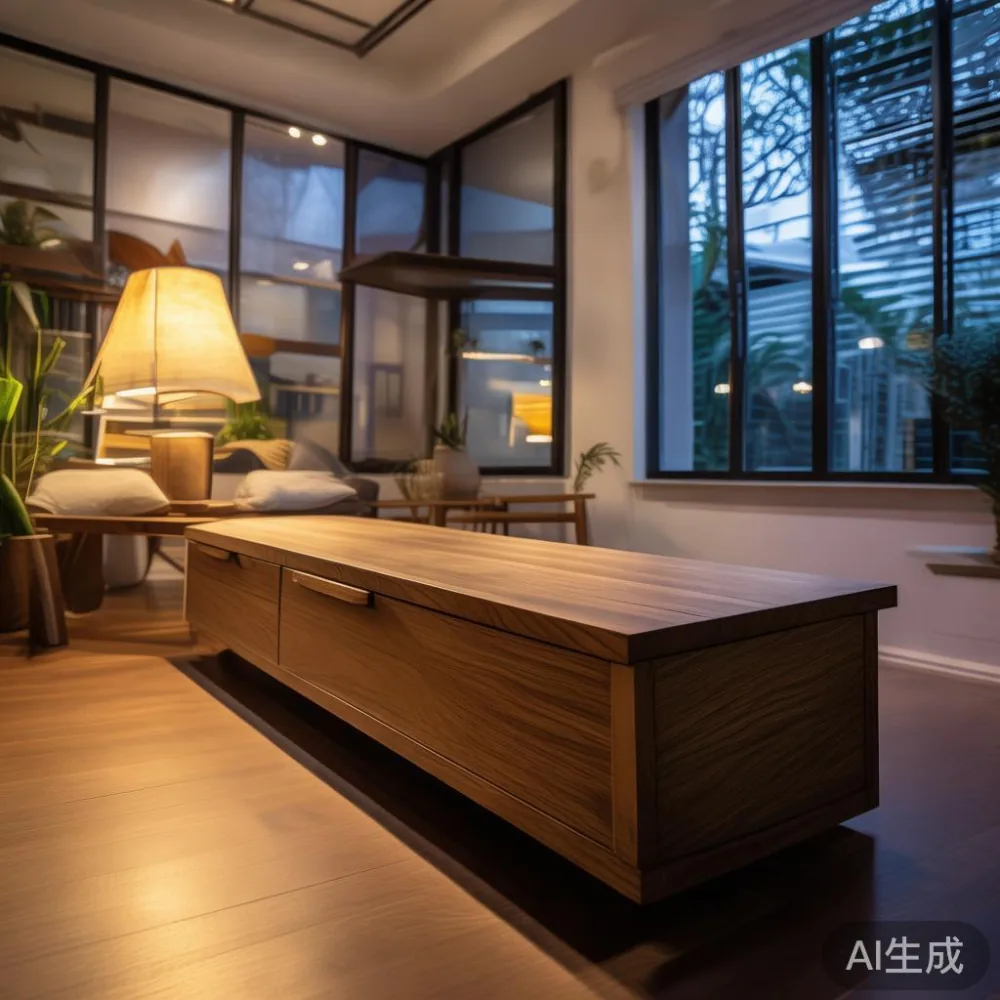
If you have been weighing whether to save on a veneered storage bench now or stretch your budget for a solid wood one, the short version is this: the gap on Day 1 looks much bigger than it actually is once you factor in refinishing, replacement, and the way each material behaves in our 32°C, 80%-humidity climate. Let me walk through it the way I would with a friend over kopi at the Tampines Hub food court.
What exactly is veneer, and how is it different from solid wood?
Veneer is a thin slice of real wood, usually 0.6 mm to 2 mm thick, glued onto a substrate such as MDF, particle board, or plywood. A solid wood storage bench is cut from a single piece or a glued laminate of hardwood — at MIDHILL we use American white oak, ash, and black walnut, kiln-dried to a moisture content of 8% to 12%, which is the sweet spot for Singapore's range.
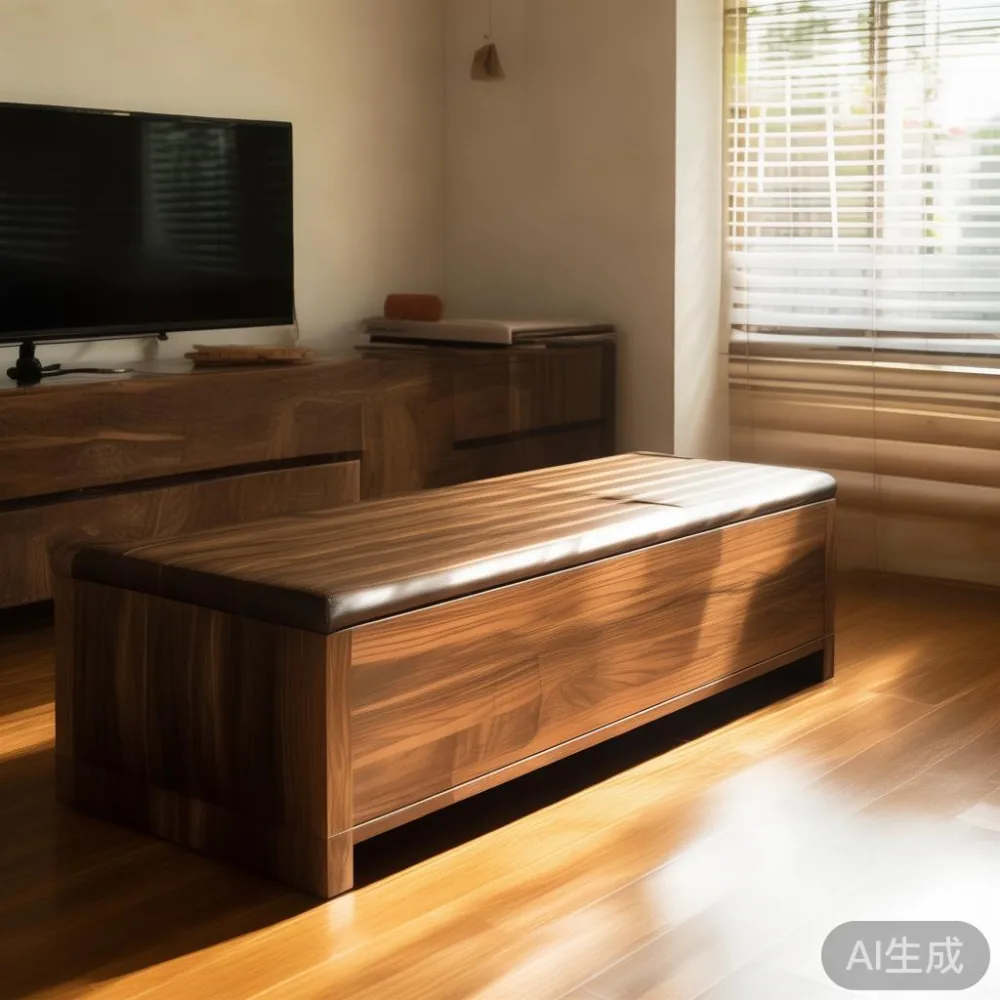
The substrate is what makes most of the cost difference. A 120 cm long bench with internal storage might weigh 18 kg in solid oak. The same bench in veneer-over-MDF weighs around 14 kg. Lighter is easier to carry up a HDB lift — most lift cabins in Singapore measure about 1.1 m wide by 1.4 m deep, and a 14 kg box is a one-person carry, whereas 18 kg usually wants two people to avoid scuffing the corridor wall.
Day-one price: what you actually pay in SGD
For a fair comparison, I pulled three real storage bench listings from Singapore retailers in October 2024:
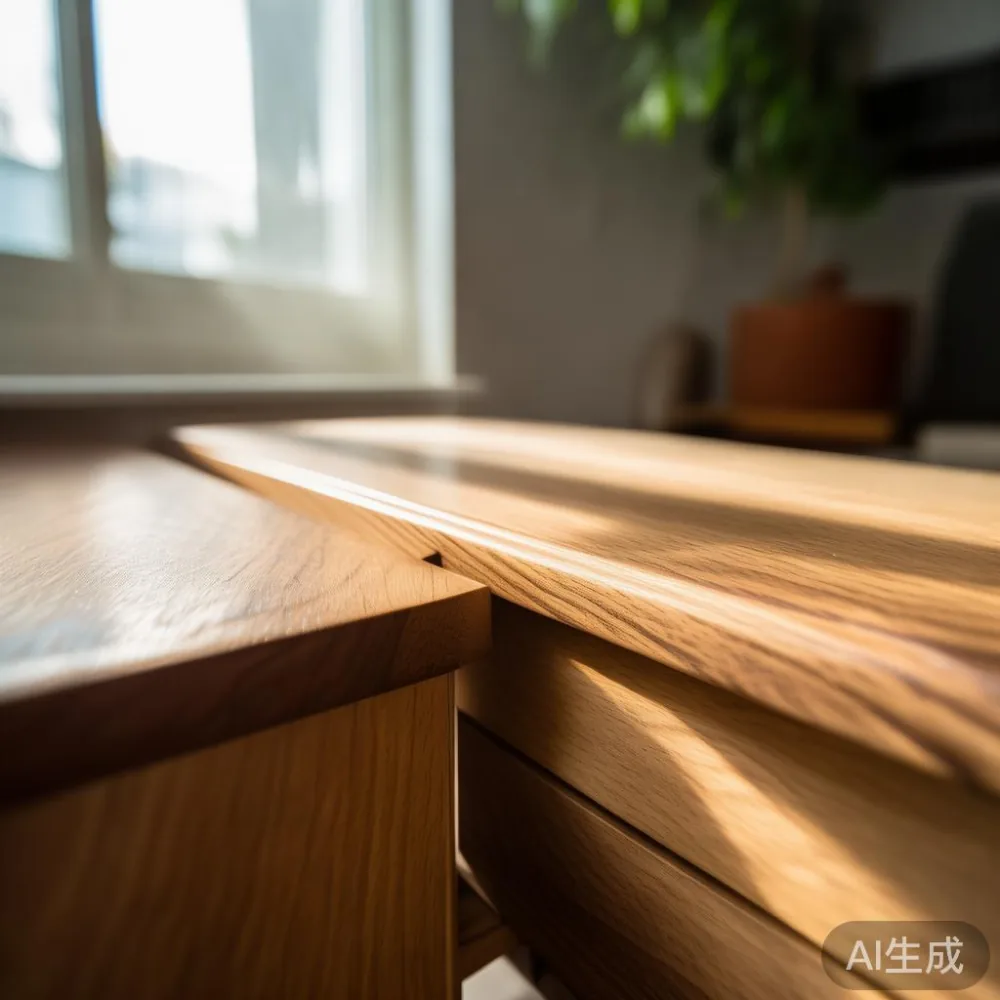
Veneer bench, 120 cm: SGD 320 to SGD 480. Typical construction: 18 mm MDF body, 0.6 mm oak veneer, paper-backed inside panels. Weight 13 to 16 kg.
Solid wood bench, 120 cm: SGD 780 to SGD 1,150 for ash or rubberwood, SGD 1,300 to SGD 1,850 for American white oak or black walnut. Weight 22 to 28 kg for oak. MIDHILL's 120 cm white oak storage bench with lift-up seat sits at around SGD 1,180 landed, including GST and door-to-door delivery above SGD 350 order value.
So on Day 1, you are looking at roughly SGD 700 to SGD 1,000 extra for solid wood. That is the gap that makes most buyers stop scrolling.
Year 1 to 2: how each material handles a Tampines corridor
Singapore HDB corridors run about 1.2 m to 1.5 m wide, and most of us use the space outside the flat for shoe cabinets, benches, or a small console. Humidity sits between 70% and 85% for at least nine months a year. This is where veneer storage bench pieces start showing stress marks.
Veneer edges — the 0.6 mm band running along the lid and the front face — tend to lift or chip where the substrate absorbs moisture. On a friend's Bedok HDB bench, two corners started peeling at month 14. A touch-up kit costs SGD 18, but the colour match is never perfect because the original veneer has already oxidised slightly.
Solid oak, by contrast, expands and contracts as one piece of wood. A well-built storage bench with proper joinery — through-tenons, floating panels on the seat back — moves instead of cracking. I have had my oak bench for over five years now, and the only wear is a dulling of the finish on the seat where shoes go on and off. That is surface, not structure.
Year 3 to 4: repairs, refinishing, and what they cost
This is the window where the cost curve flips. Most veneer storage bench pieces hit a wall at year three: peeling, swollen MDF inside the storage cavity, or a sag in the lid where the hinge has loosened on soft substrate. A new set of soft-close hinges runs SGD 45 to SGD 65 fitted. Replacing a swollen internal panel costs SGD 80 to SGD 120 in carpentry labour.
Solid wood, on the other hand, is designed to be refinished. I tested this myself last month when I sent my own bench back to the MIDHILL workshop for a sand-and-oil refresh — I paid only the shipping of SGD 60 (inside their lifetime refinishing service) and received the bench back in 14 working days, looking like new. If you were buying that kind of service from a local carpenter, a full sand-and-oil on a 120 cm bench would be SGD 180 to SGD 280, plus 5 to 7 days without the bench.
Add up Year 1 to 4 maintenance for each:
Veneer bench: SGD 18 touch-up + SGD 55 hinge + SGD 100 panel patch = SGD 173.
Solid oak bench: SGD 0 refinishing (covered) + SGD 0 hinge issues + maybe SGD 15 of oil you apply yourself = SGD 15.
Is the difference really worth it once you add everything up?
Here is the cumulative 5-year picture, assuming you keep the bench for the full period:
Veneer storage bench: Day 1 SGD 400 (mid-range) + SGD 173 repairs + SGD 60 average refinishing touch-up you cannot really do because the surface is paper-thin = SGD 633 effective spend, with a piece that looks tired by year four and probably needs replacement by year six.
Solid wood storage bench: Day 1 SGD 1,180 + SGD 15 consumables + SGD 0 structural repairs = SGD 1,195 effective spend, with a piece that can be refreshed indefinitely and easily outlasts a 10-year lease cycle.
The pure price gap of SGD 562 spread over 60 months works out to about SGD 9.40 a month. That is two cups of kopi at the hawker centre. For something you touch every single day and that anchors the entry to your home, it is a strange corner to save on.
Will a solid wood storage bench fit through my lift and corridor?
This was my biggest practical worry when I was measuring for the Tampines flat, so I will save you the measuring tape work. Most HDB passenger lifts have a clear door opening of about 800 mm wide and a cabin depth of 1,300 mm to 1,500 mm. A 120 cm storage bench, unboxed, measures roughly 120 cm long, 38 cm deep, and 45 cm tall — it slides in diagonally on a soft blanket without any disassembly. Our corridors inside the flat are usually 1.0 m to 1.2 m wide, and the bench can be tilted on its side and rolled in on furniture dollies if needed.
The piece I bought was delivered in a single box weighing 26 kg, brought up by two delivery crew in under 12 minutes. If you live in a Punggol executive HDB with a wider 1.5 m corridor, you can even take it in flat. For a 150 cm version or one with a marble table top accent panel, you may need to partially assemble, but most quality makers pre-fit the hinges so the only step is attaching the four legs with an Allen key.
How does this connect to the rest of a light-luxury home?
Storage bench is rarely a stand-alone purchase. Most buyers in our circle are also furnishing a solid wood sofa, a bed frame, a dining table, a wardrobe, and a nightstand — the same five pieces that show up in every Tampines and Bedok flat tour I have done. The construction logic transfers directly. A solid oak bed frame uses the same kiln-dried stock, the same joinery, the same oil finish. Once you trust the material on the bench, the wardrobe question becomes much easier.
In fact, a reader asked me last week about a specific concern many Singaporeans share: is Japanese wardrobe worth it when you already have a French light luxury scheme in the living room? The honest answer is that Japanese-influenced wardrobes tend to favour lighter ash and clean panel lines, which pair beautifully with American light luxury pieces — think a black walnut storage bench anchoring an oak console, with a marble table lamp adding the cool accent. It is a mix that feels intentional rather than pieced together.
If you are browsing 2026 collections and wondering about the best Post-modern sofa for 2026, the same material logic applies. The sofa frame is the part that fails; the upholstery can be replaced. Look for kiln-dried hardwood frames, sinuous spring or eight-way hand-tied, and you will be set for a decade.
What about the budget side — anything solid under SGD 2,000?
This is where many Singapore buyers push back, and rightly so. A full solid wood furniture haul under 2,000 is tight, but not impossible if you build a package around one good maker. You can realistically land a 120 cm storage bench, a 150 cm dining table in ash, and two dining chairs in solid wood for around SGD 1,950 before GST, especially during year-end factory promotions from Foshan makers. If your taste runs more under 2000 American furniture styling — shaker lines, black walnut, brass hardware — MIDHILL runs an annual warehouse-direct promotion in Singapore every November that bundles bench plus bed frame plus nightstand under SGD 2,100.
For a different look, under 2000 Coastal furniture packages tend to use whitewashed ash, linen cushions, and a softer palette. Solid ash is also a smart pick here because it takes the whitewash beautifully and stays cool under our climate. Whichever direction you go, the math is the same: solid wood costs more on Day 1, less across five years, and holds its value if you ever decide to move on.
What about styling — how does a French provincial coffee table fit with this?
One of the more common styling questions I get from Punggol homeowners is how a French provincial coffee table — turned legs, soft curves, often in oak with a slightly distressed patina — sits next to a clean American light luxury storage bench. The trick is matching the wood tone and grain scale, not the period. A French provincial coffee table in light oak reads as a sibling rather than a stranger next to a black walnut bench if both are oiled to a satin finish.
Pair that with a top 10 Minimalist furniture list for your living room — think a low-profile solid wood sofa, a single marble table accent, and a slim wardrobe wall — and the whole flat will feel like one decision rather than nine. That unity is, honestly, what most of my friends notice when they visit. They cannot tell whether it was expensive, but they can tell it was thought through.
So what should I actually buy?
If you are buying for a five-year-plus horizon in a Singapore HDB or condo, the numbers favour solid wood for any piece you touch daily — and especially for a storage bench, because the storage cavity is exactly where humidity lives longest. Veneer has its place for occasional tables, decorative panels, or rental furniture you will replace in three years. A solid wood storage bench is a 15-year purchase, not a 3-year one.
When you are ready to browse, the MIDHILL site (api.midhill.co for trade and bulk orders) breaks the range down by wood species, dimensions, and storage configuration, with delivery timelines of 18 to 28 days to a Singapore address and a 10-year structural warranty on every piece. Add the lifetime refinishing, and the cost-per-year actually drops below a veneer piece once you cross the four-year mark. That is the math I wish someone had shown me before my first Tampines purchase.