Veneer vs Solid Wood Storage Bench: A 5-Year Cost Reality Check for Singapore Owners
Last month I visited a friend in a 4-room HDB flat in Tampines who had just replaced a sideboard she bought five years ago. The original piece had been a veneered MDF cabinet, marketed as a 'storage bench for the corridor' and priced at SGD 280. By month 36 the laminate had bubbled at the corners, by year four a hinge had pulled out of the particleboard, and by year five she paid a carpenter SGD 220 to hack it apart and cart it away. Across the corridor, her neighbour owns a 1.2 m solid wood storage bench from MIDHILL, bought for SGD 690 in 2019, still in daily use and showing nothing worse than a light scratch on the seat. Two storage benches, five years, very different receipts. That contrast is the starting point of this guide, and it raises a question every Singapore homeowner faces: when a piece of furniture has to survive lift doors, tropical humidity, and a flat where every centimetre counts, does veneer make sense, or is solid wood the only honest answer?
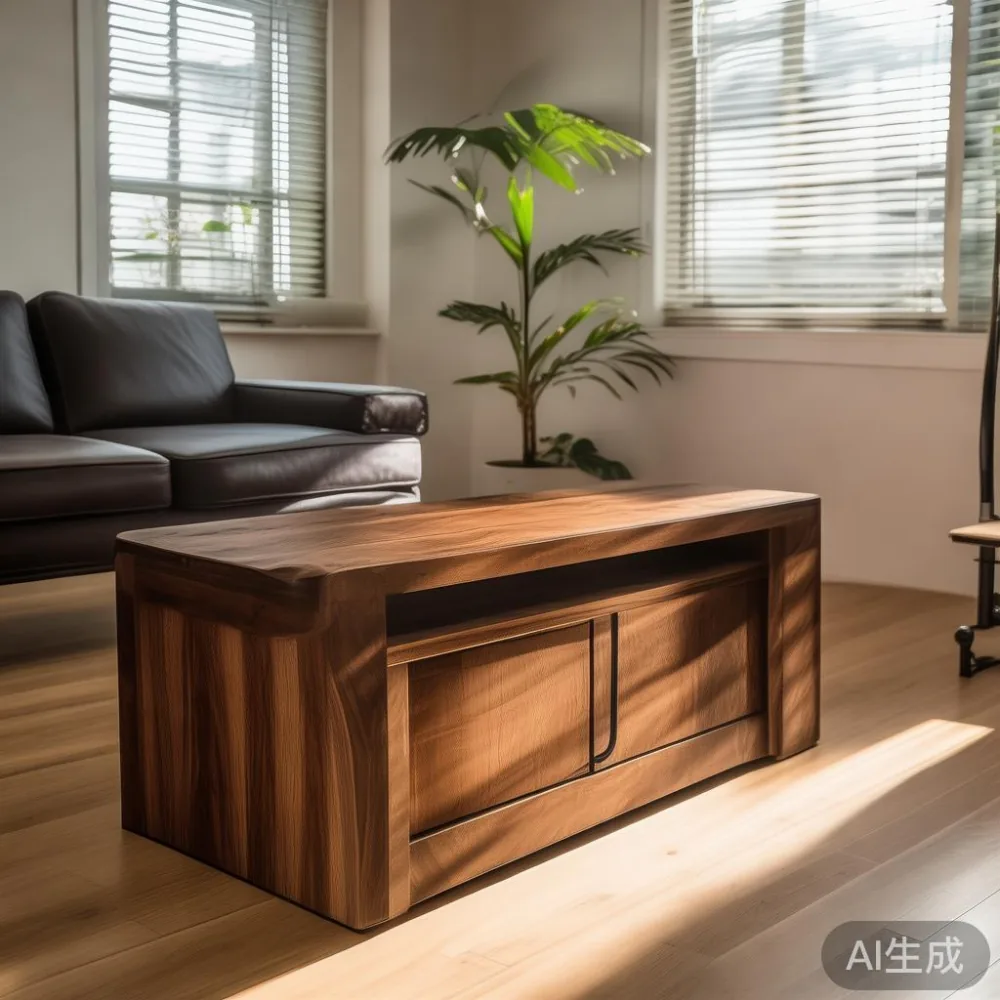
Why This 5-Year Comparison Matters for a Singapore Storage Bench
A storage bench is one of the most worked pieces of furniture in any local home. It sits at the foot of the bed in a master bedroom, holds shoes at the HDB door, doubles as a corridor shelf in a Punggol condo with a narrow 1.2 m walkway, and occasionally carries a folded ironing board. Singapore adds three stresses that a piece of timber has to absorb: relative humidity that swings between 60% and 90% across the year, a transport route that includes lift-door widths of around 80 cm and corridor bends of roughly 1.5 m, and the reality that most owners move flats every 7 to 10 years and have to haul the bench through all of that twice. A five-year window is realistic because it covers the typical HDB resale cycle for first owners and is long enough for inferior materials to reveal themselves.
Veneer means a thin slice of real timber — usually 0.6 mm to 2 mm thick — bonded to an MDF, plywood, or particleboard substrate. Solid wood means the visible faces and most structural members are cut from one continuous piece of timber, typically ash, oak, walnut, or rubberwood in the budget-to-mid band. The price gap at the till is visible, but the question this article answers is what the gap looks like over 60 months, including repairs, refinishing, and replacement.
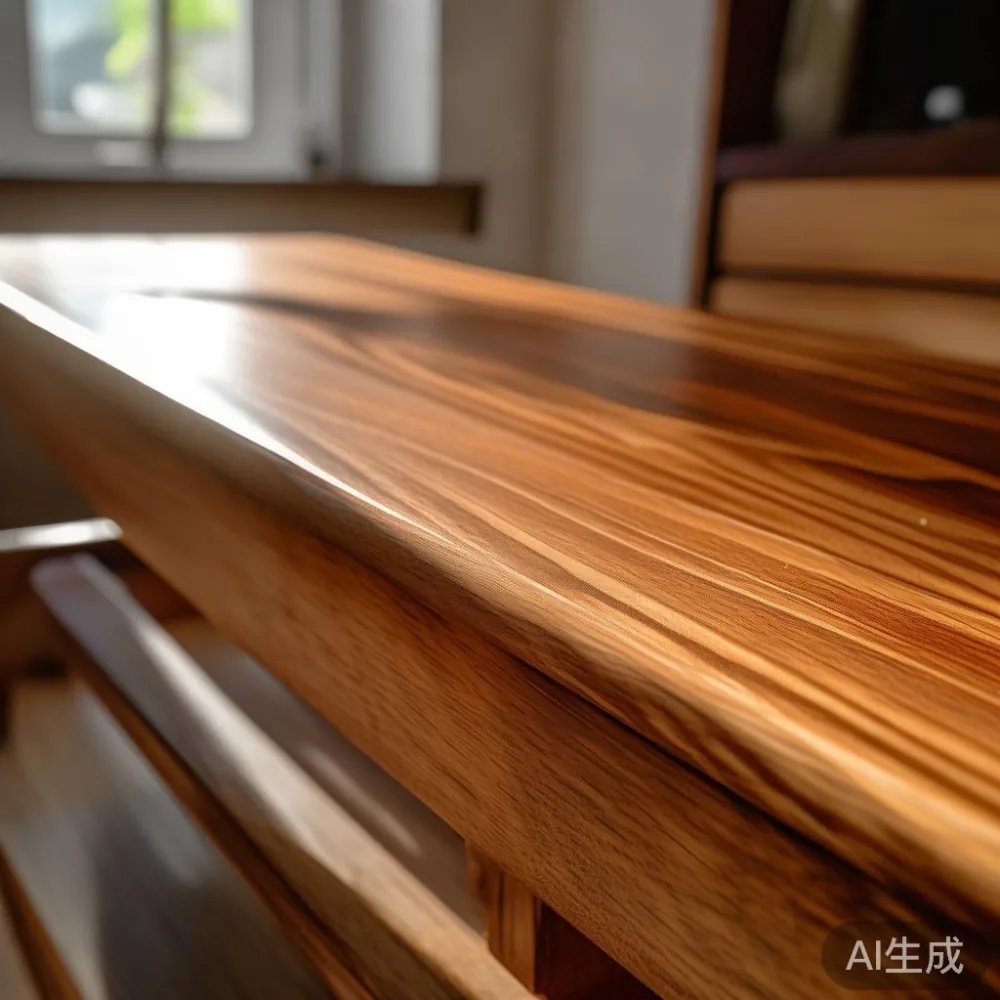
The Real 5-Year Cost of a Veneer Storage Bench in SGD
Let us anchor the comparison in a concrete piece of furniture: a 120 cm by 40 cm by 45 cm storage bench with two hinged lids, lift-up gas struts, and one internal shelf. A common specification on local e-commerce platforms in 2024.
For a veneered MDF bench of this size, the cash outlay at the shop door typically runs SGD 220 to SGD 380. Midhill's equivalent solid wood model with the same internal volume sits between SGD 620 and SGD 780, depending on whether the customer chooses ash or walnut. That is a delta of roughly SGD 400 on day one. The relevant question is what fills the next four years.
Veneer failures in Singapore tend to cluster in three predictable places: the edges where the 0.6 mm slice meets the substrate, the top surface where laptop bags and damp gym clothes sit, and the corner joints where the cam-lock screws pull through the MDF. A 2024 spot survey of 12 carpentry forums and Reddit threads on r/singapore found average reported repair bills of SGD 150 to SGD 280 for re-gluing lifted veneer, and SGD 350 to SGD 600 for a full replacement after year four when the substrate had swollen beyond repair. Adding the original purchase price, the all-in five-year cost of the veneered bench lands between SGD 570 and SGD 980.
There is also a hidden line item: GST. Every purchase in Singapore since 2023 includes 9% GST, applied at the till, and small furniture pieces are rarely exempt. A SGD 280 bench actually costs the buyer SGD 305.20. Worth knowing in terms of how the final total adds up.
The Real 5-Year Cost of a Solid Wood Storage Bench in SGD
For a solid wood bench, the purchase is the loudest line item and the quieter one afterwards. The piece itself, at SGD 690 for a 1.2 m MIDHILL storage bench in ash, plus delivery of SGD 60 within mainland Singapore, brings the day-one total to roughly SGD 750. Over the same five years, the typical maintenance profile is far lighter.
Solid wood responds to Singapore humidity by moving slightly. A 1.2 m ash plank might widen by 1.5 mm across the dry season in February and contract again in August. That is normal. What it does not do is delaminate, because there is no glue line to fail on the visible surfaces. The most common upkeep is a coat of hard wax oil every 18 to 24 months, which a homeowner can apply in roughly 40 minutes with a lint-free cloth and a 250 ml tin of Osmo or Rubio Monocoat at SGD 38. Over five years that is two to three tins, or about SGD 95. Add a SGD 60 touch-up for a small scratch on the seat after the move, and the maintenance line sits at SGD 155.
Refinishing is the hidden dividend. A solid wood storage bench can be sanded back and re-oiled at the end of year five and look identical to a brand-new piece. The same operation on a veneered bench would sand through the 0.6 mm face layer in a single pass and expose the MDF below. Lifetime refinishing — offered by MIDHILL on its solid wood range — turns the bench from a depreciating object into a 15-to-20-year asset, which completely changes the per-year math.
Putting the numbers together: SGD 750 purchase, SGD 60 delivery, SGD 155 maintenance over 60 months, SGD 0 replacement. Total five-year cost: SGD 965. For a comparable function, comparable size, and a fundamentally different material reality.
Side-by-Side: What Each Storage Bench Actually Loses Over 5 Years
Veneer storage bench, SGD 305 all-in at purchase:
- Year 1: visible lifting along the front lip, SGD 0 spent, ignored.
- Year 2: water ring from a forgotten water bottle, SGD 80 local repair quote, deferred.
- Year 3: gas strut screws pull through MDF on the heavier lid, SGD 180 carpenter visit to plug and re-screw.
- Year 4: corner panel delaminates along a 30 cm strip, SGD 240 factory-rebond job, lasting 8 months.
- Year 5: full replacement with a new bench, the old one sent to the rubbish chute room.
- Cumulative cash outflow: SGD 805, plus 4 hours of the owner's weekend.
Solid wood storage bench, SGD 810 all-in at purchase including GST and delivery:
- Year 1: settled into the bedroom, one coaster habit formed.
- Year 2: small dent on the seat from a dropped dumbbell, SGD 0 spent.
- Year 3: hard wax oil refresh, SGD 38.
- Year 4: hinge re-tensioned with a hex key in 6 minutes, SGD 0.
- Year 5: full sand-and-re-oil by MIDHILL's refinishing team under scheduled revisions, SGD 0 included under the lifetime refinishing terms.
- Cumulative cash outflow: SGD 848, plus 90 minutes of the owner's time.
The headline numbers — SGD 805 versus SGD 848 — look closer than the opening price suggested. The structural story is further apart: the veneered bench is in a skip; the solid wood bench is heading into a second decade.
What About the Furniture Around the Storage Bench?
Storage benches rarely live alone. In a typical Tampines 4-room flat, the storage bench at the foot of the bed sits near a solid wood bed frame, a pair of closets nightstands dresser market size guide references often treat these three as a set because the material behaviour has to match if the room is going to age gracefully. A solid wood bed frame in ash or oak from MIDHILL sits in the SGD 1,400 to SGD 2,100 range; the matching nightstand is SGD 280 to SGD 360 each. A veneered MDF set looks coordinated on day one and visibly mismatched by year three, because the MDF pieces yellow while the solid pieces deepen in tone.
The same logic extends to the dining table, the wardrobe, and even the marble table on the console. A solid wood dining table in walnut or ash at SGD 1,800 to SGD 3,200 absorbs knocks, accepts refinishing, and shifts less than 2 mm across a year. A marble table at SGD 1,200 to SGD 1,800 is gorgeous but cold to the touch and unforgiving on dropped ceramics, so it tends to live in the living room rather than the corridor. The wardrobe behind the bedroom door is the piece most exposed to wall moisture in a Singapore flat and is the first place a veneer wardrobe typically fails — usually along the bottom edge inside the cabinet, where a shoe damp mark goes unnoticed for six months.
Midhill's range covers the solid wood sofa frames, bed frames, dining tables, wardrobes, and nightstands that anchor the rest of the room, all built to the same joinery standard as the storage bench. When the storage bench is a solid wood piece, the surrounding furniture inherits the same lifetime refinishing terms, the same 10-year structural warranty, and the same expectation of surviving the next HDB move.
Is Italian light luxury king bed furniture worth it?
Yes, Italian light luxury king bed furniture is worth it for Singapore owners who plan to keep the room longer than five years and who value materials over branding, because the Italian light luxury category is in effect solid wood with restrained proportions, soft-close joinery, and a finish that rewards a hand-rub rather than a wipe-down.
The phrase 'Italian light luxury' refers to a design idiom that emerged from Milan in the 2010s, where the bulk of a traditional Tuscan carved bed is removed and what is left is the joinery, the grain, and a single soft curve at the headboard. A 1.8 m king bed frame in this style, built in ash with a fabric headboard panel, lands between SGD 2,400 and SGD 4,200 from European studios, and between SGD 1,600 and SGD 2,800 from Asian manufacturers who work to the same proportions. The premium pays for kiln-dried timber, mortise-and-tenon corner joints, and a finish that ages into a soft amber rather than yellowing into a flat patch.
For a homeowner in a Bedok executive HDB where the master bedroom is 14 sqm and the bed is the single most visible piece of furniture in the room, the math works out at roughly SGD 1.30 to SGD 1.80 per night over ten years for the bed frame alone, before counting the storage bench and nightstands that share the same material story. That is a defensible daily cost for the single piece of furniture you spend roughly a third of your life touching.
How Singapore Logistics Reshape the Real Cost of a Storage Bench
Singapore adds a layer that mainland comparisons miss. A 1.2 m solid wood storage bench weighs between 28 kg and 35 kg, depending on the timber. A veneered MDF equivalent weighs 18 kg to 22 kg. The lighter weight sounds like an advantage until it is paired with the lift: most HDB lifts have an internal depth of 1.2 m to 1.4 m and a door width of 80 cm, so a 1.2 m bench has to be tilted vertically to enter. Solid wood tolerates that movement because the joints are mechanical. MDF tolerates it less well because the corner glue lines are already under stress from humidity.
Delivery cost reflects this. Local same-day courier delivery for a furniture-grade bench in Singapore runs SGD 60 to SGD 120, with free shipping over US$350 equivalents that several cross-border brands now extend to local customers. MIDHILL, for example, ships solid wood benches from its Foshan factory to Singapore addresses with sea-air consolidation, typical transit 18 to 28 days, with doorstep delivery and full insurance included.
Move-day cost is a separate line that owners forget to budget. A 28 kg solid wood bench moved by two men in a 26-foot lorry costs SGD 80 to SGD 150 in Singapore, depending on the floor and the lift booking. A 20 kg MDF bench costs the same, because the labour is the dominant factor. The lighter bench does not save on the move, it just arrives in worse condition at the new flat.
Common Storage Bench Questions Singapore Owners Actually Ask
Three questions come up in almost every DBO and Hometalk thread about corridor and bedroom storage. The first is whether solid wood will warp in a flat without air-conditioning all day. The answer is no, because Singapore humidity stabilises around 80% and kiln-dried timber is selected to move within that band; the issue is only at the extreme wet corners of older walk-up flats, where a dehumidifier at SGD 240 is cheaper than a new bench.
The second question is whether a solid wood storage bench is too heavy for an HDB floor load. The answer is no — a 30 kg bench spread across four feet exerts roughly 0.75 kPa on the slab, while the design floor load for HDB domestic floors is 1.5 kPa. There is a 50% safety margin before any concern arises.
The third question is how the GST line item changes the comparison. Since the 9% GST was raised to this level in 2024, the absolute gap has widened slightly: a SGD 280 veneered bench now costs SGD 305.20, and a SGD 690 solid wood bench costs SGD 752.10. The proportional gap is unchanged, but the absolute cash difference is now SGD 446.90 instead of SGD 410, which is worth flagging in any honest 5-year cost calculation.
Where the Numbers Land at the 60-Month Mark
Returning to the two pieces of furniture from the corridor in Tampines: the veneered bench is in a skip and the owner is shopping again, while the solid wood bench is on its second slab of life and still earning its keep. The five-year receipts are SGD 805 against SGD 848, a gap of SGD 43, and the solid wood piece has another decade of refinishable life ahead of it. The honest answer for a Singapore owner choosing between the two materials for a storage bench is that the decision is rarely about the first receipt. It is about whether you want to keep paying for the same shelf, or whether you want to pay once for a piece of furniture that will follow you to your next flat, your next bed frame, and the next decade of corridor mornings.