Styling Small Apartments with a Storage Bench Without the Crowd
A storage bench can give a compact Singapore home more practical storage, a place to sit, and a surface for everyday items without adding another bulky piece of furniture. The trick is to measure twice, think in centimetres, and choose proportions that suit the actual rooms found in HDB flats and condos around Tampines, Bedok, and Punggol. A bench that looks generous in a showroom can feel crowded beside a 90 cm doorway, press against a dining table, or block the route from a lift lobby to the front door.
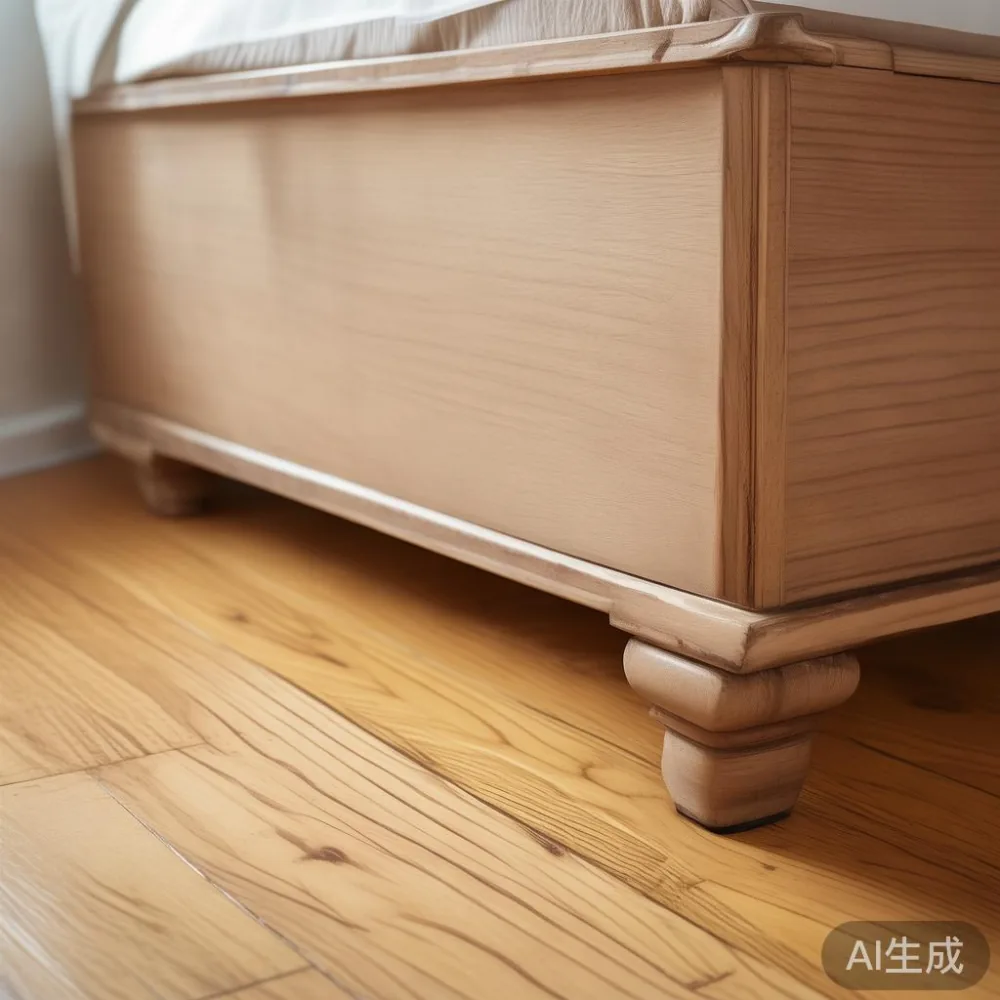
At MIDHILL, we design storage furniture in solid wood with a light-luxury point of view: warm timber, restrained detailing, and useful dimensions rather than oversized forms. The examples here are designed around Singapore conditions, including narrow lift and corridor widths, compact HDB living rooms, and the practical realities of GST-inclusive household budgets.
What Size Storage Bench Fits a Small HDB Flat?
For most compact living rooms, begin with a storage bench measuring 90–120 cm wide, 38–45 cm deep, and 42–48 cm high. A depth of 38–42 cm is particularly useful because it provides a comfortable seat while leaving more circulation space than a 50 cm-deep cabinet. Leave at least 60 cm along a main walkway and 75–90 cm in front of a dining table where people need to pull out chairs.

In my own test last month, I brought a 110 × 40 × 45 cm storage bench into a Tampines HDB living room with a 91 cm internal door and a 76 cm clear route beside the sofa. It fit through the door without removing the door leaf and still left enough space for daily movement. The compartment below was 98 × 32 × 30 cm, large enough for two shoe boxes, folded laundry, or a pair of small suitcases. This is the sort of physical check I prefer to relying only on product photographs.
Measure the route before ordering: note the lift door width, lift car depth, corridor turns, and the narrowest doorway at home. Many newer HDB blocks have lift doors around 90 cm wide, but older buildings and corridor junctions can create tighter obstacles. If the bench has removable legs, it is easier to transport upright or flat. Confirm the packed dimensions, the assembly method, and whether the furniture can be carried by a normal two-person team rather than a specialist mover.
For delivery within Singapore, allow roughly 3–7 working days for an in-stock piece, while made-to-order or special-finish items may take 4–8 weeks. Check the delivery date before arranging a time when the household cannot receive it. Some lifts require a protective floor covering and a service booking, so the supplier should confirm the move-in date and building rules. A 10-year structural warranty also provides useful long-term reassurance for a bench that carries everyday weight.
Which Style of Storage Bench Suits Singapore Interiors?
Light-luxury styling works well in small Singapore homes because it creates visual depth without heavy carving or excessive contrast. French light luxury might use pale oak, ash, or light walnut, tapered legs, and simple linen cushions. American light luxury leans toward warm woods, rounded edges, and slipcovers. Post-modern light luxury can introduce a narrow rectangular silhouette, softened corners, or a mixed-material seat while keeping the body visually quiet.
For a HDB living room, a bench with a solid wood frame and a removable cushion is more adaptable than one upholstered as a permanent sofa. A 100–120 cm bench can serve as occasional seating, a shoe station near the entrance, or a low console behind a compact dining table. Avoid fixing it to the wall unless you are certain the layout will not change. Freestanding storage gives an HDB resident or condo owner the freedom to reposition it when work, family needs, or moving plans change.
Finish selection matters in tropical light. Pale timber can reflect daylight and make a 45 cm-high bench look less substantial, while medium walnut gives definition in a dim room. Test colours in the morning and at night rather than judging them under showroom lighting. A natural finish may need careful cleaning around food and moisture; a sealed surface is usually easier to maintain, but the sealer should be explained clearly.
Pair the storage bench with pieces that continue the same material story. A solid wood sofa with slim arms, a solid wood bed frame, or a dining table with clean lines will feel more intentional than a collection of unrelated forms. If a marble table is already present, choose a bench with a matte wood finish rather than adding another highly reflective surface. A small marble side table beside a bench is useful in a condo, but a 50 cm diameter table takes up more floor area than a 35 cm one.
How Can a Storage Bench Replace Clutter Without Making the Room Feel Heavy?
The main purpose of a storage bench is to contain objects that would otherwise occupy tables, shelves, and the floor. Use the internal compartment for items used regularly: spare bedsheets, school bags, cleaning supplies, board games, or compact appliances. Keep only what fits within the stated internal dimensions. A bench advertised as “storage” may have a shallow shelf, so check the usable opening rather than estimating from the exterior.
Use the top as a landing zone, not a permanent display table. Leave one tray for keys and mail, one basket for loose items, and enough clear area for a cup or laptop. A tray measuring 35 × 25 cm can organize daily necessities without making the bench look like a display counter. A narrow bench placed near the entrance can handle shoes, but it should not block the door swing or reduce a corridor below safe clearance.
In Bedok and Tampines HDB flats, where living rooms often serve as dining rooms, a bench can replace a separate low cabinet if the room is short on wall space. Put it at the end of the dining table rather than directly opposite the main doorway. A 40 cm depth leaves approximately 50 cm between the bench and the table edge when both are centred in a 90 cm zone, which is tight for chair movement. In that case, place the bench under a window, against a side wall, or use a 35–38 cm depth.
Do not stack large objects on the cushion for long periods. A seat designed for 100–120 kg may look strong, but the cushion can still mark if weight is concentrated in one corner. If the bench is used as a sofa, keep it supplementary rather than expecting it to replace a full upholstered seat. The bench should contribute to a room’s seating plan while improving storage, not quietly create a new circulation problem.
Are Storage Benches Practical for Bedrooms and Entryways?
Yes, provided the bench is proportioned for its position. In an HDB bedroom, a 90–110 cm storage bench at the foot of a bed can work when the bed is 135–150 cm wide and there is at least 55–60 cm between the bench and the opposite wall. The storage below may hold folded bedding, but a mattress or bulky quilt should not be compressed inside the compartment.
At the foot of the bed, allow enough space to make the bed comfortably. A 40 cm-high bench should not be placed directly where someone sits to put on shoes, because the bed edge then becomes the back support. For a bedroom wardrobe zone, a narrower 30–35 cm bench can sit in front of the wardrobe doors only if the sliding doors can still open fully. A hinged wardrobe needs approximately 90 cm of clearance for a standard door leaf, plus space to stand and pull items out.
Entryways benefit from a bench with a closed lower compartment because loose shoes are visually noisy. A 30–35 cm depth fits most shoe shelves, while a 40 cm depth can accommodate deeper boots. Add a wall-mounted rail for coats if the hallway permits it, keeping the floor around the bench clear. Avoid a bench positioned where the lift door opens or directly in front of a fire hose reel or electrical panel.
For a compact bedroom, think about the bed frame and nightstand before adding another horizontal surface. A solid wood bed frame with integrated storage may reduce the need for a tall chest, while a compact nightstand with a 30–35 cm top can hold a lamp and phone. A storage bench should solve a specific storage gap rather than duplicate what is already built into the bed frame or wardrobe.
How Do You Style a Storage Bench with a Small Dining Area?
Begin by treating the bench as part of the dining zone, not as an extra piece placed wherever space remains. A 100–120 cm bench can sit at the end of a 120–140 cm dining table, but check chair pull-out space first. A typical dining chair needs about 60 cm of clearance behind it, and a person walking behind a seated diner needs another 30–40 cm in a busy route.
If space is limited, use the bench as the main occasional seat on one side of the table. The cushion should be around 5–8 cm thick for comfort, and the seat height should be close to standard dining-chair height at 43–47 cm. A 45 cm bench works with most dining tables at 73–76 cm high. If the bench is primarily decorative, a slightly lower 42–43 cm seat may suit a lounge arrangement, but it should not be so low that users feel they are dropping into it.
Styling should remain simple. One cushion, one narrow tray, and perhaps a small plant under 25 cm tall are enough. Avoid a large vase that competes with the table centrepiece or a tall lamp that blocks a window. If the bench stands near a dining table, a slim dining table with rounded corners can improve circulation, especially where children or older residents use the space.
For shoppers comparing broader furniture styles, the phrase Japanese sofa vs Modern sofa often appears in design guides, but a storage bench is more useful here than a deep sofa when the real need is concealed storage. Similarly, Mid-century modern for dining room can inspire tapered legs and clean silhouettes, provided the furniture does not make the dining zone visually crowded. A coordinated dining table and bench with the same wood tone usually read more calmly than matching every element exactly.
What Should You Check Before Buying a Solid Wood Storage Bench?
Check the solid wood specification, not merely the product label. Ask which timber is used in the frame, seat, back, drawer components, and interior panels. Solid wood sofa, bed frame, and dining table products vary in construction, so natural grain and slight colour differences should be expected. Plywood or engineered board may be used in some internal parts where appropriate, but the supplier should be transparent about materials and load capacity.
Measure three things: the bench, the delivery route, and the intended location. The product dimensions should include the widest protruding element, including handles or feet. A nominal 110 cm bench with handles may require 113 cm of wall or door clearance. The weight also affects moving: a solid timber bench might weigh 28–45 kg, while a larger model can reach 55–60 kg. Check whether the supplier includes a lift-in service and whether stairs or a narrow corridor add to the fee.
Ask about finish care, cushion removal, and the warranty. MIDHILL provides a 10-year structural warranty on eligible solid wood furniture and offers lifetime refinishing under its stated service terms. That is meaningful for long-term ownership because scratches and colour changes can be addressed rather than accepted as permanent damage. The cushion, however, may have separate care instructions and replacement availability.
Price comparisons should include GST and delivery. In Singapore, GST is currently 9%, and a benchmark of SGD 1,280 before GST becomes SGD 1,395.20 after tax, excluding any delivery or lift-in charge. Free shipping over US$350 applies to MIDHILL’s stated threshold, but the currency and destination rules should be confirmed for a Singapore order rather than assumed to mean free islandwide delivery.
For anyone researching under 2000 Japanese furniture or a broader imported style, check dimensions and serviceability carefully. An imported bench with a large box may consume corridor space, cost more to assemble, and make a small room less adaptable. The phrase how to choose American sofa is less directly relevant than a bench, yet its useful principle still applies: assess seat depth, comfort, frame quality, and room clearance rather than choosing by style name alone.
Returns and timing also belong in the decision. MIDHILL offers a 14-day return window for qualifying items, subject to the stated conditions, and buyers should check whether a made-to-order piece, assembled bench, or special finish is returnable. The European bed vs Modern bed comparison is another design exercise, but a bench should be selected for the dimensions of the entry hall and the storage task it will perform.
Can One Bench Work Across a Studio, Condo, and HDB Home?
A well-proportioned bench can work in several types of Singapore homes, but its role should change with the layout. In a studio, it may replace a coffee table and provide hidden storage. In an HDB flat, it may become a shoe bench in the living room or an extra seat near the dining area. In a condo, it can serve as a dressing bench in the bedroom or a console near a compact foyer. The same rectangular form can remain useful if it has removable legs, a replaceable cushion, and enough internal clearance.
Look for a bench between 100–120 cm wide if it must function as occasional seating; two people can sit at that length, although comfort depends on depth and cushion shape. For pure shoe storage, 80–100 cm may be sufficient. In Punggol and Bedok family flats, adjustable internal shelving can adapt the compartment as household needs change. Keep removable dividers, and label the sections so seasonal items do not become permanent clutter.
Visual discipline is just as important as capacity. One storage bench with closed sides will usually feel lighter than two open shelving units. If the room already contains a substantial dining table, choose a pale or medium-toned bench that blends with the floor and walls. If the walls are warm white and the flooring is cool grey, a warm natural wood finish can bridge the palette without adding a high-contrast block.
Online references to the best French provincial sofa for 2026 can be useful for studying curved profiles, but a small apartment may need the restraint of French light luxury rather than ornate detailing. A bench with softened corners, visible grain, tapered legs, and a simple linen cushion captures that atmosphere while remaining compact. It can sit beside a marble table without competing with veining or reflective stone.
Finally, test the bench before committing. Sit on it for 5–10 minutes, reach into the storage compartment, and walk around it as another person would. Confirm that the lid or drawers open without hitting a wall, that the cushion stays flat, and that the room still feels breathable. If a 45 cm-deep model makes the path feel pinched, reduce the depth by 7–10 cm rather than squeezing it into an unsuitable position.
A successful storage bench does not erase the need for good planning. It earns its place by consolidating storage and seating within carefully measured dimensions. Choose a solid wood frame, a practical internal layout, and a finish that suits Singapore light, then check the full route from the delivery van to its final position. That approach creates a room with more function and less visual pressure, even when every square metre is working hard.