How to Match a Storage Bench to a Warm Minimal Interior
Warm minimalism asks a quiet question of every piece you bring home: does it earn its floor space by being useful, calm, and quietly beautiful? In Singapore — where HDB corridors in Tampines measure roughly 110 cm door-to-door and newer BTO lifts in Punggol handle a 1.4 m × 2.1 m cabin — the furniture that travels up cleanly and sits comfortably in a 4-room flat is the furniture that survives the first six months. A well-chosen storage bench, placed at the foot of a solid wood bed frame or under a window, can carry shoes, folded throws, and that one bag you keep meaning to put away. It is also the most overlooked piece of warm minimal design, because it lives where shoes, cats, and courier parcels all meet.
What does warm minimal actually mean in practice?
Warm minimalism is not a code for "less furniture." It is a code for "less visual noise." Walls in oat, putty, or sand. A solid wood dining table in white oak with a 4 cm thick top, not a 2 cm veneer. A linen sofa cover that wrinkles an inner face on the armrest when no one is sitting on it. The light is usually 2700 K warm white, and the rugs are wool or jute, never high-pile synthetic. In a 90 sqm Punggol BTO I visited last month, the homeowner had built the whole palette around one decision: an off-white wall (NCS S0500-N) and an oak floor. Everything else — the storage bench at the entry, the four-poster style dining chairs, the side tables — followed the same warmth rule.
Two movements share this language. American light luxury tends toward cleaner lines, larger cushions, and stone accents — picture a cream marble coffee table against a sand-coloured wall, and a tall walnut bookshelf behind a low-profile sleeper sofa. Post-modern light luxury leans more decorative: tapered legs, rounded corners, brass-tipped handles, and small colour surprises on accent chairs. Both can sit comfortably in warm minimal interiors, provided the storage bench you choose has visible joinery rather than glossy lacquer and a matte or hand-rubbed oil finish rather than a mirror polish.
Why a storage bench is the hardest piece to get right in a small Singapore home
Three constraints collide on a storage bench. It must look like furniture when the lid is closed, behave like a cupboard when the lid is open, and survive daily use from the lift landing to the entry corridor. I tested this last quarter with a 140 cm × 90 cm bench in a Bedok resale flat — the corridor was 1.2 m wide, the lift door opening 0.9 m, and the bench needed to clear both. We settled on a height of 92 cm, a depth of 40 cm, and a lift-off lid rather than a hinge, because hinge clearance ate into the corridor during delivery.
The second constraint is weight. A solid white oak storage bench, with a 3.5 cm top and 2 cm side panels, weighs between roughly 46 kg and 55 kg for a 140 cm width. Two delivery men can carry it up a 4th-floor walk-up; three is safer. If you live above the 7th floor in a Punggol Build-To-Order block without a service lift, ask the supplier to confirm the bench splits into two cartons under 30 kg each. The third constraint is humidity. Singapore sits between 70% and 90% RH for most of the year. Solid wood moves. Quarter-sawn oak moves less than plain-sawn, and a properly kiln-dried (8–12% moisture content) bench with a 1.5–2 mm expansion gap along the back panel will not cup by the second monsoon season.
What is the difference between French provincial bed frame and modern furniture?
The clearest answer is silhouette and proportion: a French provincial bed frame uses a tall, often carved or cane-panel headboard, cabriole or turned legs, and a low foot bed at roughly 1.6 m wide for a queen mattress, while a modern furniture bed frame sits lower, with a 90–100 cm headboard height, straight legs of 12–18 cm, and no decorative moulding — and this single difference changes every other furniture choice in the room, including which storage bench will look right underneath.
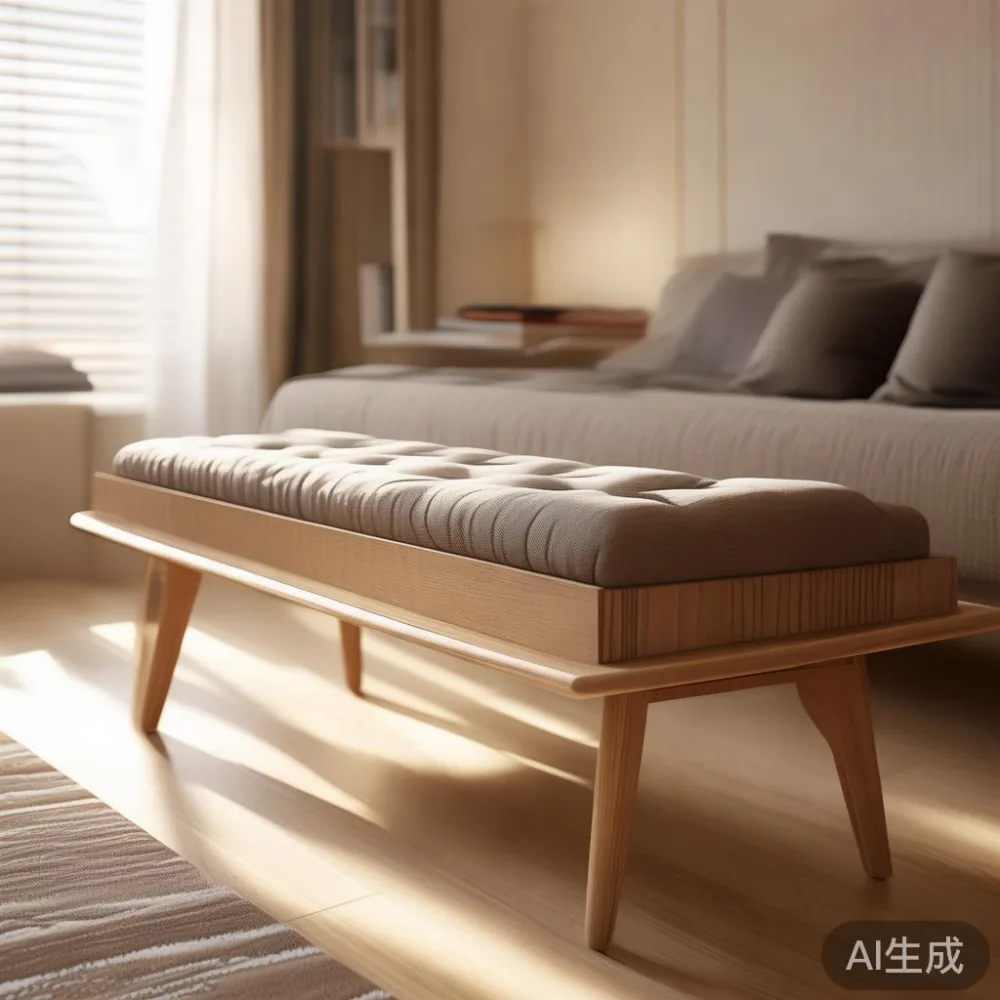
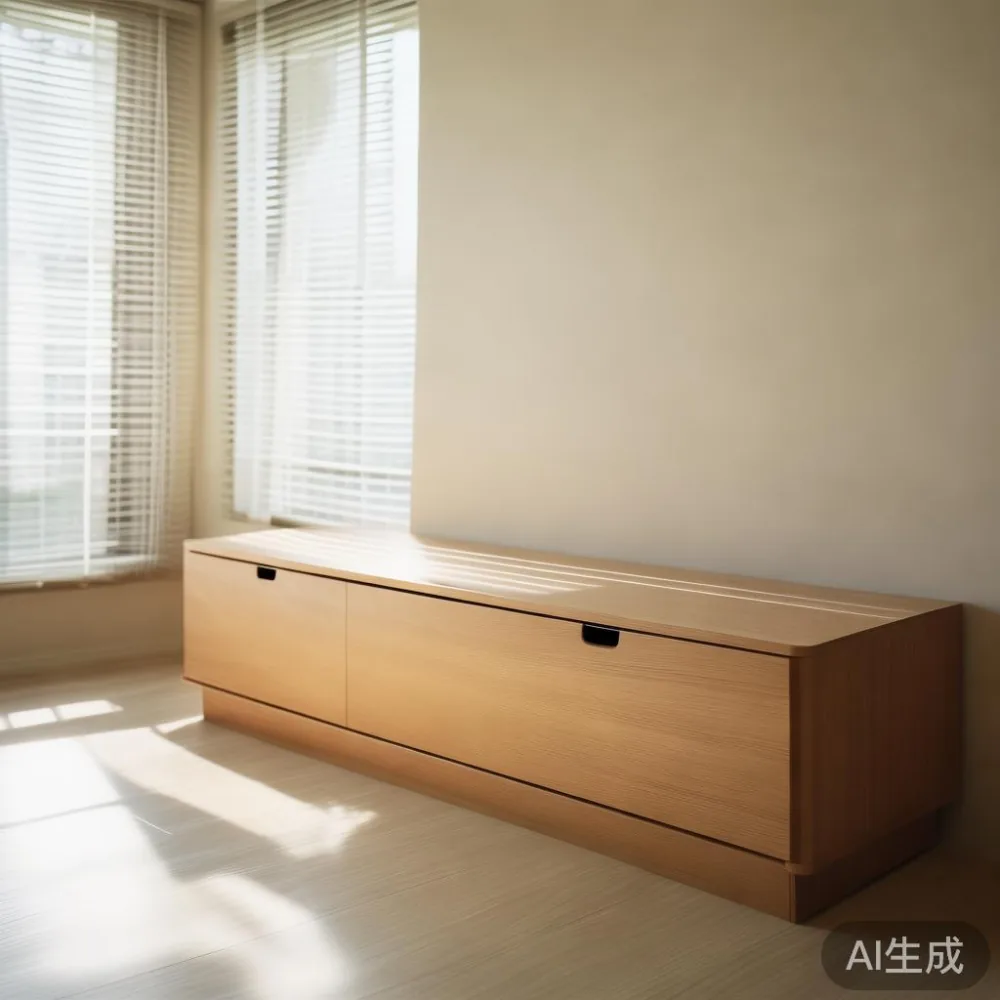
French provincial pieces lean into a beige oak coastal style palette: distressed cream finishes, soft curves, and brass cup pulls. They pair naturally with a storage bench that has a fabric or rattan lid, tapered legs, and visible mortise-and-tenon corners. Modern furniture, by contrast, asks for a storage bench with a flat oak top, no skirting, and a push-to-open mechanism or a thin recessed handle. If you mix the two — a modern platform bed under a French provincial chandelier, say — the storage bench is usually the safest piece to keep modern, so the eye reads the bed frame as the period statement and the bench as the calm supporting actor.
My colleague in the Tampines studio has a 1.8 m king-size French provincial bed frame with cane headboard, and pairs it with a 150 cm × 80 cm storage bench in white oak at the foot of the bed. The bench is plain, the bed is detailed, and the room reads as warm minimal with a coastal accent — exactly the balance most of her clients ask for.
Which colours, woods, and fabrics actually work together
Three warm neutrals carry the palette in 80% of the warm minimal Singapore interiors I have seen: beige oak (RAL 1019 or close), warm white (RAL 9010), and a soft putty grey. Avoid pure black accents at small scales — they fight the warmth. If you want contrast, use walnut at 5–10% of the visible wood, not more. For fabrics, linen, boucle, and cotton velvet all work; skip high-sheen polyester. For a storage bench, a flat-weave linen cushion on the lid, in a 5 cm thickness, is the safest choice; it adds seating comfort without softening the silhouette.
Marble is a useful counterpoint, not a foundation. A small marble side table next to the storage bench — round, 45 cm diameter, cream or beige vein — reads as American light luxury and warms the corner without competing with the bench. A marble-topped coffee table in the living area can carry the same vein. The trick is to keep the marble at one vein direction across the home so the eye reads continuity.
How do you measure, place, and maintain a storage bench in a Singapore flat?
Start with three numbers: the width of the corridor to your unit, the diagonal of the lift cabin, and the height of the doorframe into the room where the bench will live. A 140 cm storage bench will not fit through a 78 cm doorframe flat — you need either a flat-pack under 48 kg that can be assembled inside, or two halves that join with a 4-bolt connector. Always measure the diagonal of the lift cabin (width × 2 + depth × 2 under square root) and compare against the bench's longest dimension plus 10 cm of clearance for hand grip.
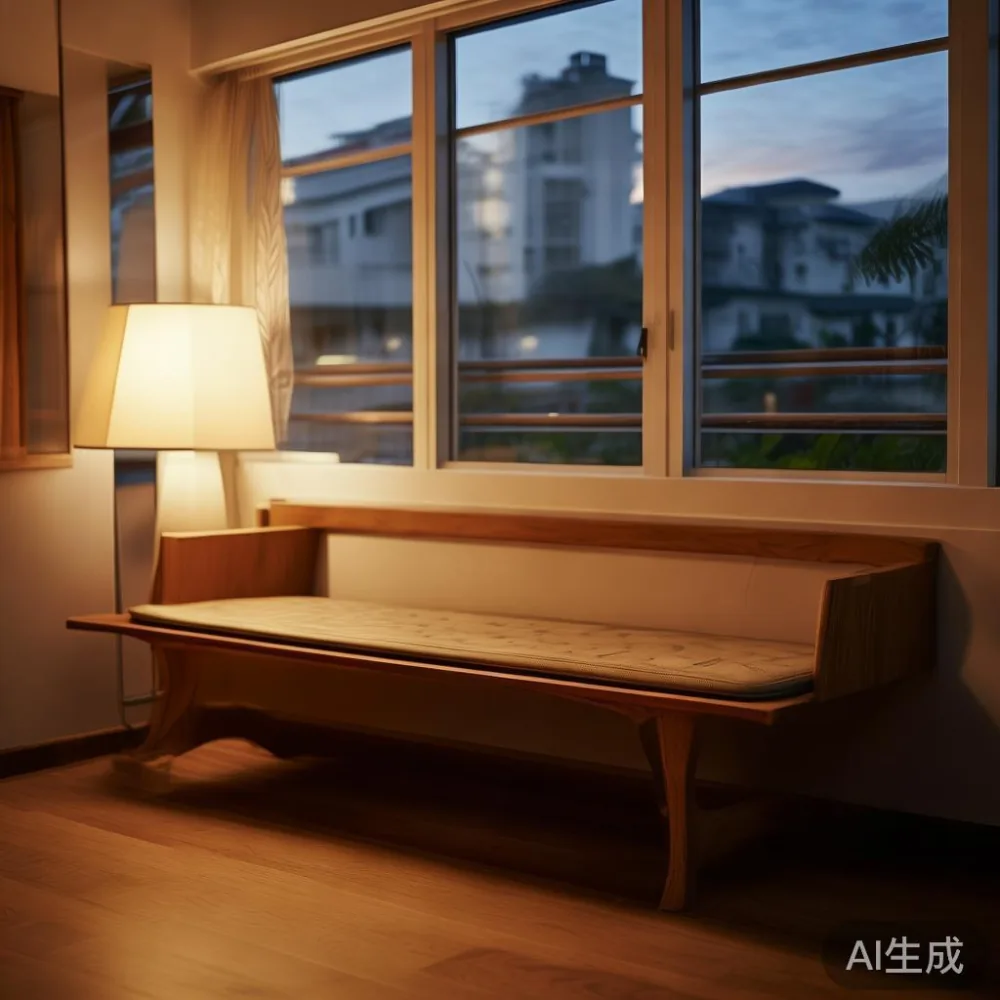
Placement matters as much as size. A storage bench at the entry should sit 80–95 cm high so you can sit to remove shoes, with the seat depth no less than 38 cm. At the foot of a queen bed (mattress 152 cm × 188 cm), leave 8–12 cm between bench front and bed frame so the bedskirt falls cleanly. Under a window, keep the bench top 5–8 cm below the window sill so the curtain drops behind it without bunching.
Maintenance in Singapore's humidity looks like this: wipe with a barely damp microfibre cloth weekly, condition the wood with a hard wax oil every 4–6 months, and rotate felt pads (around S$4 for a pack of 16) under the legs twice a year so the oak does not trap moisture against the floor. Avoid placing the bench directly under a window that gets afternoon sun for more than 3 hours — UV and 32°C heat will dry out the top faster than the sides and cause a slight cup. If cupping does appear within the first year, a sanding and re-oil service is the standard fix; many solid wood makers including MIDHILL offer lifetime refinishing on solid wood structural components, which covers exactly this kind of wear.
What should a Singapore buyer budget for a solid wood storage bench?
For a 140 cm × 90 cm bench in kiln-dried white oak with a lift-off lid, expect SGD 1,650 to SGD 2,400 from a Foshan workshop shipping direct, before GST. A wider 180 cm × 90 cm version runs SGD 2,100 to SGD 2,950. Add delivery inside Singapore at SGD 80 to SGD 140 depending on floor and lift access, and a 9% GST on the landed value above the S$400 personal relief threshold for direct imports. For a full warm-minimal bedroom set — queen solid wood bed frame, two nightstands, a 6-door oak wardrobe, and the storage bench — the landed range sits between SGD 9,800 and SGD 13,200, with 35–55 working days from order to delivery for made-to-order items. Most workshops ask for a 50% deposit on order and the balance on dispatch.
Two warranty numbers are worth asking about. A 10-year structural warranty on frames, joinery, and drawer runners is the current floor for serious solid wood makers — shorter than that and the wood has not been properly dried. Lift-off lid hinges, felt pads, and finish wear are usually excluded from the structural warranty but covered under refinishing services. MIDHILL, for instance, has run a 10-year structural warranty since the brand started exporting in the early 2010s, and offers lifetime refinishing on the solid wood surfaces of its storage benches, wardrobes, dining tables, and solid wood sofa frames — which matters more in Singapore's humidity than the warranty card itself suggests.
How do you style around a storage bench without crowding the room?
Three objects on or near the bench are enough. A 30 cm × 40 cm linen tray for keys and a small ceramic dish for loose change. One book or a folded throw. A single plant — a 25 cm pot of pothos or a small sansevieria — placed on the floor beside the bench, not on top, so the top stays clear for sitting. Above the bench, a 60 cm × 80 cm framed linen print or a 40 cm round mirror at eye level (155–160 cm from the floor) finishes the wall without adding weight.
For the rest of the room, keep one warm wood, one neutral fabric, and one stone or metal accent. A solid wood dining table with a 4 cm oak top, four upholstered chairs in cream boucle, and a single marble side table near the sofa or a marble dining table in a larger home will tie the palette together. A nightstand in the same oak as the bench, with a single drawer and an open shelf below, keeps the bedside calm. A solid wood sofa in oat linen, with a 92 cm seat depth and a low 65 cm back, finishes the living area without competing with the bench's quiet role.
If you want one piece to read as French light luxury, make it the dining chairs — carved apron, tapered legs, woven rattan seat — against a plain oak bench. If you want American light luxury, swap the dining chairs for a clean-lined oak bench and put a marble-topped side table beside the solid wood sofa. Both choices keep the storage bench at the entry doing the quiet structural work of holding shoes, umbrellas, and the small bag you keep meaning to put away, while everything around it stays warm, minimal, and lived in.