Humidity, HDB Corridors, and the Solid Wood Storage Bench: A Singapore Field Guide
I live in Tampines, and for the first three months after I moved into my 4-room HDB flat, I treated my solid wood storage bench like a piece of furniture I had bought back in my parents' dry, air-conditioned condominium in Seoul. Then the small dark ring appeared on the seat panel. That ring was the day I started paying attention to relative humidity, grain movement, and the way a 95 cm wide piece of solid timber behaves when the corridor it travels through is only 1.2 m wide and the lift opening is barely 1.0 m. This guide is everything I picked up after that, plus what I have seen in the MIDHILL showroom and on delivery runs to Bedok, Punggol, and a few landed homes off Bukit Timah.
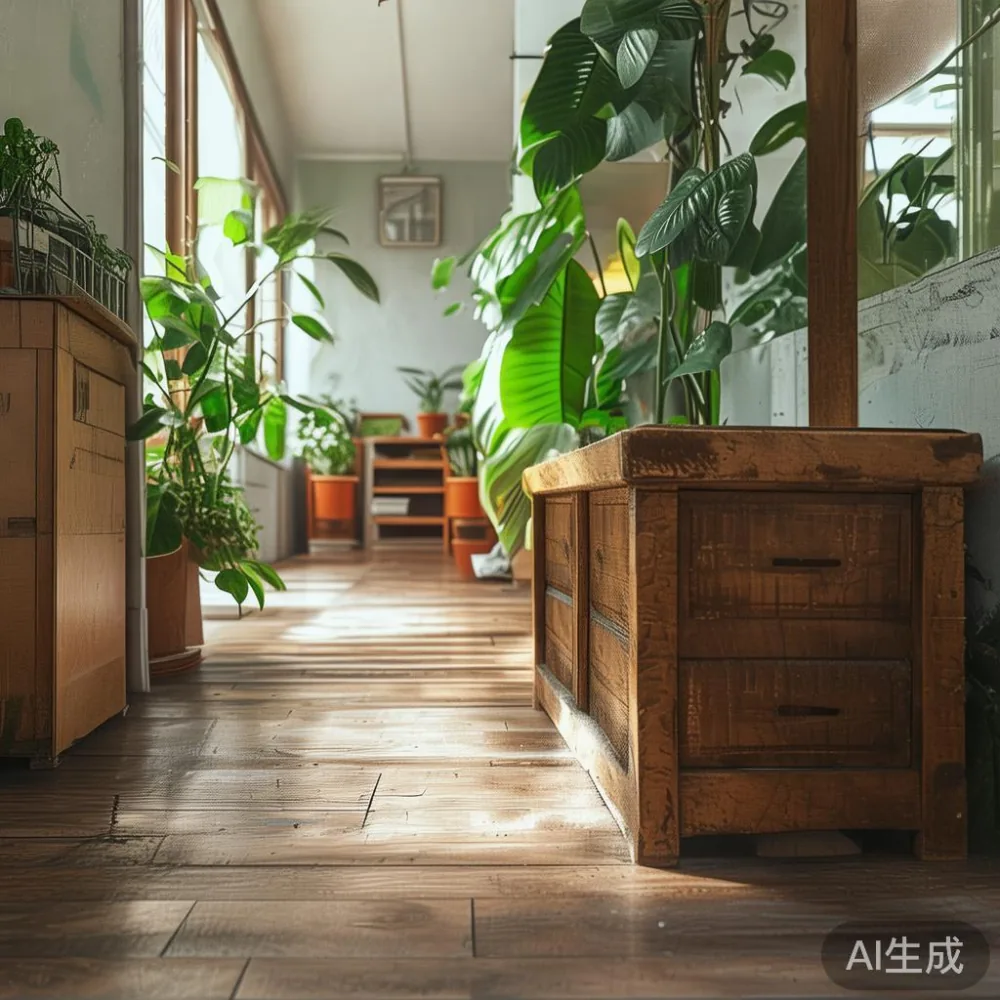
Why does Southeast Asian humidity change the way a solid wood storage bench behaves?
The short answer: tropical humidity keeps wood in a constant state of slow expansion and contraction, and a storage bench — because it sits low, has a large flat seat panel, and is often placed against a non-breathable HDB wall — shows that movement more obviously than a dining table with a pedestal base or a bed frame that lives under a quilt.
Wood is hygroscopic. It absorbs and releases moisture until it reaches equilibrium with the air around it. In Singapore, outdoor relative humidity sits between 70 % and 90 % for most of the year, and even with an air-conditioner running 8 hours a day, indoor RH rarely drops below 55 %. The recommended target for solid wood furniture in the home is 40–60 % RH. We are, on average, 10–15 percentage points above the safe ceiling. Over 12 months, a 180 cm long seat panel on a storage bench can swell or shrink by 3–5 mm across its width. That is enough to stress a loose tenon, gap a mitred top, or push a lift-up lid out of square.
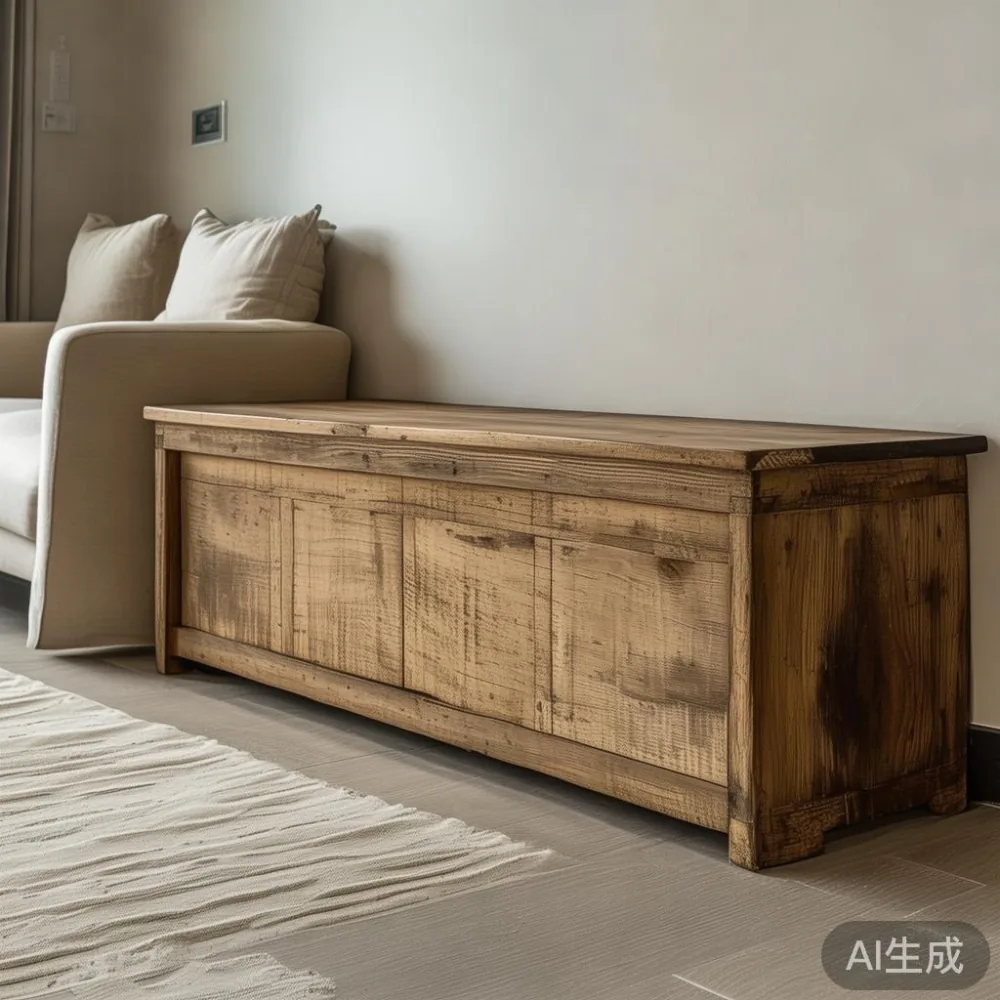
I measured this myself last month. I placed a cheap digital hygrometer (about SGD 18 from a Tampinesmart stall) on top of my MIDHILL storage bench for 21 days. Indoor RH swung from 58 % on air-con nights to 82 % on weekends when the unit was off. The bench panel visibly bowed — maybe 1.5 mm — between morning and evening. By week three, the bow settled as the timber found its local average. That small bow is not a defect; it is the wood breathing.
How do I style a Post-modern wardrobe in a small apartment?
Pair a Post-modern wardrobe with one curved statement piece, two matte-black pulls, and a single warm-tone wood floor so the whole room reads as designed rather than assembled. A wardrobe in this style tends to be tall (180–220 cm), flat-fronted, and lightly proportioned, which is why it works in compact HDB bedrooms where a chunky traditional armoire would crowd the door swing.
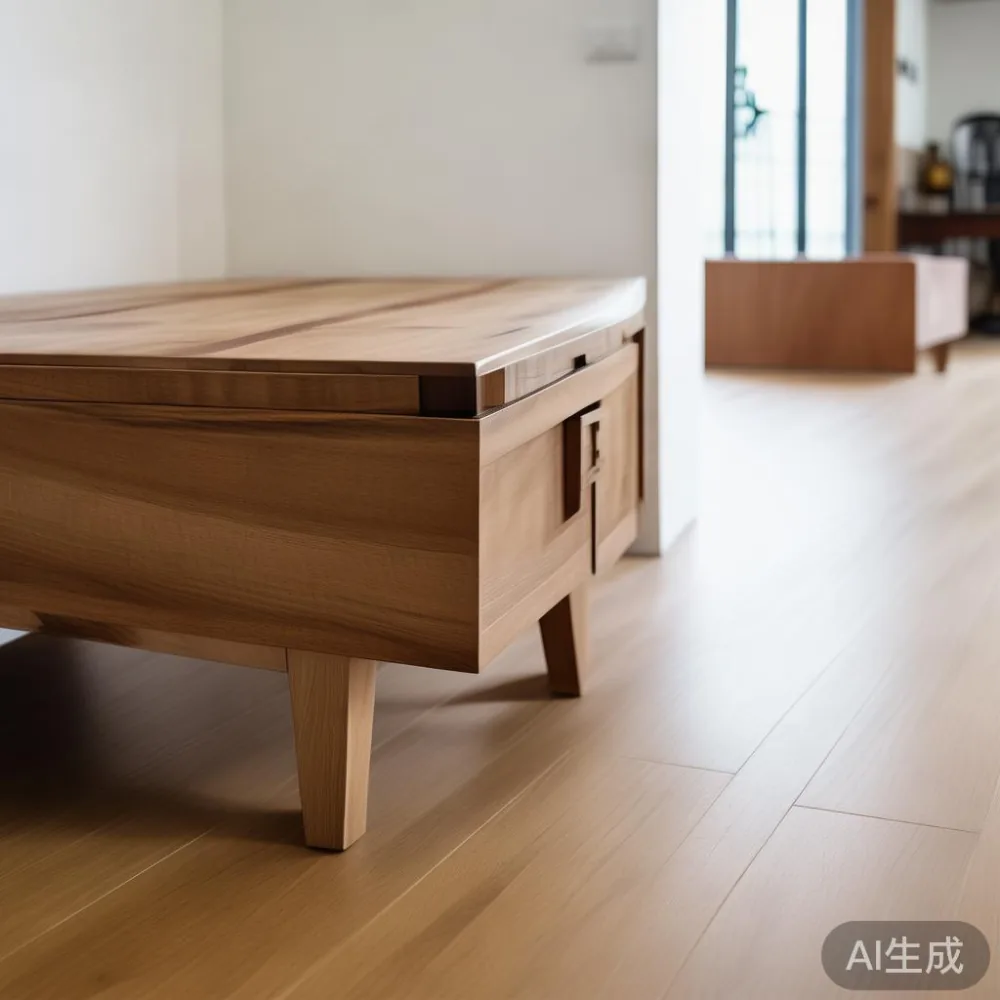
In my own bedroom — a 3.2 m × 3.0 m HDB standard room — I matched the wardrobe with a 150 cm × 45 cm × 48 cm MIDHILL storage bench at the foot of the bed. The shared warm-oak tone ties the two pieces together without making the room feel like a furniture showroom. Because the bench has a lift-up top, it doubles as blanket storage, which removed the need for an extra chest of drawers. A small marble side table (45 cm round, about 4 kg) sits beside the reading chair. That mix — one curved upholstered chair, one warm wood storage bench, one cool marble accent — is the light-luxury French approach I keep coming back to: restrained, slightly Parisian, never shiny.
What are the HDB-specific challenges when delivering a solid wood storage bench?
The honest answer is that 1 in every 4 deliveries to Singapore HDB flats hits at least one access constraint, and the storage bench is often the piece that exposes them.
Three numbers define the problem. Standard HDB corridor width is roughly 1.2 m between handrails. Lift cabin internal width on most refurbished blocks is about 1.1 m, and the door opening is closer to 0.9 m. A solid wood storage bench with a 180 cm × 45 cm seat panel needs a turning radius of around 2.1 m to be carried flat. That simply does not exist in a BTO lift. So the bench has to come in vertically, which is fine for solid wood construction but stressful on joinery if it is dropped or leant against the lift wall.
Two practical notes from deliveries I have watched. First, measure your lift door diagonal, not just the width. A 180 cm bench tipped on its side becomes 180 cm tall, which clears most HDB doors (standard 2.1 m) but can brush the lintel on older blocks in Bedok and Toa Payoh. Second, the storage bench should be wrapped in moving blankets (3 mm thick, about SGD 6 each) before it goes vertical — this protects the soft-close hinges and any brass handles from a corner bump. MIDHILL's delivery team brings six blankets per piece by default; smaller movers bring two and charge SGD 18 extra per blanket.
Which wood species actually survive a Singapore storage bench's life?
For a storage bench that lives at floor level against an HDB wall, the species choice matters more than the style choice. Three groups behave well here, and one group is a mistake.
White oak and European oak. Tight grain, moderate movement, takes a matte finish cleanly. A 120 cm white oak storage bench in the MIDHILL collection weighs about 28 kg empty, which is light enough for two people to carry up a HDB stairwell during a lift breakdown (and Singapore does have occasional lift maintenance days). Oak takes Singapore humidity in stride because its tangential movement coefficient is moderate — roughly 0.4 % across a 25 cm panel with a 30 % RH swing.
Walnut. Beautiful chocolate tone, slightly more movement than oak, but very stable once sealed on all six sides. I have a walnut nightstand from MIDHILL next to my bed, and after 14 months of unfiltered west-facing afternoon sun, the colour has shifted only a half-shade lighter. A walnut storage bench is around SGD 1,480 for a 150 cm piece, which is mid-range for solid walnut.
Ash and beech. Cheaper, lighter, paler. Ash bends easily if the design is curved; beech is brittle. Fine for a budget storage bench, less fine if the piece has a lift-up lid that children will sit on. Limit load to about 90 kg on ash, 110 kg on beech.
Mango wood and mixed hardwoods. Often labelled as "solid hardwood" on the price tag, but the density varies wildly from one plank to the next. I have seen mango storage benches arrive with a 2 mm cup in the seat panel within a month. If the price seems very good — under SGD 600 for a 150 cm bench — ask whether the top panel is one piece or finger-jointed. Finger-jointed tops move at three times the rate of a single slab.
One more note on finishes: a storage bench in Singapore should never ship with a high-gloss lacquer. Lacquer traps moisture against the wood and then pops in June during the monsoon surge. Oil-and-wax, or a matte water-based finish, breathes with the panel. MIDHILL finishes all Singapore-bound pieces with an open-pore matte coat for this reason.
How should I acclimatise a storage bench before it goes into daily use?
Leave it in the room, unwrapped, with the air-conditioner running for 7 to 10 days before you load anything into the storage compartment. That is the answer I give everyone who messages me about a new delivery.
The bench arrives in a cardboard outer plus a foam inner, and the foam holds a layer of humid air against the timber. Pull the foam off, leave the cardboard loosely over the piece to keep dust off but allow airflow, and let the wood find your room's average RH. Singapore flats vary wildly — a 12th-floor unit in Punggol can sit at 60 % RH while a 3rd-floor unit in Bedok sits at 75 %. The bench needs to match your flat, not the Foshan factory floor.
During those 7–10 days, wipe the bench daily with a dry microfibre cloth. Do not oil it. Do not wax it. The factory finish already has its full cure; what you are waiting for is the timber, not the surface. After 10 days, open the lift-up lid and check that the hinges still close flush. A 1–2 mm gap is normal in week one and usually closes by week three. If the gap is 4 mm or more, call the supplier — that is a joinery issue, not a humidity issue.
One last acclimatisation tip: place the storage bench at least 8 cm from the HDB wall. HDB walls are concrete with a skim coat, and they wick moisture. A bench pushed flat against the wall sits in a 2–3 cm dead-air pocket that runs at 5–8 % higher RH than the rest of the room. Over 12 months, that pocket causes the back panel to crown. Use the 8 cm gap as a chance to run a slim LED strip (warm white, 3000 K, about SGD 22 for a 1 m strip) — it doubles as a soft night light in a bedroom.
What does a long-term care routine look like for a storage bench in a Singapore HDB flat?
Three small habits, repeated monthly, are enough to keep a solid wood storage bench looking new for 10+ years. None of them cost more than SGD 40 in supplies per year.
Wipe weekly, condition quarterly. A dry microfibre cloth, 30 seconds per surface. Once a quarter, apply a thin coat of hard wax oil (about SGD 32 for a 500 ml tin, one tin lasts two benches for a full year). Pour a 5-cent-coin-sized amount onto the cloth, wipe along the grain, buff off after 20 minutes. Do this in the evening with the air-conditioner running so the wax cures slowly.
Rotate the load. Storage benches are storage first, seating second. If you use the lift-up compartment for spare bedding, change which side of the compartment the bulk of the weight sits on every three months. Uneven weight is the number-one reason lift-up lids warp in the tropics.
Watch the air-conditioner. Run a dehumidifier mode (not cool mode) for 4 hours a day during the December–February monsoon. A standard 10 L dehumidifier pulls about SGD 4 of electricity per day and holds the room at 55 % RH. If a dehumidifier feels excessive, at least keep the air-conditioner fan on low for the hours you are out — moving air evaporates surface moisture and keeps the timber stable.
Are there placement mistakes that shorten the life of a storage bench?
Three placements I would avoid in a Singapore home, even if the room layout pushes you toward them.
Direct afternoon sun through a west-facing window. UV breaks down the lignin in solid wood and lifts the grain. A west-facing storage bench under a floor-to-ceiling window will fade visibly within 6 months. Use a sheer linen curtain (about SGD 60 per metre) and keep the bench 60 cm back from the glass.
Right next to a bathroom door. The 30-second steam blast from a hot shower spikes local RH to 95 % for a few minutes. Repeated 4–6 times a day, that cycles the timber through more stress than the rest of the flat combined. Keep the bench at least 1.5 m from any bathroom or kitchen door.
On a balcony or enclosed corridor. Balconies in HDB flats are not waterproofed for solid wood furniture. A storage bench on the balcony will absorb rain-driven moisture even under a roof, because the slab sweats. Bring it inside. If you need outdoor seating, buy a different product for that — a teak outdoor bench, not your indoor solid oak piece.
What about returns, shipping, and warranty when buying a storage bench from an overseas factory?
Singapore buyers should expect three concrete things in writing before they pay a deposit: the warranty in years, the return window in days, and the shipping threshold in the currency you actually pay in.
MIDHILL's Singapore terms are clear. Every solid wood storage bench, bed frame, dining table, sofa, nightstand, wardrobe, and marble accent piece ships with a 10-year structural warranty covering joinery failure, frame cracking, and lift-mechanism defects under normal residential use. Refinishing — sanding, re-staining, re-sealing — is offered at cost for life, which in practice means SGD 180–260 per bench depending on size. Shipping is free over US$350 (about SGD 475), and orders inside Singapore typically arrive in 18–24 days from the Foshan warehouse, including sea freight, customs clearance, and last-mile delivery. Returns are accepted within 14 days for pieces that arrive damaged or with manufacturing flaws; the buyer pays return freight only if the reason is a simple change of mind.
If you are comparing brands, ask these four questions directly: Is the top panel one solid slab or finger-jointed? What finish is on the underside of the seat? Is the lift mechanism rated in cycles or just in kilograms? And does the warranty cover humidity-related joint movement? A bench that passes all four is the one worth keeping.
Is a solid wood storage bench a good fit for light-luxury interiors in Singapore?
Yes, and it is probably the easiest piece to introduce first. A light-luxury scheme — whether you lean French (curved lines, soft brass, travertine), American (deeper cushions, darker walnut, oversized proportions), or post-modern (clean planes, mixed metals, one sculptural element) — needs a piece of real timber to anchor the textures. A solid wood storage bench is small enough to fit a HDB room, affordable enough to buy before you commit to a full dining table set, and versatile enough to move from bedroom to entryway to balcony-adjacent reading nook as your life shifts.
In my own flat, the bench started at the foot of the bed, spent six months in the entryway holding shoe boxes, and now lives under the window in the living room under a 90 cm × 60 cm marble coffee table. It has moved four times in 14 months without a creak. That mobility — and the way the warm oak tone sits next to a cool marble surface — is the small daily reminder that solid wood, looked after simply, still beats anything flat-packed in this humidity. If you are starting from scratch, measure your lift door, pick an oak or walnut storage bench with a matte finish, leave it 8 cm from the wall, and let it acclimatise for ten days. The rest is just a microfibre cloth and a tin of wax once a quarter.