How to Care for a Lacquered Storage Bench in Singapore’s Humid Climate
A lacquered storage bench can bring order to a compact Singapore home, but tropical humidity, heat, and everyday use can dull its finish if care is neglected. In an HDB flat in Tampines, a storage bench may serve as a shoe seat at the entrance, a low table in the living room, and a place to hide bedding for guests. In a Bedok condo, it might sit beside a dining table or hold toys in a child’s room. The finish may look immaculate on delivery day, yet its care routine matters just as much as its colour and dimensions.

MIDHILL designs solid wood furniture with practical longevity in mind. The company has served customers since 2008, exports to more than 15 countries, and backs its structures with a 10-year warranty. Its commitment includes lifetime refinishing, 14-day returns, and free shipping on orders over US$350. Those policies provide reassurance, but they do not replace sensible care for a lacquered surface in Singapore’s warm, damp conditions.
This guide explains how to protect lacquer on a storage bench, with measurements and routines suited to Singapore homes. It also covers light-luxury design choices, including French light luxury and American light luxury influences, without allowing appearance to overshadow maintenance.
What makes lacquer vulnerable in Singapore’s humidity?
Lacquer creates a smooth, reflective layer over wood. It is generally easier to wipe than an untreated surface, but it remains sensitive to prolonged moisture, direct sunlight, abrasion, and household chemicals. Singapore’s high humidity can cause wood to absorb moisture unevenly beneath a sealed film. The lacquer may appear unchanged while the substrate moves slightly underneath, increasing the chance of fine checking or edge wear.
Heat is another concern. A bench placed against a west-facing window in Tampines may reach 38°C by late afternoon, while a unit beside an air-conditioning vent may experience rapid temperature changes. Furniture should remain at least 60 cm from radiators, heaters, and direct sun where possible. Leave 10–15 cm behind a wall for airflow, and avoid standing the bench on damp flooring.
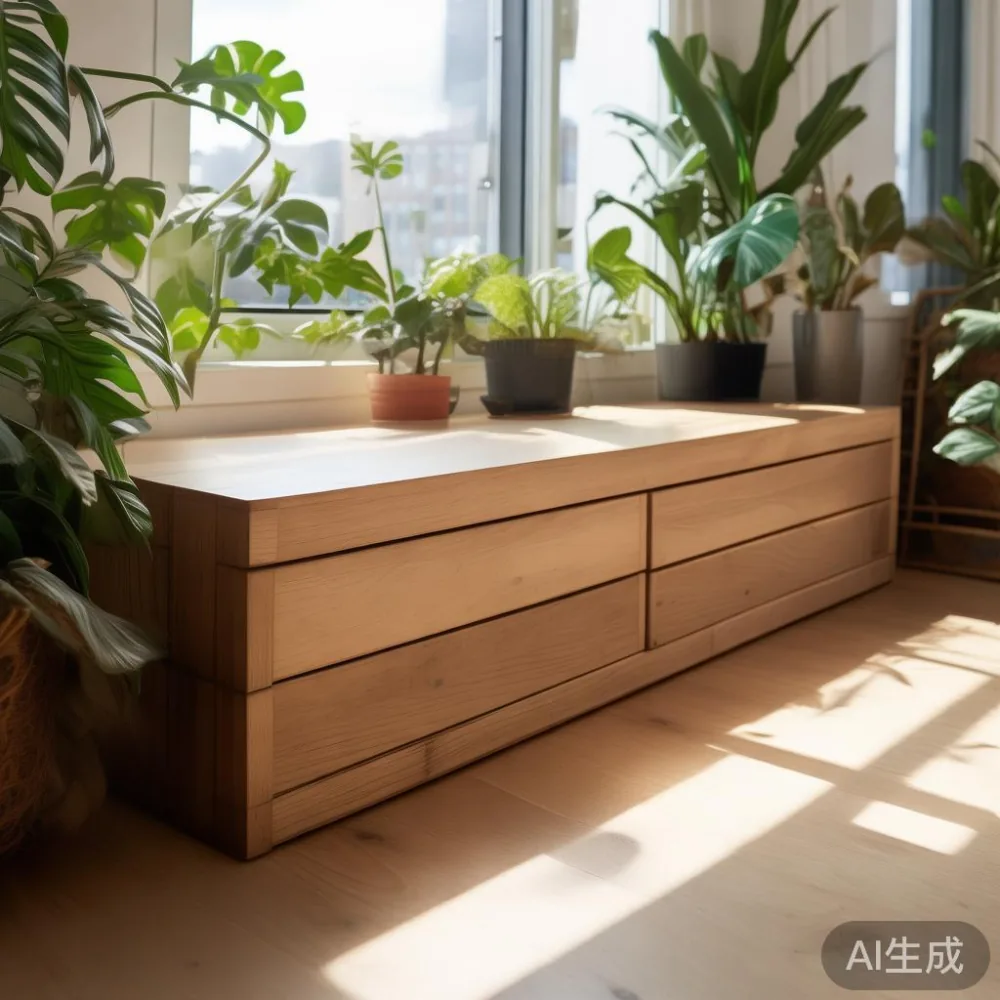
Use a hygrometer to monitor the room. A reading between 45% and 65% relative humidity is preferable for wooden furniture. Singapore frequently sits above this range during wet periods. Run dehumidifiers, air-condition the room regularly, and keep benches away from bathrooms and laundry areas. Do not wipe a wet bench with a dry cloth, because grit can scratch the lacquer. Blot excess moisture with a clean microfibre cloth instead.
A lacquered storage bench should also be lifted, not dragged. Moving it by one corner can twist the frame and damage the joints. Two people should carry a model weighing more than 25 kg. Clear the route through lift lobbies and corridors beforehand, measure doorways, and check whether the bench fits in the elevator diagonally.
How should I clean a lacquered storage bench?
For routine cleaning, use a soft, lint-free microfibre cloth slightly dampened with warm water. Wipe along the grain and around edges, then dry the surface immediately. A 30 cm by 30 cm cloth is large enough for most panels without trapping excess water around joints. Avoid spraying cleaner directly onto the bench; overspray can enter seams or leave a dull ring.
For weekly maintenance, dilute a small amount of mild pH-neutral soap in a bowl containing about 500 ml of water. Test the mixture on a hidden 5 cm area for 24 hours. If the finish stays unchanged, apply it sparingly with a damp cloth and buff dry. This routine is suitable for a lacquered storage bench near an entrance, where dust, shoe marks, and hand oils accumulate faster than on a dining table.
Never use nail-polish remover, acetone, alcohol, bleach, abrasive pads, or household glass cleaner. Even though some products appear suitable, they can dissolve or haze lacquer. Wipe spills within 10 minutes when practical. Oil marks should not be scrubbed; gently lift the residue and allow the area to dry.
Place felt pads beneath the bench feet and under movable trays. Keep paper bags, cardboard boxes, and damp folded laundry off the top. The lid should support no more than 40 kg unless MIDHILL specifies a higher load for the particular model. A useful rule is to distribute the weight across at least two contact points rather than concentrating it in one corner.
How often should a storage bench be inspected?
Inspect the finish once a month, with extra checks during humid months. Look beneath the lid, around handles, along the front rail, and where the legs meet the frame. Use a bright torch held 20–30 cm away; side lighting can reveal haze, scratches, lifting at an edge, or small gaps in the lacquer.
Check the fixing hardware every 6 months. Tighten loose screws gently so that the joint remains square. A storage bench commonly carries shoes, books, baskets, and bedding, so uneven loading can pull a lid out of alignment. Keep heavier objects in the middle and use labelled cotton or linen bags inside the compartment.
Pay attention to the room as well as the furniture. If a bench is next to a balcony door in Punggol, inspect the underside after rain. Lift one end only when the piece is light enough to handle safely; otherwise ask another person to help. White moisture marks near a joint or black spotting around a screw head indicate that the finish has been compromised and should be assessed promptly.
For a home where the bench doubles as a coffee table, consider a protective tray measuring roughly 45 cm by 30 cm. It prevents hot mugs and condensation rings from reaching the lacquer. Do not place an iron, laptop, or warm food directly on the surface. A temperature below 60°C is a sensible ceiling for everyday items.
Should lacquer be polished, waxed, or refinished?
Do not apply wax, furniture polish, silicone spray, or oil unless the lacquer manufacturer explicitly approves them. These products may leave a greasy film that attracts dust, and they can make later refinishing harder. A dry microfibre cloth removes surface dust; slightly damp cleaning is enough for ordinary marks.
Minor scuffs do not always require a full refinishing service. First, clean the area and wait 24 hours to see whether the mark remains. If it does, note its approximate length in centimetres and photograph it under indirect light. Contact MIDHILL with the model details, purchase information, and clear photographs. The company’s lifetime refinishing service provides a route for restoring eligible lacquered pieces rather than replacing an otherwise sound storage bench.
Deep scratches that expose raw wood, blisters, or broad dull patches need professional assessment. Do not sand the surface yourself. Incorrect grit, pressure, or cleaning can create a repair larger than the original mark. A 10-year structural warranty covers structural issues, while surface wear still requires appropriate care and assessment.
Placement can prevent most finish problems. In a compact bedroom, keep the storage bench away from direct afternoon light and at least 30 cm from an open window. If it serves as a bedside surface, treat it like a nightstand: use a coaster beneath a lamp, leave 5 cm around the base, and do not drape wet towels across the lid.
Can a storage bench work as both seating and storage?
Yes, provided the unit is designed for both loads and the lid is closed properly. A practical storage bench for an HDB living room may measure 120 cm wide, 40 cm deep, and 48 cm high, with an internal compartment around 110 cm by 32 cm and a clear depth of 18–22 cm. These figures vary by model, so confirm the dimensions before purchase.
Seat one adult only if the maker gives a safe working load. Repeated sitting places cyclical stress on the lid and frame, so children should not climb or jump on it. Keep the hinge side free from bags and shoes that could force the lid open. A soft seat pad can make a storage bench more comfortable, but check that the pad does not obstruct ventilation or trap moisture.
Singapore’s narrow corridors and older lift entrances make delivery planning important. Measure the lift car, lift door, corridor turns, and home doorway before confirming a large piece. Allow at least 10 cm of clearance around the packed bench during movement. MIDHILL provides delivery information against the destination address; delivery timing should still be confirmed in writing.
Returns are accepted within 14 days under the stated policy, and shipping is free above US$350 for qualifying orders. Prices and currency treatment should be checked at checkout, with Singapore transactions normally displayed in SGD. GST and local charges may affect the final amount, so review the full breakdown rather than comparing only the headline price.
How do I choose a finish that suits a humid home?
Choose a lacquer with an even sheen and inspect it under neutral daylight, not only warm showroom lighting. Look for consistency across 4 large panels at a time. Fine orange-peel texture may be part of the manufacturing process, while scratches, bubbles, cloudiness, and colour variation need clarification. Request close photographs of edges, corners, and the underside before delivery.
Ask for the finish-care instructions that correspond to the exact lacquered storage bench. A closed box with a lift-up lid needs more attention at the perimeter than an open-front bench, because trapped humidity and heat can develop inside. Ventilate the compartment after loading damp items and leave the lid slightly open for 20–30 minutes after a shower-heavy day.
Material coordination matters in a multi-piece room. A lacquered storage bench can sit beside a solid wood sofa or bed frame without requiring identical finishes. If the bedroom also contains a dining table, keep the bench 60–90 cm away to avoid crowding a walkway. A marble table should remain in a drier zone because both marble and lacquer dislike standing water.
Design searches can become surprisingly specific. A Singapore shopper might ask about the best Japanese bed for 2026, how to choose Japanese sofa, or the best Modern light luxury wardrobe for 2026. Those comparisons are useful, but the bench should be judged as part of light luxury with storage: proportions, joinery, finish quality, function, and maintenance should be considered together.
French light luxury often calls for restrained colour, slender visual lines, and tactile fabrics. A pale upholstered bed frame may pair well with a lightly toned storage bench, provided the bench’s protective feet and tray are used consistently. American light luxury may favour deeper wood tones, clean profiles, and generous cushioning. In either style, keep the bench practical rather than turning it into a display pedestal.
Other room-planning questions are common too, such as how to style French sofa in bedroom and a for sale Coastal furniture search. A coastal palette can suit Singapore homes, but pale lacquer needs more frequent wiping than a darker finish. The lighting condition must match the product photo, and sample dimensions should be compared with the intended room.
What should I do before the bench arrives?
Prepare the destination before delivery day. Remove rugs and obstacles from the route, protect the floor near the lift lobby, and reserve parking for the delivery vehicle. Measure the lift door and the narrowest corridor turn. For a typical HDB block, the internal lift door may be around 90 cm wide, so a boxed bench wider than 85 cm may require careful angling or a turning check.
Record the condition of the storage bench on arrival. Photograph all sides, the lid, legs, and packaging before assembly. Check for movement, scratches, trapped moisture, and missing fixings. Do not sign off a clearly damaged finish simply because the structural frame appears sound.
For raised platforms in some Punggol or Tampines homes, plan the final carry. Two-person handling becomes safer above a 25 kg model, and a 3-person carry may be needed on tight staircases. Protective blankets should be clean and free of loose threads. Lift rather than slide whenever the bench changes direction.
After arrival, let the piece acclimatise in its final room for 24–48 hours before loading it. Open the lid briefly, check the interior for condensation, and remove any packaging film retained beneath the base. Set the levelling feet evenly so the frame does not twist. Record the warranty documents and the finishing-care contact details in a household folder.
MIDHILL’s online catalogue is available at midhill.co, where dimensions, materials, finish details, delivery terms, and warranty information can be checked before ordering. Clear questions about a solid wood sofa, bed frame, dining table, wardrobe, nightstand, or marble table help ensure that every piece in a coordinated room has suitable care requirements.
What is the simplest tropical-care routine?
Use a three-part routine: dry dust weekly, damp clean when needed, and inspect monthly. Keep the storage bench away from direct sun, wet walls, and strong heat. Remove spills quickly, distribute loads evenly, and never drag the unit. If the finish is scratched, photograph the area and seek an assessment rather than applying an unapproved polish.
This approach preserves the clean character associated with French light luxury and the disciplined proportions of American light luxury while respecting Singapore’s climate. More important than the label is the daily habit: a 5-minute wipe and a 10-minute inspection can prevent a minor issue from becoming permanent damage.