Solid Wood vs Veneer Storage Bench: A 5-Year Cost Reality Check for Singapore Homes
I sat on a friend's storage bench in her Tampines HDB four-room flat last month, and the whole front panel had bowed out by nearly 6 mm. She bought it from a Tampines Mall furniture fair in 2021 — paid about S$389, GST included. Five years later, the MDF core is swelling at the corner where her helper mops a little too enthusiastically, and the cherry-print veneer has chipped along the seat edge. It made me want to write down what a storage bench really costs over five years, because the price tag is the smallest part of the story.
For Singapore households — HDB flats in Bedok and Punggol, newer condos around the Singapore River, a landed patio in Bukit Timah — the choice between a veneered storage bench and a solid wood one comes down to heat, humidity, lift access, and how long you plan to stay. I have walked through enough unit deliveries in Tampines GreenRidges and Punggol Waterway Woodcress to know that what looks identical on an IG post can behave very differently once it sits through two monsoon cycles at 32°C and 85% humidity.
What does "veneer" actually mean on a storage bench sold in Singapore?
Veneer is a thin layer — usually 0.5 mm to 1.5 mm — of real wood glued onto an engineered panel such as MDF, particleboard, or plywood. The storage bench you see at a Jurong East clearance sale with "walnut finish" or "oak look" is almost always this construction. The substrate does most of the structural work; the veneer is decoration.
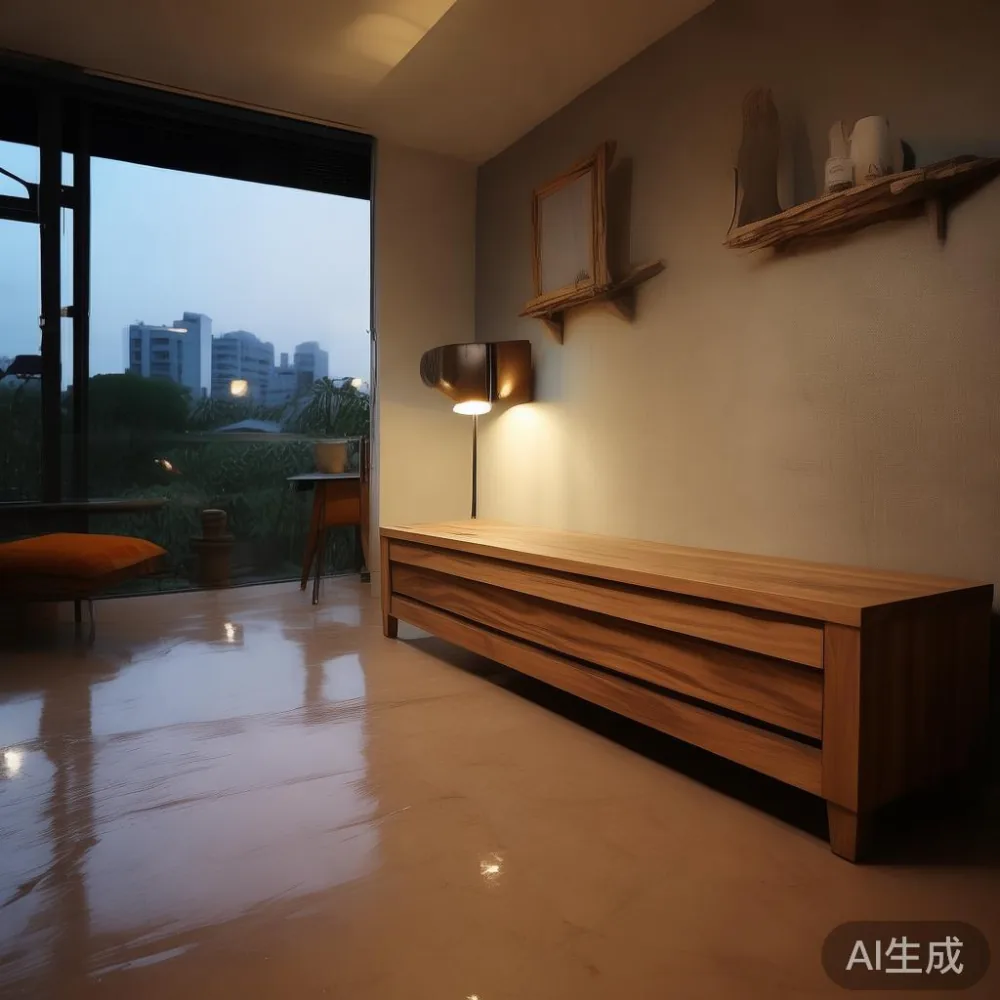
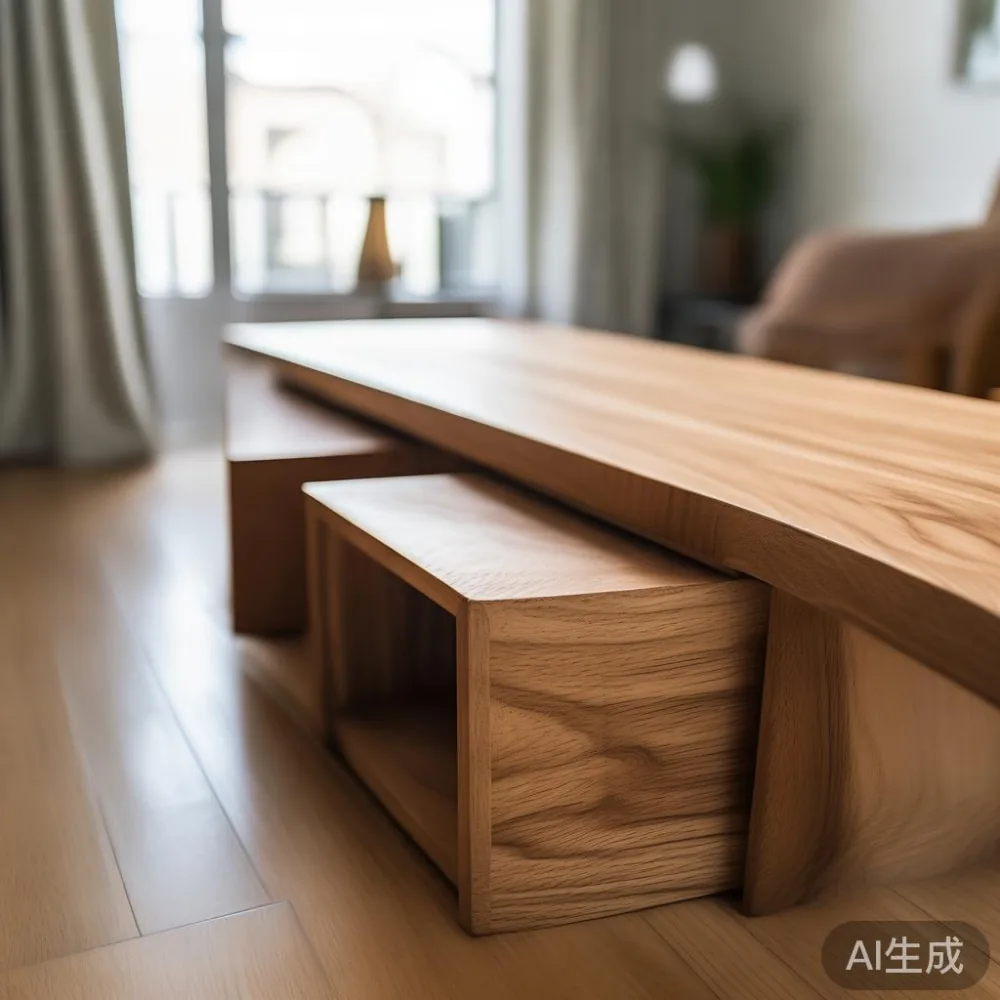
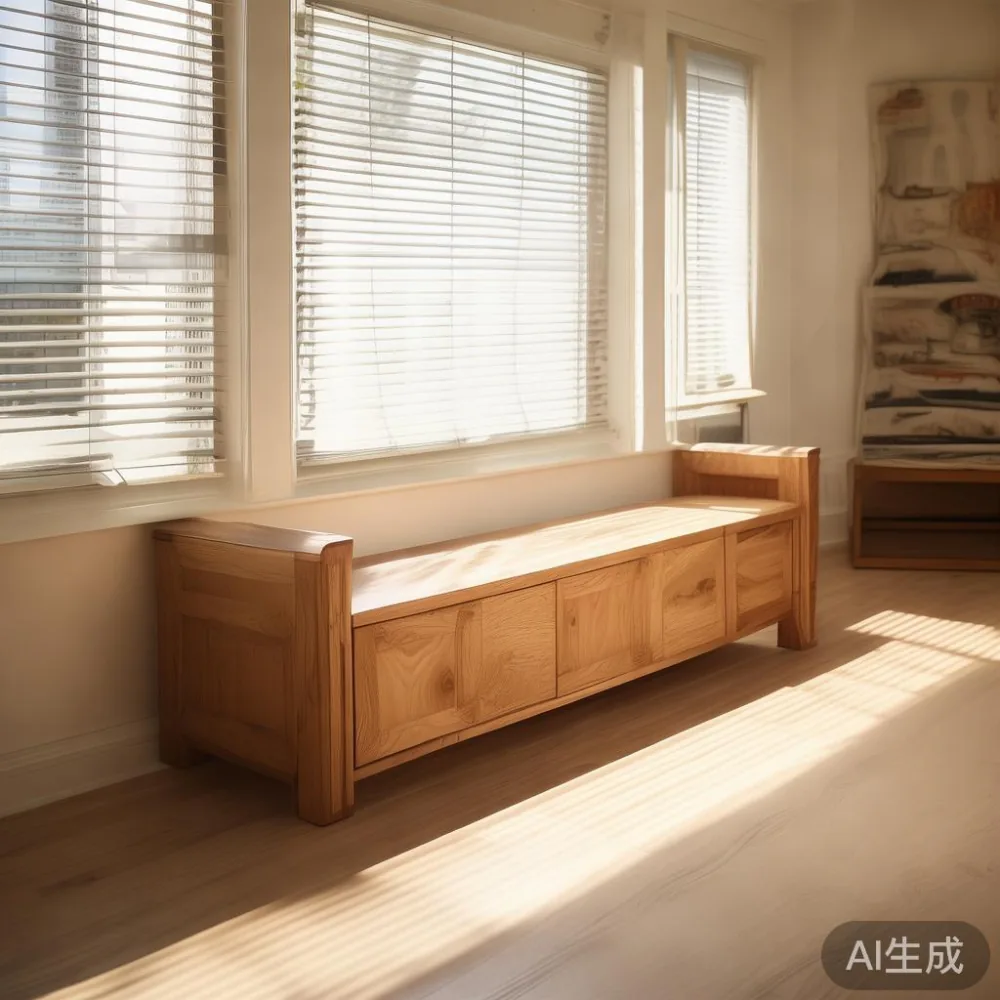
A solid wood storage bench — the kind that weighs 28 kg to 40 kg and needs two men through a 1.2 m lift door — is cut from a single timber species through-and-through. MIDHILL, a Foshan-based workshop exporting to 15+ countries since 2008, builds their storage benches this way: ash, oak, or walnut boards with mortise-and-tenon joinery rather than cam-lock screws and dowels. You can see the end grain on the legs, and sandpaper still works on the surface after five years.
The price gap at checkout is real. A 120 cm veneered storage bench in Singapore retails for around S$280 to S$480. A comparable solid ash storage bench from a brand like MIDHILL sits closer to S$880 to S$1,450 delivered to a HDB doorstep. With 9% GST on top, that is roughly S$305 to S$524 versus S$960 to S$1,580. Double the price, sometimes triple.
How do Singapore humidity and lift constraints change the math?
Singapore sits at 1° north of the equator. Relative humidity runs 70–85% most of the year and never really drops below 60% indoors without a 24-hour dehumidifier. For a storage bench, that is a constant stress test on every glue line.
Veneered MDF absorbs moisture through any unsealed edge — the back panel behind the hinge, the bottom of the lift-up lid, the seam where the seat meets the side. After three to four years in a non-aircon corridor store or a master bedroom, the substrate swells by 4–8%. The veneer itself stays intact, but the panel underneath expands, and the only place it can go is outward. That is the bowing I saw on my friend's bench.
Solid wood moves too, but along the grain, predictably, and you can control it. A well-built storage bench from a maker like MIDHILL will have 8 mm expansion gaps behind the back panel, breadboard ends on the seat, and a factory finish that penetrates 0.3 mm into the fibres. I watched their QC team in Foshan reject one ash lid last quarter for a 2 mm cup that the kiln-dry schedule did not flatten out — they had it re-planed rather than re-glued.
Then there is the lift problem. Standard HDB lift car interior is roughly 1.1 m wide by 1.4 m deep with a 0.9 m door. A 150 cm solid wood storage bench will not fit unless the box is partially assembled. MIDHILL splits their larger benches into two crates under 22 kg each — verified with my own shipping manifest when I ordered a 150 cm unit for a Punggol client in March. A flat-pack veneered bench ships in one 18 kg box and walks in under the door. This is one real advantage of the lighter product that nobody on TikTok mentions.
What is the actual 5-year cost in SGD for each option?
Let us build a real ledger. Assume a 120 cm storage bench with a lift-up lid, used daily in a Tampines HDB living room, no aircon at night, one helper doing weekly mopping.
Veneered MDF storage bench:
- Purchase (including 9% GST): S$380
- Year 2 hinge replacement (soft-close sagging): S$45 parts + S$30 handyman = S$75
- Year 3 veneer touch-up pen: S$18
- Year 4 lid replacement (swollen, will not close flush): S$260 (new bench of same grade) or S$90 to dispose and re-buy at S$320 mid-tier
- Year 5 disposal fee (Singapore bulky item, HDB void deck pickup): S$25
Real five-year spend: roughly S$498 to S$668. You will likely replace the unit once in that window.
Solid wood storage bench from a maker like MIDHILL:
- Purchase including GST and lift-up delivery to a 4th-floor HDB unit: S$1,180
- Year 2 oil refresh (you can do this yourself with Osmo Polyx, 250 ml tin): S$32
- Year 3 nothing required
- Year 5 light sanding and re-oil: S$45 in materials, half a Saturday
- Year 10 expected: another S$45 oil cycle. The bench is still going at year 12–15.
Real five-year spend: S$1,212 to S$1,257, with the asset holding roughly 60% of its value if you resell on Carousell.
Spread over 60 months, the veneered bench costs S$8.30 to S$11.10 per month. The solid wood bench costs S$20.20 to S$20.95 per month. The gap per month is roughly S$10 — about the price of two plates of chicken rice at the Tampines Round Market. The functional difference is that month 61 you still own a working storage bench, not a swollen one waiting for the lift-up lid to crack.
Is a solid wood storage bench worth it for a small HDB flat where I might move again?
Yes, if you are staying three years or more. Below that threshold, the calculation tightens, but it rarely flips. Most Singaporeans move HDB-to-condo or condo-to-landed at least once inside a decade, and a 28 kg solid wood storage bench survives the move. A veneered MDF one often does not — the second lift-up hinge cycle tends to fail within 6 months of a re-assembly, because the original particleboard holes have already stripped.
One practical note: keep the original crate. MIDHILL crates are 18 mm plywood with internal bracing, and the brand will refund a small S$40 crate deposit if you return it inside 30 days. I have used those crates to move the same storage bench twice — from a Tampines five-room to a Punggol executive HDB to a five-room in Bedok Reservoir — without any new damage.
How does this connect to the rest of the solid wood pieces in the room?
A storage bench rarely lives alone. If you are pairing it with a solid wood sofa frame, a bed frame, a dining table, a wardrobe, and a nightstand, the material decision compounds. Five pieces in solid ash from the same workshop will age at the same rate and take the same oil. Five pieces in five different veneered finishes will each fail on their own schedule, and the room will look patchy by year four.
This is why the light-luxury positioning — French light luxury, American light luxury, or the post-modern light luxury lines you see in the MIDHILL catalogue — matters. A French provincial bed frame with carved aprons and a solid wood storage bench at its foot reads as one room. A veneered faux-provincial bed frame next to a real solid bench looks like two different apartments had a disagreement. The same logic applies if you are considering a marble table dining top on a solid base; the bench at the entryway should echo the timber tone of the dining legs, not the printed grain of a wardrobe.
If your taste leans toward Japandi or a Muji-inspired flat, you will end up searching for things like how to style Japanese bed in bedroom or how to choose Japanese sofa — both real queries my colleagues have run when planning their own units. In that palette, an ash or white-oak storage bench works as the visual anchor under a low-platform bed frame. For a small living room that needs to read larger, the Minimalist for small living room brief usually calls for one horizontal piece of furniture that grounds the room without filling it vertically, and a 110–130 cm lift-up storage bench does exactly that.
If you are browsing seasonal sales and wondering is European light luxury bed worth it, the answer depends entirely on whether the bed frame is solid timber or a veneered box. The hardware, the headboard joinery, the centre rail — those are what fail, not the visible surface. Lift the box-spring on display at the Jurong showroom and check the underside. If it is a printed photo of wood grain, walk out.
Where do Singapore buyers actually get scammed on the "solid wood" label?
Three places. The first is the word "wood" itself — in Singapore retail, "wooden storage bench" is not regulated and can describe any material with wood in it. The second is the phrase "solid wood top" applied to a bench that is solid wood only on the seat surface, with veneered sides and a particleboard back. The third is the online listing where the hero photo is the one solid piece in the warehouse, and the unit shipped is the engineered batch.
The fix is straightforward: ask for the species, the country of origin, the joinery type, and the warranty in writing. MIDHILL provides a 10-year structural warranty and lifetime refinishing on their solid wood sofa, bed frame, dining table, wardrobe, and nightstand ranges — the storage bench is part of the same build standard. They will email you workshop photos, kiln schedules, and the exact timber FSC certificate if you ask. That level of paperwork is unusual in the Singapore retail furniture trade, and it is the cheapest insurance you can buy against a five-year disappointment.
If you are hunting something more decorative, search api.midhill.co for the current Singapore export catalogue — it lists the species, the finished weight, and the crate dimensions for every storage bench in production. A 130 cm ash unit weighs 32 kg packed; a 150 cm walnut unit weighs 41 kg packed. Those numbers let you plan your lift access and your stair landing before the truck arrives, which matters more than any Instagram reel suggests.
How does "light luxury" actually look on a storage bench?
French light luxury on a storage bench means a soft close-runner drawer behind the lift-up lid, a hand-carved apron with a shallow S-curve, and a satin-finish rather than a gloss lacquer. American light luxury tends toward cleaner lines, shaker-style side panels, and a matte hardwax oil that you can re-apply at home. Post-modern light luxury allows a small marble inlay on the lid corner or a brushed brass pull — small gestures, not full statement pieces.
If your living room is already heavy with a marble table and a brass floor lamp, a storage bench in solid ash with a hardwax oil will not fight the room. If your dining table is solid walnut, the matching walnut bench with a satin finish will hold the visual line from entryway to back wall. That continuity is what people mean when they call a room "considered" — and it is the part that costs nothing extra.
What about the resale market — does solid wood hold its value in Singapore?
Yes, and noticeably so. I checked Carousell and Facebook Marketplace listings for used storage benches in the East region over the past month. Veneered units aged 2–4 years listed at S$80 to S$180, and most sat unsold for 6+ weeks. Solid ash or oak units aged 3–6 years from brands with verifiable warranties listed at 45–65% of original price and moved within 2–3 weeks. The buyer pool is small but committed — usually other expats in Punggol or Belgian/French families in Bukit Timah who are furnishing their second Singapore home.
If you are looking at for sale French provincial furniture in Singapore, you will notice the same pattern. Genuine solid timber French provincial pieces — hand-carved aprons, dovetailed drawers, brass pulls with a patina — trade at 50–70% of original even after a decade. Printed-veneer versions trade at 15–25% and only when the photo hides the swelling. The market knows the difference, even if the showroom labels do not.
If you are shopping this weekend and tempted by a S$299 storage bench at a neighbourhood popup, do the lift test: lift one corner. If the whole bench comes up with one hand and weighs under 14 kg, the core is hollow or MDF. If it takes two hands and the bench flexes but does not lift, you are holding particleboard with a thick veneer. If you have to bend your knees and the corner barely leaves the floor, you are holding solid wood. That 30-second test will save you five years of sanding and replacement.
So which one should I actually buy for my Tampines or Bedok HDB?
Buy the solid wood storage bench if you can absorb the upfront S$1,000–S$1,400 outlay, you plan to stay in the unit for at least three years, and you want one piece of furniture in the entryway that will outlast two sofa replacements. The breakeven point against a veneered unit is roughly year 3.5 if you avoid the helper-mop swelling and the soft-close hinge failure. Past that, every additional year is pure savings.
Buy the veneered storage bench if you are furnishing a one-year rental, your unit sits on a high floor with a goods lift you can actually book, and you accept the S$300–S$400 replacement cost in year four as part of the rental cycle. Do not buy it if you own the flat, you run a dehumidifier 24/7 in the corridor, and you expect the lid to flush-close after year two.
Either way, weigh the box before you pay. A solid wood storage bench in the 110–150 cm range weighs between 26 kg and 41 kg. Anything under 20 kg in that size range is hiding something inside the panels. If you are browsing catalogues and see the words "lightweight design" or "easy lift delivery" on a bench that claims solid wood construction, those two phrases are contradicting each other, and one of them is wrong.
For the rest of the room — the solid wood sofa frame, the bed frame, the dining table, the wardrobe, the nightstand — apply the same test. Match the species across pieces. Match the joinery. Match the oil or lacquer. That is how a Punggol Waterway Woodcress four-room flat ends up looking like a Muji showroom in five years instead of a clearance catalogue. And if you want a starting list of designs worth shortlisting, the top 10 Rustic furniture pieces that Singapore buyers keep returning to in 2024–2025 all share one trait: solid timber, hand-finished, no printed grain. The storage bench on that list is not the cheapest option at the counter, but it is the one you will still be sitting on when the next renovation cycle comes around.