Storage Bench Prices: Insights for Singapore Homes
Solid wood furniture is often described by its material, finish and style, yet the final price can vary by several hundred or even several thousand Singapore dollars. The reason is rarely one hidden feature. It is the combined cost of timber, construction, dimensions, hardware, surface treatment, quality control, packaging and delivery. Understanding these variables can help Singapore buyers compare products fairly, especially when fitting a storage bench, bed frame or dining table into an HDB flat or condo with narrow lift access.
MIDHILL has manufactured solid wood furniture since 2008 and exports to more than 15 countries. Its prices also reflect practical decisions made in a furniture workshop: how boards are selected, which joints are cut, how long each piece takes to finish and how safely it can be delivered. A 120 cm storage bench is not simply a cheaper version of a 180 cm model. Its timber volume, bracing, working time and handling requirements are different.
This guide explains what actually drives solid wood furniture prices, using measurements and costs that Singapore households can relate to. It also considers GST, corridor and lift constraints, delivery timing, maintenance and the difference between appearance-driven and construction-driven spending.
Is solid wood automatically more expensive than engineered wood?
Solid timber usually costs more to buy than a comparable panel product because manufacturers must source suitable logs, cut defect-free boards, dry them properly and work with material that cannot hide weak areas. A 25 mm solid oak or ash board can cost several times as much per square metre as a laminated board, even after both are cut into a nightstand, wardrobe or bed frame. The gap becomes clearer in large surfaces. A dining table with a 220 cm by 90 cm top uses close to 2 square metres of visible timber before offcuts are considered.
That does not mean engineered wood is poor. A well-made bed frame can use plywood or blockboard in concealed areas while retaining solid wood around the edges. It means the seller's description should specify where solid wood is used. “Solid wood construction” may mean the visible frame, internal drawer components and some structural rails. “Solid wood throughout” describes a different specification.
The material grade matters too. In timber purchasing, “clear grade” means fewer knots and colour variations. “Select grade” permits some natural marks. Rustic grade may include knots, cracks and broader tonal changes. Clear-grade timber needs longer selection and more careful cutting, which raises the price. Finger-jointed sections can reduce waste and cost, while full-width boards create a more continuous appearance but require larger, straighter logs.
Buyers should ask for the species, thickness, finish and moisture information. A useful specification for a storage bench is a frame made from kiln-dried hardwood at 25–30 mm, with a load rating and clear dimensions. Vague terms such as “heavy-duty wood” reveal less than 25 mm hardwood rails, reinforced joints and a stated capacity of 120 kg.
How much of the price comes from timber and construction?
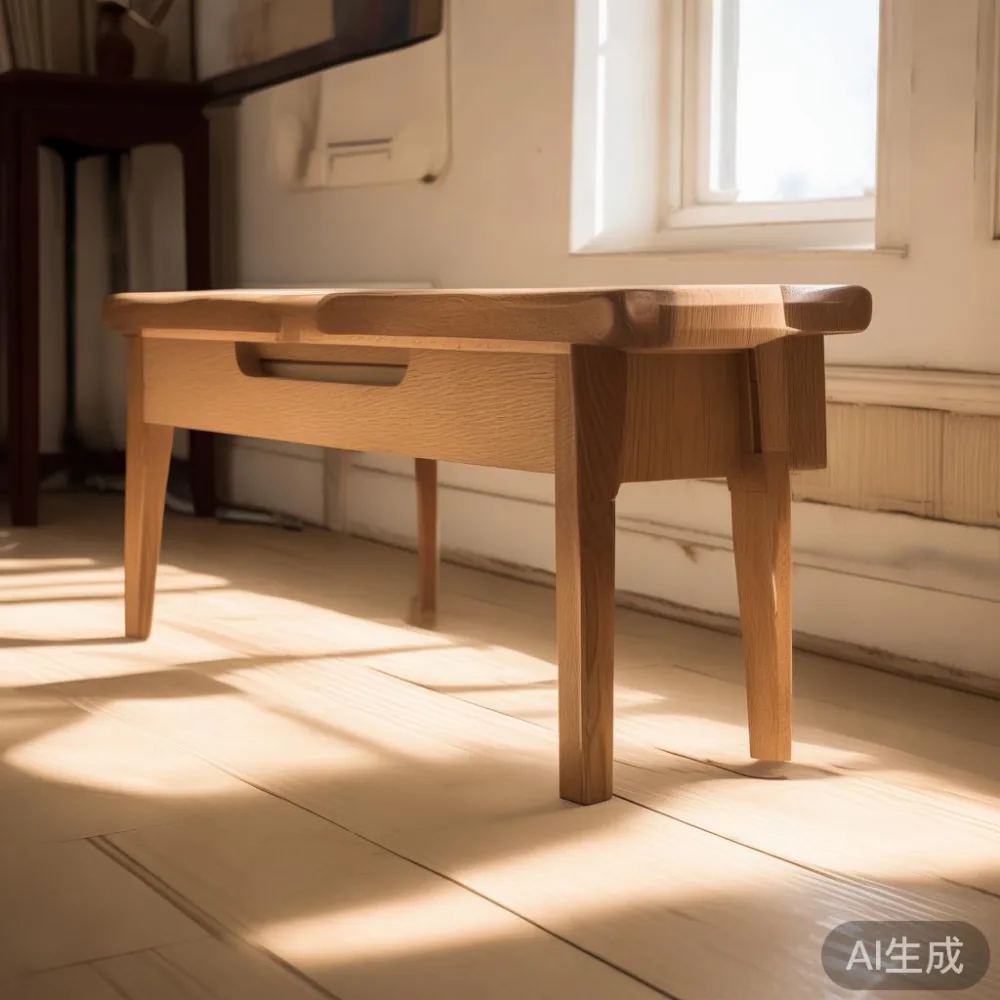
For many pieces, timber and construction form the largest share of the price. Material might account for 30–45 percent of a typical solid wood dining table, while labour and hardware make up much of the remainder. The proportions change with the design. A simple storage bench with 4 straight legs, 1 lower shelf and 2 side panels is economical because it repeats a limited number of parts. A storage bench with 3 drawers, soft-close runners, a raised back, carved panels and mitred corners requires more setup and finishing time.
Joinery is another price driver. Mortise-and-tenon joints, dowels, dovetails and reinforced corner blocks demand different levels of precision. A machine can cut repeatable mortises quickly, but the pieces still need assembly, clamping, inspection and correction. Curved components take longer than rectangular ones. Doors need alignment. Drawers need slides that operate smoothly after years of humidity changes.
Hardware can add S$40–S$250 per piece. A basic wardrobe may use steel hinges and rails, while a more refined model may have soft-close hinges, adjustable hanging mechanisms and thicker drawer boxes. Brass or metal handles can cost S$25–S$180 per set. A solid wood sofa gains price from its frame, webbing or springs, foam layers, fabric and labour; the timber is only one part of the comfort system.
Surface treatment also has a labour cost. Sealing a dining table may take 2–4 hours across sanding, preparation, stain, filler and several coats. A lower-cost oil finish can require more frequent maintenance. A tougher lacquer or water-based coating may cost more but can be easier to clean. The finish should be described accurately, because “natural finish” may simply mean clear lacquer over stain rather than untreated timber.
Why do size and design change the price so much?
Dimensions are easy to compare because every extra centimetre can affect material use. A 100 cm nightstand contains less timber than a 120 cm one, but the price difference is not always proportional. A wider model may need stronger supports, longer rails or wider doors. A tall 210 cm wardrobe requires more vertical panels and alignment work than a 150 cm cabinet. A 200 cm bed frame uses longer rails, but it may also need centre support to prevent sagging.
Design complexity has a measurable impact. Rectangular forms with flat panels and straight edges can be batch-produced. Sloped legs, curved arms, bevelled tops, fluted fronts and irregular edges require special jigs, more hand fitting and more touch-up work. French light luxury often uses pale woods, restrained curves and brass details. American light luxury tends to combine substantial proportions, deeper upholstery and visible joinery. Post-modern light luxury may introduce asymmetry and mixed profiles, all of which can affect labour.
One real example from my own checking illustrates this. Last month I visited a Singapore supplier and measured two dining tables made to the same 200 cm length. The first had a 75 cm top, square legs and one straight apron. The second had an 80 cm top, rounded corners, a shaped apron and recessed hardware. The second needed 38 minutes more finishing and about 14 percent more timber. Its quoted price was S$360 higher, so the increase was not simply a markup for a trendier appearance.
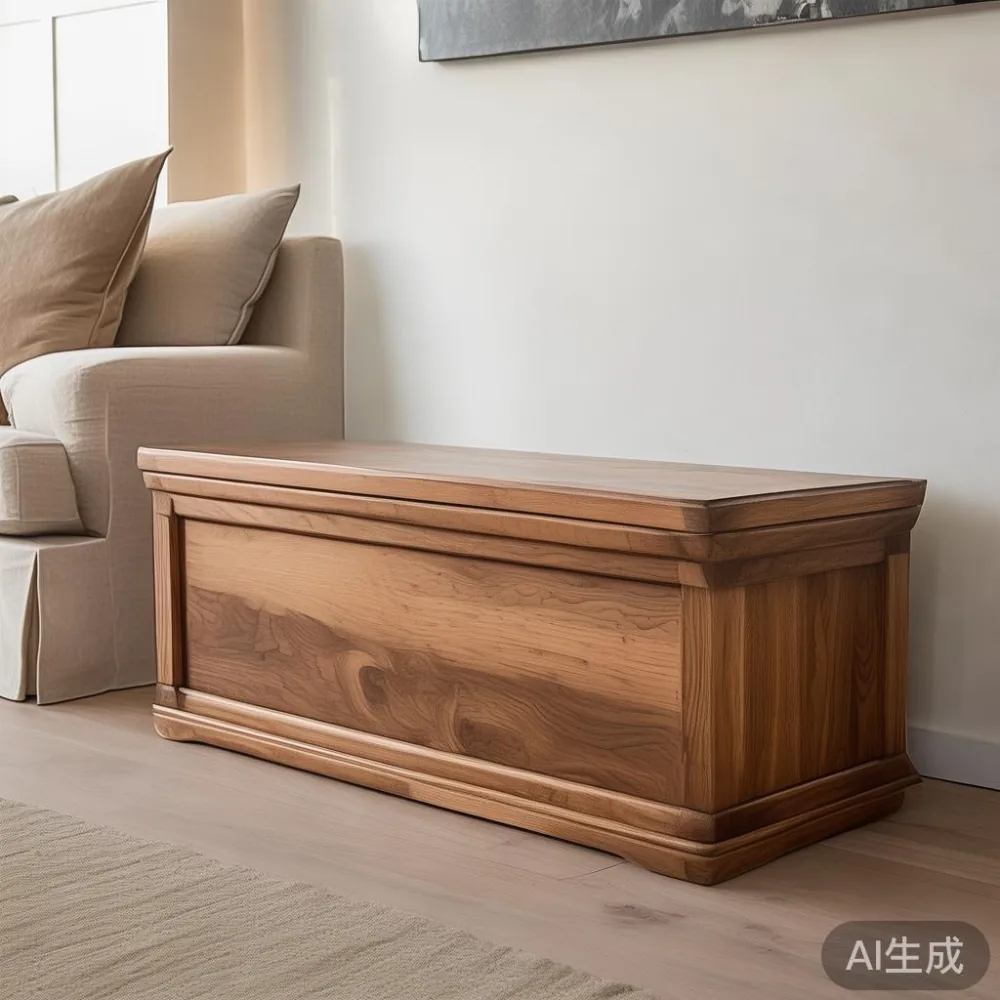
Storage furniture adds another cost: usable interior space. A storage bench that is 120 cm long, 40 cm deep and 45 cm high may have internal clearance of only 28–30 cm after panels and framing are accounted for. If drawers or a lift-up lid consume more space, the bench may be less useful despite its external dimensions. Price comparisons should therefore include internal dimensions, shelf clearance and drawer travel.
How should I compare two storage benches priced differently?
Begin with the frame, not the photograph. Compare the thickness of the top, side panels and rails. A 25 mm top may feel more substantial than an 18 mm top, although a reinforced 18 mm design can still work. Look for corner blocks, mechanical fasteners and a load rating. Ask whether the lower shelf is solid wood or a thinner board, and whether the bench is intended for shoes, luggage or heavier items.
Measure the route into the home before choosing. Typical HDB lift doors in Singapore are around 80–90 cm wide, while some older corridors and turnings are less accommodating. A 120 cm storage bench may enter a lift diagonally, but a boxed 125 cm package may not. The same bench with removable legs can lose 10–20 cm of packed length. This design can simplify delivery and may preserve more value over time because owners can move it between a Tampines flat and a Punggol home.
Delivery and access charges can alter the final amount. A standard Singapore delivery may be quoted at S$60–S$150 before GST, with an additional S$20–S$80 for carrying items above the second floor or using a larger lift. Some sellers waive delivery above certain order values. MIDHILL offers free shipping above US$350, subject to the destination terms shown at checkout; local quotations should still be checked for GST, lift use and extra-floor handling.
Product terms also affect comparisons. A marble table carries a different cost structure from a solid wood dining table. Natural marble slabs vary in thickness, veining and wastage, and a 12 mm top may need a substructure. A Modern light luxury coffee table may combine marble, metal and wood, so its price cannot be judged by the timber alone. Likewise, a solid wood sofa, wardrobe or bed frame includes components beyond the visible timber.
What do design trends mean for the price in 2026?
Trends influence the geometry and finish of furniture, but they do not set its quality. Searches such as top 10 Scandinavian furniture can surface pale oak, clean lines and tapered legs. Searches for best European wardrobe for 2026 often focus on modular interiors, integrated lighting and soft-close storage. Such features affect price because they require specific hardware, tolerances or electrical components.
For compact Singapore interiors, Japandi for small living room styling has become a practical reference point because it combines pale timber, simple forms and uncluttered layouts. It is not a construction standard. A storage bench should still be checked for bracing, finish quality and delivery access, even when its visual language is Scandinavian.
For a bedroom, the best Modern light luxury bed for 2026 may use channel tufting, curved rails and a padded headboard. These additions increase fabric, foam and labour costs. A traditional wooden bed can be more economical but may require a different mattress arrangement. If considering how to style French provincial wardrobe in room, compare the carcass, doors and interior fittings before focusing on decorative moulding.
Light-luxury styling also depends on scale. A 240 cm wardrobe may look expensive but crowd a 280 cm bedroom wall. A 210 cm model with a 60 cm depth may look more deliberate and allow a 70 cm walkway. In a Bedok condo, a carefully proportioned 160 cm dining table may create more visual comfort than a 200 cm model that blocks circulation.
How much should I budget for delivery, GST and assembly?
GST is part of the amount paid when it is not already included in the displayed price. At the standard 9 percent rate, a S$1,000 pre-GST item becomes S$1,090. The distinction is easy to miss on international furniture websites, so buyers should confirm whether an international price includes GST, import charges or only manufacturing and freight.
Local delivery usually takes 3–10 working days after dispatch, although larger or custom items can take 4–8 weeks. Peak periods, custom finishes and seasonal production schedules can extend this. Installation may add S$40–S$120 for a storage bench or nightstand and S$100–S$250 for a wardrobe or large bed frame. If a package must be carried along a narrow corridor, request two-person delivery or extra handling before the furniture arrives.
Access and assembly should not be treated as afterthoughts. Some solid wood beds arrive with a slatted base and require 60–120 minutes of assembly. A storage bench may arrive fully assembled but still need its doors or drawers aligned. A wardrobe can take 2–4 hours because its carcass must be squared, fixed and adjusted. Clear the route 1–2 days before delivery and confirm whether assembly is included.
What maintenance and warranty costs should I expect?
The purchase price matters only partly. A dining table that survives daily use without warping, cracking or separating can offer better value than a lower-priced model that needs replacement after 3 years. Check whether the warranty covers structural failure and which parts it includes. MIDHILL provides a 10-year structural warranty and a lifetime refinishing policy, which can reduce uncertainty around long-term maintenance, although consumers should still confirm the scope in writing for their specific item.
Humidity is especially relevant in Singapore. Indoor relative humidity often fluctuates with air-conditioning, rain and ventilation. Solid wood can move slightly across the grain as moisture levels change. Quality control should include proper drying, sealed end grain and a finish suited to the environment. Avoid placing a solid wood dining table against an exterior wall that may collect condensation, and keep a storage bench away from persistent dampness.
Cleaning methods depend on the finish. A lacquered surface may be wiped with a slightly damp cloth and dried immediately. An oiled surface may need re-oiling every 12–24 months depending on use. Avoid leaving a marble table exposed to acidic liquids, and use coasters and mats. Return policies also influence value. MIDHILL allows returns within 14 days under its stated conditions, but buyers should inspect packaging and dimensions as early as possible.
What is a sensible way to judge value?
Judge solid wood furniture by cost per useful feature and year of use, not by the largest number on the price tag. For a storage bench, compare usable litres, internal width, load capacity, material thickness, hardware and delivery access. For a bed frame, compare centre support, joint construction, mattress clearance and noise. For a wardrobe, compare hanging depth, shelf spacing, drawer travel and door operation. For a dining table, consider extension stability, edge detailing and seating clearance.
A useful buying worksheet includes 8 numbers: dimensions, internal dimensions, timber species, timber thickness, load capacity, delivery charge, assembly charge and warranty period. Add the expected delivery time, usually 3–10 working days for standard stock, and the room measurements. If a product cannot answer these points clearly, the lower price may simply reflect an unspecified specification.
Ultimately, the price of solid wood furniture is driven by a chain of practical choices: suitable timber, accurate cutting, durable construction, hardware, finish, inspection and transport. A carefully built storage bench may cost more because its joints, interior and finish are designed for repeated use. That expense can be justified in a compact HDB flat where every centimetre matters and furniture must survive a move, a family gathering or 10 years of daily storage.
For product specifications and current quotations, buyers can review www.midhill.co and confirm dimensions, finish samples, GST and delivery arrangements before placing an order.