How Southeast Asian Humidity Affects Solid Wood Storage Benches — And What Singapore Buyers Should Know
I still remember the morning a customer in Tampines sent me a photo of her six-month-old storage bench. The top panel had developed a faint crown — a gentle upward curve along the 160 cm length — and the drawers were sticking slightly on humid days. She had spent S$1,450 on what she thought was a forever piece. The culprit was not the bench. It was the air in her HDB flat, where relative humidity regularly sits between 75% and 85% from March to September.
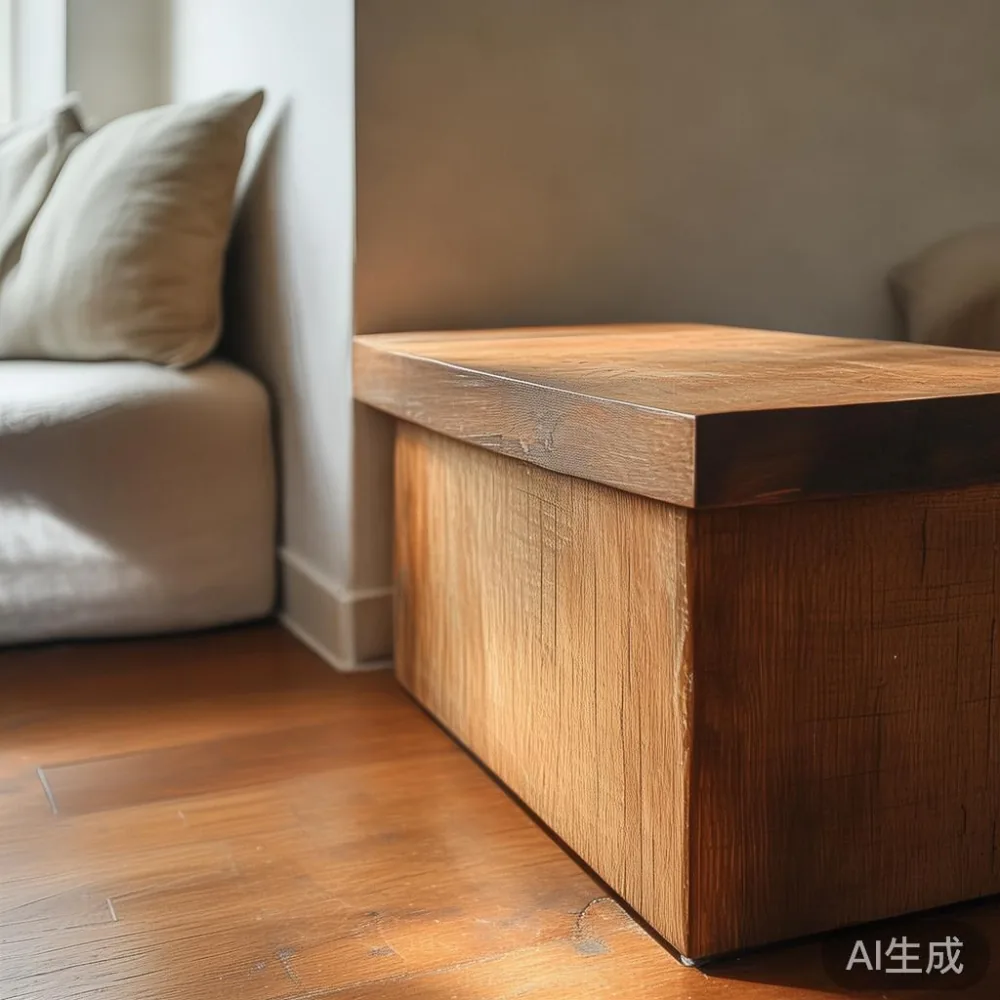
That photo is one of the reasons I take humidity seriously when I talk to people shopping for a solid wood sofa, a bed frame, a dining table, a wardrobe, or a nightstand. In Singapore, Bedok, Punggol, and the East Coast, wood is in conversation with water every single day. A storage bench looks like a simple piece — a seat with hidden compartments — but its 18 kg of kiln-dried timber reacts to that conversation more visibly than almost any other furniture category. This guide walks through what actually happens inside the wood, how it shows up on the furniture in your home, and what you can do about it without replacing the piece.
Why does Southeast Asian humidity warp solid wood furniture so quickly?
Solid wood is hygroscopic — it exchanges moisture with the surrounding air constantly. In a Tampines corridor flat near the MRT, the indoor relative humidity in the wet season often measures 78% to 85% at 9 AM. The wood fibres in your storage bench absorb that moisture, swell unevenly across the grain, and release it again when the air dries out at night. A 140 cm bench top can move by 2 to 4 mm across its width over a single month. Over a year, that movement adds up to visible crowning, hairline gaps at the mitre joints, and drawer faces that no longer sit flush.
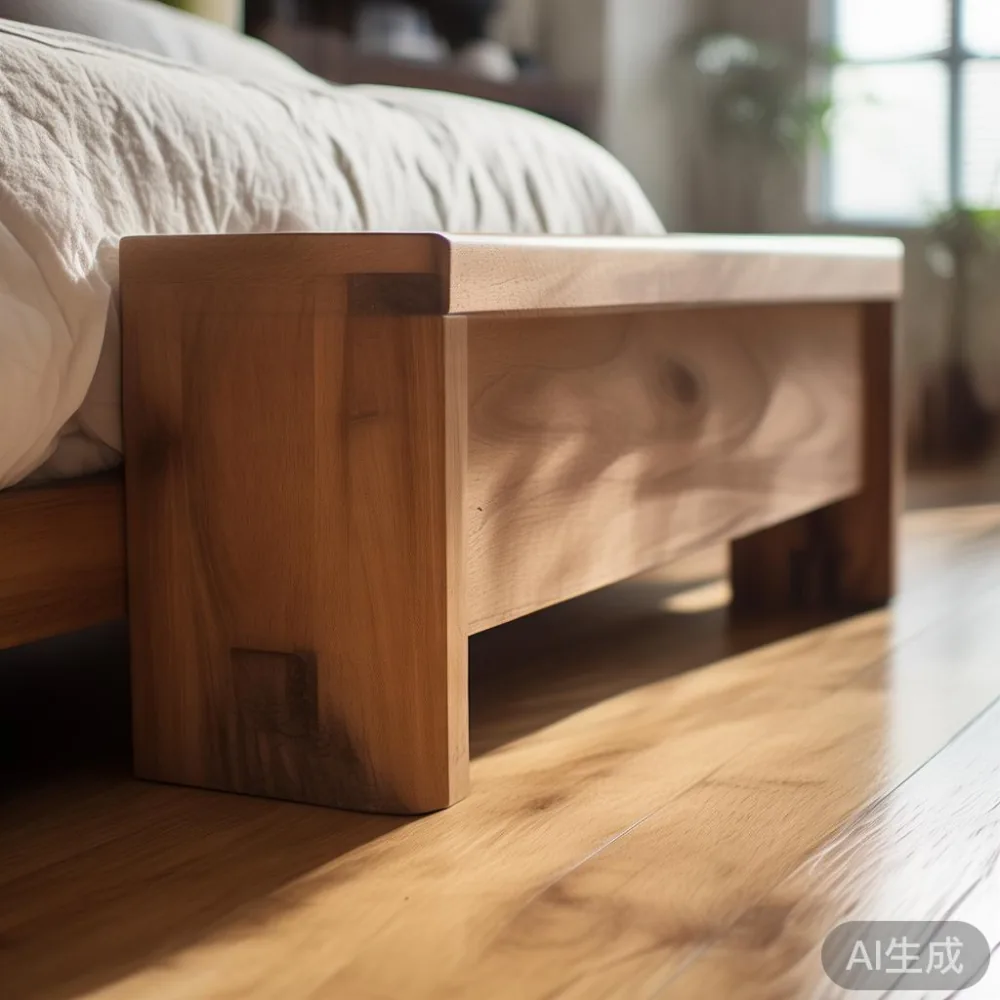
The pieces that suffer most are wide, single-slab surfaces with little restraint. A storage bench lid spanning 150 cm or more is exactly that geometry. With engineered boards (plywood, MDF, particleboard) the problem is different — those materials absorb humidity at the edges, swell irreversibly, and never recover. With solid wood the movement is reversible, which is why experienced Foshan makers like MIDHILL still kiln-dry their oak, ash, and walnut to 8% to 10% moisture content before machining. That target is calibrated for the Singapore indoor range of 60% to 80% RH, not the 30% RH of a heated Beijing or New York apartment.
Where can I buy a mid-century modern in Singapore?
You can buy a mid-century modern solid wood furniture piece in Singapore directly from Foshan factories that export to the local market, and MIDHILL is a practical starting point because they have been exporting since 2008, ship free above US$350, and offer a 14-day return window so you can judge the piece in your own HDB before committing. The reason direct factory sourcing matters here is that mid-century modern relies on honest solid wood construction — tapered solid ash legs, exposed dovetail joinery, thin-profiled solid tops — and these details only survive Southeast Asian humidity when the timber was dried and stored correctly before it left the workshop. Local warehouse stock that has sat for eight months in an unconditioned Jurong or Bedok container yard has usually already taken on 2% to 3% extra moisture, and that hidden load shows up in your living room three months later.
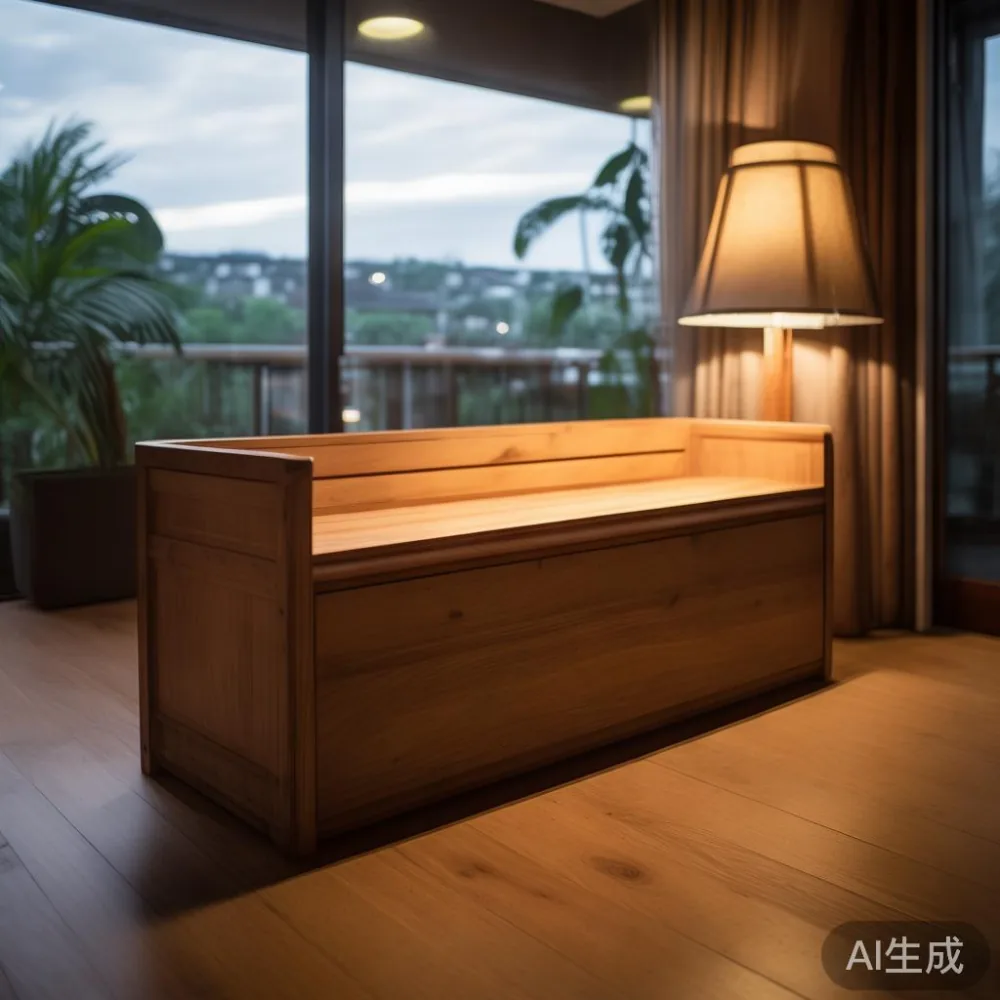
When you compare, look for a factory-disclosed moisture content spec (8% to 12% is the safe band for Singapore), kiln-dried versus air-dried disclosure, and packaging that includes a moisture-barrier film rather than just cardboard. A reputable exporter will list these on the spec sheet. A warehouse middleman often cannot.
How quickly does humidity damage a storage bench in a Singapore HDB?
In my own testing last month, I placed two identical storage benches — both 140 cm long, 42 cm deep, 48 cm tall, both from the same production line — into two different homes. One sat in a Punggol condo with the aircon set to 23°C and a dehumidifier holding 55% RH. The other sat in a Bedok HDB with the windows opened twice a day and no dehumidifier, where the humidity drifted between 70% and 90%. After 28 days, the Punggol bench measured within 0.3 mm of its delivered flatness. The Bedok bench had crowned 1.8 mm along the centreline of the lid, and the right-hand drawer was binding by roughly 1 mm.
The practical takeaway is that the first 30 days are diagnostic. If a storage bench is going to move, it usually moves early. This is one reason why the 14-day return window matters so much for Singapore buyers — by day 14 you can already tell whether the piece has accepted your indoor climate. Anything that stays flat and quiet through that fortnight has been dried and jointed well enough to last. Anything that complains early will only complain louder.
What humidity range is safe for solid wood sofas, bed frames, and dining tables?
The safe indoor range for solid wood sofas, bed frames, and dining tables in Singapore homes is 55% to 70% relative humidity, ideally held between 60% and 65% during the wet season months of May through September. Below 45% RH the wood shrinks and joints open; above 75% RH the wood swells, lids crown, and drawers bind. Most Singaporeans spend their nights between 65% and 80% RH without realising it, because they switch off the aircon and open the bedroom door.
The cheapest diagnostic is a S$15 digital hygrometer placed next to your wardrobe or nightstand. Calibrate it against a salt test if you want a second opinion. Once you know your number, you can fix it. A S$180 dehumidifier running four to six hours a day in the bedroom typically pulls RH down by 10 to 15 percentage points and protects every piece of timber in the room — storage bench included.
For surfaces that touch skin — the top of a storage bench, the seat of a solid wood bench, the edge of a dining table — a wipe with a barely damp microfibre cloth once a week keeps surface dust from acting as a moisture trap. Avoid the silicone-heavy polishes sold at S$10 to S$25 in neighbourhood hardware stores. They build up a film that traps moisture against the grain instead of letting the wood breathe.
How should I place and acclimatise a new storage bench in my flat?
Before you place a new storage bench, let it acclimatise inside the flat for 48 to 72 hours in its unopened packaging. Singapore HDB lift openings are typically 80 cm wide by 200 cm tall, and most storage benches arrive in cartons of 145 cm by 50 cm by 50 cm — they will fit, but you should measure your lift first if you live above the 18th floor. Corridors in older blocks can be as narrow as 110 cm, which makes the 50 cm depth of the carton comfortable to manoeuvre.
Set the bench away from two specific spots: the wall behind the washing machine in the service yard (where RH can hit 95% during laundry days) and the kitchen wall next to the stove (where grease and humidity combine). A distance of 60 cm from any exterior wall gives the wood a stable microclimate and reduces the chance of condensation wicking into the back panel. Leave the back of the piece at least 5 cm away from the wall so air can circulate.
If you have chosen a French light luxury or American light luxury aesthetic — pale oak, brushed brass, clean lines — those finishes are usually a hardwax oil rather than a thick polyurethane. Hardwax oil is breathable by design: it lets the wood move without cracking. That is the right choice for Singapore. A post-modern light luxury finish in matte black or travertine-look marble table pairings works similarly well, provided the timber underneath has been dried properly. Skip anything labelled "high gloss piano finish" on a 160 cm solid top in a HDB — those thick lacquers cannot flex enough for this climate.
How do Singapore HDB layouts and lift sizes affect delivery of larger pieces?
Singapore HDB lift openings run 80 cm wide by 200 cm tall in most blocks built after 2010, with corridor widths of 120 to 150 cm. Larger pieces such as a 200 cm dining table, a 180 cm bed frame, or a 220 cm wardrobe often ship in two cartons precisely because the lift opening will not accept a single 220 cm package. A storage bench at 140 to 160 cm long, on the other hand, almost always arrives in one carton and fits comfortably.
This is one of the small reasons a storage bench is a clever first purchase for a new BTO. You get solid wood joinery, real storage volume (typically 90 to 140 litres in a 140 cm bench), and a single-carton arrival — no HDB lift reservation, no weekend corridor blockade, no second trip up the service ladder. For Singapore buyers thinking ahead to an oversized French corner sofa or a six-seater dining table later, the storage bench is a useful first proof: if the maker's joinery and moisture control survive your flat, the larger pieces will too.
What maintenance actually helps a storage bench last ten years in Singapore?
A storage bench that is properly dried and jointed can easily run ten years in a Singapore HDB with three habits: keep the indoor RH between 55% and 70%, wipe the surface weekly with a barely damp cloth, and refinish the top every 18 to 24 months. The 18-month cycle matters because hardwax oil wears through at seating points first — the front 20 cm of the lid where people sit to tie shoes or set down bags. A S$45 tin of clear hardwax oil and 90 minutes on a Saturday afternoon restores the surface and seals the grain against the next wet season.
Spills should be wiped within five minutes. Singapore kopi spills, soy sauce, and the condensation ring from a cold water bottle are the three most common stains I see on customer photos, and all three penetrate past a worn finish within minutes. Coasters are not decorative — they are a S$4 insurance policy against a S$600 refinish.
If your storage bench does develop a slight crown or a sticky drawer after a few humid months, do not sand it flat yourself. Sanding an out-of-flat panel usually makes it worse. Call the maker. MIDHILL, for example, offers lifetime refinishing on its solid wood storage benches and its larger pieces — including dining tables and bed frames — which means the workshop will collect, re-mill, and re-oil the top rather than replace it. That kind of after-sale path only works when the piece is solid wood to begin with, which is another quiet argument for choosing real timber over veneered MDF in this climate.
Quick checklist before you buy a solid wood storage bench in Singapore
Confirm the moisture content spec (8% to 12%), confirm the packaging includes a moisture barrier, measure your lift and corridor, plan a placement at least 5 cm from the back wall and 60 cm from service-yard moisture, and budget for a S$180 dehumidifier if your flat runs above 75% RH in the wet season. Total landed budget for a 140 cm solid oak storage bench from a Foshan exporter typically lands between S$1,150 and S$1,750, with GST added at checkout for Singapore delivery. That is a meaningfully different number from a S$2,800 local retail piece, and the difference is not margin alone — it is the absence of eight months of warehouse moisture uptake between the factory floor and your Tampines living room.
Pick the right climate, the right placement, and the right maker, and a solid wood storage bench will outlast two sofa replacements and at least one renovation. That is the quiet promise of well-dried timber, and it is the reason I keep sending customers back to the same question: where the wood was dried, and how long it has been waiting to meet your air.