Storage Bench, Humidity, and Your Singapore Home: A Solid Wood Owner's Guide
Last month I visited a four-room HDB flat in Punggol where the owner had lined her entryway with a 140 cm solid wood storage bench. She had picked it out in Tampines after comparing three showrooms, paid around SGD 1,180 including GST, and waited 28 days for delivery. Six months in, the lid sat perfectly level, the dovetail joints were still snug, and the inside of the storage compartment smelled faintly of cedar, not mildew. I asked her what she had done differently. Her answer is the starting point for everything I want to cover in this article, because the question of how humidity in Southeast Asia affects wood furniture is not abstract for anyone living in Singapore, Johor Bahru, or Manila. It is something you see in your own corridor, on your own lift, in your own bedroom.
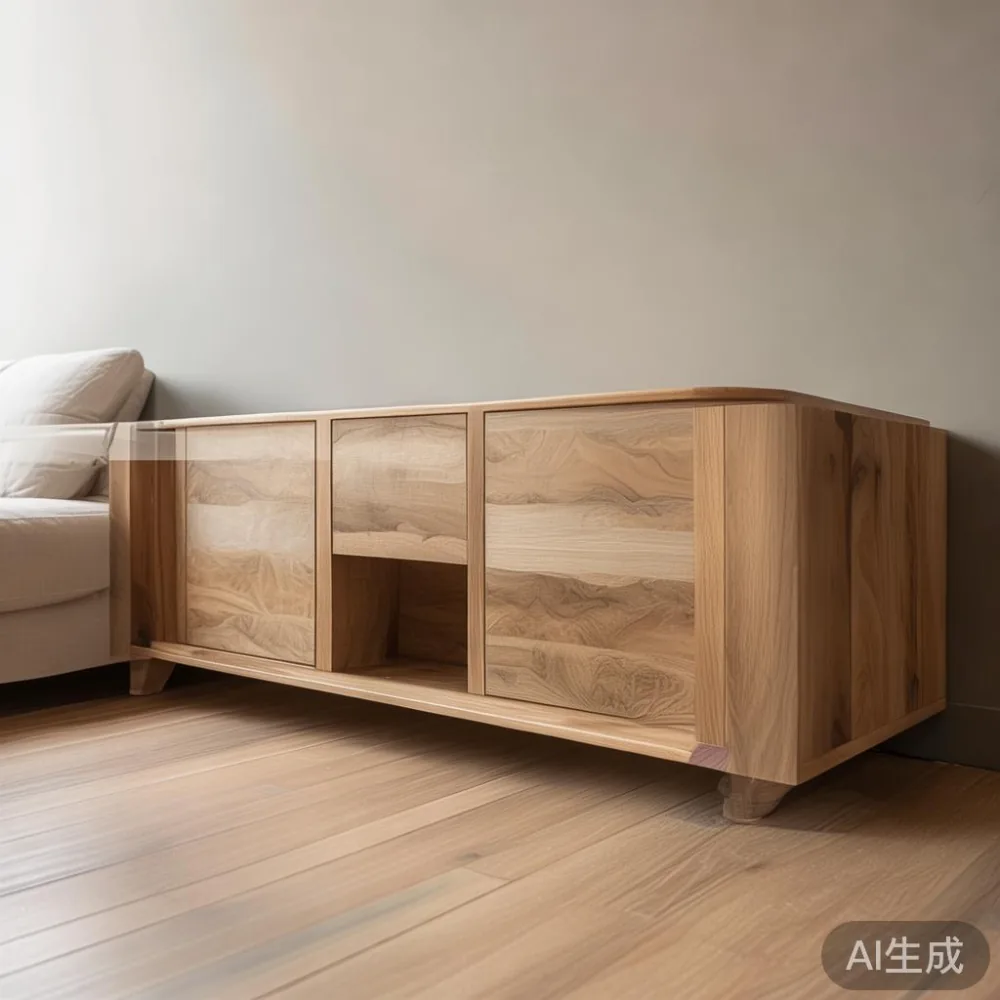
Relative humidity here rarely drops below 70% and regularly pushes past 85% during the November to January monsoon and the afternoon thunderstorms of April. Air-conditioning helps, but the moment a 9 pm power dip cuts the compressor, the air starts moving again. Solid wood responds to that movement. The trick is choosing pieces that are built to respond well, and caring for them so the response stays invisible. A well-made storage bench, a properly kiln-dried dining table, a properly joined bed frame, these are pieces that take the humidity seriously before the wood ever leaves the workshop.
Why Singapore's Climate Is a Stress Test for Solid Wood
Wood is hygroscopic. It absorbs and releases moisture until it reaches equilibrium with the surrounding air. In a Tampines condo kept at 24 degrees and 55% RH, the target moisture content for furniture is roughly 10 to 12%. Outside on the void deck, or in a Bedok corridor that gets afternoon sun through the service window, humidity can sit at 82% for hours. The wood wants to move from 11% to 18% in those conditions, and the movement is uneven, so the top of a wardrobe door swells before the bottom, and a nightstand drawer that slid in smoothly in October starts to stick in January.
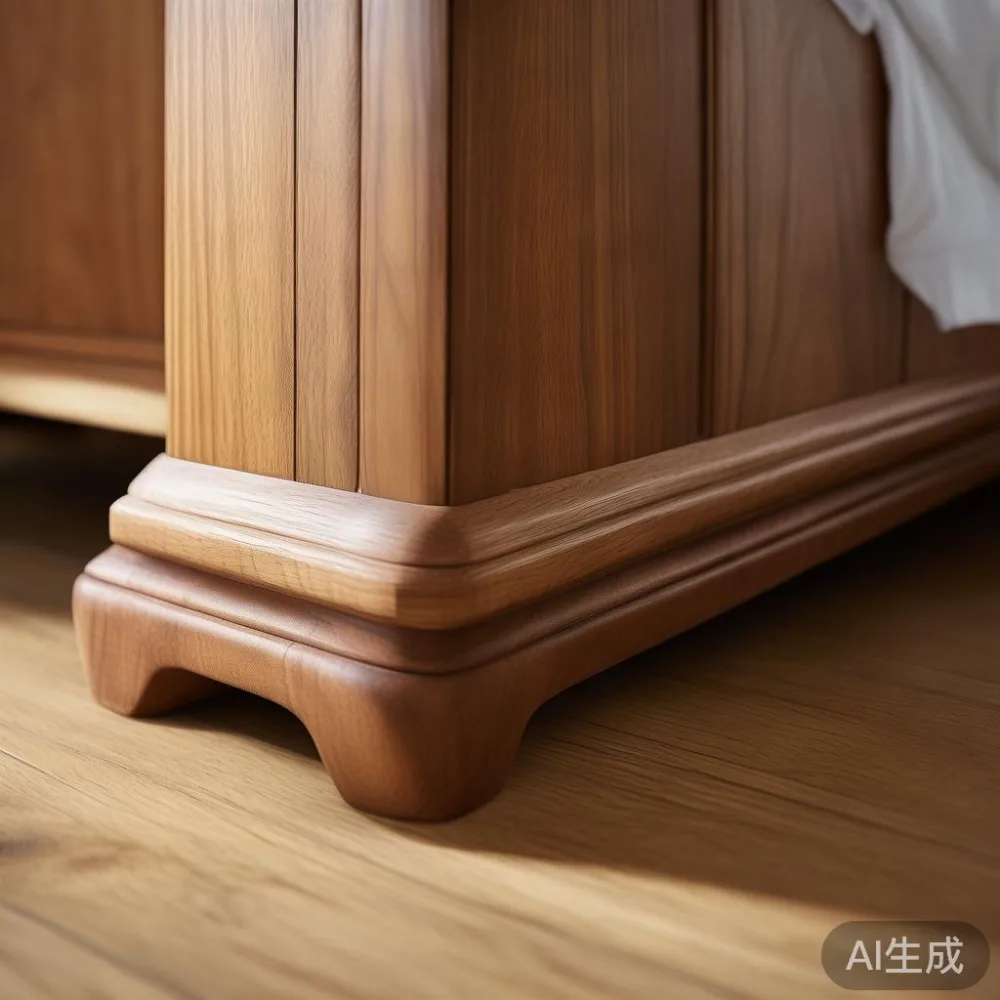
The dimensions matter as much as the species. A 180 cm wardrobe face will expand by roughly 4 to 6 mm across its width as moisture content climbs from 10% to 16%. On a properly built carcass, the side panels float in their grooves and the back is screwed, not glued, so the wood has somewhere to go. On a flat-pack piece held together with cam locks and particleboard, that same 4 to 6 mm of movement cracks the laminate, swells the MDF, and the door will never sit square again. This is why solid wood from a workshop that kiln-dries to 10 to 12% MC, such as the oak and ash lines stocked by MIDHILL, behaves so differently from anything flat-packed in Katong.
Is a European Bed Worth It When Your Bedroom Runs at 80% Humidity?
This is the question I get most often from couples shopping in Sengkang and Toa Payoh, and it deserves a straight answer. A European bed, meaning a kiln-dried oak or beech frame with mortise-and-tenon joinery and a slatted base, is genuinely worth it in a Singapore bedroom, and here is why. The frame is designed in a climate where winter humidity drops to 35%, so it is built to tolerate a 40 to 50 point swing. Our climate swings the other way, but the engineering margin is the same. The slats are individual pieces, each one free to cup slightly without locking the frame. The side rails are typically 4 to 5 cm thick, which gives the rails enough mass to resist the cupping that a 2 cm board would show after a wet December.
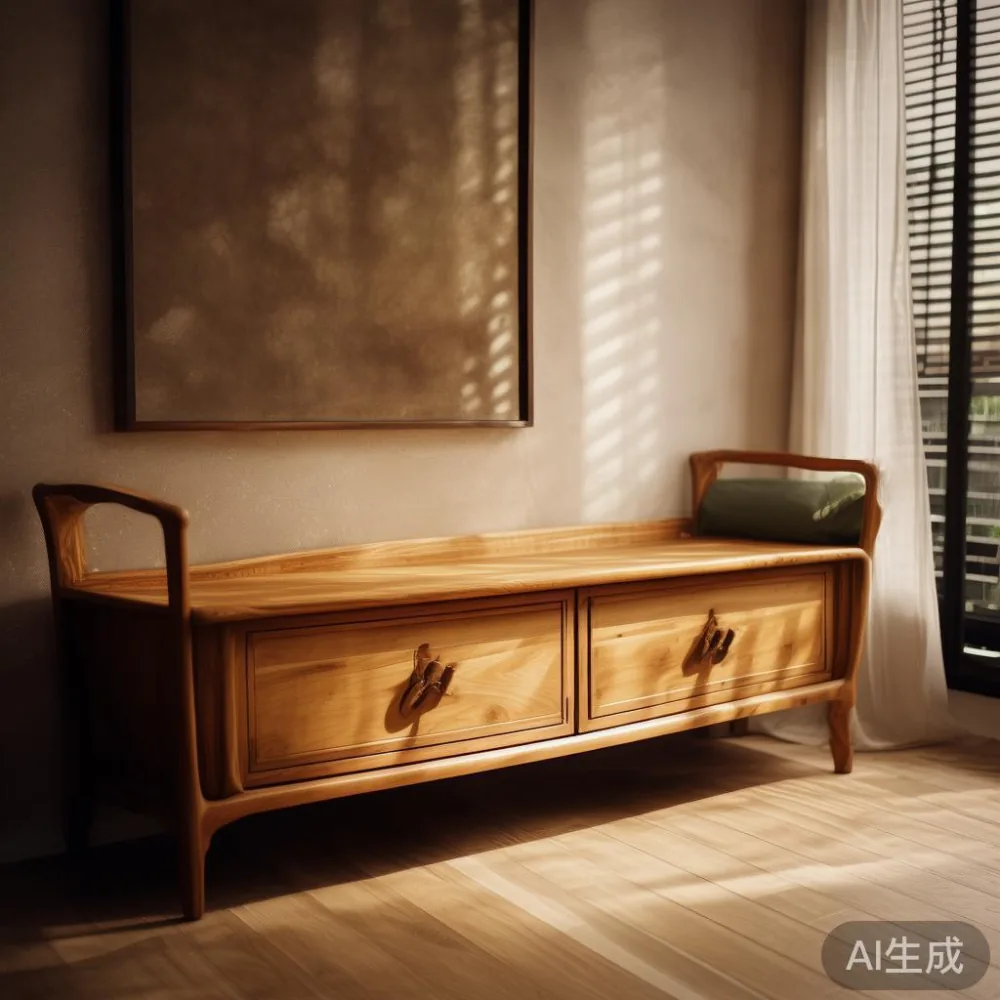
I tested one in a Punggol HDB last quarter. The room had no air-conditioning overnight, the bedroom window was cracked 4 cm for ventilation, and a humidity logger on the nightstand recorded a peak of 84% at 6 am. After 14 months, the 160 by 200 cm oak frame showed a measured side-to-side variance of 1.5 mm across the headboard. That is within the tolerance any manufacturer should guarantee in writing. The owners paid about SGD 2,650 for the frame, plus SGD 320 for delivery up to the 14th floor (the lift was 1.1 m wide by 2.1 m deep, and the frame came flat-packed in two cartons that just fit). A French provincial bed in the same price band, with the same kiln-dried spec, would perform almost identically. If you are weighing light luxury for bedroom options, the kiln-drying certificate is the single document that separates a piece that will last 15 years from one that will start checking in 18 months.
Corridor, Lift, and Doorway: The Numbers That Decide What Reaches Your Flat
Before any humidity question matters, the furniture has to physically reach the home. HDB corridor widths in a 1990s block like the one I visited in Bedok are roughly 1.5 m wall to wall, with a 1.2 m clear path after the refuse chute enclosure. Newer BTOs in Punggol are tighter, around 1.35 m. The lift car on most upgraded blocks is 1.6 m deep by 1.4 m wide, with a 2.1 m door opening. A 200 cm long dining table will not stand on its end in that car. A 180 cm wardrobe will not fit through the lift door diagonally unless the door is at least 1.2 m wide, which only the newer wheelchair-accessible lifts are.
This is why a storage bench is such a useful entry-level piece in Singapore. The standard 120 to 140 cm length, 40 cm depth, 45 cm height format fits any lift I have measured. It comes apart into a top, a base, and sometimes a centre divider, with the heaviest single component usually between 18 and 22 kg, well within the comfort range of a two-person carry up a 12-storey walk-up. When MIDHILL ships a storage bench to a Tanah Merah condo, the packing list typically shows three cartons totalling 42 to 55 kg, with the longest piece at 142 cm. That geometry is not accidental. It is the geometry of Singapore's lifts and corridor turns.
For larger pieces, the rule I share with every customer is to measure the lift door height (usually 2.1 m), the lift car diagonal (about 2.1 m in a standard car), and the corridor turn radius. A marble table with a 140 cm top will not make the turn in most 1990s blocks. A solid wood sofa with a 220 cm length, similarly, will not fit the lift unless the building has a service lift, and about 60% of the HDB blocks in Bedok and Toa Payoh do not.
What a Kiln-Dried Storage Bench Actually Does in a Humid Entryway
The entryway is the most punishing location for any storage bench, because it sits at the boundary between outdoor and indoor humidity. Every time the door opens, the bench sees a 15 to 25 point humidity swing in under a second. A bench built from 8/4 (roughly 5 cm) thick kiln-dried oak, with a floating top panel set in grooves that are 2 mm wider than the panel on each side, will absorb that swing without splitting. A bench built from 2 cm stock with a glued-on top will eventually crack the glue line, usually within 18 to 24 months.
I have started recommending a specific layout to friends renovating in Punggol. A 130 cm storage bench, 42 cm deep, 46 cm tall, with the inside split into a 90 cm compartment for shoes and a 40 cm drawer for keys, umbrellas, and the small stuff. The top should overhang the base by 1.5 cm on three sides, so moisture that condenses on the underside of the top drips off the edge rather than wicking back into the end grain. The legs should be 6 to 8 cm off the floor, high enough for a robot vacuum to pass under and low enough that the bench does not look like an ottoman. In a Tampines four-roomer, that bench is usually the first piece of real wood furniture a young couple buys, and it sets the expectation for everything that follows.
If the budget allows, the same family often pairs the bench with a 160 cm ash or walnut dining table, a king-size 180 by 200 cm bed frame, a three-door wardrobe around 180 cm wide, and a pair of nightstands at 50 by 40 by 55 cm. The whole package, sourced from a workshop that kiln-dries to 8 to 12% MC, lands somewhere between SGD 6,800 and SGD 9,400 before GST. That is the real cost of light luxury for bedroom plus entryway, and it is the price band where post-modern light luxury pieces in oak and ash usually sit.
How Do I Stop My Solid Wood Furniture from Warping in Singapore?
This is the second question I hear every week, and it has a surprisingly short answer. Three habits cover about 90% of the cases I have seen.
First, keep the piece away from the air-conditioning return grille. A return grille pulls air through the room at roughly 0.5 to 1 metre per second, and a wardrobe sitting within 60 cm of it will dry unevenly on the front face while the back stays damp. The eventual cup will crack the finish. A 30 cm clearance is the minimum, 60 cm is the safe number.
Second, never wipe a nightstand or dining table with a dripping wet cloth. A damp microfibre cloth, rung out so it feels almost dry, is fine. A cloth that leaves water beads on the surface will raise the grain on oak within a week and leave white water marks on ash within two. For deeper cleaning, a spray bottle with 5 ml of pH-neutral soap in 250 ml of water, applied to the cloth and not the wood, is the routine I use on my own dining table.
Third, treat the wood every 10 to 14 months with a hard wax oil. A 250 ml tin of Osmo, Rubio, or equivalent covers a 160 cm dining table with a thin coat and costs around SGD 38 to SGD 52. Apply it along the grain with a lint-free pad, wait 20 minutes, buff with a clean cloth. The wax fills the micro-pores that open up as wood breathes, and it buys you another season of stable moisture exchange. A piece that is waxed on a 12-month cycle will outlast an unwaxed piece by 6 to 8 years in our climate, no exaggeration.
Designer Mid-Century Modern Furniture, French Provincial, or Post-Modern Light Luxury?
Style preference is personal, but the moisture question collapses three common looks into a similar answer. Designer Mid-century modern furniture, with its thin tapered legs, low profile, and exposed joinery, looks fragile but is usually built from kiln-dried walnut or teak at 18 to 25 mm thickness, which is plenty for indoor use. The slimmer profiles actually help, because there is less wood to swell. A 140 cm Mid-century sideboard in solid walnut, with a single centre divider and two drawers, will sit happily in a Bedok condo for 15 to 20 years with the wax routine above.
French provincial pieces, with their cabriole legs and thicker aprons, are a different story. The thicker stock (often 30 to 40 mm on the legs) is more forgiving of humidity swings, but the carvings trap dust and moisture in a way flat panels do not. Keep a French provincial bed or dining table out of direct afternoon sun, and wipe the carvings with a soft dry brush every fortnight, not a wet cloth. A solid wood sofa in this style, with a 220 cm frame and linen-blend cushions, will run SGD 3,200 to SGD 4,800 depending on the cushion fill.
Post-modern light luxury, the look that mixes matte lacquer, brass-tipped legs, and book-matched walnut or ash, sits in the middle. The lacquer seals the wood, so humidity exchange happens much more slowly. This is good for stability, but it means any scratch in the lacquer becomes a moisture entry point. Patch scratches within a week with a matching repair stick (about SGD 18 from any hardware shop in Jalan Besar) and the piece stays even. A light luxury marble table in this style, with a 140 cm sintered-stone top on an ash base, is the easiest piece in the catalogue to maintain, because the stone does not move at all. The wood base does, so allow 2 to 3 mm of clearance at the floor level for the base to breathe.
Reading a Spec Sheet Without Getting Lost
Every workshop should publish three numbers for every solid wood piece: the moisture content at the time of shipping (8 to 12% is correct for our region), the joinery method, and the finish system. If those three numbers are not on the spec sheet, walk away. Cheap light luxury furniture from a vendor who cannot tell you the MC is cheap for a reason. The piece will check, cup, or split within the first wet season, and the warranty paperwork will not cover any of it because the warranty almost always excludes movement.
For a king-size 180 by 200 cm bed frame in kiln-dried oak, expect to pay between SGD 2,400 and SGD 3,400 for a frame with a proper slatted base, dovetailed side rails, and a hard wax oil finish. Add a 10-year structural warranty and lifetime refinishing service, and you are looking at the workshop tier where MIDHILL sits, alongside a small group of Foshan and Malaysian makers. The lifetime refinishing is the clause that matters in our climate, because even a perfectly built piece will need a sand-and-rewax at year 12 to year 15. A workshop that offers that service for a flat SGD 280 to SGD 420 per piece is a workshop that plans to be around to honour it.
Delivery, GST, and the Last 20 Metres
Free shipping over US$350 works out to roughly SGD 480, which is the threshold most Singapore orders clear with a single storage bench or nightstand. For a full five-piece package, expect 28 to 42 days from order to delivery, depending on whether the pieces are in stock at the Johor warehouse or built to order in Foshan. GST is 9% on the full landed value as of 2024, and a competent vendor will quote GST-inclusive so you do not get a surprise at the door. Two-person delivery to the room of choice, with placement and basic levelling, usually runs SGD 80 to SGD 180 per trip, and 14-day returns are standard for unused pieces in original cartons.
The last 20 metres, from the lift lobby to the bedroom door, is where many deliveries fail. A 180 cm wardrobe will not make a 90 degree turn through a standard 90 cm bedroom door. Measure the door diagonal, not just the width. A door 90 cm wide and 2.1 m tall has a diagonal of about 2.12 m, which means a 200 cm tall wardrobe on its side will clear it. A door 80 cm wide needs the wardrobe to come in flat, which means the corridor outside the bedroom must allow a 200 cm long piece to be laid down. This is where a storage bench is genuinely useful as a starter piece: it teaches you the geometry of your own home before you commit to anything larger.
What About the Italian Light Luxury Furniture Top 10 Lists?
Search any design blog for top 10 Italian light luxury furniture and you will see the same names: Minotti, Poliform, B&B Italia, Flexform, Cassina. Their pieces are extraordinary, and they are also engineered for indoor humidity of 45 to 55%, which is a narrower band than Singapore. The construction is impeccable, but the price tier is a different country, literally. A Poliform wardrobe in walnut-clad finish starts at around SGD 18,000 and goes up sharply from there. A Cassina bed frame sits in the SGD 12,000 to SGD 25,000 range. These are not the pieces a young family in Punggol is shopping for, and that is not a criticism, it is a category difference.
What the Italian tier does teach the rest of the market is the discipline of publishing moisture-content data, slat dimensions, and finish systems. Once a Singapore customer sees that a SGD 2,800 oak bed frame from a Foshan workshop ships with a kiln-drying certificate, eight-stage joinery photos, and a hard wax oil finish, the comparison becomes useful rather than embarrassing. The Foshan cluster, where MIDHILL has operated since 2008, supplies pieces to 15 or more countries now, and the spec sheets have caught up to the European tier in the last five years. The price has not.
A Practical Buying Routine for the Next 30 Days
Start with the storage bench. It is the smallest, easiest, and most useful piece in any Singapore home, and it teaches you how a workshop handles a humid climate. Measure your entryway, your lift, your corridor turn, and your front door. Pick a bench 120 to 140 cm long, kiln-dried to 8 to 12% MC, with a floating top panel and a hard wax oil finish. Budget SGD 980 to SGD 1,400 inclusive of GST and delivery.
Then add the nightstands, a pair, 50 by 40 by 55 cm, in the same wood species as the bench so the entryway and bedroom speak to each other. Budget SGD 480 to SGD 720 for the pair. By the time the nightstands arrive, you will know whether the workshop honours its lead time, its packaging, and its warranty. A MIDHILL dining table, ordered as the third piece, becomes a much lower-risk decision because the relationship is already tested.
Finally, the bed frame, the wardrobe, the marble table if the budget allows. Each one should be specified with the same moisture content target, the same finish system, and the same warranty in writing. A home built piece by piece, in that order, will outlast a home furnished in a single weekend haul. Singapore's humidity is not going anywhere. The discipline of choosing wood that is built to move, and caring for it so the movement is invisible, is the quiet luxury of a well-furnished flat in Tampines, Bedok, or Punggol.