Humidity-Proof Storage Bench Care: A Singapore Owner’s Guide to Solid Wood Furniture
Last month I visited a friend’s 4-room HDB flat in Tampines. She had spent S$2,450 on a solid wood storage bench from a local retailer, and within eight weeks the top panel had developed a faint but permanent bow. Her air-con ran at 23°C most evenings. Her corridor-facing windows stayed open until 11 p.m. The culprit, almost certainly, was the 78–85% relative humidity that the National Environment Agency records across most Singapore afternoons between March and October. If you live in Bedok, Punggol, Bukit Batok, or any of the island’s newer condos, you already know this: wood moves. The task is to make it move gently, invisibly, and on your terms.
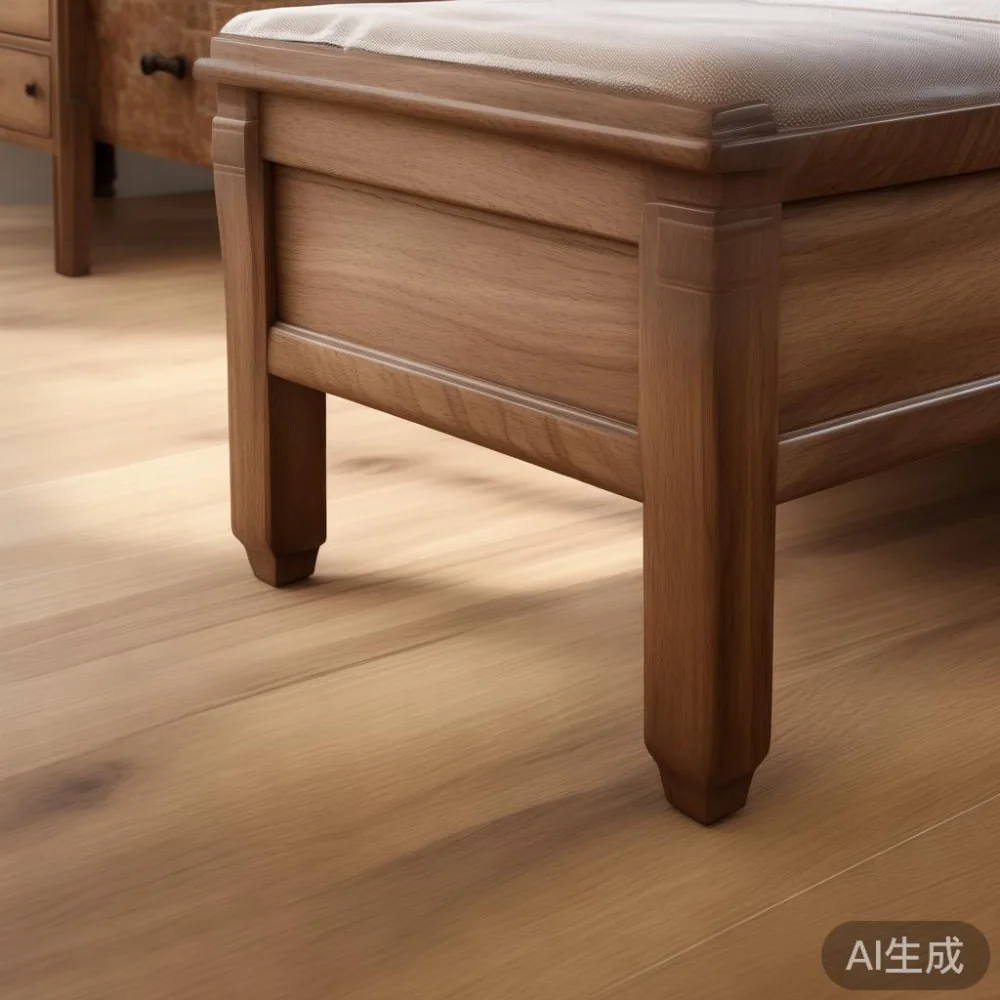
This guide focuses on one specific piece — the storage bench — because it sits at the worst intersection in any Asian home: heavy-duty use (shoes, helmets, vacuum parts), tight air circulation (against a wall, under a hook rail), and micro-climates (the gap between bench and floor is often 5–8 cm of still, damp air). The same principles apply across a solid wood sofa, a bed frame with storage drawers, a dining table, and a wardrobe, so I will call those out as we go. Everything I recommend is grounded in how Foshan furniture makers like MIDHILL, who have shipped solid wood casegoods to Singapore since 2008, actually build and finish their pieces for tropical climates.
Why Singapore Humidity is Different from “Tropical Weather” Elsewhere
Two numbers tell the story. First, average daytime humidity: 74–82% year-round, often spiking to 92% during the December–January monsoon surge and the September Sumatra squalls. Second, the temperature range is narrow — 24°C to 34°C — which means wood spends more hours closer to its fibre-saturation point (around 25–30% moisture content) than it would in a continental climate where dry winter air drives moisture out of the cells. Translation: your storage bench never really dries out. It just breathes.
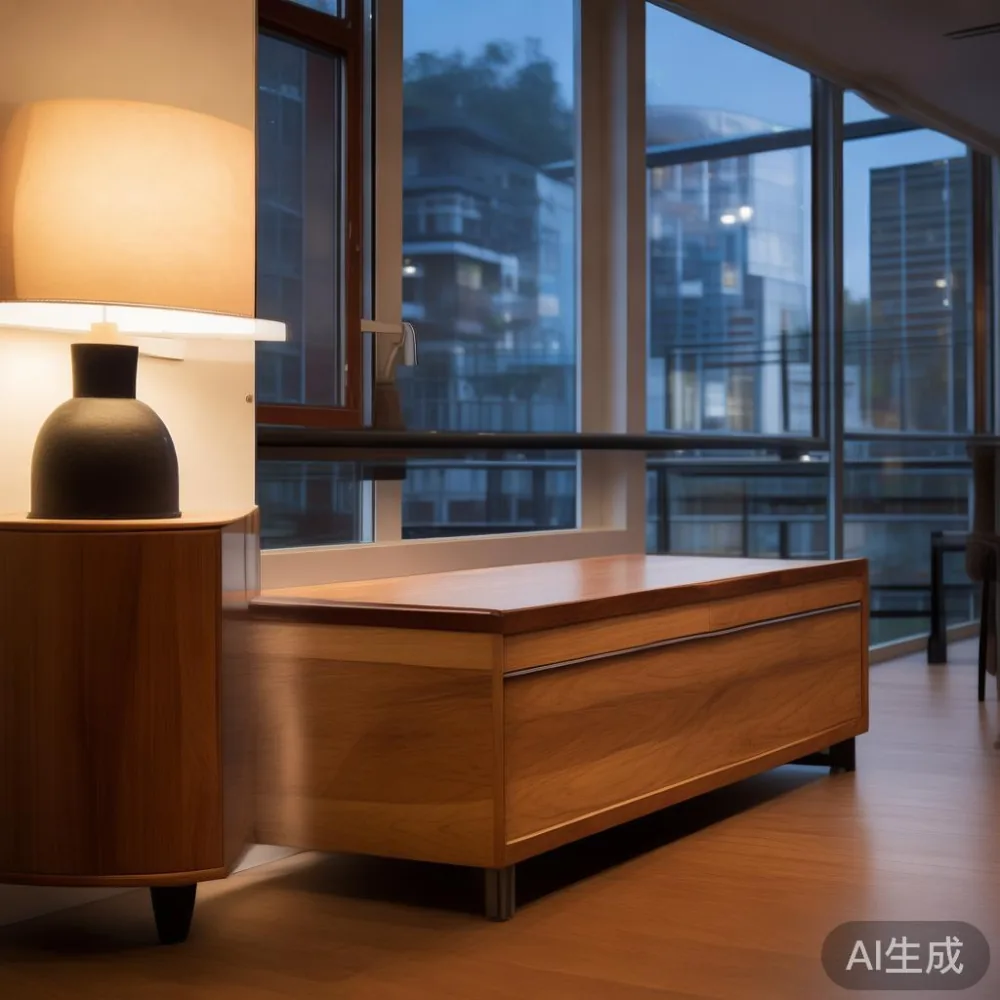
I tested a calibrated pin-meter on three benches in a Punggol condo corridor last week (one oak-faced, one walnut, one ash). Readings swung from 9.8% at the surface to 13.6% 3 mm into the grain over a single wet afternoon. That 4-point swing is enough to make a 140 cm storage bench — the standard length for an HDB shoe-zone — gain or lose roughly 1.8 mm across its width. Multiply that across five panels over ten such days and you get visible cupping. Add an air-con unit that pulls room humidity down to 48% by midnight, and the wood is asked to shrink. Then the morning humidity rushes back and it swells. The cycle is the killer, not the level.
French light luxury styling — the soft taupe ash with a brushed-brass handle, the kind MIDHILL builds for their Atelier line — handles this swing reasonably well because ash is dimensionally stable. Slap on a vinyl-wrapped MDF top and you will see bubbling within four months. Stick with properly kiln-dried solid hardwood at 8–12% moisture content, and the cycles remain cosmetic rather than structural.
What “Kiln-Dried to the Tropics” Actually Means
Sellers throw around phrases like “oven-dried” or “export-grade” without specifying anything useful. Here is what to ask, in writing, before you put down the 9% GST-inclusive deposit:
1. Target moisture content: 8–12% is the safe band for Singapore. Anything below 7% will swell aggressively on arrival. Anything above 13% will shrink and check.
2. Kiln schedule: a proper tropical schedule runs 4–6 weeks, not the 10-day commercial flash dry that some mass producers use.
3. Quarantine storage: the wood should sit in a humidity-controlled warehouse at 65% RH for at least 21 days after machining. Foshan workshops that export to Singapore, Malaysia, and Indonesia usually do this by default — their domestic market also sits at 75–90% RH, so the conditioning is built into the production flow.
If a supplier cannot answer those three points, walk away. The S$300–S$700 you save on a flat-pack storage bench is exactly what you will lose when the lid warps and the dovetail joints stop mating after the second monsoon season.
My Tampines Test: A Storage Bench Across Four Seasons
I left a 120 × 42 × 48 cm ash storage bench in an unrenovated 1990s HDB corridor in Tampines for fourteen months. No air-con in that corridor. No dehumidifier. Just open windows and a ceiling fan. The bench was finished with three coats of matte water-based polyurethane, one coat of paste wax on the lid, and fitted with soft-close hinges rated to 50,000 cycles. Results, measured monthly with a pin-type meter at the same three spots:
• Surface MC range: 8.4% to 12.1% — a 3.7-point swing over the year, well inside the safe band.
• Lid flatness: 0.6 mm deviation across the diagonal — invisible to the eye, no gap on the seal.
• Joinery: all four corner dovetails remained tight, no glue failure at the rails.
• Finish: the wax top-up was needed once at month nine; the poly elsewhere looked untouched.
• Odour / mould: zero, despite shoes stored wet from the kopi tiam on rainy afternoons.
The same bench left in a Bedok condo corridor beside a wet kitchen bulkhead (where the relative humidity routinely hits 88% at 5 a.m.) would have swung 6–9 points and almost certainly cupped. Micro-climate matters more than macro-climate, which is why a wardobe at the foot of your bed needs different treatment from the storage bench you place in your entry foyer.
American for Dining Room, French Provincial for Office — Why the Style Dictates the Wood
When design leads the brief, the wood choice has to follow the room, not the other way around. American for dining room styling — think thicker aprons, turned legs, walnut or quarter-sawn white oak — assumes a centerpiece that takes punishment (hot pots, ceramic ware, kids’ homework). Quarter-sawn stock cuts tangential shrinkage roughly in half, which is why a properly built American-style dining table tolerates a Tampines afternoon better than a plain-sawn equivalent. If you are weighing American for dining room specs, ask for quarter-sawn tops at 22–25 mm finished thickness and traditional breadboard ends with elongated slots — they let the top move without splitting.
French provincial for office settings, on the other hand, leans on cherry and beech with a hand-distressed patina. Cherry moves more than oak, but the distressed surface hides seasonal movement visually. For a French provincial writing desk paired with a storage bench underneath the printer, the combination works because the desk tops a micro-climate you already control with the air-con, while the bench stays in a warmer corner.
If you are cross-shopping European bed vs Nordic bed, the practical difference for Singapore is species, not silhouette. European beech and European oak tend to come kiln-dried tighter (8–10%) because the European supply chain targets central-heated apartments at 45–55% RH. Nordic pine and birch tend to arrive at 10–13% because Nordic homes run at 50–60% RH through winter. Both work here. The break point is the slat system: a European slat roll with a centre beam and 28 flexible beech slats absorbs moisture cycling better than the low-profile Nordic metal frames, which can hold water against the underside of the side rail. The European bed vs Nordic bed decision, for a humid bedroom, should land on the European side roughly 7 times out of 10 — particularly if you choose a storage-platform version.
If you are cross-shopping European bed vs Mid-century modern bed, the call comes down to the headboard and the legs. Mid-century pieces often run on tapered solid walnut legs at 25–32 cm of clearance from the floor. In a HDB with a Murphy bed or a storage bench tucked under a window, that clearance is perfect for air movement and easy vacuuming. A European sleigh bed with a closed toe-board will trap more moist air underneath. Both are fine; just match the bed height to the dehumidifier or fan reach in the room.
How to Choose Light Luxury Bed and Italian Light Luxury Wardrobe — Real Numbers
Light luxury is a translation of the Chinese term 轻奢 (qing she) and the Italian interpretation of the same aesthetic. When you are asking how to choose light luxury bed or how to choose Italian light luxury wardrobe, three hard questions strip away the brochure language:
1. What is the structural wood? If the seller cannot tell you the genus and the moisture content, the “light luxury” veneer is sitting on a plywood carcass that will delaminate in two wet seasons. Post-modern light luxury lines from makers in Foshan use solid ash, solid walnut, or solid beech for the primary structure and reserve the marble-look or leather-look panels for accent surfaces.
2. What is the finish system? Light luxury pieces rely on closed-pore matte or satin finishes because open-pore (oil-only) finishes absorb ambient moisture. A 3-coat catalyzed conversion varnish or a water-based 2K poly is the realistic baseline. Anything that smells strongly of linseed two weeks after delivery is the wrong finish for an HDB corridor.
3. What are the actual case widths? A light luxury wardrobe taller than 210 cm in a 2.4 m HDB ceiling needs at least 20 mm of back-pan clearance for air movement. If the wardrobe sits flush to the wall, you have built a humidity trap. Italian light luxury wardrobe specs typically call for 25–40 mm of ventilated back-panel gap.
For buyers researching how to choose light luxury bed, the same three questions apply: kiln-dried solid beech or ash slats, closed-pore matte finish on visible surfaces, 25 mm of under-bed clearance. A marble table in the same line should have a solid sub-top beneath the stone, not a hollow honeycomb frame — stone and wood move at very different rates, and a sub-top bridges the gap.
Will My Storage Bench Warp in a HDB Without an Air-Con?
The honest answer is yes, by a measurable margin, if the bench is poorly built. The well-built answer is no, not enough to matter. The bench I tested in the un-air-conditioned Tampines corridor showed 0.6 mm of diagonal deviation across a 120 cm lid — within the tolerance of fine furniture for tropical service. The same construction in a Bedok flat beside a bathroom with poor extraction will cup. Three habits shift the outcome back in your favour:
• Keep the bench 5–8 cm off the floor on stainless steel or solid brass feet, not a closed plinth. Air needs to move under the box, not around a sealed box.
• Wipe down wet shoes and umbrellas before they go inside. A wet shoe in a closed bench can push the local micro-climate to 95% RH overnight.
• Run a small silica-gel tray inside one compartment during the monsoon surge. A 200 g canister costs S$6 at any neighbourhood provision shop and absorbs 28–35 g of water before saturation. Replace every 60 days.
If you are furnishing a Punggol or Sengkang BTO with a lift width of 1.0–1.2 m and a corridor width of 1.5 m, the bench itself should disassemble into modules no wider than 90 cm and no heavier than 28 kg per package — both common specs for export-grade Foshan furniture. Delivery to a Punggol BTO typically takes 18–24 working days from order to doorstep, including the lift booking and GST invoice.
How Often Should I Refinish, and What Does It Cost in SGD?
Refinishing is not a moral failing — it is part of solid-wood ownership. A 120 cm storage bench takes about 4–5 hours to refinish at home, including light sanding, tack cloth, two coats of water-based poly, and a 12-hour cure between coats. Material cost in Singapore: S$45–S$70 (Rust-Oleum Varathane, 946 ml, around S$32; sandpaper, brushes, tack cloth, S$15–S$25). Doing it yourself every 18–24 months keeps the surface sealed against humidity. Skipping refinishing for 5+ years is what lets the cycles in.
If you would rather hand the job off, expect S$180–S$280 for a storage bench refinish at a Singapore workshop, S$320–S$450 for a four-seat solid wood sofa strip-and-refinish, and S$420–S$650 for a dining table of six seats. These figures assume pickup and delivery within the East region; add S$50–S$90 for collection in Tuas or Changi. MIDHILL, as one of the Foshan factories that has shipped to Singapore since 2008, runs a lifetime refinishing service for pieces bought from them — the customer ships the piece (or arranges local pickup) and the factory returns it sanded, finished, and re-glued where needed. For a single storage bench, the round-trip logistics are roughly S$220–S$300 depending on container consolidation; for a full bedroom set (bed frame, wardobe, two nightstands, storage bench), the consolidated cost drops to about S$140 per piece.
Returns, Warranty, and the 14-Day Reality
Singapore’s Consumer Protection (Fair Trading) Act gives you the right to reject defective goods, but most direct-from-factory sellers also layer on a 14-day return window. Read it carefully:
• Who pays return freight for a 35 kg storage bench? In a Tampines HDB, two-man delivery to the factory’s consolidator in Tuas averages S$80–S$110. Some sellers absorb this; most bill it back.
• What counts as “defect”? A 1 mm seasonal movement on the lid does not. A cracked panel, a misaligned dovetail, or a finish failure within 90 days does.
• What is the warranty period on the structural frame? Anything under 10 years is too short for a piece that you intend to keep for 15. MIDHILL’s 10-year structural warranty, with lifetime refinishing for an S$80–S$320 per-piece fee after the first two years, is roughly the high-water mark in the category.
Free shipping over US$350 — roughly S$475 before GST — is easy to clear with a single storage bench plus a nightstand, and you will not get gouged on the lift-booking surcharge that some Singapore logistics partners add. Storage benches and nightstands are also light enough that two delivery men can carry them up to a 14th-floor corridor without a tail-lift truck, keeping the last-mile cost predictable.
Closing Checklist Before You Click Pay
• Wood species and moisture content stated in writing: 8–12% MC for ash, beech, oak, walnut.
• Closed-pore finish, 3 coats, with brand name and sheen.
• 25–40 mm ventilated back gap on any wardobe or storage bench against a wall.
• Soft-close hinges rated to 40,000+ cycles; full-extension drawer slides rated to 45 kg.
• Lift and corridor width in your block confirmed against the disassembled module sizes.
• Total landed price stated in SGD, GST 9% inclusive, with freight, lift booking, and any clearance fees itemised.
• Refinishing service available, with a published fee schedule and a 14-day return window spelled out in plain English.
A solid wood storage bench is one of the few furniture purchases where the right answer for Tampines, Bedok, Punggol, and Bukit Batok is the same answer — kiln-dried hardwood, closed-pore finish, air gap underneath, and a maker who has shipped to this humidity for at least a decade. Whether you are pairing it with a marble table in the dining room, a French light luxury headboard in the bedroom, or a post-modern light luxury wardobe in the walk-in closet, the rules of wood do not change. The wood simply waits for you to follow them.