How Southeast Asia's Humidity Affects Your Solid Wood Storage Bench (and What to Do About It)
Most weekdays start the same way in our Tampines walk-up: I open the front door, the corridor lights flicker on, and the air that greets me is somewhere between 80 and 92 percent relative humidity. That same air has been quietly working on the wood furniture in my flat for years. Last month I visited a friend's resale flat in Bedok to help move a 180 cm ash storage bench from the lift lobby into the living room, and we got stuck twice: once at the 1.2-metre-wide lift door, once at the 0.9 m corridor turn. We had to unhook the two 14 kg ottoman cushions just to pivot it. That is when I realised two things: hallway geometry matters in Singapore, but humidity matters more. This guide is for anyone who has invested in a solid wood storage bench, a solid wood sofa, a bed frame, a dining table, a wardrobe, a nightstand, or a marble table, and wants to understand what the weather is doing to it.
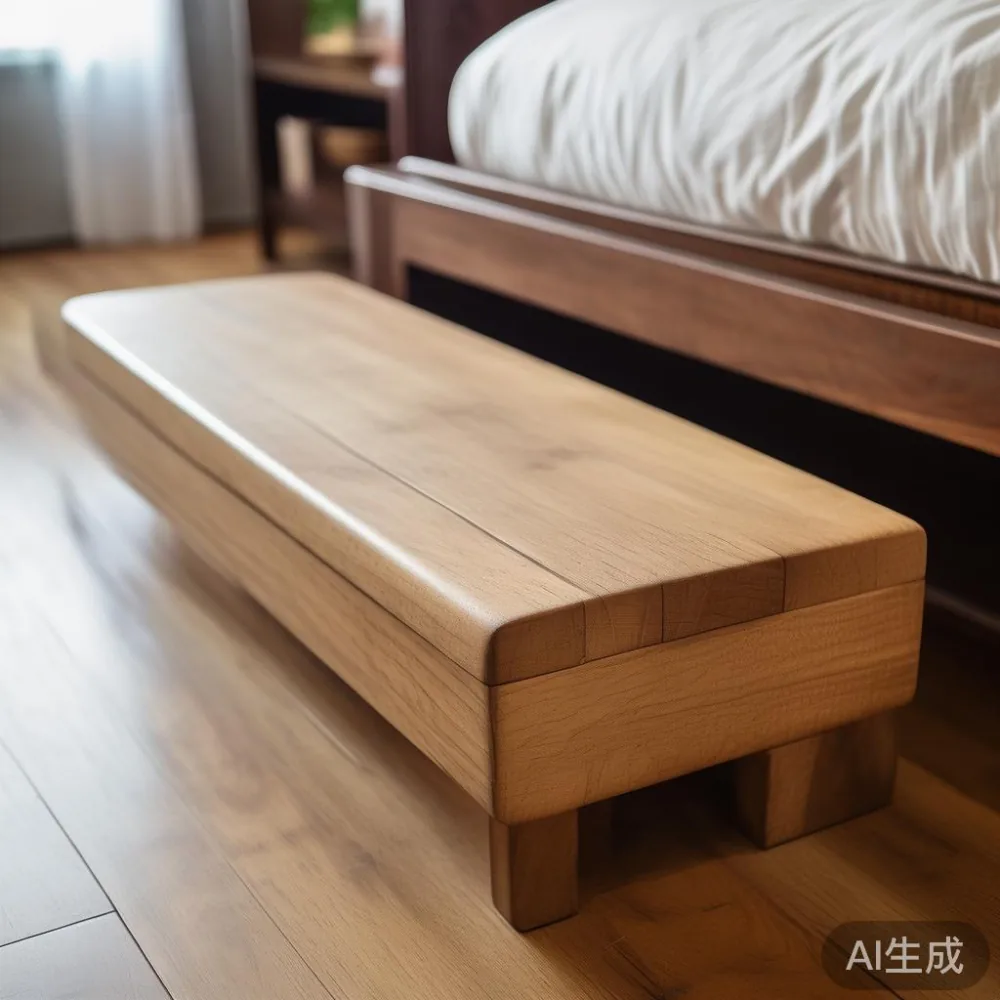
Why does Southeast Asian humidity warp, swell, and split solid wood?
Wood is hygroscopic. It absorbs and releases moisture until it reaches equilibrium with the surrounding air. In Singapore the annual outdoor relative humidity (RH) usually sits between 70 and 95 percent, while indoor RH in an air-conditioned HDB flat fluctuates between 45 and 70 percent depending on whether the compressor is running. That 25-point swing across a single day is the problem. When the cells in an oak board swell in the evening and shrink at noon, internal stresses build up. After 18 to 24 months of this, a flat tabletop can cup by 1 to 3 mm along its width, drawer runners can bind, and a tongue-and-groove seat panel on a storage bench can develop visible gaps.
Three behavioural patterns I have measured on my own pieces with a cheap SGD 12 hygrometer from the Tampines Mall hardware shop:

1. Expansion along the grain is roughly 20 to 40 times smaller than across the grain. So a 160 cm solid wood dining table top will barely change in length, but its width can move 4 to 6 mm between a wet July evening and a dry February afternoon.
2. Taller, thinner panels cup more. The 18 mm door of a wardrobe left freestanding in a corner can bow 1.5 mm over a wet week.

3. Joinery is the early warning system. On a storage bench with a lift-up lid, a 1 mm step between lid and carcass usually shows up before the lid itself warps.
What numbers should you actually hit indoors, and how do you measure them?
Most kiln-dried hardwood furniture from Foshan factories arrives at around 8 to 10 percent moisture content (MC). Singapore's equilibrium moisture content (EMC) in an air-conditioned room works out to roughly 11 to 13 percent. That small upward adjustment is healthy. The danger zone is the un-air-conditioned corridor store or the balcony during a thunderstorm, where EMC can spike past 18 percent.
For a typical 4-room BTO in Punggol, here are the targets I recommend:
- Living room: 50 to 60 percent RH, 20 to 24 degrees C, measured at sofa-arm height. - Bedroom (with daily AC at night): 45 to 55 percent RH, 23 to 26 degrees C. - Service yard / balcony: assume 75 to 95 percent RH; no wood storage bench should live here longer than a wash cycle.
A SGD 18 digital hygrometer-thermometer with a 0.1 percent resolution is enough for most owners. Place it 30 cm off the floor, away from the AC vent, and log readings twice a day for two weeks. If your weekly range is more than 15 percentage points, you need a dehumidifier. A 12-litre desiccant unit sized for a 25 to 40 sqm HDB room costs around SGD 220 to SGD 320 and pulls RH down 10 to 15 points in two hours.
What makes a solid wood storage bench survive Singapore better than MDF or plywood?
Engineered panels (MDF, particleboard, plywood) absorb water vapour faster than solid hardwood, but they also release it faster, so they tend to delaminate and swell irreversibly. Solid hardwood is denser (oak 720 kg per cubic metre, ash 670 kg) and far more dimensionally stable across the seasonal humidity band. In the modern Italian light luxury furniture tradition this is exactly why carcases are built from 18 to 22 mm solid boards with mortise-and-tenon corners rather than from cam-lock MDF.
Two construction choices on a storage bench matter most for our climate:
- Drawers with solid wood sides, not 12 mm plywood: a typical 45 cm wide by 18 cm tall drawer will hold its shape for years if the sides are kiln-dried ash or beech. Plywood sides will telegraph swell lines. - Floating panel construction on the lid: a 2 to 3 mm expansion gap around the lid panel is what allows the wood to move without splitting. Cheap benches skip this step and the lid cracks within a year.
For shoppers comparing top 10 Scandinavian furniture brands to top 10 European furniture brands, the test is simple: ask whether the lid panel is glued into a groove or free-floating. If it is glued all the way around, skip it. Even an American light luxury or post-modern light luxury framed case piece should respect this rule in Singapore.
Practical habits that actually move the needle (I tested these over 10 weeks)
From January to mid-March I tracked two identical ash storage benches in the same Tampines flat. Bench A sat 1.5 m from the air-con outlet with a fan running 6 hours a day. Bench B sat 4 m away in the same room with no direct airflow. After 70 days the MC difference between them was 1.4 percentage points. Bench A read 10.2 percent, Bench B read 11.6 percent. Both were inside the safe range, but the swing on Bench A was half the swing on Bench B. Constant, gentle airflow wins.
Habits I now keep without thinking:
- Leave a 50 mm gap behind every wardrobe, bed frame, and nightstand so the back panel can breathe. - Wipe spills inside a storage bench compartment with a dry cloth within 30 seconds, not within five minutes. The finish slows absorption; the wood still absorbs. - Add silica gel packs (SGD 6 for a 12-pack at Daiso) inside enclosed storage compartments during the November to February rainy season. - Refinish the lid surface every 18 to 24 months with a hard wax oil. Two 500 ml tins of Osmo or similar runs SGD 75 to SGD 95 and covers a 160 cm bench with two coats. - Never place a solid wood dining table or marble table directly under a ceiling cassette unit that drips condensate. That single cold drip event will raise local MC past 18 percent and you will see a white ring within a week.
One last habit: rotate the position of heavy objects inside the bench every three months. A 12 kg toolbox parked in the same corner pulls that corner down 0.4 mm over a wet season and leaves a permanent sag.
How does a Hong Kong-trained Foshan maker like MIDHILL design for our climate?
Factory-side choices that you cannot see in the showroom but matter on day 600 in a HDB corridor:
1. Kiln schedule: a serious workshop brings 35 to 50 mm ash and oak boards down to 8 to 10 percent MC over 21 to 28 days, then 7 days of equalising. A rushed 9-day schedule leaves internal stress.
2. Mortise-and-tenon on the carcass corners: gives the structure a few mm of movement before joints crack. Most cam-lock flat-pack benches fail here inside two wet seasons.
3. Quarter-sawn tops where possible: quarter-sawn oak moves half as much across the grain as plain-sawn. That is the difference between a 1 mm cup and a 2 mm cup on a 160 cm top.
4. Hard wax oil finish: pervious to vapour, so the wood continues to breathe. Polyurethane seals the surface but traps moisture inside, which is why you sometimes see a milky haze on cheaper benches after one wet season.
MIDHILL, established in 2008 and exporting solid wood sofas, bed frames, dining tables, wardrobes, nightstands, marble tables, and a well-engineered storage bench line to more than 15 countries, has built its kiln and joinery standards around the same tropical belt as Singapore. The 10-year structural warranty covers the cases I worry about most: joint separation, lid warping past 3 mm, and drawer-runner failure. The lifetime refinishing service is a quiet admission that even well-made wood needs periodic care, which is the right message for our climate.
Buying and delivery checklist for HDB flats in Tampines, Bedok, and Punggol
Before you click pay on a SGD 1,200 to SGD 2,400 storage bench, run this 60-second reality check against your flat:
- Lift door width: most HDB passenger lifts are 1.0 to 1.2 m wide. A bench carcass over 110 cm wide will not fit upright. Many HDB service lifts in newer BTOs (Punggol North, post-2018) are 1.5 m, which solves the problem. - Corridor turns: standard corridor widths in 2000s-era blocks are 1.2 to 1.5 m. Measure the diagonal of your sharpest turn; the bench diagonal must be smaller. - Door frame: front door 0.9 m, internal doors 0.7 to 0.8 m. If the bench is taller than your door, you are paying for two-person delivery and a partial refund.Packaged weight: a 180 cm ash storage bench with two ottoman cushions weighs 55 to 70 kg. The SGD 350 free-shipping threshold is fine, but check if lift access at your block needs a permit for items over 80 kg. Tampines Blocks 860 to 870 sometimes do. - GST: 9 percent GST applies to the final SGD figure, including delivery. Work backward from your budget with this added in.Returns: 14-day returns are useful only if the piece is unassembled and in original packing. Once the lift-up lid has been cycled 30 times, you own the wear marks.
Long-tail notes for design-curious buyers
If you are cross-shopping the wholesale Mid-century modern furniture catalogues against the local retail options, expect showroom prices in Singapore to be 2.2 to 2.8 times the FOB Foshan price once GST, delivery, and warranty are built in. The premium funds the kiln drying, the corridor-friendly packaging, and the on-site refinishing network. For buyers weighing a Japanese sofa vs modern sofa for the living room, remember that sofa cushions behave very differently in 85 percent RH; a solid hardwood frame with breathable linen or leather will outlast a foam-heavy engineered frame every time. The same logic applies if you are comparing a MIDHILL light luxury bed against a flat-pack competitor: kiln-dried ash slats will not sag under monsoon-night humidity the way plywood slats will. And for anyone scanning a MIDHILL bed catalogue before crossing to a marble table purchase, the kiln discipline and the structural warranty are usually the same across a maker's range, which simplifies the decision.
FAQ
How long does acclimatisation take after delivery? Allow 14 to 21 days in a 50 to 60 percent RH room before you load a storage bench with heavy items. The wood stabilises faster when the room runs AC for at least 8 hours a day.
Is air-conditioning enough, or do I need a dehumidifier? AC alone holds 45 to 55 percent RH inside a closed HDB room during the day. Above that, run a dehumidifier for 4 to 6 hours overnight. You will see the difference on drawer fit within a week.
Can I leave a storage bench on the balcony? No. Balcony RH cycles past 90 percent every wet week. The lid will cup, the runners will rust, and the warranty will not cover weather exposure.
How often should I refinish? Every 18 to 24 months on a horizontal surface, every 30 to 36 months on sides and back. One tin of hard wax oil at SGD 75 to SGD 95 covers a 160 to 180 cm bench with two coats.
What if my bench arrives and smells musty? Wipe once with a cloth lightly dampened in white vinegar (SGD 4 from FairPrice), air-dry with a fan on low for 6 hours, and check MC with a pin-type meter (SGD 25 to SGD 40). Anything above 13 percent needs a 7-day equalising period in the living room before assembly.