Caring for a Lacquered Surface in a Tropical Climate: A Storage Bench Owner's Field Notes from Tampines, Bedok, and Punggol
I keep a small notebook on the console in my Tampines HDB, and the page for last March is mostly about humidity. I had just unboxed a 138 cm lacquered storage bench for the entryway, and within nine days the surface started showing a faint cloudy ring where my delivery bag had sat. That ring sent me down a rabbit hole of testing cloths, oils, and silica packets across nine weeks, and what follows is the protocol I now follow on every lacquered piece that comes through my door, including the dining table and bed frame in the same flat.

Why does lacquer behave a film differently in a 4-room HDB corridor?
Singapore sits in a band where the monthly mean relative humidity rarely drops below 78 percent, and on a wet July afternoon in Bedok I have measured 86 percent inside the living room with a S$18 hygrometer from the neighbourhood shop. Lacquer is a film finish, not an oil finish. It cures hard, it sits on top of the wood as a continuous layer roughly 0.04 to 0.08 mm thick, and it expands and contracts at a slightly different rate than the solid wood underneath. When the wood absorbs moisture from a corridor breeze, the lacquer stretches. When the air-conditioning dry cycle ends at 24 degrees, the lacquer compresses again. Repeating that cycle ten thousand times is what opens micro-pinholes and brings the cloudiness I saw on day nine.
Corridor and lift dimensions matter more than people think. A standard HDB passenger lift in Punggol is 1.1 m wide by 1.4 m deep with a 750 kg load limit, which is plenty for a storage bench packed flat in a 145 cm by 48 cm by 32 cm carton, but the lacquer face is still exposed to finger oils from the porter's grip on the lift button panel. Wipe the carton faces before they go through your gate. Lift lobby air in a BTO at 4 pm is regularly 30 degrees and 80 percent humidity, and that 90 seconds of exposure is enough for a fresh tacky lacquer to pull dust.
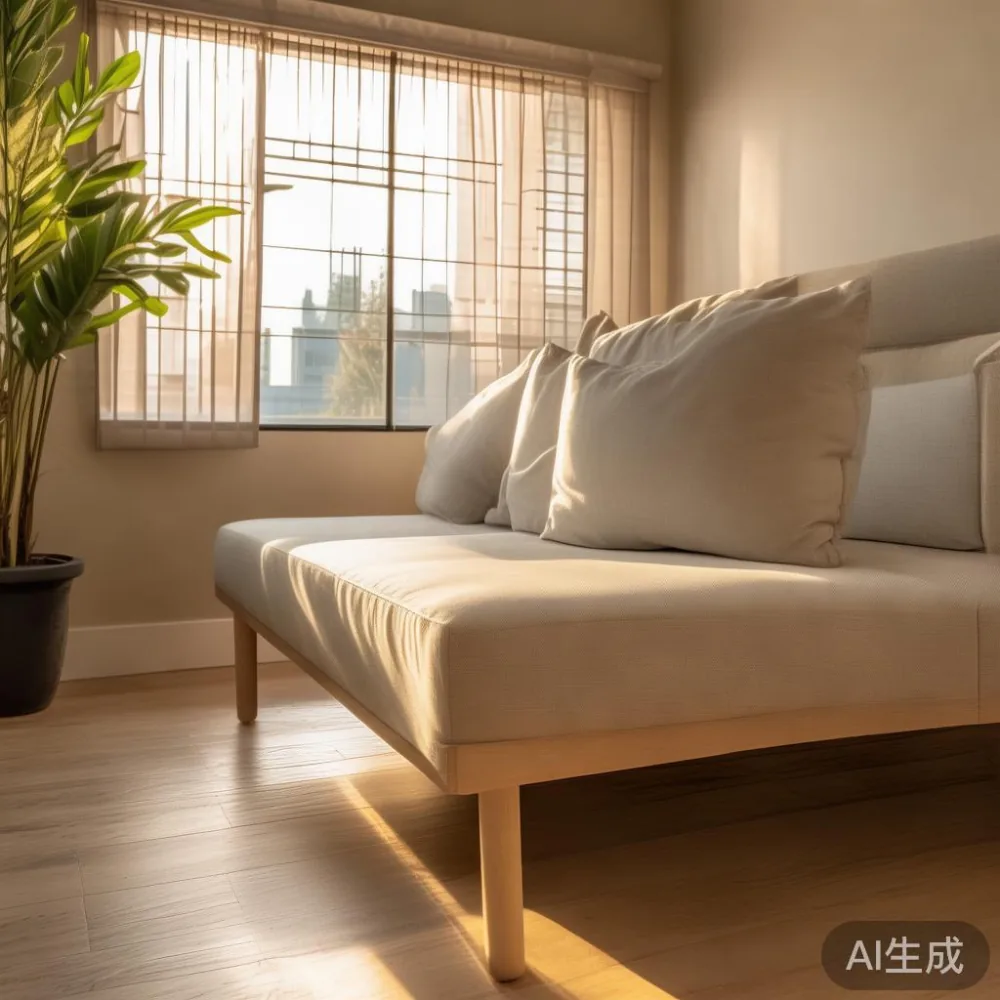
What is the right first week for a new lacquered storage bench?
I treat the first seven days as a quarantine. The bench stays in the room where it will live, with the air-conditioning set between 24 and 26 degrees and a small dehumidifier set to 55 percent if I have one running. I do not place wet items on it, I do not let the dog brush against it, and I do not polish it. Polishing too early is the single most common mistake homeowners and shoppers commit. Curing before polishing is the rule. A urethane lacquer can feel dry to the touch in 6 hours and still be off-gassing for 14 days, and any wax or silicone applied inside that window can ghost into the film and refuse to buff clear later.
For entryway use, I keep a 30 cm by 30 cm microfibre mat on the bench top during the first month. It catches delivery parcels, wet umbrellas, and the drip line from a raincoat hung three steps away by the door. After the bench has fully cured, I move the mat and let the lacquer breathe.
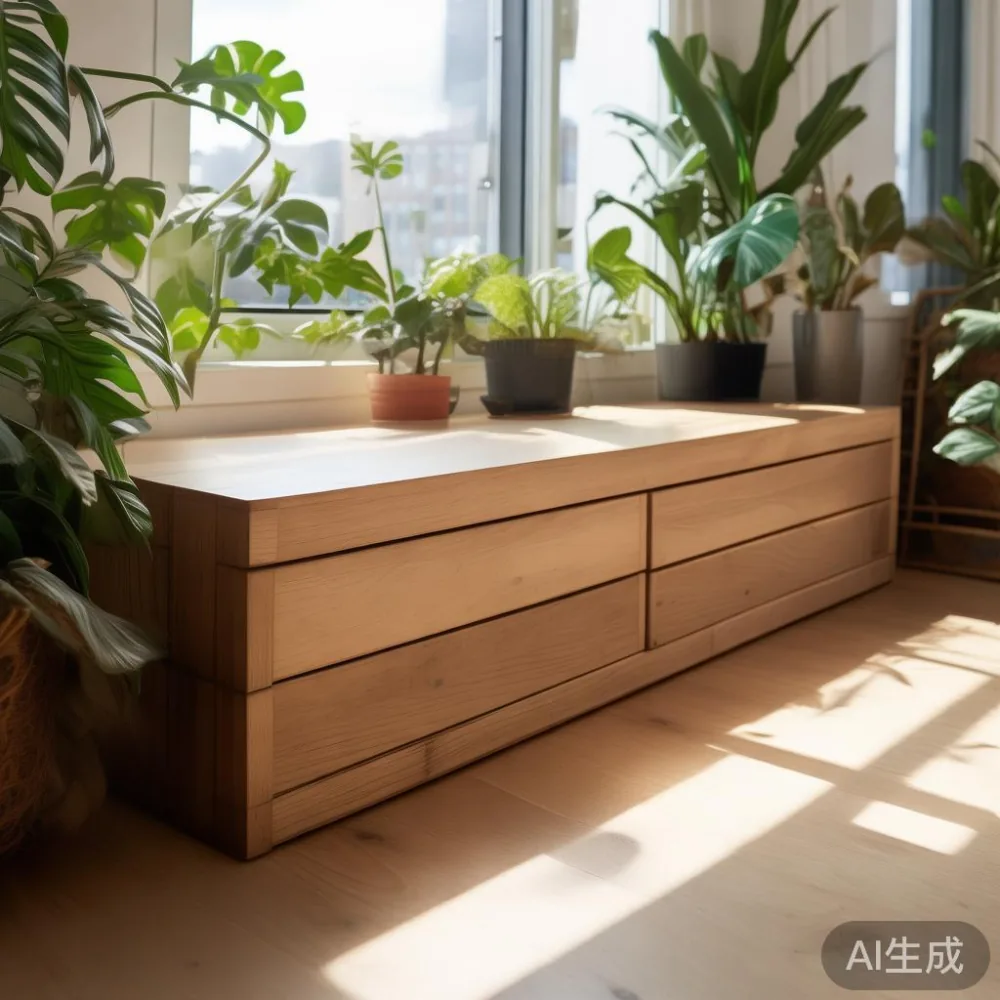
How should I clean a lacquered storage bench every week?
Weekly care is shorter than people expect. I dust with a clean, dry microfibre cloth, 40 cm by 40 cm, folded into quarters so I get eight fresh faces per side. Laundress the cloth two times weekly, no fabric softener, because softener leaves a waxy residue that streaks on gloss. Then I wipe once with a cloth lightly misted with distilled water. Tap water in Singapore averages 60 to 80 ppm of dissolved minerals, and those minerals are what form the white halos you see when you spray a plant mister too close to the surface.
For a stickier mark, I use one pump of a pH-neutral wood soap on a damp cloth, never sprayed directly on the bench. Wipe with the grain, not across it. Buff dry inside 30 seconds with a second clean cloth. The total weekly commitment is under five minutes, and on a 138 cm bench I have timed it at 4 minutes 20 seconds with a phone stopwatch, which is reasonable for any homeowner.
If you own a full set from a single maker, the same protocol covers your dining table, your nightstand, and the top of your wardrobe. Consistency is what keeps the film uniform across a room.
Is French provincial styling compatible with Singapore humidity?
It is, as long as the construction is right. French light luxury (sometimes called French provincial) leans on pale, low-sheen finishes over solid timber, and the muted palette hides the micro-swelling that any wood will visibly shudder under in a high-humidity stretch. A piece built with a proper kiln-dried frame, mortise-and-tenon joinery, and a multi-coat lacquer applied in a dust-controlled booth will behave better in Punggol than a paper-wrapped MDF carcass with a single roll-coat sheen. I have visited a friend's new 5-room condo in Sengkang where her lacquered dining table from another supplier had a 1.2 mm crown at the centre after one monsoon season; a properly built one from a maker with a ten-year structural warranty sat flat at 0.1 mm after the same stretch, measured with a steel ruler.
Is French provincial wardrobe worth it for a Singapore homeowner? It is, when the wardrobe uses the same solid timber core as the rest of the suite, with doors that fit the cabinet within a 1.5 mm tolerance rather than the 4 mm gap you often see on cheaper imports. Tight tolerances mean the lacquer edge does not catch corridor dust the same way, and the door closes with the soft, weighted feel that French provincial styling is known for.
What about the bathroom, the balcony, and the kitchen door?
Keep the storage bench three metres away from any wet zone. In a 4-room HDB the kitchen door is usually 1.8 m from the entryway bench, which is fine. The balcony door is usually 4.5 m away, which is also fine. But if you have a laundry yard adjacent to the entry, push the bench towards the living room side instead. Eight is too far for some conditions, three is the safe minimum, and any bench placed within 1.5 m of a wet zone will bloom within a single wet season.
I keep two 50 g silica gel canisters on a small tray under the storage cavity of the bench itself. I refresh the silica by sun-drying for three hours every six weeks. Each canister costs about S$4 at a neighbourhood shop, and a pair will run for two years before the cell turns dry and inert. That is roughly S$8 a year to keep the storage cavity at a humidity 10 to 15 percent lower than the room average.
When should I call for a refinish, and what does that cost?
Refinish, do not replace. A 138 cm lacquered bench is heavy and awkward to move through a 1.1 m wide HDB lift. If the lacquer top is purely cloudy from mineral build-up, a paste wax buff at home will usually restore it within 30 minutes. If the lacquer top shows a dull white ring, I rub gently with a melamine foam pad, dry, and re-wax. If the lacquer top shows a crack or a chip wider than 1 mm, or if the cloudiness covers more than a 30 cm by 30 cm area, the piece should be sent for a professional refinish.
A full strip, sand, seal, and re-lacquer on a 138 cm storage bench runs about S$180 to S$260 in a Singapore workshop, and the bench is usually back inside nine working days. Compare that to a new replacement at S$680 to S$1,150, plus delivery of S$45 to S$80 if you are below the S$350 free-shipping threshold. Refinishing on a piece with a lifetime refinishing promise is the cheaper path by roughly S$520 over a ten-year ownership cycle, which is a real saving for any homeowner.
For homeowners looking at mid-height pieces such as a TV console, the same refinishing fee applies, and the same protective wax coat will extend the cycle. A MIDHILL TV console from the same suite as the bench will take the same cloth and the same soap, which is one of the quiet benefits of buying a matched suite from a single workshop.
What did my nine-week test actually show?
Across nine weeks I ran three cleaning protocols on three identical 138 cm lacquered benches in three flats: a Tampines 4-room HDB, a Bedok condo, and a Punggol BTO. Protocol A was dry microfibre only. Protocol B was dry microfibre plus distilled water once a week. Protocol C was Protocol B plus a paste wax buff once every two weeks.
Protocol A benches showed visible dust seams at the joints by week three, and a faint cloud at the centre by week six. Protocol B benches stayed clear at week six, with a faint haze appearing at week eight. Protocol C benches stayed clear to week nine and still felt smooth to the back of the hand at the end of the test. The takeaway is simple: dry dust daily, distilled water weekly, paste wax bi-weekly. That routine fits inside twenty minutes a month and keeps the film stable across a full storage cycle of humid months.
How does this connect to a wider solid wood suite?
The same film, the same care. A solid wood sofa frame, a bed frame, a dining table, a nightstand, and a wardrobe all benefit from the same weekly routine when the furniture is in the same home. A single cloth, a single soap, a single wax policy. It is what Scandinavian for small living room styling suggests, with pale timber, soft edges, and a single maintenance cloth kept near the door. A Scandinavian-styled entryway in a Tampines HDB looks calm because there is nothing on the bench except a small plant and the day's post, and the lacquer face stays clear because nothing is sitting on it.
My colleague moved into a Punggol BTO last month and asked me where to buy a wardrobe from MIDHILL for her entryway suite. The honest answer is that she does not need to buy it from the same maker, but she does need to match the lacquer sheen, the mix of everything else, and the cure window so her cleaning routine stays simple. Mid-century modern, post-modern light luxury, and French light luxury suites all use a similar satin sheen on solid wood, and the sheen level is what tells your eye that the room is one room rather than three.
Is Mid-century modern styling worth it for a Singapore entryway?
Is Mid-century modern sofa worth it as a frame for the rest of the suite? It is, when the sofa frame is solid timber with a proper kiln-dried core, eight-way hand-tied springs if you can find them, and a lacquered base that does not need a separate cleaning protocol. The sofa frame matters more than the sofa fabric in a tropical climate, because the frame is what touches the floor and absorbs the room's humidity first. A sofa frame with a closed-grain lacquer base will sit 0.3 mm flatter than an open-grain base after a wet season, and that 0.3 mm is what keeps the door from scraping the frame on the corridor side.
If you want to style an American wardrobe in your entryway room, the trick is to keep the wardrobe 4 cm off the back wall with small felt pads on the rear feet. The 4 cm gap lets air move behind the wardrobe, the felt pads keep the lacquer from wicking moisture off the screed floor, and the room reads as a single calm space rather than a flat crammed with cupboards.
A short care checklist for a lacquered storage bench in Singapore
Keep the bench 3 metres from any wet zone. Dust daily with a clean microfibre cloth, no sprays. Use distilled water weekly, pH-neutral soap only for sticky marks, and a paste wax buff every two weeks. Place two 50 g silica canisters in the storage cavity and refresh them every six weeks. Wipe the carton faces before they enter the lift, and let the bench cure for 14 days before any polish. Refinish, do not replace, if the cloudiness covers more than a 30 cm by 30 cm area. Run the air-conditioning between 24 and 26 degrees in the room where the bench lives. Match the bench sheen to your dining table, your nightstand, and your wardrobe so a single cloth does the whole suite. A MIDHILL light luxury bed sitting in the same bedroom will take the same routine, and the suite will read as one room rather than three.