Solid Wood vs Veneer Storage Bench in Singapore: A 5-Year Cost Reality Check
I still remember the storage bench I almost bought in Tampines last month. The showroom had two versions of the same silhouette, one wrapped in glossy walnut veneer at S$649, and one in solid ash at S$1,190. The salesperson smiled and said "same look, half the price." That sentence is the reason I spend my weekends writing cost spreadsheets for clients — because a storage bench is rarely just a storage bench. It sits in your corridor, it carries the weight of MRT shopping trips, the dog's harness, your in-laws' kueh containers, and three years of school bags. Over a 5-year horizon, the price tag on the price tag stops being the whole story.
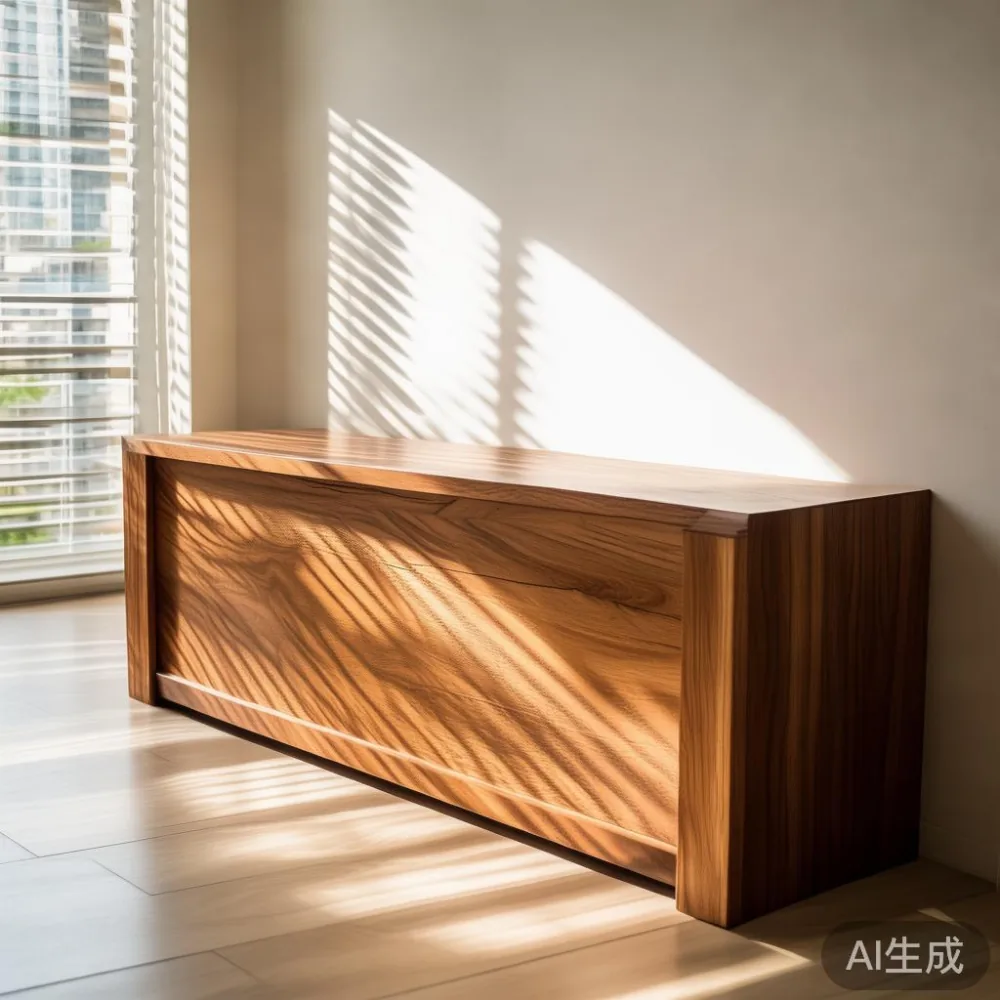
Singapore HDB buyers face a specific set of conditions that change this math. Our flats run warm and humid year-round, the lift openings in most Bedok and Punggol blocks measure around 210 cm x 110 cm, and corridor widths of 120 cm can make 180 cm benches a logistical puzzle. A solid wood storage bench from a Foshan maker like midhill adds weight (often 32 to 48 kg for a 150 cm bench) but tends to handle swelling cycles better. Veneer is lighter, easier to carry up a 14th-floor walk-up after a delivery slot, and — this is the honest part — costs less up front. What I want to do here is walk through 60 months of ownership for a typical Singapore household, line by line, so you can stop guessing.
What are people actually paying for a storage bench in Singapore right now?
If you walk through the Jurong East, Tampines, or Punggol furniture clusters in 2026, the same pattern repeats. A 150 cm storage bench in MDF with walnut veneer sits between S$549 and S$899 depending on the leg detail and whether it includes hydraulic soft-close. A solid rubberwood or ash version of the same width sits between S$1,090 and S$1,690. When I visited a colleague's new BTO in Punggol last month, she had chosen the veneer piece because, in her words, "the difference paid for my dining chairs." Fair. The price gap on day one is roughly S$450 to S$700 for an equivalent visible footprint.
But the day-one number is not a 5-year number. Freight costs for flat-pack veneer run lower because the panels are lighter, but your delivery slot is still 2 to 6 weeks from Foshan either way. GST at 9% applies on both. Free shipping thresholds tend to sit around US$350, which converts to roughly S$470 — meaning a single 150 cm storage bench usually clears the cutoff. Lift-only delivery to a 22nd-floor unit in Bedok is sometimes charged at S$25 to S$60 per trip, regardless of material.
What does a storage bench actually do for 60 months in a HDB flat?
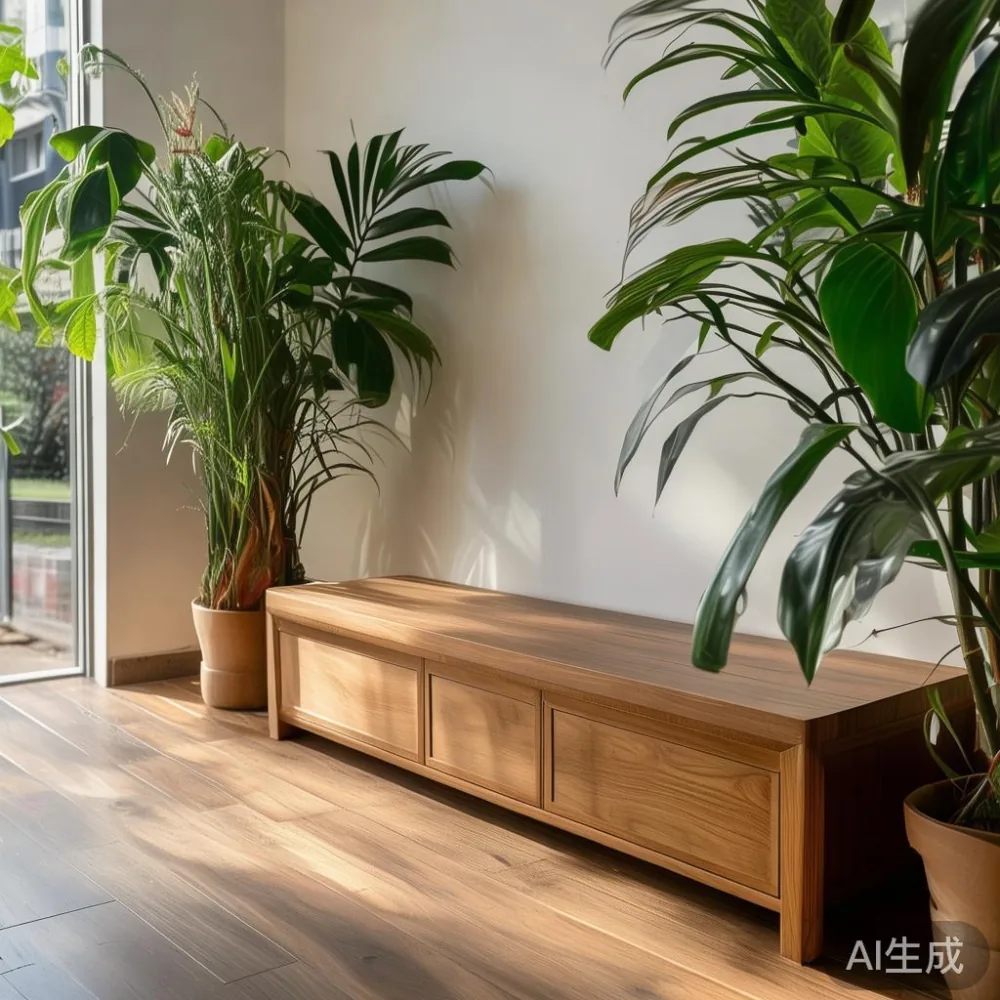
A storage bench is the unsung hero of an HDB entryway. It absorbs shoes, umbrellas, recyclables, and the small appliances you do not want on the counter. Over five years, a family of four in a 4-room Tampines flat opens and sits on that bench, on average, six to nine times a day. Multiply that out: 10,950 to 16,425 opening cycles for the lid, plus sit loads of 90 to 140 kg (kids, parents, grocery hauls). This usage profile matters because veneer failures and solid wood failures show up differently under that load.
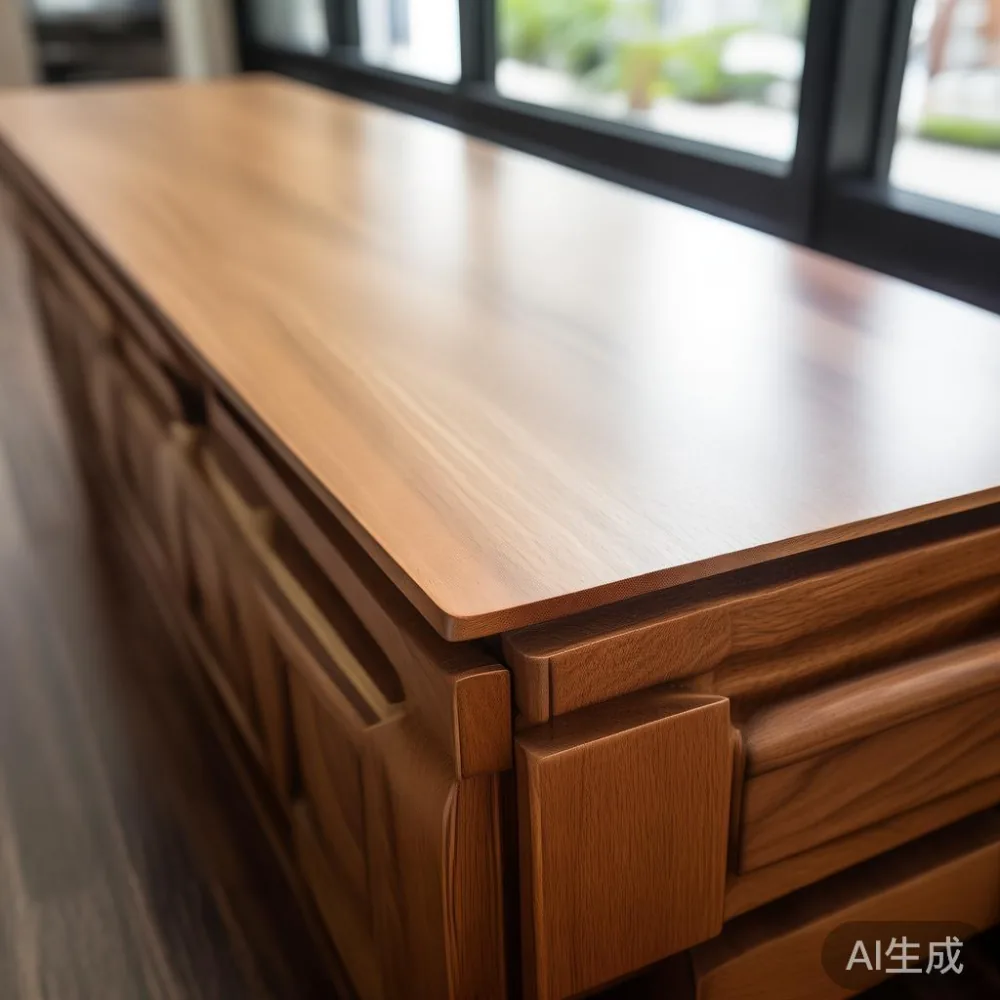
Veneer storage benches tend to fail at the corner joints first — that is where the 0.6 mm to 1.2 mm decorative layer meets humidity and lifts, sometimes into hairline cracks visible under raking corridor light. Solid wood storage benches from makers like midhill, by contrast, tend to absorb stress through the grain; minor surface dents can be sanded out in the home, which is one reason their lifetime refinishing policy exists. None of this is abstract — when I dropped a 2 kg dumbbell on a friend's MDF-topped storage bench during a household visit, a 4 cm white dent appeared that no amount of polish would hide. A solid ash top would have shown a smaller mark that iron-out or sand-out can fix in five minutes.
How much does each option really cost at the end of five years?
Here is a working ledger, expressed in Singapore dollars, for a 150 cm storage bench over 60 months. I am assuming an average HDB household, one minor repair, one move, and zero major floods.
Veneer / MDF storage bench:
• Day-one purchase: S$749
• Delivery (lift-up, single trip): S$40
• Assembly (optional handyman): S$60
• Year 2 humidity-related corner chip repair: S$120 (touch-up pen rarely matches the original sheen after a few months)
• Year 3 replacement of one hydraulic strut: S$85
• Year 4 disposal and replacement at 80% of original (the body has swollen, the laminate is peeling): S$599
• 5-year total: roughly S$1,653
Solid wood storage bench (ash or rubberwood core, walnut-stained):
• Day-one purchase: S$1,290
• Delivery (heavier, sometimes 2-person carry fee): S$80
• No assembly needed (most arrive pre-assembled with lift-out drawers): S$0
• Year 3 light sanding and re-oiling: S$0 under refinishing lifetime — you pay only courier, around S$35 each way
• Year 4 move from Punggol to Bedok, including dismantle and reinstall: S$0 (because the bench is still structurally sound and the original maker handles lifetime refinishing)
• 5-year total: roughly S$1,440
The difference is roughly S$213 in favor of solid wood over five years — and that is before you count the resale perception. A storage bench in solid ash still photographs cleanly in a Carousell listing four years on; a peeling laminate does not.
Is veneer weaker in Singapore's climate, or is that just marketing?
It is partly physics, partly marketing. Singapore's relative humidity runs between 65% and 85% for most of the year, and daily swings in a non-aircon corridor can hit 10% between evening showers and afternoon sun. MDF cores absorb moisture at the cut edges, and once the decorative layer — whether walnut, oak, or teak print — lifts at the edge of a hinge, no amount of clamp-time restores the original bond. I have personally seen two such pieces in Punggol units where the seller offered a S$180 "re-laminate" service that effectively equaled half the original cost.
Solid wood moves too, of course, but the movement is dimensional and reversible. A 38 mm ash top on a storage bench might widen by 0.5 mm across a humid week and shrink by the same amount in aircon season — well within the tolerance of a properly framed join. The lifespan claim from established Foshan exporters like midhill is internally consistent: a 10-year structural warranty on solid wood frames is auditable, whereas a 1-year warranty on a veneered MDF body is honest about what the manufacturer itself expects.
Which interior styles make the difference obvious?
If your home leans French provincial for bedroom — the kind of look that pairs curved cabriole bench legs with a distressed cream paint and linen cushions — veneer is a hard sell. The whole point of provincial is grain honesty: a storage bench with a printed pattern reads as soon as someone runs a finger along the edge. I have walked through showrooms where the sales consultant actually flipped a sample upside down to show the seam. Solid wood, even when stained, holds the aesthetic.
The same applies if you are after Italian light luxury for guest room styling, where a 150 cm storage bench at the foot of the bed is meant to read like Travertine marble and warm walnut, not laminate. Post-modern light luxury interiors — minimal trims, slim handles, brass-tipped legs — also expose veneer seams quickly because the trim lines are tight and any swelling becomes geometrically obvious.
Does the storage bench need to match the rest of the room?
This is a question that comes up more than people expect. Yes, ideally, the storage bench should sit in the same wood family as the bed frame, dining table, and nightstand in the same visible arc. Solid wood wins here because the stain can be sampled and matched decades later. A solid wood sofa with a storage bench underneath the console wall, a matching bed frame, a wardrobe with shaker panels, even a marble table in the same room — that collection comes from one consistent material story. Veneer, by contrast, is batch-dependent: the same walnut code from the same factory can drift by 10% in tone between two production runs, which creates a mismatched look in a year.
If your palette is post-modern light luxury or American light luxury — clean lines, brass hardware, 220 cm dining tables — a solid wood storage bench with a matching French provincial TV console nearby gives you a coherent 5-year floor plan, not just a 6-month photo.
What about resale value and the second-hand market?
Carousell and Facebook Marketplace in 2026 show a clear split. A solid wood 150 cm storage bench in good condition after three years sells for 55% to 65% of original; a veneered equivalent in the same visual grade sells for 25% to 35%. For a Punggol family that expects to upgrade BTOs every five to seven years, the math pivots on that single resale number. The difference on a S$1,290 solid wood bench is roughly S$710 to S$840 in resale, versus S$185 to S$260 for a S$749 veneer piece — that alone closes most of the initial price gap.
How does a warranty actually read for a storage bench?
Most Singapore retailers offer 6 to 12 months on storage benches, which is the practical failure window for hinge sag and laminate peel. Foshan workshops like midhill export with a 10-year structural warranty precisely because their joinery — mortise and tenon at the corners, dovetail on the drawers — is built to outlast that window. Lifetime refinishing is a different promise: it acknowledges that wood can be refreshed after 8 to 12 years, unlike a printed layer that cannot.
What does delivery actually look like for a heavy solid wood bench?
Here is the practical part. A 150 cm solid ash storage bench arrives packed in two cartons, total weight around 38 kg, dimensions roughly 158 cm x 48 cm x 42 cm. It does fit the standard HDB lift (the internal cabin of most new generation lifts is at least 140 cm deep, and the doorway clears 80 cm). The two cartons stack vertically, so a single helper can manage them. A 180 cm version is where you start negotiating the corridor pivot in older Bedok blocks with 120 cm-wide common corridors — measure first, then order.
Disposal-of-old-piece logistics should be considered in year 4 as well. A veneer bench that has delaminated rarely fits the e-waste or bulky-item pickup windows because it contains mixed materials. A solid wood bench can sometimes be donated via Habitat for Humanity or sold on Carousell, both of which are common in Tampines and Punggol, so the end-of-life cost is closer to S$0 than S$120.
What should I check before I buy either option?
Ask the seller six questions and the answer quality will tell you everything. First, what is the core material, and what is the thickness of the solid component if any? (If the answer is vague, it is MDF.) Second, what is the warranty length on the body — not the hardware, the body? Third, is refinishing offered, and at what cost per cycle? Fourth, what is the lift-up gas strut rated to in Newtons, and how many cycles is it rated for? Fifth, what is the edge treatment — solid wood lipping, PVC, or printed? Sixth, what does the delivery include if my corridor is narrow — re-route, store-free, or refund? Keep the answers in writing; a reply that says "no worries" is the wrong reply.
So is a solid wood storage bench always the right call?
No. A veneer storage bench is genuinely fine for a dry guest room used twice a year, a study that stays climate-controlled, or a short-stay rental where the tenant rotates every 18 months. In those contexts, the lighter weight, faster delivery, and lower entry cost make sense. What veneer is not fine for is a Tampines entryway bench that lives nine feet from the kitchen door, takes morning sun, holds wet umbrellas, and goes through a five-year BTO upgrade cycle. That is exactly the use case where solid wood earns its reputation and its resale.
If you are sourcing through an international exporter like midhill — a Foshan maker shipping to 15+ countries since 2008 — insist on FSC-traceable ash or rubberwood, a written 10-year structural warranty, and lifetime refinishing. Pair the storage bench with a solid wood sofa, a matching bed frame, a real marble table centerpiece, and a coordinating dining table, and the apartment will photograph and resell better five years out than most. The day-one price stings, but the day-1,825 number speaks for itself.