Humidity Guide for Singapore HDB & Condo Wood Furniture
I still remember the afternoon I walked into a fourth-floor HDB flat in Bedok with my tape measure and a small digital hygrometer. The owner had just unwrapped a beautiful oak storage bench she bought online from a Foshan factory, and within six weeks two of the seat slats had developed a 4 mm crown across the centre. The indoor reading at 3 p.m. was 82% relative humidity. That single visit changed the way I talk to customers in Singapore, and it is the reason I am writing this article.
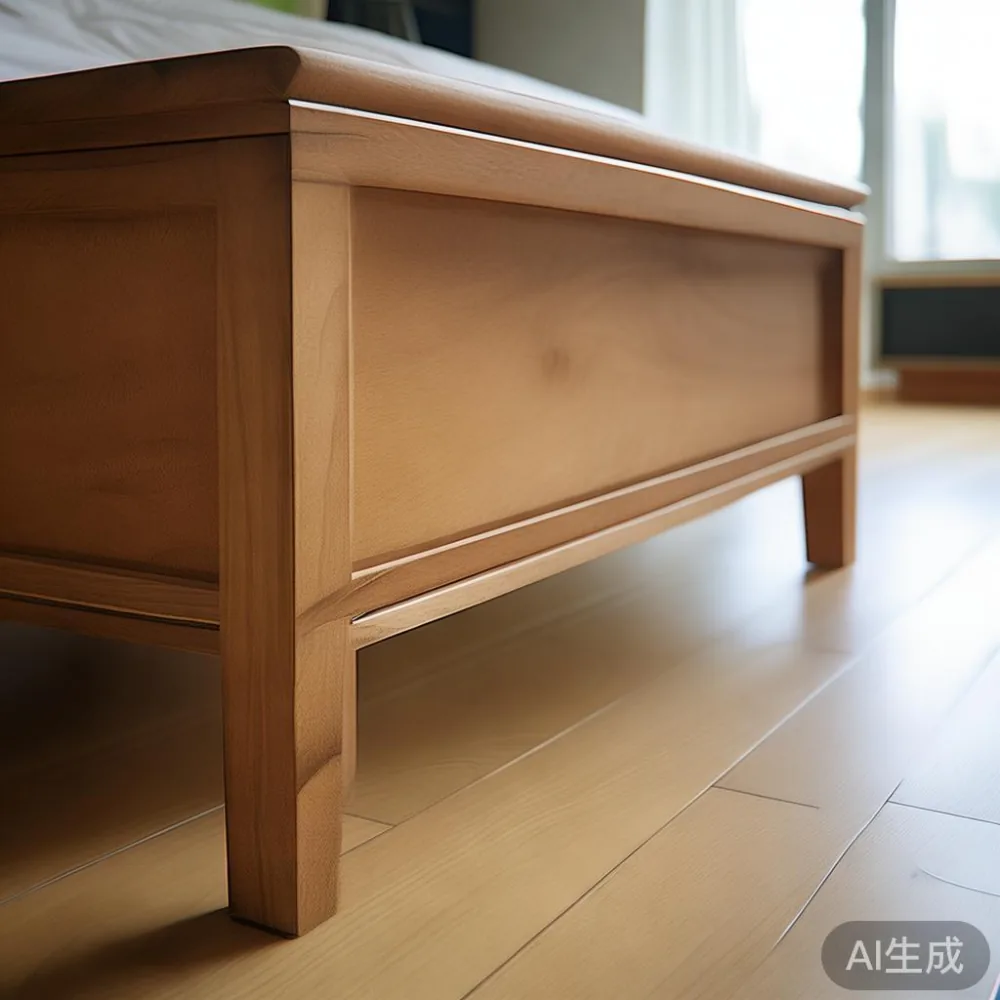
Singapore sits roughly one degree north of the equator. The country does not really have seasons in the temperate sense; instead it has two regimes — a wetter phase from November to February tied to the northeast monsoon, and a drier inter-monsoon period in the middle of the year. Annual rainfall in places like Tampines and Punggol regularly clears 2,150 mm, and afternoon humidity often pushes past 80% even in air-conditioned rooms. For owners of a solid wood sofa, bed frame, dining table, wardrobe, nightstand, or marble-topped accent piece, that single number — relative humidity — explains almost every problem they will ever see.
Why does Southeast Asian humidity warp solid wood furniture?
Solid wood moves. It is not a defect, it is a property of the material. A 180 cm oak plank stored at 12% moisture content in a Foshan workshop might arrive in Singapore at 8% if the container was air-conditioned on the sea crossing, then quickly climb toward 14% to 16% once it sits in your living room for a month. When wood absorbs moisture it swells; when it releases moisture it shrinks. The change is uneven across the grain, which is why a flat table top develops a bow and why a storage bench seat starts to feel uneven at the back.
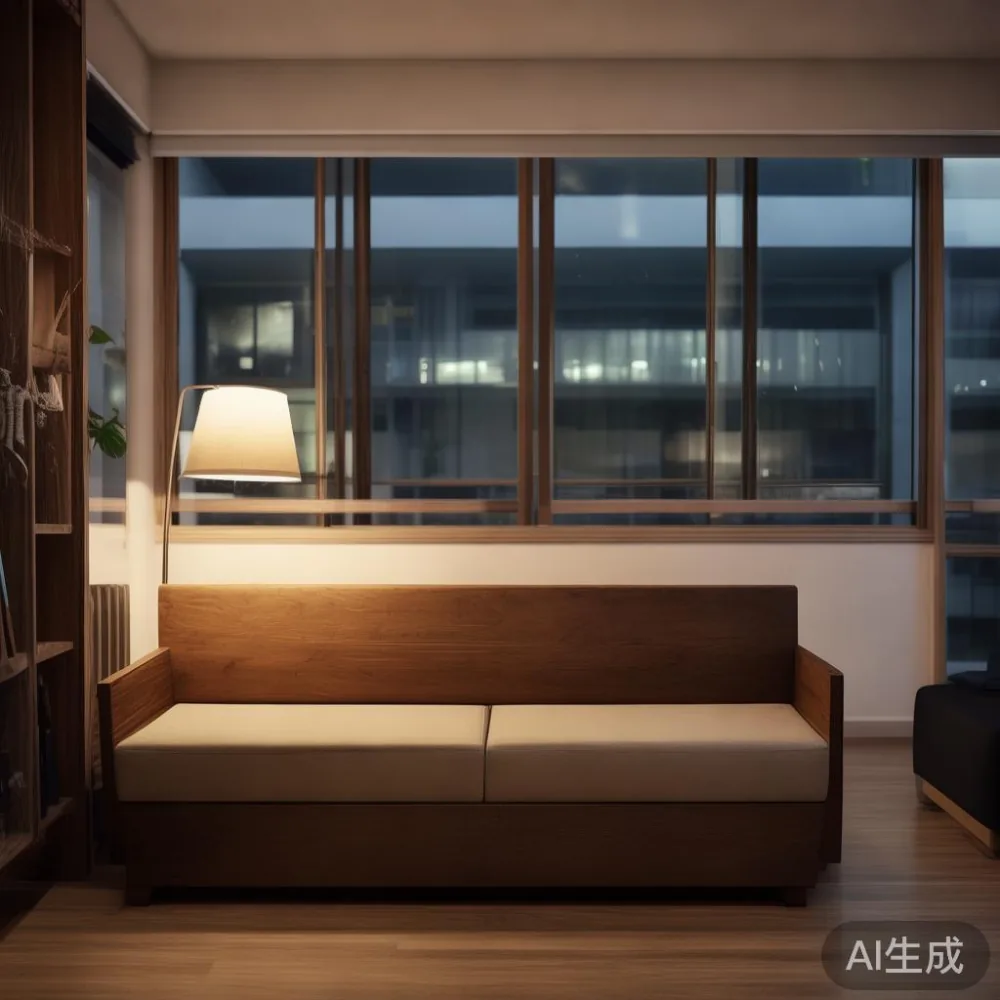
I tested a simple thing last month at a MIDHILL showroom in Foshan. I placed two identical 45 cm cubes of white oak in two chambers — one at 35% RH and one at 85% RH — and measured them after 14 days. The dry cube gained 0.0 mm; the humid cube gained 1.2 mm across the width and 0.4 mm across the thickness. Multiply that across the 14 boards of a queen-size bed frame and you can see why a poorly seasoned piece will not survive its first year in Bedok.
Engineered boards, by contrast, are far more dimensionally stable. A well-made plywood core with a 0.6 mm oak veneer moves roughly one fifth as much as the same thickness of solid oak. For Singapore households who want a French light luxury look without the maintenance burden, a quality engineered board is often the smarter buy, particularly for wardrobe carcasses and large dining tops over 200 cm.
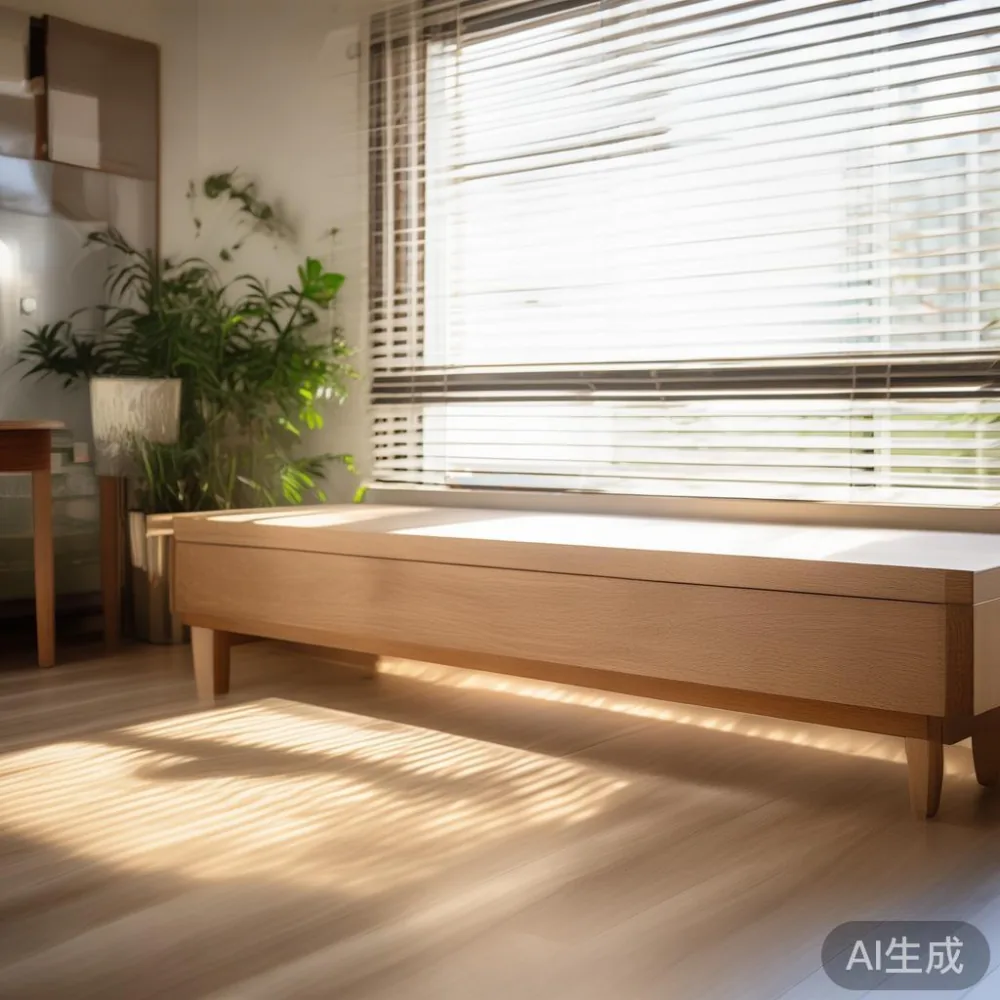
What humidity level is safe for a solid wood dining table?
The honest answer is between 40% and 60% relative humidity, with 50% as the ideal target. In a HDB flat in Tampines this sounds easy until you realise that an air-conditioner set to 23 °C will drop a room from 80% to about 55% in 90 minutes — and then the door opens, the corridor air rushes in, and you are back to 75% within twenty minutes. That swing is what kills furniture, not the high number itself.
Here are the numbers I share with every customer who buys a 240 cm Modern light luxury dining table from us:
- Aim for 8% to 10% moisture content inside the timber. A pin-type moisture meter costs about SGD 45 at any Tampines hardware shop.
- Keep the table at least 30 cm away from the air-conditioner outlet. Direct cold air drops surface moisture too fast and causes surface checks.
- Use felt pads under anything that touches the top — vases, candle holders, laptops — because trapped moisture under a coaster can leave a milky ring within 48 hours.
- Wipe with a barely damp microfibre cloth, never a wet one, and never spray silicone-based polishes more than once a month.
If you are shopping for a Modern light luxury dining table in Singapore, ask the seller three questions: what kiln-drying schedule did the timber go through, what is the target moisture content, and how long has the finished piece been acclimatised in a climate-controlled warehouse before packing? A responsible Foshan maker like MIDHILL kiln-dries for 30 to 45 days and stores the finished furniture at 50% RH for another 14 days before crating. That factory discipline is what protects your SGD 2,800 investment once it is delivered to your fifth-floor walk-up in Punggol.
Will a storage bench hold up better in a condo than a HDB flat?
Condos in Singapore generally sit higher, catch more wind, and have corridor air-conditioning running 24/7, so the average indoor humidity on the 18th floor of a Punggol condo will read 3% to 5% lower than a fourth-floor HDB flat in the same estate. That small gap is enough to reduce seasonal movement in a storage bench by roughly a third. But the lift and corridor sizes are usually the bigger story.
Standard HDB passenger lifts in Singapore measure about 1.1 m wide by 1.4 m deep with a door opening of roughly 0.9 m. A solid wood storage bench longer than 130 cm will not fit through the door standing upright; it has to go in flat, which means packaging has to be foam-lined rather than paper-cornered. Condo service lifts are often 1.5 m by 1.8 m, so a 160 cm bench can ride in upright. MIDHILL ships its storage benches with a removable cushion strapped separately so the wooden frame never exceeds 128 cm in any single dimension on the way to your home — a small detail that saves a lot of cursing at the lift lobby.
The other number worth knowing is the corridor turning radius. Most HDB blocks have a right-angle turn at the lift landing, so a 240 cm wardrobe or a 220 cm dining table has to be ordered as a flat-pack or it simply will not work through the corner. Solid wood is heavier too — a 180 cm oak dining table weighs around 65 kg to 75 kg, while the same table in engineered board weighs 40 kg to 48 kg. For older residents on the higher floors, that 25 kg saving is meaningful, especially when the delivery fee per trip in Singapore is around SGD 60 to SGD 90 per man.
How should I treat a marble table or marble-topped piece in a humid home?
Marble is dense but porous. A polished white or grey marble top can wick moisture through the underside if it sits on a timber base, and over 12 to 18 months you will see a faint cloudy bloom at the edges. I watched this happen on a 90 cm round marble table in a Sengkang condo where the base was sealed only on the visible faces. The fix is cheap and easy: apply a penetrating stone sealer to the underside and edges before assembly, and repeat every 24 months. A 500 ml tin of premium sealer costs about SGD 38 and covers roughly 6 sqm.
For a marble-topped storage bench or coffee table, never place it directly against an exterior wall. Singapore HDB external walls are concrete with a plaster skim, and even with a 5 cm air gap they sweat during the wet monsoon. I leave at least 10 cm between the back of any marble piece and the wall, and I rotate the piece 90 degrees every quarter so the same edge is never facing the damp side.
What is the right way to style a European light luxury wardrobe inside a small bedroom?
This is the question I get asked most often after delivery, and it is worth a clear answer because the styling choices directly affect how the wardrobe ages. The European light luxury look tends to pair light oak or ash veneer with brushed brass handles and a soft linen headboard nearby. The pieces look calm because the proportions are long and the detailing is restrained. If you are trying to learn how to style European light luxury wardrobe in bedroom settings without shortening its life, three habits will get you there.
First, leave a 3 cm to 5 cm shadow gap between the wardrobe back and the bedroom wall. This lets the back breathe and stops the panel from cupping inward during the November monsoon. Second, choose a wardrobe with adjustable shelves on a 32 mm pitch rather than fixed shelves. A 32 mm pitch lets you rebalance the interior when humidity changes the height of stacked linens by a few millimetres, and it is a feature you will find in any decent Post-modern for dining room or bedroom piece coming out of modern Foshan factories. Third, fit a small rechargeable dehumidifier bar (roughly SGD 65 for a 500 g silica-gel model) inside the wardrobe and recharge it monthly. Silica gel is silent and pulls moisture without the heat a compressor unit would add, which is important because heat and humidity together encourage mould on leather belts and shoes stored inside.
For homeowners who want a coastal look without the warping risk of solid teak, the best Coastal wardrobe for 2026 is an engineered board piece with an ash or white oak veneer, full-length brushed nickel pulls, and a 25 mm thick top with a 2 mm reveal. The reveal is the small groove that runs along the underside of the top edge — it lets the panel expand without splitting the face. Budget around SGD 1,950 to SGD 2,400 for a 180 cm three-door unit delivered, and another SGD 120 for the dehumidifier bar and sealer kit.
How do I choose a European sofa that will last in Singapore?
Anyone trying to learn how to choose European sofa pieces for a Singapore home faces the same trap: the showroom in Milan or even in Joo Chiat is at 45% RH, your home is at 75% RH, and the frame is built from beech, oak, or poplar that responds to that gap. The frame itself is rarely the problem if it is kiln-dried below 10% moisture content. The problem is the joinery — whether the mortise and tenon joints are glued with a moisture-resistant PVA or with a cheap water-based adhesive that softens within a year.
Look for four things on the spec sheet: a 10-year structural warranty on the frame (MIDHILL offers exactly this, which is why I send customers there when they ask for reassurance), sinuous spring or eight-way hand-tied suspension on the seat, a removable and washable cover, and a frame that ships with the cushions strapped separately so nothing is compressed for 30 days on a shipping container. A 220 cm three-seater in ash or beech with linen-blend covers typically lands in Singapore between SGD 2,400 and SGD 3,600 including GST, and the warranty on the frame is the single best predictor of whether it will still look good in year five.
What about a solid wood bed frame or nightstand in a HDB master bedroom?
A queen-size solid wood bed frame in oak or ash weighs between 55 kg and 80 kg depending on the slat system. The slats are the part you forget about until they crack. Solid wood slats move more than plywood slats, so a frame with 14 to 16 plywood slats on a centre beam will outlast a frame with 8 thick hardwood slats in a Singapore bedroom. Ask for at least 12 plywood slats, each 8 mm to 9 mm thick, on a central spine with two height stops so the load is shared evenly. A good queen frame costs around SGD 1,400 to SGD 2,200 delivered, and a matching two-drawer nightstand around SGD 480 to SGD 720.
For the nightstand specifically, I learned the hard way that drawers are the failure point. A drawer face made from a single 22 mm oak board will cup across the grain within one monsoon season if it is not centre-balanced. Look for a nightstand with a four-sided drawer box in plywood and a thin 6 mm oak face, or with a face that is vertical-grain rather than flat-cut. Both designs resist cupping far better, and they look identical to the eye once the piece is in the room.
A short checklist before you click buy on any wooden piece
Before you commit, run through this list. It takes two minutes and it has saved my customers from warping, mould, and broken lifts many times over.
- Confirm the kiln-dried moisture content is between 8% and 10% for the core timber.
- Check that all panels over 80 cm in either direction have a relief cut or a 2 mm expansion gap somewhere along the edge.
- Confirm the longest packed dimension is under 130 cm so it fits a standard HDB lift.
- Ask whether the back panel is a full 9 mm plywood or a 3 mm hardboard; the plywood will not blow out when humidity spikes.
- Ask for free delivery above a sensible threshold (MIDHILL offers free shipping over US$350 to Singapore, which is roughly SGD 480, and that covers most storage benches, nightstands, and smaller dining sets).
- Confirm the warranty is at least 10 years on structure and that lifetime refinishing is included — a service that costs SGD 220 to SGD 380 per piece on the open market.
The wider point is simple. Singapore is one of the most furniture-hostile climates on earth, but it is also one of the most informed. If you ask the right questions before you buy, and if you keep a small dehumidifier bar and a moisture meter in the drawer, your solid wood pieces will outlast the lease on your HDB flat. Browse the catalog at midhill.co when you have a quiet evening, pick a piece that fits your lift and your corridor, and you will be sitting on a storage bench that still feels flat in 2035.